«…AND THEY CALLED IT DARBNAKAR»…
Thanks to the study of literary, archaeological, epigraphic and other sources, certain episodes of the history of the past arise.
Researchers try to restore the history of settlements, of cities bearing the traces of millennia, the level of economic and cultural development of countries, the way of life of the population…
In the manuscript books are the testimonies of times favourable and harsh, disastrous for the development of the economy, of culture… According to the report of Ghevond the priest, as a result of the extremely heavy Arab taxation the precious metals were entirely exhausted in the land of the Armenians — «…he made an end of the finding of silver in this land»…
Agriculture, cattle-breeding, craftsmanship are among the important guarantees of the level of a country’s might.
Of enormous significance too is the natural wealth of the country, metallurgy.
The Armenian Highland has in its mountains, in their depths, rich mines, which were renowned since the most ancient times. The iron of the Armenian mountains was exported both to the south — to Assyria, and to the north — to the Scythian world.
The finds discovered from excavations prove the high level the Armenian Ancestors had in the field of metalworking.
According to Strabo’s mention, «There are gold mines in Syspiritis (Speri, K. A.) — at Caballa, whither Menon was sent by Alexander with troops, but was strangled by the inhabitants.
There are also other mines, such as that of the so-called sandyx, which is also called «Armenian colour» and is like the kalkhe (=purple shell)».
«In old Armenian literature too there are testimonies concerning the extraction of metals, and still more, their working, the making of various things, objects from them.
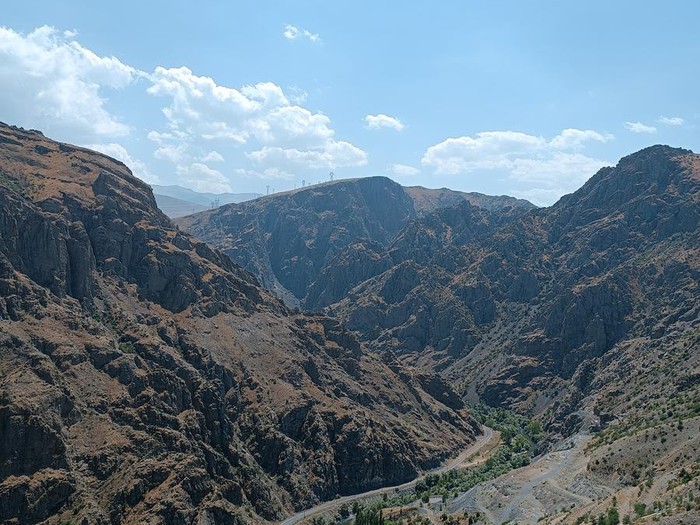
From the sources it appears that the mountains of Rshtunik were rich in iron ore, where the extraction of iron had been developed since ancient times.
According to Pavstos Buzand, Hakob of Nisibis, coming to Armenia, «reached the mountain of the iron-cutters and lead-cutters… in Rshtunik» (P. Buzand, History, p. 38).
So, this mountain was famous for its iron and lead mines, and because for a long time iron and lead had been extracted here, for that reason it had received the fame of «Mountain of the iron-cutters and lead-cutters».
It is told by tradition that the apostle Bartholomew, coming to Armenia, in the south of the country — in the land of Andzevatsik comes upon the «Smiths’ Rock», that is — such a famous place of iron-working, which was very well known, and Buzand does not consider it necessary to give explanations, while «Smiths’ Rock» could have been the name of the iron-stone or the iron mine.
Ghazar Parpetsi — praising the Ararat plain, mentions the gold, copper, iron and precious stones of its depths»,- writes Babken Arakelyan («Cities and crafts in Armenia in the 9th-13th centuries», Yerevan, 1958, 52-53):
Among the mentions in numerous sources about the important metal mines of the various regions of Hayk are also, among the riches noted in Anania Shirakatsi’s «Ashkharhatsuyts», the iron mines of Turuberan and Aghdznik.
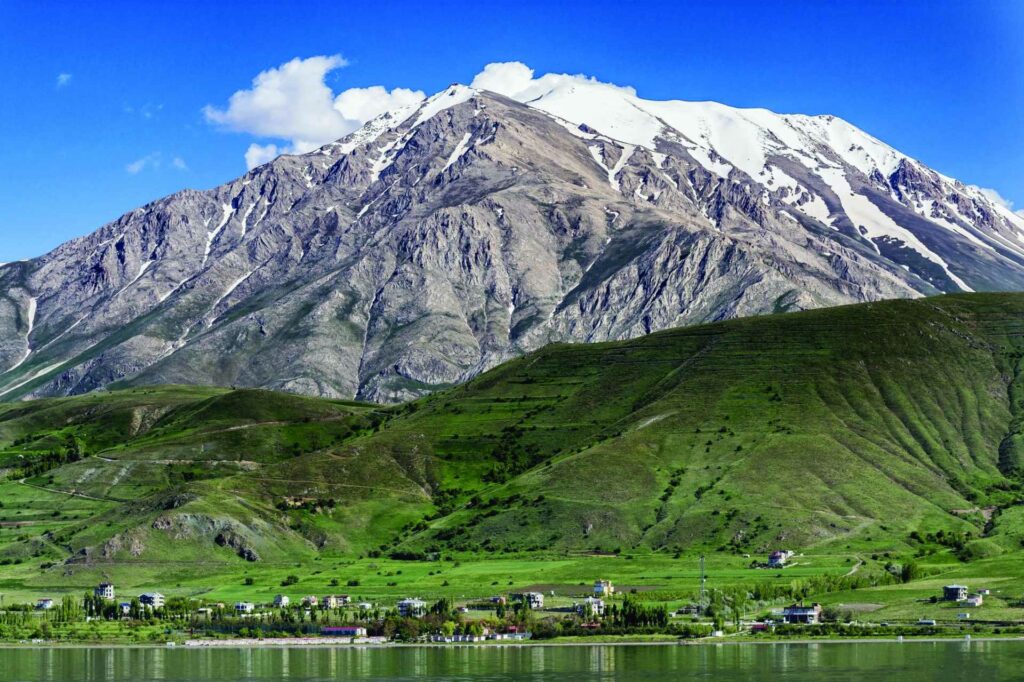
Among the provinces of the Vaspurakan land of Greater Hayk is Andzevatsik — the province of Andzevatsik rich in caves, which the locals usually called «Kargah», «Karpah» — in the eastern section of the Armenian Taurus, with its mountains spread south-east of Lake Van, with the fortress-stronghold of Kangvar — of Darbnakar.
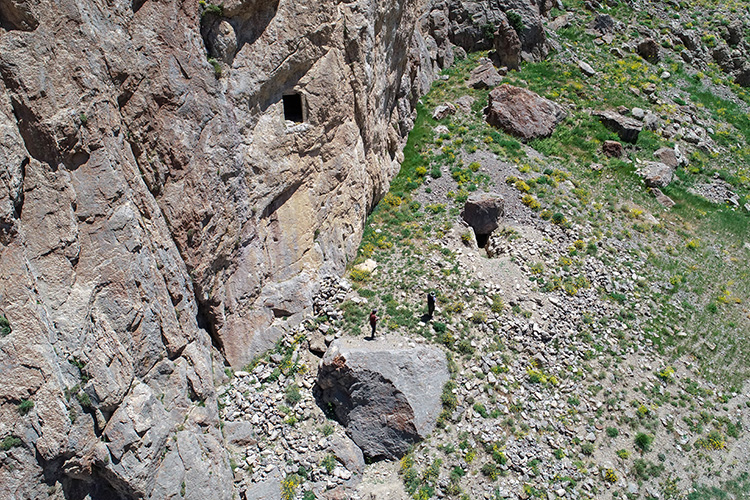
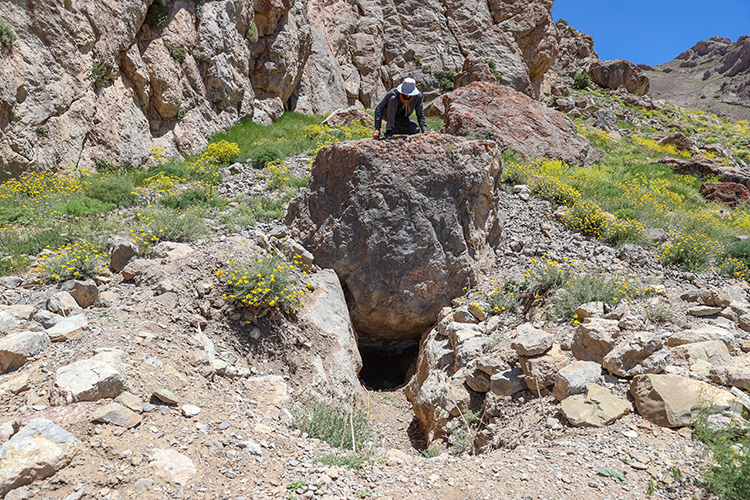
«Such mixed, natural and unnatural phenomena and feelings are made to be divined in the south-western parts of the land of Van — in the province of Andzevatsik (which already means a land of ages), at the beginning of the era of Christianity — at the time of the mission of St. Bartholomew, by the area mentioned between the mountains called Kangvar and Ravens’ Rock, where there is a special rock or cave, and according to the transmitter of the tradition — «Many devs (let us say also the demon-deceivers- Gh. A.) dwelt in that Rock, and deceived the people of the place, giving from that place potions of disease… with the hammer-sounds of smiths, they worked with terrible wonders and horrors; to which the people of the land, being accustomed — wandered there by the Cave (or by the Furnace- Gh. A.)… having named the name of that place Darbnats-kar. The holy apostle, having arrived — drove away the smiths — the workers of evil, and smashed the idols which were in the name of Anahat».
«The thing truly worshipped or dreaded was the hammer-sound of the crafty smiths and that cave or furnace, which also means the smelting-place of the smiths, the deep place of the mines and stones, the materials extracted from the depths.
Very similar to this was also the mountainside called «But» situated a little further away, where they worshipped both fire, and water, and idol, and there were dragon-inhabited caves, from which those deceived by the devs and the possessed «worked something enormous, and visions and flashes, voices and rumblings and crashes», which too the holy apostle silenced and in their place, according to the old tradition of our nation, set the image of the Mother of the Lord not made by hands and appointed newly believing virgins for the guarding of that place, which St. Illuminator confirmed again. And the monastery became a great place of pilgrimage and, though rather humble — such it is to this day», – writes Gh. Alishan.
In poetic quatrains Nerses Mokatsi (~1575-1625) sounded the echoes of the clash and din of the hammers of the Smiths’ Rock.
«…Having come to the land of Andzevatsik —
At the fame of a certain rock,
In which the fox was fortified in a den,
It dwelt with the Lady Anahit —
Man-terrifying, hammer-clanging:
For the lightning having fallen down,
Having struck into the smiths’ furnaces,
The potion, which it compounded mixed with disease,
Congealed into amulet-beads:
As the historical discourse too
Teaches us with one accord,
And the old engine of the dragon
Cyprian, a holy man:
For the old dragon nested there
And was in harmony with the hammer.
With the clash of the din it cast fear,
Ever hindering them from remembrance:
And the men of the place as if mad
Thronged there wandering,
Taking a pus-dripping bundle
And they called it Darbnakar:
To which place the apostle having come
Speedily put a stop to the work,
To the din of the smithy’s clash,
Of those who were the workers of the matter,
And he shattered the Dits-Mother»…
«This famous, very mountain-enclosed place, surrounded by heaven-gazing rocks» — the «Ravens’ Rock» — near the fortress of Kangvar, where «was the great drop of the Tigris» and the temple of the Dits-Mother Anahit —
Near the great fortress of Kangnavor
Which «they called Ravens’ Rock»,
where the smiths with their terribly-resounding hammers forged the weapons securing the might of the Armenian land — glorifying Ayr Aramazd, Lady Anahit, Invincible Mihr and Victorious-armed Vahagn, was destroyed to its foundations at the time of the spread of Christianity.
The «din and crash of the smithy’s clash» fell silent, and on the spot the Hogvots monastery was founded…
Instead of the weapon — the cross and the convent…
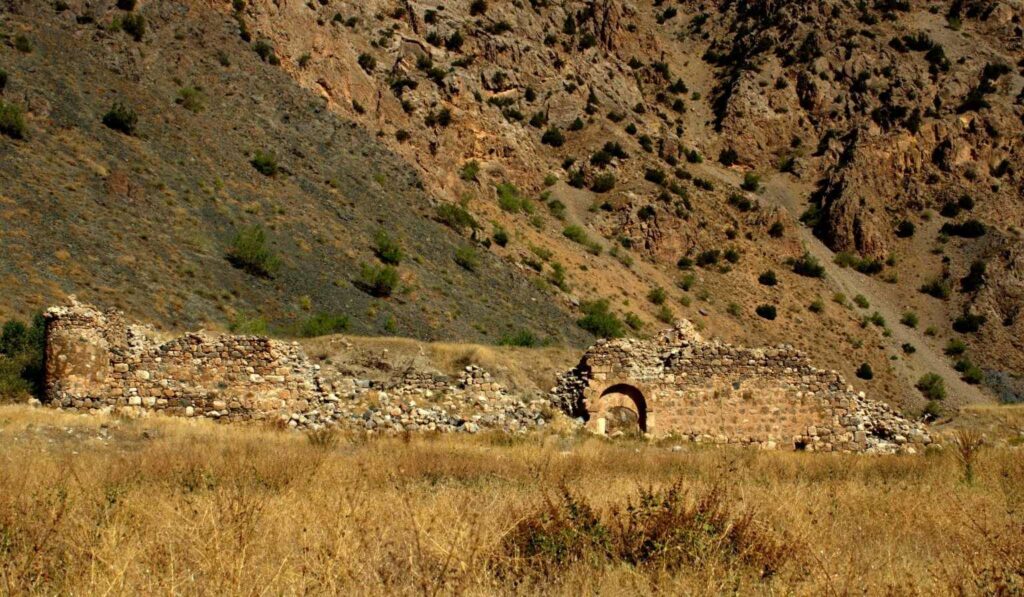
«Oh, if only, awakening again from these caves, they would come forth and resound on the high plateau of Bagrevand, with the memories of Hayk and Trdat…»,- wrote Ghevond Alishan with the longing to see again the memories of the past awakened from the caves…
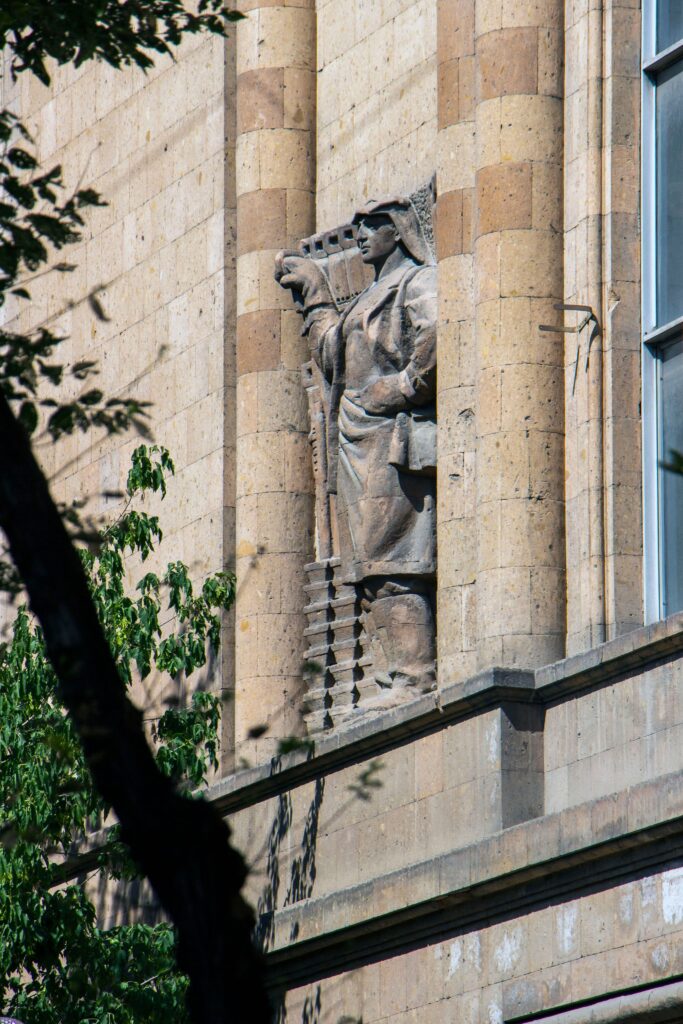
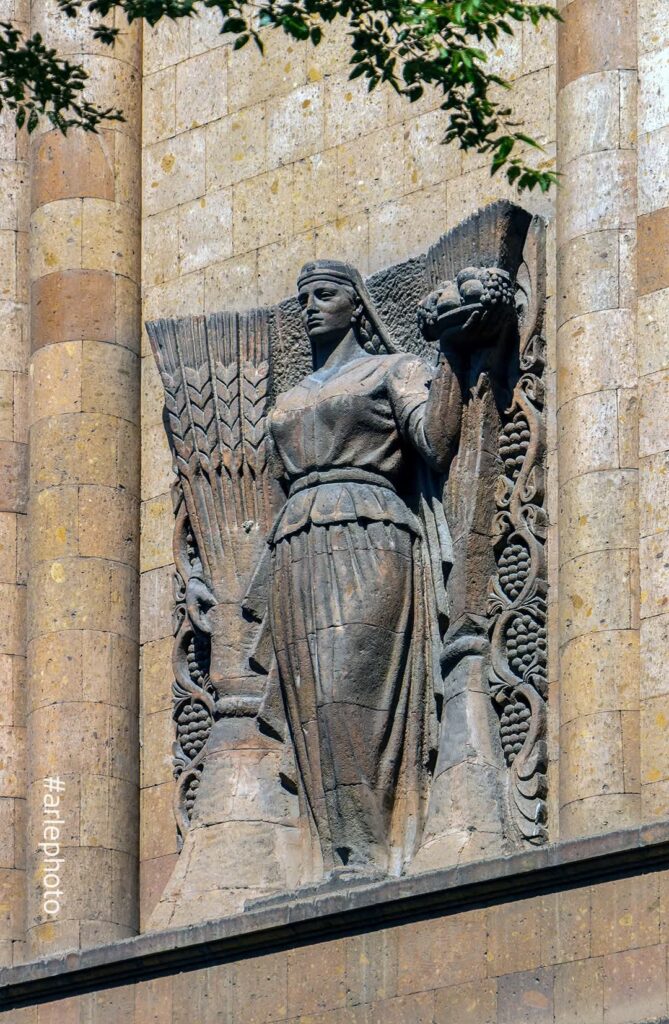
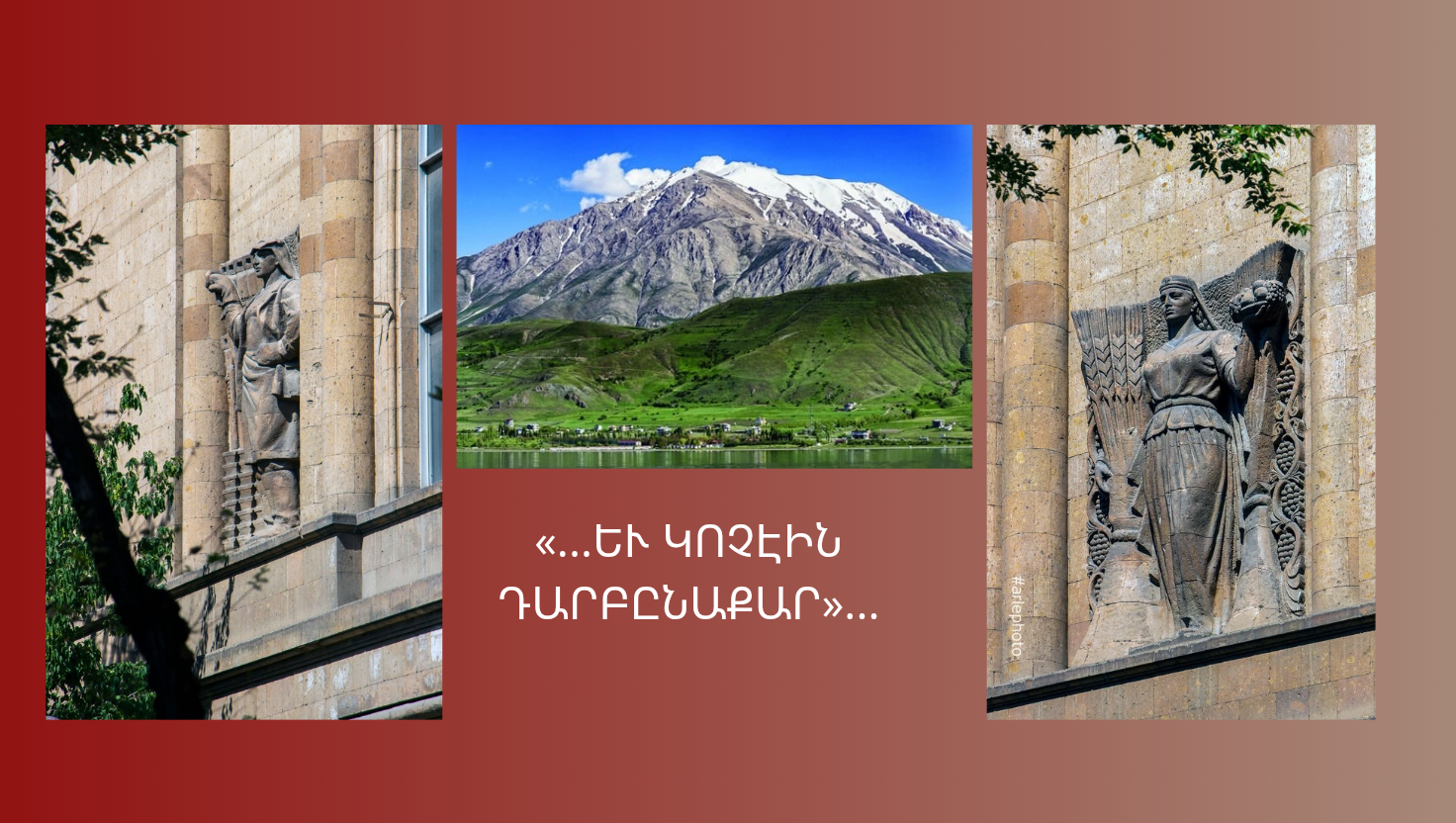
In memory of the Dits Mihr, patron of the Smiths — a present-day Yerevan smith — accompanied by a sculpture symbolizing the Dits-Mother Anahit adorning the same facade: To the author of the photographs of the said sculptures — arlephoto — with great gratitude…