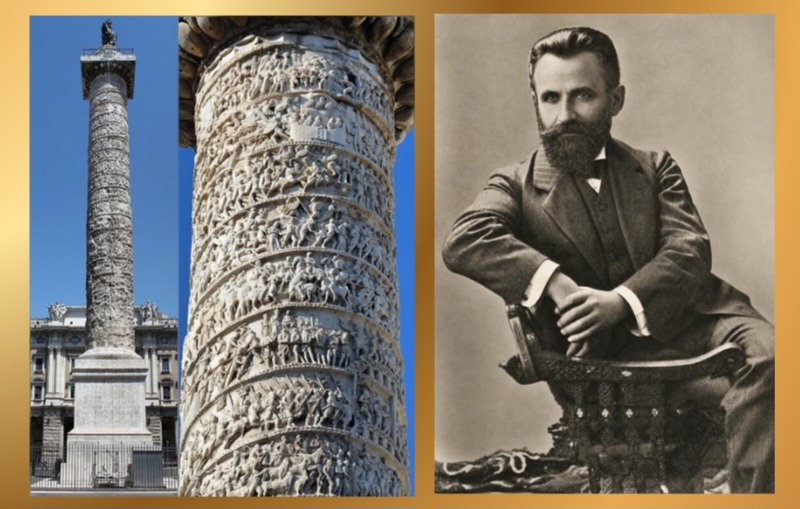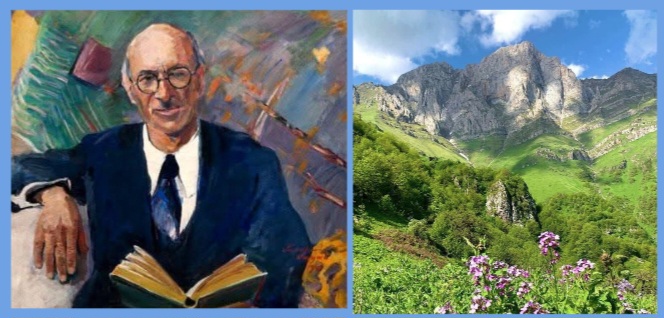








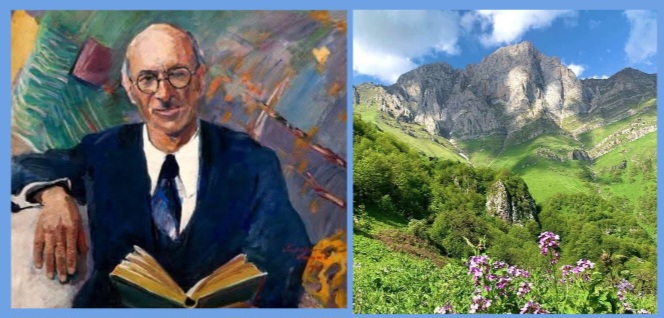
Hrachya Acharyan’s lexicological article «Words borrowed from Armenian in Persian» was accompanied by the publishers with the following note.
«This article of Academician Acharyan was in the course of being printed when merciless death cut the thread of his life»… (it was 16 April 1953)…
A passage from the article in question, with certain abridgements, follows below:
«It is a linguistically well-known phenomenon that the language of a conquering nation affects the language of the conquered nation to a greater or lesser degree, according to the numerical superiority, the strength and, above all, the cultural level of the conquering nation.
That phenomenon can go so far that it can even swallow up the language of the conquered nation.
To take an example from our surroundings, let us recall Arabic, which in the 7th century, coming out of Arabia, conquered the East and the West and wiped out the local languages of Egypt, Sudan, Palestine, Syria and Mesopotamia.
But there is also the opposite phenomenon to this.
If the conquering nation, despite its power, is lower from an educational point of view than the conquered nation, it can be affected to a greater or lesser degree by the language of the conquered nation.
Thus the Romans ruled over the Greeks, but from the in many respects more civilized Greeks they not only borrowed their science, but also a great many words.
Likewise the Turks, although they conquered the Greeks, were themselves also affected to a certain degree by the Greek language. In the literary and popular Turkish of Constantinople there is a group of Greek words, such as names of crafts, especially of navigation, of kinds of fish, even of fruits, which are borrowed from Greek»…
…«Turkish also has borrowings from Armenian»…
…«The number of words borrowed from Persian in Armenian is large. Persian too, however, has borrowings from Armenian, though in a very small quantity»…
BAREKENDAN
This is the name given to the eating-day that precedes every weekly fast. But notable is Bun Barekendan, which is the Sunday preceding the Great or Forty-day fast. That day is the day of the believers’ greatest joy and rejoicing.
In the whole year they do not spend so joyfully as on that day. Even Easter does not come up to it. As if to take revenge for the coming 7 weeks of fast, on that day the believers bring out their entire store of foodstuffs and spend the whole day eating and drinking, so much so that, as a proverb, it is said:
«It is not Barekendan, it is belly-living».
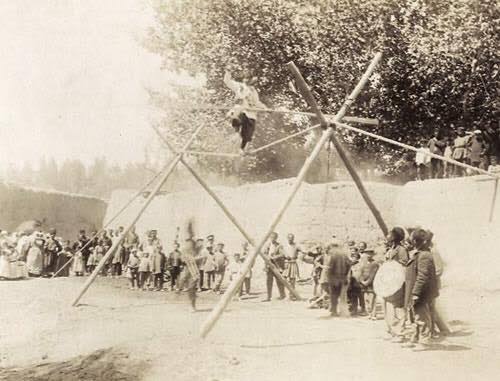
On that day it is also permitted to display every kind of public buffoonery, even disguised with a mask. This is the carnival well known to the Europeans, which existed among us long before the European one. Abovyan, at the beginning of his book «Wounds of Armenia», gives an extensive description of a village Barekendan at the beginning of the 19th century.
That day is also Abeghatogh, that is, even the ascetic monks leave off religious abstinence and live in worldly amusement.
The Monday following Barekendan is called «baklakhoran»; from that day the fast begins and the tradition-keeping Armenian people withdraws its hand from every kind of animal foodstuff (meat, oil, eggs, milk, yoghurt, cream, caviar, fish and so forth). All this is forbidden until the evening of the Dipping. In the house of a believing man no such foodstuff of any kind must any longer be found. In Constantinople the Muslim Gypsies come out on Monday morning, crying: «Yemeklere syupyurke!» («A broom for the foodstuffs!»), and everyone gives them the superfluous animal foodstuffs of their house, in order to clean the house.
The word «Barekendan» has no ancient usage; it is not attested from the 5th century, but from it we have «barekendanal», «barekendanutsanel», «barekendani» and «barekendanutyun»; the last of these is already used in the Holy Scriptures. The «Concordance» gives 6 testimonies, of which let us recall Psalm XXIX 7: «I said in my prosperity, that I shall not be moved for ever».
The existence of that testimony not only confirms the existence of the word in the first half of the 5th century, but also establishes the etymology of the word. There is no longer any doubt that the word «Barekendan» is composed of the words «bari + kendani» and is a genuine Armenian word.
In Persian there is bargandan, which is also written barqandan and which in Georg Dpir’s dictionary is explained in the following way: «A feast of joy and of rejoicing and of amusements, which takes place at the going-out of the month of Shaban». This word is borrowed from Armenian in Persian.
But what business has a Christian word in Persian?The Persian believing people mourns, laments all year long in memory of the martyrdom of Ali, Hasan and Hussein. Every mullah or dervish, at the head of a travelling troupe of actors, goes from village to village and, gathering the village people in the village square, presents tragic mourning-spectacles before them. The people, squatting on the ground, its head covered in its hands, weeps, mourns, sobs, paying a few shahi. Such scenes have no end in Persia, until the 10th of Muharram, which is the day of splitting the head.
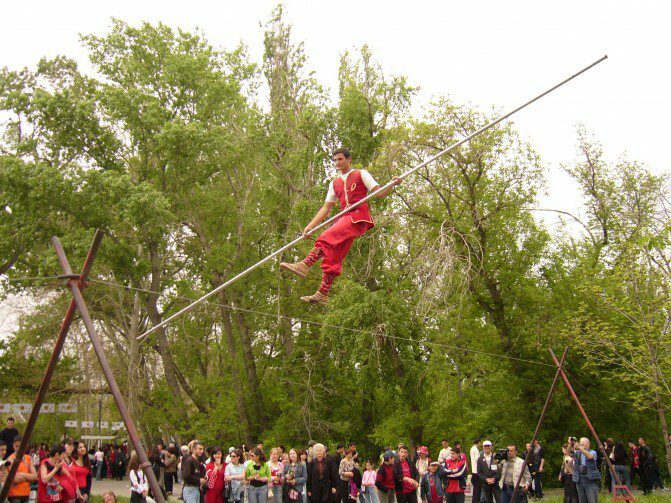
The Armenians’ Barekendan, with its spectacles of rejoicing and of joy, even with masquerades, has aroused the envy of the mourning Persians, who, in order to spend at least one joyful day a year, have borrowed from the Armenians that feast and its name.
Armenian Barekendan is the day preceding the mourning days of the great fast; the last day of the Muslims’ month of Shaban too is the day preceding the strict fasting of the whole month of Ramadan.
Thus «Barekendan» and «bargandan» coincide completely in meaning.
From the point of view of the form of the word there is no difference at all. Among the Armenian people the word «barekendan» is pronounced in the form «barkendan». The first consonant of the word, as well as the «d» sound of the last syllable, are entirely the same and represent the correct Eastern pronunciation.
The second vowel sound «e» is deleted in both alike.
The Persian letter «g» corresponds to the «gh» sound of modern Persian (modern Persians pronounce the Arabic letter «q» as «g», as in «aga»:
There is no doubt at all as to the origin of the Armenian word «barekendan», whereas the Persian form «bargandan» withstands no explanation. If the Persians had thought, by popular etymology, to turn the letter «g» or «q« into «x» and had said «barxandan», everything would of course have changed and all Armenian linguists would have interpreted that Armenian word from the Persian word «xandan» – «joyful, laughing».
This is why and how an Armenian word entered Persian.
This word does not exist in the old Zoroastrian religion, and therefore not in the Zoroastrian language and literature. The «Q» sound shows that the word is foreign. Words written with the letter «Q» are for the most part Arabic, but this word cannot be Arabic, on account of having 6 consonants (it is well known that native Arabic words have generally 3 consonants)»…