

























«THE RIGHTEOUS SUN AND THE SKY — LIKE A CHEST»… (PART B)
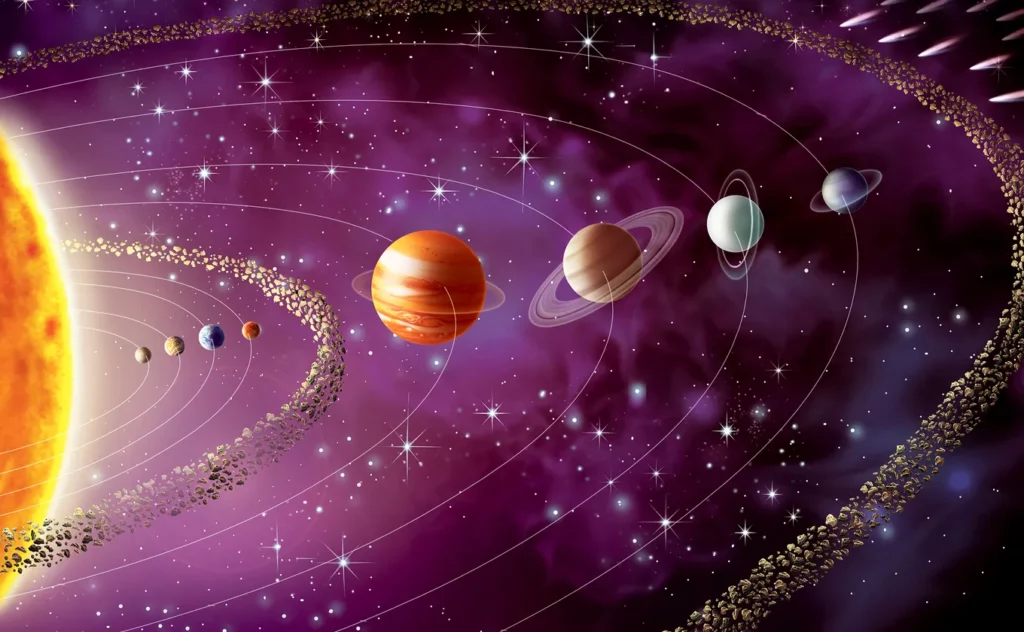
With a glorification resounding from the depths of millennia the Armenian still greets the Sunrise:
«Morning of light,
Righteous Sun»…
And he praises the Light of the Life-giving, all-luminous Sun, which «with its rays illuminates the whole universe»…
«The Eye of the Sun», «The Fountain of perceptible light», which sends its light to the earth, radiant and beautiful, and with its lightning-ablaze rays «raises up the seeds, the plants, renews life»…
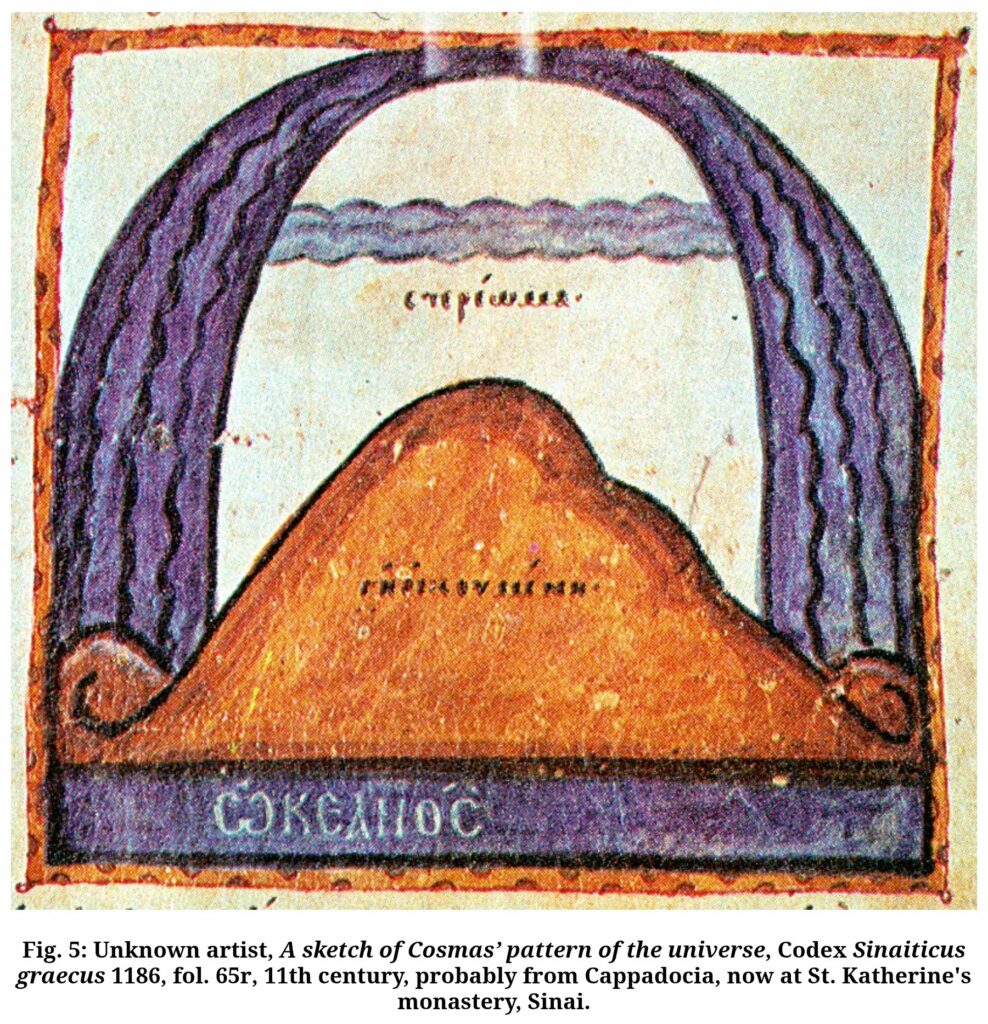
Meanwhile in the 6th century Cosmas Indicopleustes, in his book «Christian Topography», depicted «the earth constructed with extraordinary particularities» — «enclosed in a chest, surrounded by waters», «the closed cosmic system» — taking as a basis the descriptions of the Old Testament, and mockingly refuted «the pagan conception of the sphericity of the earth» («Book IV. Recapitulation — with biblical illustrations of the Universe and with the refutation of the pagan conception — the notion of a spherical universe»).
Continuing the previous publication — let us again quote from the article «The natural-philosophical views of Anania Shirakatsi» by Sen Arevshatyan, academician of the NAS RA, Doctor of Philosophical Sciences, professor:
…«For medieval cosmology the question had become a stumbling block: on what does the Earth rest, how does it hold up its weight? The most widespread view was the one defended by Cosmas Indicopleustes — that the earth, as a quadrangular plane, rests on the waters.
Shirakatsi comes out against that view. He writes:
«I do not understand, if the Earth rests on the waters, then how is the immeasurable weight of the Earth held upon such a quantity of watery nature without sinking, and (the water), splitting apart, does not spread out on all sides of the earth, and it does not sink into the waters».
Shirakatsi calls «frenzied» those «pagan philosophers» (whereas in reality — this is the view of Cosmas Indicopleustes and of the church), who say that «The Sea surrounds the Earth, and the Earth is on the sea like an island, and the water is on the air and is surrounded on (all) sides». This contradicts the principle of weight characteristic of the elements.
The seas are on the earth, and «outside the Earth there is no other sea».
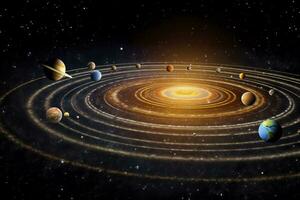
Shirakatsi tries to explain by rational causes the state of the Earth located at the centre of the universe — rejecting its placement on the waters. He asserts that the Earth maintains such a position thanks to the rapid rotation of the celestial zones and to two opposing forces — the weight of the Earth and the forces of the winds, which balance each other. The weight of the Earth pulls it downward, and the force of the winds — upward, and thus balanced it maintains its stable position at the centre of the universe.
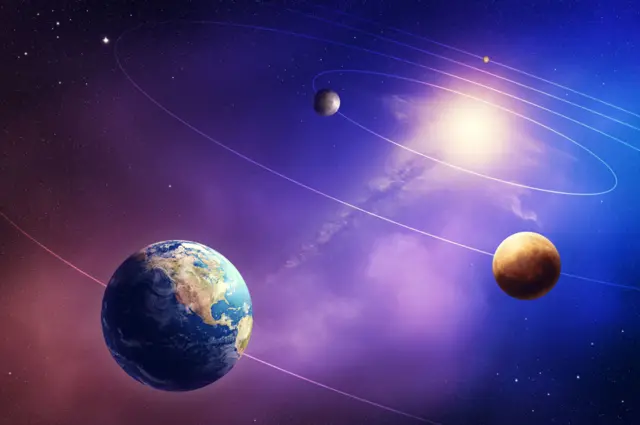
Of great interest was Shirakatsi’s explanation of the causes of the eclipses of the Sun and of the Moon. Their eclipses, according to Shirakatsi, occur at the time when, and for the reason that, the Moon, the Sun and the Earth find themselves on one line.
During a solar eclipse the Moon passes between the Earth and the Sun, and the Moon temporarily covers the disc of the Sun, while the Earth finds itself between the Sun and the Moon, we see the shadow of the Earth on the Moon. By this we are once more convinced that the Earth is spherical, since we see that its shadow is round»…

…«In contrast to the dominant church doctrine, Shirakatsi holds that the Moon has no light of its own, that it receives its light from the Sun. The Moon is like a mirror placed opposite the Sun and reflects its light»…
…«In the 7th century, under the conditions of the dominance of the ecclesiastical-theological worldview, Anania Shirakatsi came forward with ideas progressive for his time, established strong ties with the representatives of the natural-scientific thought of the ancient world and laid the foundations of natural-philosophical thought with his works devoted to the fields of cosmology, astronomy and mathematics»…
The same author — referring to David the Invincible, born in the 70s of the 5th century in the village of Nerdin in the province of Taron, who, thanks to the influence of the traditions of the ancient Armenian perception of the world, developed with his views and his wise thought the secular direction in philosophy, writes: (quoted from the article «David the Invincible and the philosophical thought of Ancient Armenia»).
«In the development of Armenian philosophical science David the Invincible, that greatest philosopher of the V—VI centuries, played an extremely important and, we can say without reservation, decisive role. He was a bold reformer of science, who with his works opened a broad road for the secular direction of Armenian scientific thought.
Under the conditions of the dominance of Christian ideology he came forward as the true founder of epistemology, logic, ethics, aesthetics and other philosophical sciences and left a deep mark on the development of the scientific thought of the following centuries.

The philosophical heritage of David the Invincible, which by its ideological sources is connected with the philosophical schools of the ancient world, is of great interest for the history of world science»…
… «However, decisive significance for the rise of philosophical thought belonged to the literary-scientific activity of the so-called Hellenizing school, which laid the foundations of the secular direction in ancient Armenian science and literature.
The intense translating activity of the Armenian Hellenophiles, who had received their education in the greatest scientific centres of the time — Alexandria, Athens and Constantinople, was of essential significance for the future of Armenian philosophical thought.
As a result of their activity Christian apologetics was pushed back from the front line of ideological life.
The translations of the works of Aristotle, Plato, Philo of Alexandria, Porphyry and the Anonymous commentator, made by the Hellenizing school during the V—VI centuries, gave the ancient Armenian intellectuals new ideas and theories, which corresponded to the needs of the development of the secular culture of Armenia.
And it is by no means accidental that the most eminent representative of Armenian philosophical thought, David the Invincible, was born precisely from that milieu, from the ranks of the Armenian Neoplatonic Hellenophiles, who played a great role in the history of the spiritual culture of their native people».
«The circumstance must be particularly emphasized that thanks to David the Invincible that variety of Neoplatonism spread in Armenia which
it is customary to call «the Alexandrian direction of Neoplatonism» — as distinct from the Athenian and Syrian schools. That direction preserved and transmitted to the following generations, especially to the philosophers of the early Middle Ages, the progressive scientific tendencies of the ancient world.
It is true that for the Alexandrian school, as for the other currents of Neoplatonism
as well, a syncretic combination of the teachings of Plato, Aristotle, Pythagoras and Stoicism — on an idealist basis — is characteristic. However, unlike the Athenian and Syrian schools, the Alexandrian Neoplatonists devoted great attention to natural science and. mathematics, and in the multicoloured bouquet of Neoplatonism they emphasized, more than the other Neo-platonists, Aristotle’s logical teaching and his epistemology, in which the materialist, scientific tendencies were expressed most clearly»…