














«THE RIGHTEOUS SUN AND THE SKY — LIKE A CHEST»… (PART A)
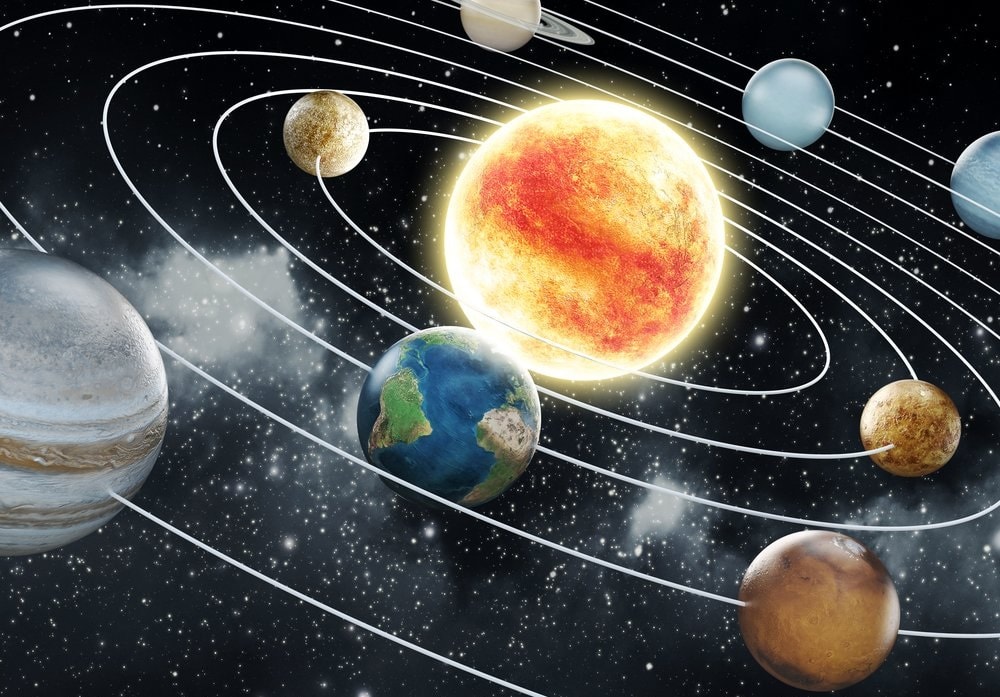
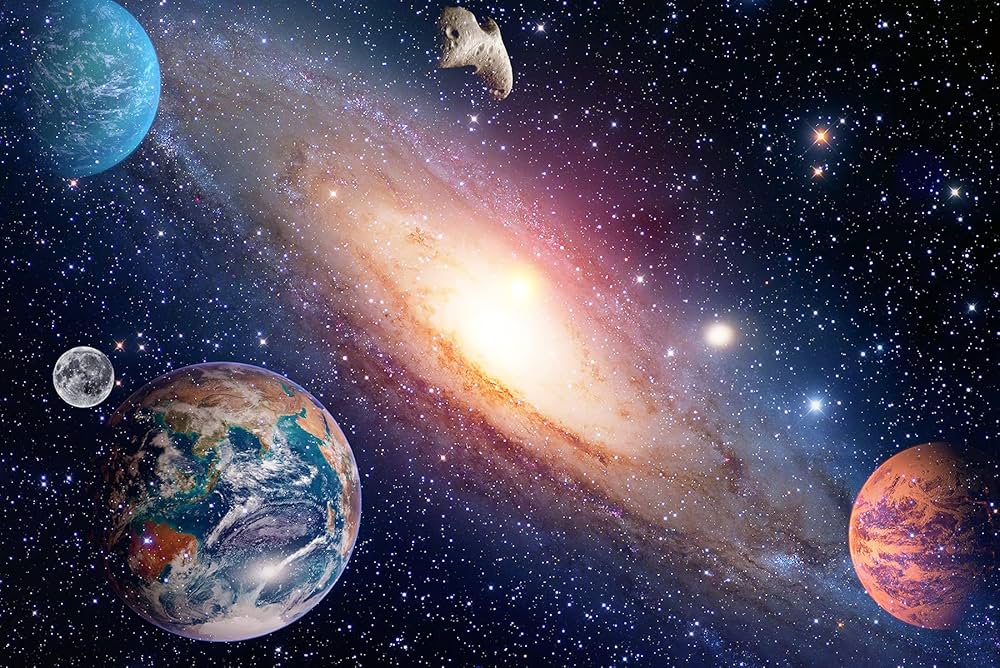
While the Armenian Ancestors studied the world surrounding them and gazed intently at the everlasting «dance» of the celestial luminaries and constellations — glorifying the Light-giving, Warmth-giving and Life-bestowing Sun as «the Eye of the Universe» and «the Fountain of Wisdom», and at sunrise greeted the Righteous Sun — in honour of the Light and Knowledge it bestows, some apologists of Christianity imposed their primitive and erroneous views — convinced that «The Sky is like a chest — with a vaulted lid, at the bottom of which is the Earth. It is flat, quadrangular and rests on the waters»…
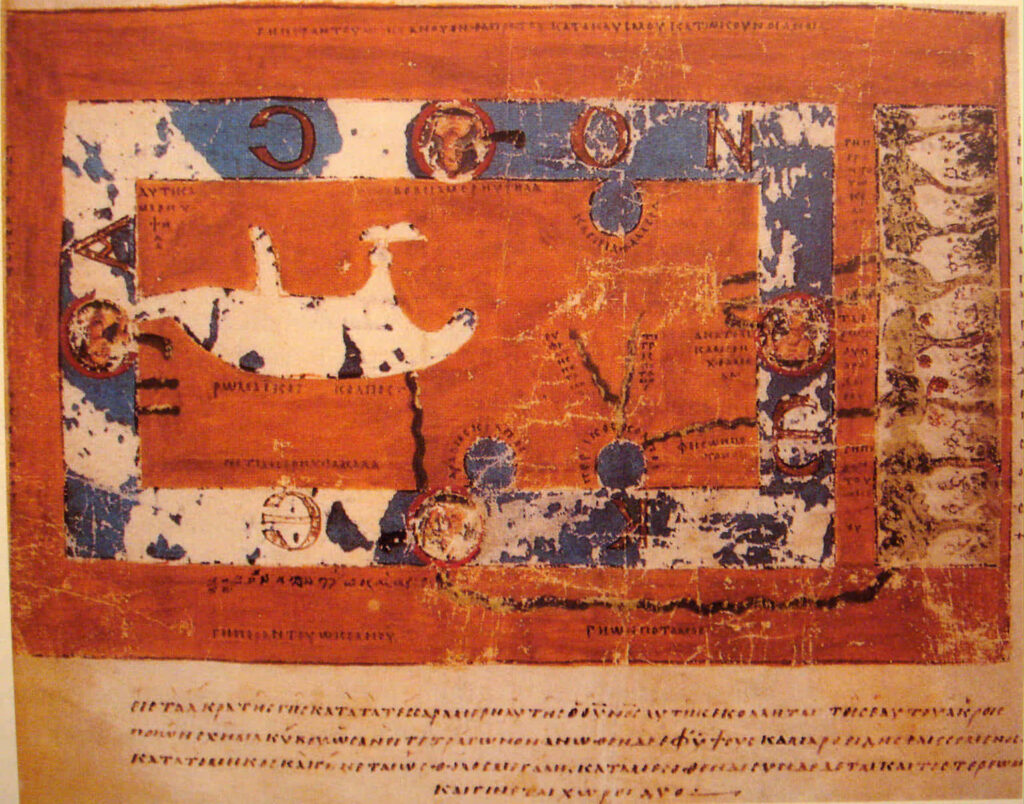
«Against false Christians, who, like the pagans, declare that the sky is spherical»,- in the 6th century Cosmas Indicopleustes («the traveller to India») presents his long and «convincing» anti-scientific explanation in his book «Christian Topography», (Book I).
«It should be noted that his (Cosmas Indicopleustes’, K. A.) teaching was accepted by the church with love. To come out against it meant to criticize the dogmas of theology, which in the conditions of the early Middle Ages was a bold step»,- writes E. L. Danielyan (quoted from the article on the question of the cosmological views of the author of the «Ashkharhatsuyts»»).
In issue No. 5 of 1974 of the journal «Lraber of Social Sciences», which represents the social sciences and Armenian studies of the NAS RA, the article «The reflection of some geographical ideas of antiquity in the works of medieval authors» is summed up thus:
«In the early Middle Ages (V-XI cc.) science in Europe was in decline.
The reason for this was Christian ideology. A product of the decline of science and of Christian ideology was the work «Christian Topography» of Cosmas Indicopleustes (VI c.), in which the author set out his notions of the Earth and of the universe.
However, in the early Middle Ages the biblical geographical notions of Cosmas Indicopleustes were not dominant.
The analysis of the works of some scholars of the same period, as well as of the 7th-century «Ashkharhatsuyts» and of Anania Shirakatsi’s «Cosmology», allows us to suppose that at that time, despite the persecutions of the church, the ancient ideas about the sphericity of the earth, the thermal zones and the antipodes had become widespread». (A. B. Ditmar, O.D. Shabrova, Yaroslavl).
Below are some excerpts from the article «The natural-philosophical views of Anania Shirakatsi» by Sen Arevshatyan, academician of the NAS RA, Doctor of Philosophical Sciences, professor — to show the legacy of pre-Christian science within Christianity.
…«For his time Shirakatsi became the only author who turned to the rich heritage of antiquity and was able, under the conditions of the dominance of the religious-theological worldview, to appreciate the achievements of Hellenic science and to introduce them into Armenian science — in the period of its formation. However, as a child of his time, Shirakatsi was unable to renounce completely the views of the church.
He strove to combine the ecclesiastical with «pagan» science, and moreover — within that «pagan» science he makes a division between «good» and «evil» scholars, between acceptable «good» scientists and «evil» thinkers to be rejected — thereby creating a convenient path for enriching the newly created Christian science with the achievements of the science of the ancient world.
Shirakatsi defends the ancient Greek theory of the origin of the world from four elements»…
…«In the question of explaining the structure of the world Shirakatsi follows the views of the ancient cosmologists — assigning a decisive role to the weights of the elements»…
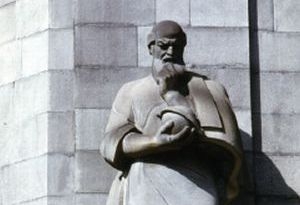
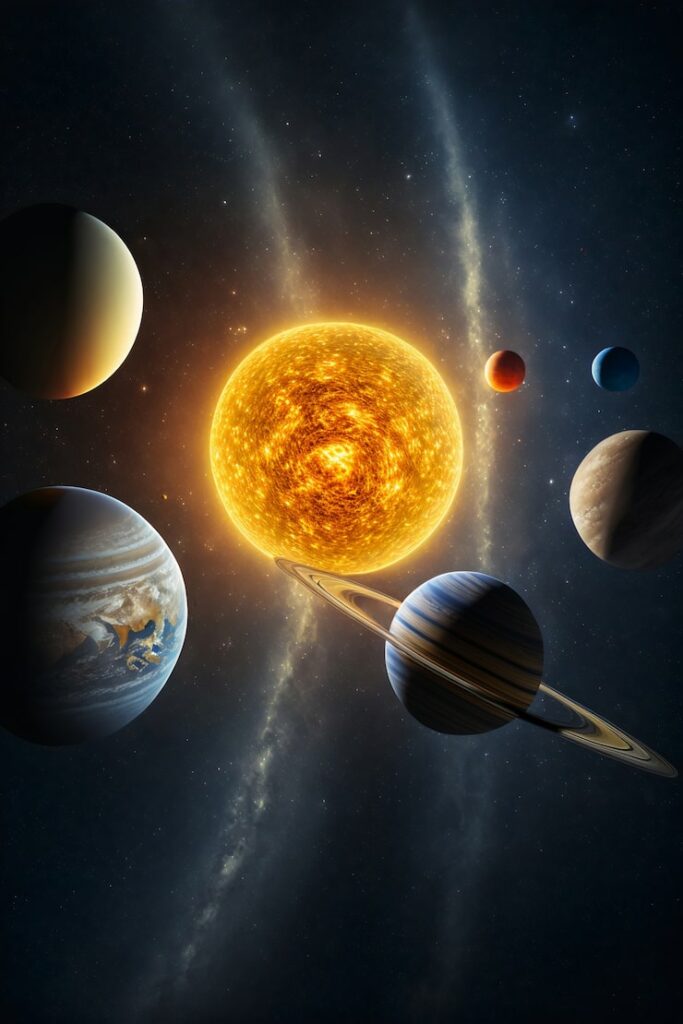
«…In his cosmological system Shirakatsi follows the traditional Geocentric theory, widely spread in the ancient world and in Christian cosmology, and the related notions of the finiteness of the material world».
«The Geocentric theory — having at its basis the idea of the existence of god — of the «prime mover», had been adopted from ancient Greek philosophy by the fathers of the Christian church; more precisely — it had been taken over from the Aristotelian-Ptolemaic system by early-medieval religious philosophy.
Its most valuable tenet was that the earth is spherical.
Eratosthenes, who adopted that Aristotelian idea, measured the diameter of the earth.
Accepting the Geocentric system of Aristotle and Ptolemy — most of the fathers of the church threw out of it the idea of the sphericity of the earth.
Only some more enlightened representatives of Christianity, such as, for example — Basil of Caesarea, John Philoponus and other doctors of the church, defended the theory of the sphericity of the earth. A considerable part of the orthodox clergy clung to the cosmological theory that derives from the ideas of the Bible.
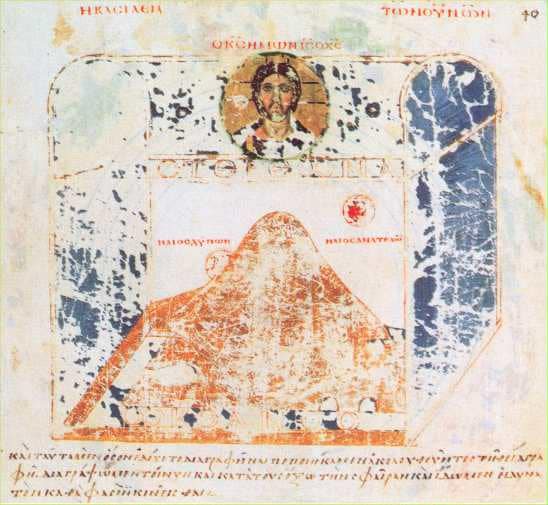
It was elaborated by the 6th-century Alexandrian doctor Cosmas Indicopleustes (Indikopleustes), who in his work «Christian Topography» developed the idea that the Sky is like a chest — with a vaulted lid, at the bottom of which is the Earth.
It is flat, quadrangular and rests on the waters. The Earth is surrounded by the ocean, beyond which is an uninhabited, desert territory. That territory is surrounded on four sides by a high rampart, on which rest the sky, the Sun and the Moon, which move not around the Earth, but around a towering conical mountain peak.
Compared with the achievements of the science of the Hellenistic period, the «Christian Topography» of Cosmas Indicopleustes was a great retreat.
Anania Shirakatsi refutes the main tenets of the «Christian Topography» and defends the positions of Hellenistic science.
«If anyone wishes,- writes Shirakatsi,- to receive from the outer philosophers a convincing example of the position of the earth, then the example of the egg seems suitable to me.
Just as in the middle (of the egg) is the spherical yolk, and around it is the white, and the shell encloses everything, so too the earth is in the middle, the air surrounds it, and the sky encloses all of this within itself».
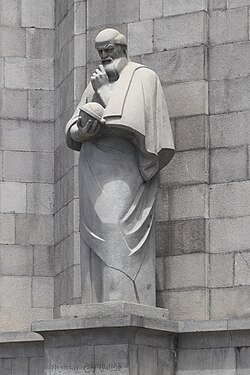
Shirakatsi’s notions of the sphericity of the earth and of the structure of the universe are very clear and definite.
«Now, that upper sky,- he says,- which the Greeks call «ether», and the Chaldeans — «dense fire», … like a vaulted ceiling, smooth, with a round, exact embrace, spreads around the spherical earth with its unceasing and unstoppable rapid rotation, of an invisible substance, which is subject only to rational cognition».

Closely connected with the disputes of the ancient cosmologists about the shape of the earth was also the question of the antipodeans (antipodes), that is — are there people on the opposite side of the earth, does life exist on the lower part of the earth, or is it desolate and uninhabited.
According to Christian cosmology, that question was connected either with accepting the sphericity of the Earth, or with denying the tenet of the Bible that the Earth is established upon the waters.
Shirakatsi — in order not to betray his scientific convictions, finds that at one time he «accepted the existence of the antipodeans» and thought «that this corresponds to the divine word».
But straightaway he tells his dream, in which to his question — «Do other living beings exist on the lower part of the earth, or not», the Sun, appearing in the form of a young fair-haired man, answers — «They do not exist. But (there) I illuminate the mountains, the gorges and the desolate caves».
Shirakatsi thus accepts that on the lower part of the Earth there are «mountains, gorges and desolate caves» and rejects the existence of the antipodeans, only because it does not correspond to «the divine word»…
To be continued…