
«IN THE HEART OF THE LAND OF MUSH — ON THE SLOPES OF MOUNT KARKE»…

Among the most ancient, renowned and sacred places of the Armenians were Ashtishat and, not far from it, the celebrated temple site in the land of Taron — near nine cold springs gushing close to one another, which «is called the monastery of Innakneay because of the IX (9) sweet-water springs, and is called the monastery of Glak after the father superior of the monastery»… (as the 13th-century historian Vardan Areveltsi reports).
The Innakneay monastery of Mush, or of Taron, later — after the spread of Christianity — became «Sultan of Mush St. Karapet».
«Churches were erected upon the temples», yet in the heart of the Armenian people it remained a place of worship for pilgrimages, especially for the joyful nationwide celebrations of Vardavar, where right up to the year 1915 the sons of Armenia gathered from the far and near provinces of Armenia — to express their national devotion and their love for the homeland.
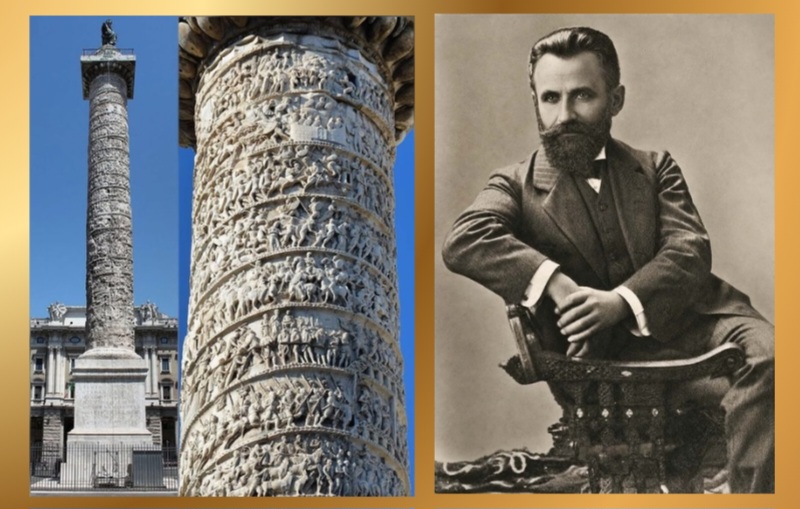
The reflections of the Armenian ethnographer and philologist Hayk Ajemyan (1898-1965), born in Van —
on «Sultan of Mush Saint Karapet» — published in the monthly «Hayrenik», (1926, June, No. 8, p. 112), below…

A
Thousands upon thousands of years ago, when the world of Armenia was living the finest period of its glory and victory, in the heart of the Land of Mush — high on the slopes of Mount Karke,
there rose that magnificent temple of Armenian pagan worship, under whose marble-built arches rested the gold-cast statues of Golden-mother Anahit, Golden-fingered Astghik and Dragon-reaper Vahagn — those ancient gods of the Armenians (hereafter — the Dits, K. A.), before which, before sunrise, the Armenian Kurms burned incense and frankincense and murmured melodies of glorification, while the Armenian virgins, with flowing hair and in white garments, scattered flowers and fragrant oils.

When the righteous sun, with its gold-embroidered rays, abundantly illuminates the House of the Dits of the pagans, and the gleam of the gold-cast statues of the Ancient Dits also mingles with the beams of the sun, the temple fills with fading-glorious and crimson lights.
The Armenian gusans begin to play the kithara and the bambir, the trumpeters sound the horns sweetly. The pagans rise to their feet and the prayer and glorification of the chief Kurm are heard — addressed to the sun-born Dits of the manly vigour, strength, battle and victory of the Armenians — Dragon-reaper Vahagn:
«O thou, Vahagn, Dits of power, thou, Sun made man, O thou Victorious Giant, and Dits of our fathers, thou Sun-born and dragon-reaping power»…
After the invocation of the chief Kurm, the pagan worshippers, with profound enchantment, sing the hymn of Vahagn, whose melody, with a thousand and one harmonious modulations, echoes in the mysterious sanctuaries of the temple:
- «In travail were heaven and earth,
In travail too the purple sea,
The travail held in the sea
The little red reed.
Through the hollow of the reed smoke rose,
Through the hollow of the reed flame rose,
And out of the flame a youth ran.
Fire for hair had he,
And moreover he had a beard of flame,
And his eyes were suns…»:
Thus, for centuries on end, the pagan Armenians of the World of Mush devoted their worship and faith to the Ancient Gods of the Armenians (the Dits, K. A.), until Christianity found its way into Armenia.
The illustrious Armenian representative of the new religion, St. Gregory the Illuminator, with his new apostles, persecuted the Armenian pagans, demolished and destroyed the altars and temples of the Ancient Gods, annihilated the Armenian pagan literature, which immortalized the songs and praises of love and enjoyment, of glory and victory of the ancient Armenians, their hopes and emotions, recorded in parchment books — by the hand of the Armenian gusans and of the singers of Goghtn.
The «apostle» of the Christian religion and of the new faith of the Armenians entered the World of Mush, climbed up the slopes of Mount Karke, demolished and destroyed the beautiful and lofty temple of the Ancient Gods of the Armenians and there, where once stood the golden, marble and bronze statues of Golden-limbed Anahit, Sea-born Astghik and Sun-born Vahagn, upon the ruins of the temple and the fragments of the statues of the Dits, he laid the foundation of a huge and glorious Christian temple-monastery; as a monument — eternal to the new religion and the bright faith of the Armenians.

B
The bitter-cold winter of Armenia has passed.
The snows of the mountains have melted and, flowing down the valleys, have mingled with the rivers, which have swollen in floods and watered the fields and plains, the groves and gardens adorning their banks.
The spring of the world of Taron is opening.
The plain of Mush adorns itself like a graceful bride with countless flowers of every hue. The Meghraget and the Aratsani caress their banks with sweet water-voices and gentle splashes. Up the slopes of Mount Karke the Armenian shepherds graze their flocks. The villager ploughs his field, the householder tends his garden.

Spring gives everyone new life and labour — the tireless and holy labour of righteous earnings, of honest sweat.
The Armenian architect, at the head of thousands of workers, is building a beautiful temple. The villagers come of their own will to help in the construction of this new sanctuary. They carry stone and lime, with song and joy they encourage the efforts and toil of the workers. The vardapets of the new religion offer prayers and invocations for the establishment of the new sanctuary.
An aged Armenian monk with a venerable biblical face kneels in the half-finished sanctuary of the temple and murmurs:
«Establish it in faith
Confirm it in hope
Found it in love» …

With the rays of the sun the work of the day also begins.
And behold, the temple is ready with its marvellous structure. The new sanctuary of the new religion has risen up on the heart of Mount Karke. The solidly built domes of the temple, having as crown and wreath the exquisitely wrought and sky-aspiring bell tower, with pleasing harmony present a soul-delighting scene against the distant horizon or the layers of the blue sky.
Messengers are sent to all the sides of the Armenian world to inform the people that the construction of the temple dedicated to the name of Saint Hovhannes Karapet has been completed, and that soon the magnificent ceremony of consecration will be performed, at which the Patriarch of All Armenians and the king of the world of Armenia must be present — with their retinues.
In a short time the world of Mush becomes a great all-Armenian festive ground. From all parts of Armenia many thousands of pilgrims come towards Taron — to see the consecration of the temple of Saint Karapet.
At dawn the ringing bells of the lofty bell tower of Saint Karapet peal, whose last peals echo with melodious sounds in the valleys of the mountains of Sasun and vanish on the distant horizons.
The pealing of the bells fills the hearts of the Armenian pilgrims with the bright faith of fervour, and all with one voice pray and cross themselves.
The Patriarch of All Armenians comes with his archbishops and the officials of the religious hierarchy.
The king of the Armenians is followed by the nakharars, the generals, the princes, then also the queen with her followers and handmaidens. These are followed by townsfolk, soldiers, commoners, peasants, men and women, old men and children, in a word, the Armenian people with all its classes.
The Patriarch, the king and the queen, the princes and the nakharars, the great and the blessed of the land enter the temple and take their places, while the common people throng in the courtyard of the monastery. The office begins.
The Patriarch of All Armenians with profound emotion blesses this newly built temple.
Before the main altar flickers the bright lamp of the Illuminator, whose dim reflections have mysteriously illuminated the image of the Mother of God.
And behold, the Armenian clergy, «servants of the immortal word», sound the soul-enchanting night-hymn of the apostolic church founded by the Illuminator —
«Awake, my glory, awake, and I too
shall awake in the morning, alleluia…»:
«Awake, new people, a new song
taking up to the Renewer, alleluia…
«Awake, you too who are redeemed by blood,
the glory to the Redeemer, alleluia…»:
The arches and sanctuaries of the temple echo those sweet sounds of the dawn hymn, at the hearing of which the dense multitude of pilgrims kneels with profound reverence in this newly built sanctuary of the new religion, offering its worship to the name and power of Saint Karapet.

A little later the religious glorification dedicated to the sun begins.
The khashkhosh rattles rustle, the cymbals ring with sweet vibrations, the temple fills with mysterious voices, joined also by the clergy — singing praise:
«Morning of light, righteous sun,
shine light upon me… » :
«Issuing from the Father, issue forth into my soul,
a word pleasing to You»…
«Treasure of mercy, of the hidden
treasure make me a finder…»:

The righteous sun has long since risen and warmed the whole created world; through the narrow windows of the temple the luminous rays have fallen inside and mingled with the flickering reflections of the candles and lamps.
The solemn liturgy begins, and the Patriarch of the Armenians — vested in garments woven with gold thread — celebrates the liturgy, during which the ceremony of the consecration of the temple of Saint Karapet takes place.
The stones of the Armenian temple, the sacred vessels and utensils, the images and books are anointed with holy myron, and that huge and beautifully wrought temple of the Christian faith, of the Armenian Church of the Illuminator, now becomes a renowned place of pilgrimage — in the name of Saint Hovhannes Karapet.

C.
Centuries and generations that never return have passed.
The world of Armenia has become an arena of blood and devastation — for the tyrants and barbarian forces invading from the east and the west. Yet the magnificent monastery of Saint Karapet has remained as an eyewitness and silent witness to all the events that have taken place in Armenia.

Its lofty and sky-soaring domes, noble and proud, have remained standing in an indestructible and victorious posture, keeping hope and faith unvanquished in the heart of the Armenians.
It is the feast of the monastery of Saint Karapet. From all parts of the Armenian world townsman and villager turn to its door — to have their wish fulfilled.
It is the great and sacred Armenian pilgrimage.
The fervent and faith-filled pilgrims have set out on the road before sunrise to reach the monastery.

The mist of the world of Mush disperses, the darkness of night scatters, and the good light sways from the east. The sun spreads its golden rays over the well-watered and green-adorned fields.
The many-coloured flowers revive with the breath of warm beams and moist dews. Spring and brook, river and stream turn the colour of silver, and the whole of nature in the world of Taron takes on the appearance of a purple sea.
At this sweet moment of nature, behold. The Armenian pilgrims are coming from the fields and villages, from the valleys and gorges, both on horseback and on foot, the village man and the village woman — decked out and adorned in colourful native costumes, their hearts — filled with Armenian faith and hope, with joyful songs, with joy and laughter, with dhol and zurna, with saz and flute.

Suddenly you see, man and woman, little child and old man, at the sight of the domes of Saint Karapet — kneel down; they cross themselves and, their hearts filled with emotion and their eyes with tears, sing the praise of Saint Karapet:
«Saint Karapet is high above all,
His road is winding and twisting,
Many a pilgrim goes and comes,
Both on horseback and on foot.
He gives answer to the rider.
He grants the wish of the one on foot.
Sultan of Mush, chankli divan,
Wish-granting Saint Karapet …»:
Here too is the Armenian ashugh, who has leaned his back against the massive column of the bell tower and glorifies Saint Karapet:
«Saint Karapet in the midst of the grove,
A twin spring in the midst of his courtyard,
To whose door lamb and ewe come,
The sacrifice is cut on bright Sunday…
Ya! Sultan of Mush, chankli divan,
Wish-granting Saint Karapet».

The Armenian pahlevans have come too, all of whom have been granted the grace and power of Saint Karapet. They kept fasts and abstinence, repented and prayed until they attained their desire.
Look! The pahlevan is now climbing onto the rope. He has put on colourful oyemas, he is barefoot, on his head he has put the arakhchi of Mush — his chest and back are adorned with crosses and beads. He kisses his long helping pole, his «chankli divan», puts it on his head, turns his eyes to the temple of St. Karapet and suddenly, leaping nimbly, begins to climb onto the rope, while the naghara and zurna play pleasantly, and in the air the faith-filled voice of the pahlevan is heard:
«Ya! Sultan of Mush,
Chankli divan,
Saint Karapet
May you stand firm».

The crowd of many thousands watches the game of the pahlevan with great pleasure, and then the dancing and merrymaking of the whole people begins.
The village man and the village woman, hand in hand, forming a round dance, with a thousand and one light and joyful movements, smiling, open-hearted, noble and affectionate, begin to dance the «Mshu khrr» with harmonious modulations and to sing:
«The world of Mush is mist,
Its soil and water are sweet,
Let the north wind drive me,
Let it bury me in its bosom»…
The dance ends. The dancers have turned red and are sweating. It is the hour of rest. The lively village women prepare the table.
Everywhere they have slaughtered the matagh. They give everyone a share and from every mouth the wish «May God accept it» is heard. The simple patriarchal tables are full of white bread, the cheese and the pokhind are abundant, matsun and halva — never lacking. Everywhere joy and laughter, song and delight, «toasts» and wishes.
And so the day darkens, the sun gives its last kiss to the mountain slopes of the Armenians and darkness covers the whole created world. Not a voice, not a whisper. The peace of the night is sometimes interrupted by the voices of the loud and sweet songs of the Armenian ashughs, who seem to be singing a lullaby to the pilgrims of Saint Karapet.

D
The sweet wind of the sea of Van whistles in the midst of the plain of Mush, and from the side of Mount Nimrut the mountain breeze blows gently.
«Adam’s darkness» disperses and from the side of the chapel the twilight seems to appear, when suddenly the Morning Star too, like a lamp hung from the sky, sends forth its gleams.
The pilgrims are still sleeping soundly, soundly, when the bell-ringer of the monastery, rattling his semantron, announces to the monks and the pilgrims the breaking of dawn and invites them to enter the temple to pray.
Everyone springs up and washes with the cold water of the spring and the brooks.
The temple fills with pilgrims. Everyone lines up side by side. In a silent and half-dark corner I too take a place and am soon carried away by imaginary and dreamlike thoughts. I turn my eyes to the old and faded picture of the Mother of God, before which the oil lamp flickers.
O Mother of God, new Mother of God, do you know perhaps that in the place of that old picture of yours there once rose the gold-cast statue of our Golden-limbed Anahit, who was the Mother of goodness and abundance of the World of the Armenians?
Here also is the picture of Saint Hovhannes Karapet.
Thou, Saint Karapet, illustrious figure of the Gospel, apostle of God, forerunner of the lost, Baptist of Jesus, Good Tidings of men, wondrous prophet, much-tormented martyr, thou, lord of seven names, Saint Karapet, take a tongue, speak! Do you know perhaps that in the place of that pale and sad picture of yours, before you — upon an iron-built and bronze-covered pedestal sat enthroned the statue of our Dits Vahagn, that invincible giant of strength and power?
I look at your picture, but what do I see? A Jewish woman, Herodias, has put your severed head on a dish and is gazing at it, while your headless body, your hands chained, lies sprawled in blood.
Defeated, chained and then beheaded, martyred Saint Karapet, open your eyes and see how the people of the Armenians has knelt before your sanctuary and is lamenting your
martyrdom.
As long as you did not exist, Saint Karapet, in the place of that faded canvas depicting your blood-soaked body and severed head, we bowed down to the lofty statue — of Vahagn of the Great Armenians, that invincible and incomparable giant, who drove away even the dragons, and for that was called Dragon-reaper, Dragon-conqueror.
In his day we were invincible, the World of the Armenians was strong and undivided – «The border of the brave — their weapon».
Now we pray with sadness before your picture, while our Armenian pagan ancestors composed songs of victory before the statue of Vahagn, sounded the horn and the trumpet.
While I am carried away by these reflections, the arches of the temple echo with the dawn hymn of the Armenian church, joined also by the sounds of the khashkhosh rattles and the cymbals:
«Awake, my glory, awake, and I too shall awake in the morning, alleluia»…

E
But behold, the Great Genocide came and put an end to this great Armenian corner that had lived for centuries. And while on one side the Armenians were being martyred , on the other side the barbarians desecrated the temple and altar of St. Karapet, demolished the tomb, plundered the two-thousand-year-old marvellous monastery.
And thus, behold, in the first quarter of the twentieth century, the historical existence of St. Karapet, the beloved monastery of the Armenians, came to an end.
The World of Mush became ruined and desolate; its mother people was martyred on its own land, and the bells of Saint Karapet rang for the last time and with a weeping voice seemed to call out:
- Hosanna to the Armenian victims, glory to the blood that was shed and eternal memory to them all!
And now Mount Nemrut is wrathful and frowning, sad, desolate and bereft of Armenians is the plain of Mush, tearing through whose heart the Meghraget flows winding and twisting — keeping in its heart the last sigh and longing of the Armenian martyrs.
Up the slopes of Mount Karke, there, where once rose the magnificent and marvellous monastery-temple of the Sultan of Mush Saint Karapet, now — enormous heaps of broken hewn stones and of lime and earth have mingled with one another, and from that mixture has formed a high and huge, shapeless and purposeless hill, on whose summit, at whose foot and on whose sides spring shoots and flowers grow, the red poppy — a sign of the innocent blood of the Armenians. And the «Brothers’ blood» among the stones reminds the passer-by of the unburied, forgotten and unremembered bodies of the Armenian martyrs.

It was spring. The day was turning to evening; the sun had spread its gold-embroidered rays over the slopes of Mount Nemrut and over the graceful waters of Lake Nazik. The plain of Mush was covered in the evening dusk. A profound, sepulchral silence reigned everywhere, life was dead in the once cheerful, but now desolate World of the Armenians.
Two Kurdish shepherds — one a venerable old man with a grief-stricken face, and the other a vigorous and swarthy youth – had brought the sheep of their bek to graze at the foot of a huge hill covered with hewn stones, to which the torrential rain and the warm sun had given abundant vegetation.
Near that hill the green life and the red sun of the brave and valiant young men of Mush, in the bloom of youth, had been extinguished.
The sheep drank the cold water on the bank of the stream and then sat down row upon row under the shade of the trees.

The two shepherds — apparently father and son — crouched down beside the sheep.
The old man gazed with a sad look at that huge mound of earth and heaved a deep «ah».
The youth observed his father’s sadness and asked gently:
- Papa, what place is this here?
The old man answered with a deep sigh: - Lavo, this hill that you see, here rose the monastery-temple of the Sultan of Mush, chankli divan, Wish-granting Saint Karapet, ah, ah, a thousand ahs!
The old man fell silent, took up his shepherd’s flute and with a melodious sound began to play the praise of Saint Karapet:
Lo-o, Lo-o, Lo, Lo …
Saint Karapet, Saint Karapet,
Sultan of Mush Saint Karapet.
Chankli divan Saint Karapet…