Category: Non classé

  • Ritual Practices among Armenians: Offerings
    Ritual Practices among Armenians: Offerings

    Ritual Practices among Armenians: Offerings

    Continuing the examination of various forms of the ancient sacrificial offering ritual, here are some excerpts from Yervand Lalayan’s article titled “Ritual Practices among the Armenians”:

    “…As first-fruits, gifts of wheat, flour, clarified butter, cheese, butter, oil, grapes, and wine were freely given to both friends and the church, including its clergy. Gradually, these offerings led to the establishment of the following church taxes:

    PTGHI (First Fruits) – In favor of Etchmiadzin, wheat was collected throughout Russian Armenia during harvest time, approximately one pood (about 16 kg) per household, while in the jurisdiction of the Aghtamar Catholicosate, it was about half a pood per household for the benefit of Aghtamar’s Holy Cross Monastery. In this region, only those who owned a bed, i.e., married individuals, were required to pay this tax. They were exempt from it only when they were no longer in the ‘fruit-bearing’ stage, meaning they were no longer capable of having children. If someone refused to pay this tax, the collecting priest would curse them, saying, ‘May you not bear fruit.’

    To collect this tax, vardapets (scholarly priests) and official priests would go around, preaching in the churches. As a gift, they too were given a few poods of wheat, which was called “gavazanaptugh”—literally, the fruit of the staff—referring to the staff held by the preaching priest or the one who holds authority.

    During the same harvest period, the parish priest, along with the sexton, would bless the threshing floors of their parish and receive as a gift about one pood of wheat and half a pood of barley. This offering was called “kalaptugh” (the fruit of the threshing floor), while the sexton would receive approximately a quarter pood or one rpik of wheat.”
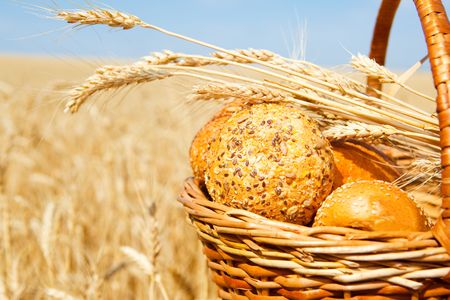
    In cities and large towns, instead of collecting the wheat tax, sextons would go around every Saturday carrying a large basket on their backs, shouting, “Sexton’s bread, dear ladies of the house!” Each household would bring and give an entire loaf of bread.
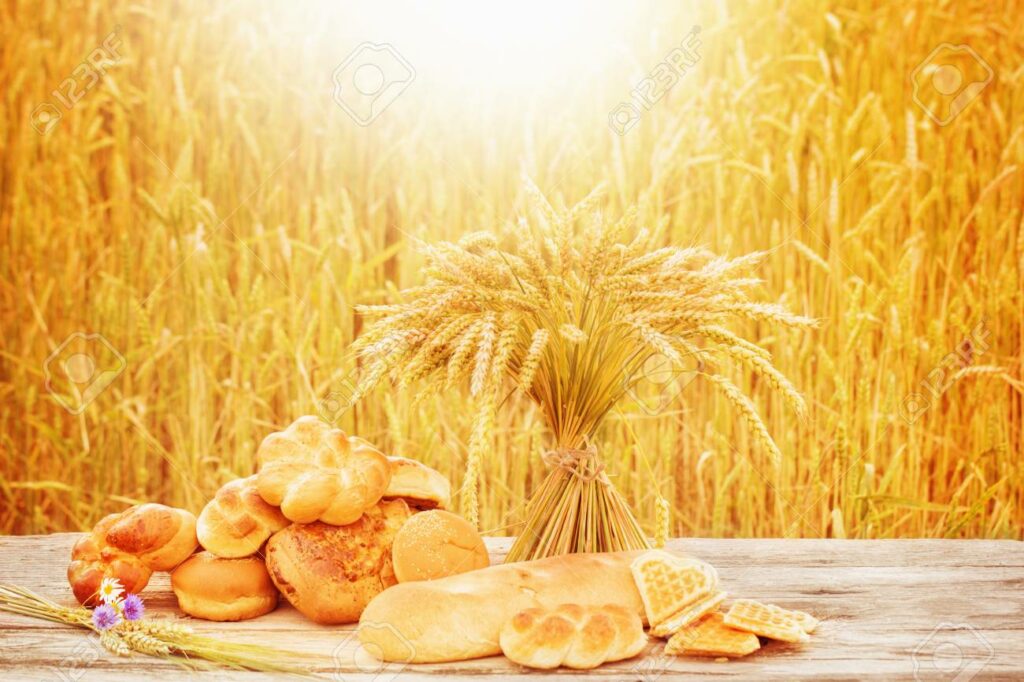
    This custom has also faded, but in some places, such as Old Nakhichevan, Kaghzvan, and Van, the same practice continued only during the seven weeks of Lent. Each household would voluntarily take a loaf of bread to the church weekly and give it to the sexton. If someone was reluctant, the sexton would go to their house and demand it. This offering was called “Yotnahats” (Seven-bread).

    In Javakhk, an old tradition has also persisted: the godfather is obliged to give the “king” — that is, the groom — a pair of yemeni shoes, and the latter is required to give his old slippers to the sexton.

    Cheese – In spring, after the Feast of Ascension, agents would spread out to the villages, collect one day’s worth of milk from the sheep, make cheese, and send it to Etchmiadzin. The same was done in the jurisdiction of the Aghtamar Catholicosate.

    Clarified butter – In the fall, agents would again visit the villages and collect one or half a pound of clarified butter from each household in favor of the Mother See. The same was done in the Aghtamar region, but in addition, they also collected a pair of socks from each house for the monks of Aghtamar.

    Oil and Hemp – During Lent, in the Aghtamar Catholicosate, they collected oil, hemp, and cotton as a tax for the church. The oil and cotton were used for lamps, and the hemp was used to make ropes, both for hanging the lamps and for use on the monastery’s boats.

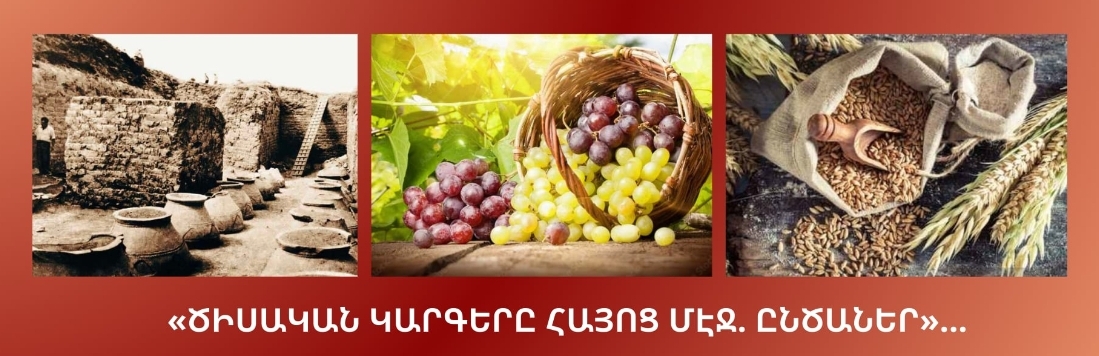
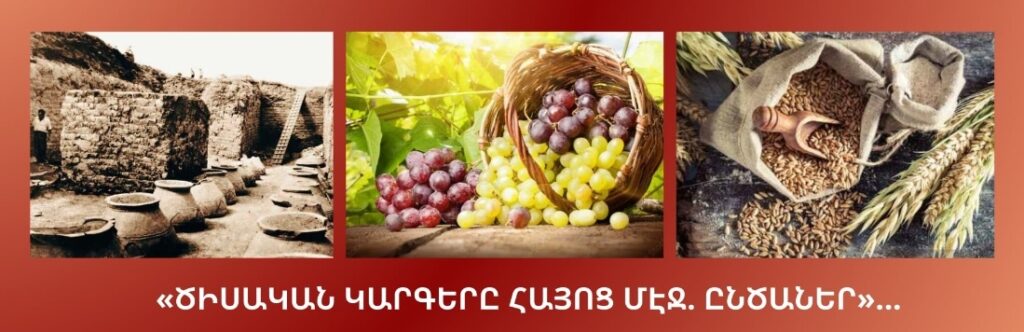
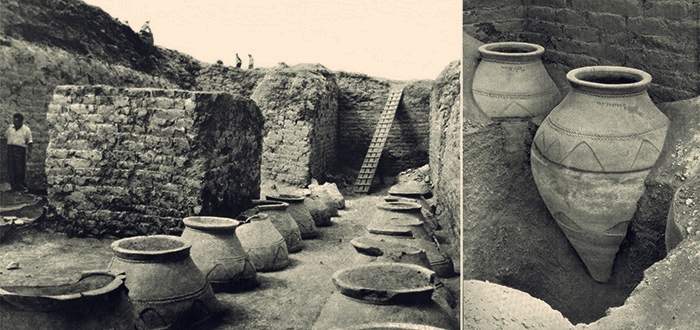
    Wine – When a wine press owner first produced new wine, he would not only share it with his relatives, the priest, and the village elder, but also take a couple of pitchers to the church as “bazhki”—wine to be used for communion during the liturgy. Many old churches had buried clay jars next to them, where this wine was stored. In many places, when wine pressing began, the priest would come to bless the press, receiving grapes as payment.

    Flour – The first time new wheat was milled, some flour was sent to the church to be used for making the Eucharist bread.
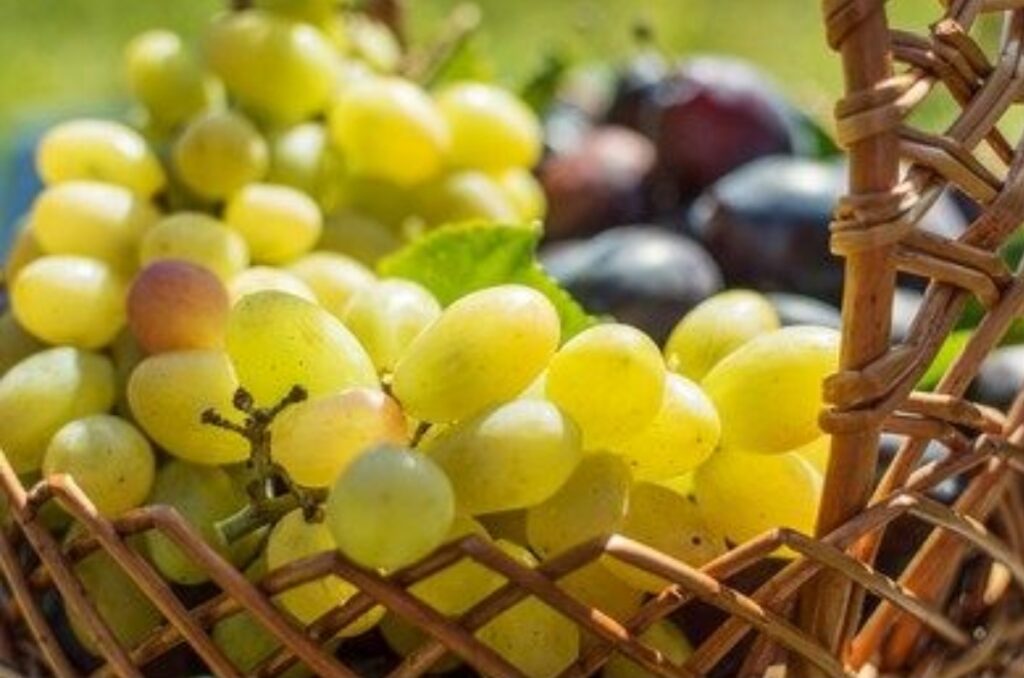
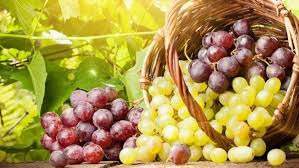
    Grapes (ԽԱՂՈՂ) – On the Feast of the Assumption of the Holy Mother of God, every vineyard owner brings 5-10 pounds of grapes to the church. A portion of the grapes is blessed and distributed to the congregants, while the rest is given to the priests and the church attendants.

    Butter (ԿԱՐԱԳ) – On Holy Thursday, during the “Washing of the Feet” ceremony, each household brings a “khiar,” which means a butter shaped and sized like a cucumber, to the church and gives it to the priest. A small portion of it is blessed by the priest and distributed to the people, while the remainder is kept by the clergy.

    Chickens (ՀԱՎ) – During the Catholicosate of Aghtamar, it was customary in the autumn to collect 1-2 young chickens from each household as a tax for the benefit of Aghtamar. According to common tradition during Easter and the Feast of the Holy Cross, people would bring gifts for the Catholicos of Aghtamar, such as lambs, eggs, baked goods, sugar, and roasted chickens. Many would also give offerings known as “ajhamboor” (a respectful kiss or blessing).

    Soul Offering and Seizure (ՀՈԳԵԲԱԺԻՆ և ԿՈՂՈՊՈՒՏ) – In the past, each monastery would send one or two clergymen once or twice a year to the villages within its diocese to collect “soul offerings” from the relatives of those who had died that year. These offerings could include lambs, sheep, cattle, or money, and they would also take the deceased’s bedding and clothing as part of what was called a “seizure.” This no longer happens, but instead, on the anniversary of the deceased, a ruble or more is requested as a “soul offering” for the church’s benefit.

    …”The firstborn calf of cows and buffaloes is customarily and continues to be donated to the church.”

    To be continued…
  • Ceremonial rites among Armenians: Offerings

    Ceremonial rites among Armenians: Offerings

    The eminent ethnographer Yervand Lalayan, in his article “Sacred Rites Among Armenians,” explored the origins and evolution of the “ritual of offering,” perpetuated among Armenians and other peoples around the world since time immemorial. Below, we present brief excerpts (the beginning was covered in previous articles)…

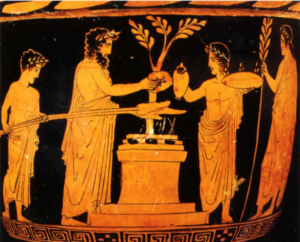
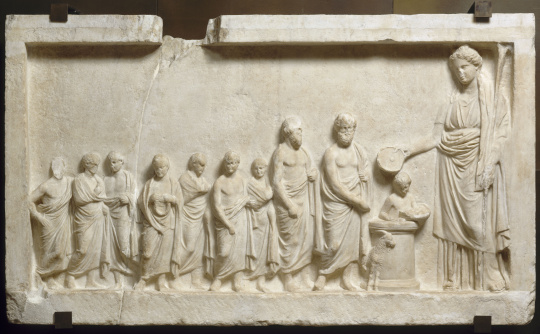
    “Among the Greeks, there was a tradition where the services offered to the gods were the same as those needed by living men; temples were considered the homes of the gods, sacrifices as their food, and altars as tables.”

    In this context, it is possible to demonstrate that the food offerings made to the gods and those placed on the graves of the deceased share a common origin, as both derive from offerings made to the living…

    “Among Armenians, when grapes are harvested for the first time (usually during the Feast of the Dormition), they are sent as gifts to relatives, the village headman, dignitaries, the priest, and then brought to the church to be blessed, and the next day, to the cemetery for the commemoration of the dead. In the Shirak region and in other Armenian villages, during the first threshing, bread is made with flour from this wheat, called “chalaki” or “taplay,” which is offered to relatives, the village headman, the priest, and distributed early in the morning to passersby as a portion intended for the deceased. When the first pears and early apples are harvested, they are sent as gifts to relatives, especially the son-in-law, the village headman, the priest, and taken to the cemetery for the commemoration of the dead during Vardavar, placed in a bag or on a tray on the tombstone. All passersby take them, eat them, and pray for the deceased. When honey is harvested, a portion is reserved for relatives, the village headman, the priest; candles are made from the wax and then brought to the cemetery and the church to be lit. A newborn lamb or calf is offered to relatives, the village headman, or other dignitaries, consecrated to the church, or slaughtered to prepare the “bread of the soul.” The new wine is sent as a gift to relatives, the village headman, or dignitaries, to the church for the communion chalice, and to the cemetery for the commemoration of the dead, where a little is poured on the tombstone before drinking a cup of mercy.”

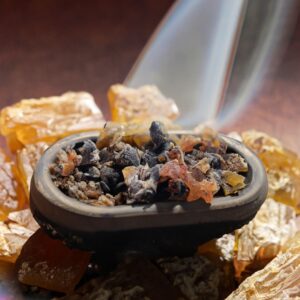
    The above-mentioned facts, observed in all countries, demonstrate that sacrifices are, by principle, offerings in the true sense of the word. Animals are offered to kings, slaughtered on graves, and sacrificed in temples. Prepared foods are offered to military leaders, placed on graves and on temple altars. The first fruits are offered to living military leaders, as well as to the dead and to the gods: in some places, it is beer, in others, wine, and elsewhere, chicha, sent to the visible ruler, presented to the invisible spirit, and sacrificed to the gods. Incense, once burned before kings and in certain places before dignitaries, is burned elsewhere before the gods.

    Let’s also add that dishes, as well as all sorts of precious objects intended to gain favor, are accumulated both in the treasuries of kings and in the temples of the gods. We now arrive at the following remarkable conclusion: In the same way that offerings made to earthly rulers gradually evolve to take the form of state revenues, offerings made to the gods develop to take the form of ecclesiastical revenues.

    “The Middle Ages introduced a new level in the development of offerings. In addition to what was necessary for the communion of priests and laypeople, without counting what was set aside for the altar bread, it became customary to offer various gifts, which, over time, were no longer even brought to the church but sent directly to the diocese. Later, due to the frequent repetition and expansion of these gifts, which were supposed to be intended for God but were in reality bequeathed to the church, regular income for the church began to appear.”

    Among the Armenians as well, the income of the church and its clergy has developed in a similar manner. Initially, pilgrims would willingly invite the church’s clergy to share their sacrificial meal, but gradually, they found themselves obliged to reserve a specific portion for the church and its clergy. Thus, nowadays, anyone offering a sacrifice is required to give the animal’s skin to the church, the right leg to the priest, and the head and stomach to the sacristan.

    Offered as first-fruits, the free gifts of wheat, flour, clarified butter, cheese, butter, oil, grapes, and wine made to friends, to the church and to its officials gradually gave rise to ecclesiastical taxes, which we will discuss later.

  • «And they paid him royal honors»…

    «And they paid him royal honors»…

    Most of the current Christian liturgical ceremonies originate from ancient rituals, shaped over centuries as a result of their reinterpretation (for example, the daily morning prayer service at dawn, the “Aravakal Jamerkutyun” at the “Hour of Sunrise,” the Antasdan ceremony with blessings of the four corners of the world, traditional festivals like Palm Sunday, Vardavar, and others that have preserved ancient customs, the veneration of saints and martyrs as “heroes of faith,” those “worthy figures” who serve as models for men, the canonization and glorification of patriarchs mentioned in the Old Testament, various hymns and chants commemorating “Dedicated Persons,” the offerings, the solemn processions of clergy during various feasts with rose water sprinkling on the attendees, etc.).

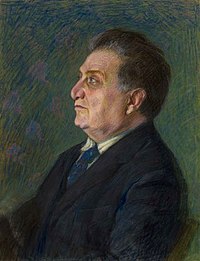
    In certain present-day ceremonial rites we can observe a clear echo of the persistence of an ancient tradition, known since time immemorial and bound up with the worship of the Ancestors: that of the heralds, the “forerunners” (karapet), who walked ahead of the Royal procession. This aspect was addressed by the distinguished Armenian ethnographer, archaeologist, and folklorist Yervand Lalayan (1864-1931) in his study dedicated to the origins of “Ritual Orders,” a portion of which we present below.

    Portrait of Y. Lalayan (P. Terlemezyan, 1930)

    The Armenian patriarchs and kings were worshiped by the Armenian people both during their lifetime and after their death. Cadmus, addressing Hayk, calls him the ‘Greatest of heroes,’ who, after death, becomes the Orion constellation. Vahagn earned the fervent love of Armenian poets. The Arsacids were attributed divine origins, and their statues, which Vagharshak built in Armavir in the likeness of his ancestors and later brought to Bagaran and then Artashat, were shattered by Sasanian Ardashir (as recorded by Movses Khorenatsi, Book 2, Chapter 77).

    Moreover, not only the high priests but also the Catholicoi were involved in organizing the rites of royal worship, as seen in the following words of Faustus of Byzantium: ‘And Nerses the Great established the customs of the kingship with the most virtuous religious observances, as he had seen from the ancient kings’ (Faustus of Byzantium, Book 5, Chapter 1).

    The societal organizations that have yet to fully differentiate clearly show the identity of the worship of living and of deceased rulers. Among savage peoples, at first it was the ruler himself who would proclaim his own feats of valour and the deeds of his Ancestors. Egyptian and Assyrian inscriptions show that this custom persisted for a long time. Later, when the ruler was not a good orator, he would entrust others to recount his deeds. Thus, it gradually became customary for heralds to precede rulers and princes, singing their praises—just as they did for dead, deified rulers.

    That the same occurred among Armenians is evident from the following remnants. Agathangelos (§684), mentioning the names of the princes whom Tiridates sent to bring the sons of Gregory the Illuminator, says that the third prince was “Dat by name, the royal karapet.” Therefore, it is clear that Armenian kings also had a karapet or karapets who went before them, announcing the king’s presence to the people.

    Even to this day, a cleric holding a cross leads the Catholicos’s procession, and as he approaches the church, clerics and choirs go ahead of him, singing hymns and praising him. The same occurs during a religious procession when one person, holding the cross standard, leads the way, and a group of clergy, singing hymns, guides the image of the deity or a relic.

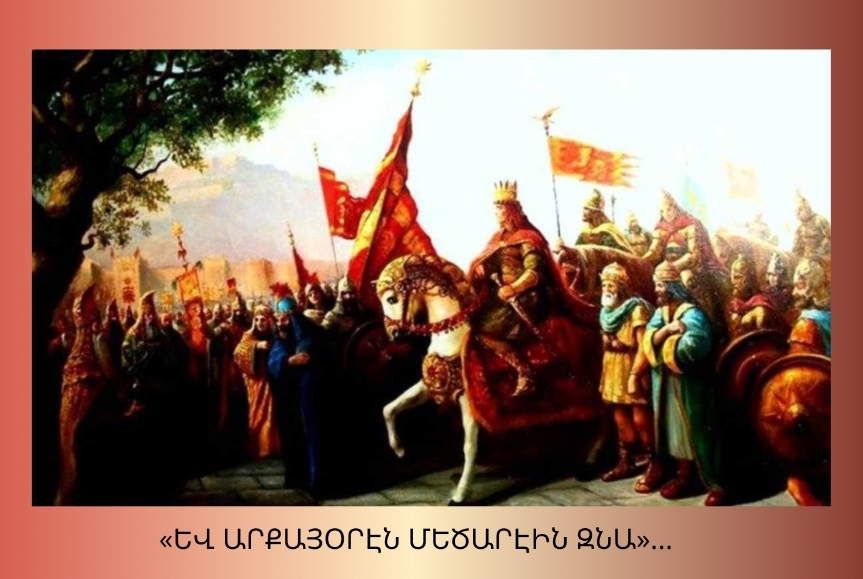
    We also observe the same in wedding ceremonies. When the king (the groom, in this case) returns from the church to his home, a person called the “fox” runs ahead of him, announcing his arrival and praising him and the queen (the bride) (quoted from Y. Lalayan’s Ethnography, Ritual Orders, p. 177).

    That is why, during the wedding ceremony, the “king,” the groom, was honored with “royal, majestic, and regal ceremonies.”

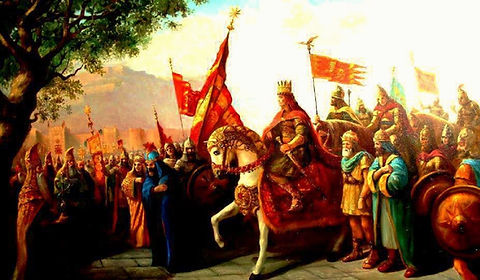
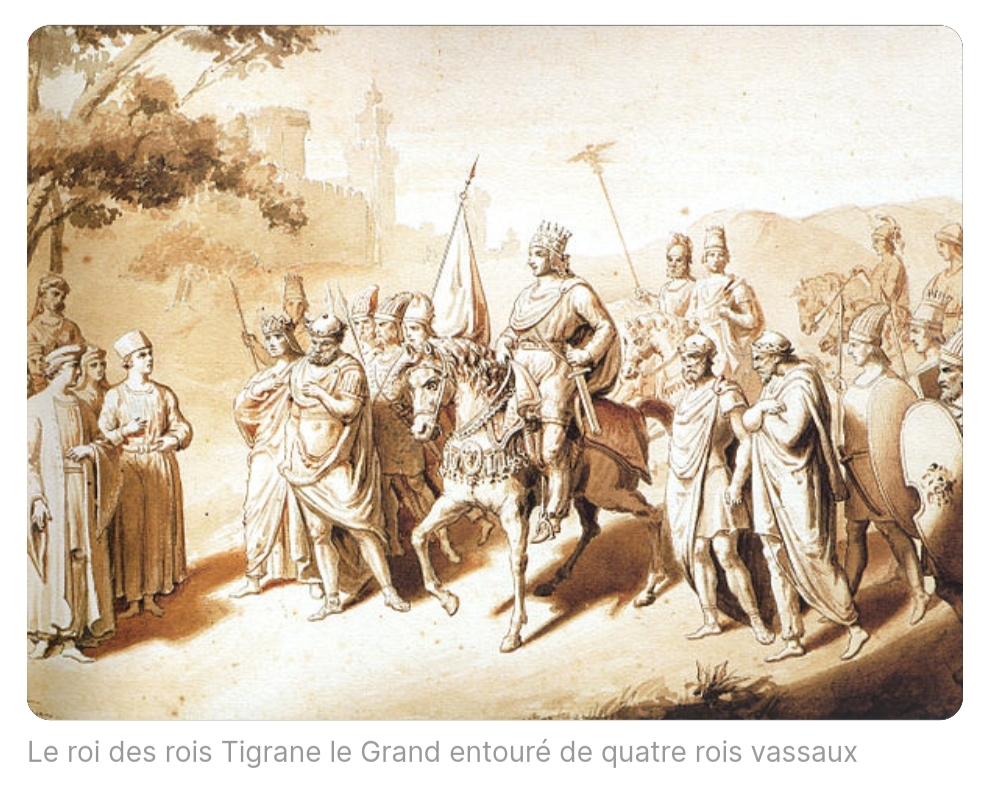
    Tigranes the Great, King of Kings, surrounded by four vassal kings (artist: J. Fuzaro)

    About King of Kings Tigran the Great, according to Plutarch:
    “Many kings were in his presence, whom he had relegated to the position of servants, and he constantly kept four of them with him as companions or bodyguards…”

  • «…AS A FOUNTAIN OF LIGHT»…

    «…AS A FOUNTAIN OF LIGHT»…

    «…AS A FOUNTAIN OF LIGHT»…

    The principles of a life and activity in harmony with Nature and its laws, and consequently founded on high reason and virtue, lie at the basis of the Haykian Sacred teaching.

    By the value system shaped by our Forefathers, generations imbued with a brave and unshakeable spirit have been tempered from age to age, who have steadfastly faced the difficulties of life — considering wisdom and a virtuous conduct devoted to the homeland to be the source of happiness…

    The sons of Armenia, conscious of the necessity of transforming themselves, of returning to the value system of the Haykazuns, are rediscovering the Haykian Sacred teaching that comes from the depths of millennia — by following the courses of the Kurms of the Haykian Brotherhood.

    The Haykian Sacred teaching, transmitted from generation to generation — in harmony with the achievements of science and with universal human values, arms the generations of Hayk with the logic and the worldview acquired through cognition and knowledge, and they, with unwavering will, with the necessary abilities and skill, with a powerful moral spirit and capacities, overcome difficult situations with endurance…

    We are glad to announce that from now on a group for adolescents will also operate — for 14-18-year-olds.

    We warmly await our well-educated, brave-hearted and valiant young people, who are to become the bearers of the Wisdom, of the Light of our Ancestors — forming the elite of the future of the Armenian nation — for the sake of building ever new victories…

    Photo — from the page of Kurm Harut Arakelyan — with gratitude
  • DAY OF COMMEMORATION OF THE MAGI — THE MARGAR DAY OF THE MONTH OF TRE (September 20)

    DAY OF COMMEMORATION OF THE MAGI — THE MARGAR DAY OF THE MONTH OF TRE (September 20)

    DAY OF COMMEMORATION OF THE MAGI — THE MARGAR DAY OF THE MONTH OF TRE (September 20)

    The Magi were the learned men of the Ancient world who comprehended and studied the laws and regularities of Nature and enriched people’s lives with their research, experiments and innovations…

    The Magi were the physicians who soothed and healed pains, the authors of discoveries in various fields of science and the sages who enriched everyday life, whose experience and knowledge later became the foundation of the flourishing, developing sciences.
    Nature, the Universe — as an immense temple, and the Primordial elements — as Creative forces, were their «field of study» and their «object of glorification»…

    The teaching of the astronomers, the soothsayers and the alchemists, transmitted from age to age, prospered and abundantly «bore fruit» later — through rare connoisseurs.

    And today too — thanks to the Haykazun Kurms and Magi, certain chosen sons of Armenia continue the national traditions coming from primeval times — at the «Aramag» school of the Magi, for which we express our gratitude to the Kurmic order of the Haykian Brotherhood and congratulate them — on the occasion of the feast of the Wise Magi.

    For the sake of the Armenian generations — «In one hand a torch, in the other — a dagger» — armed with the Light of Knowledge and with the weapon of establishing Justice, and strengthened by the wisdom of the Magi…

  • THE FARMER AND THE STORK

    THE FARMER AND THE STORK

    THE FARMER AND THE STORK

    For millennia, as a means of conveying a thought or idea, allegory has been employed — with concise, brief speech (fable) or with image (polysemous symbols)…
    Fables, written in a language mocking and censuring the various human characters and diverse phenomena presented through animals, plants or various objects, sound topical even today.
    Here is one of them — from Vardan Aygektsi:

    «The Farmer and the Stork»:

    «The farmer sowed beans and chickpeas on the bank of the river.
    From the nearby reed-bed geese and cranes came out and gathered the seeds.
    The farmer prepared snares and placed them at the edge of the sown field. Towards morning he took his oak club and went to look at the snares.
    The geese and cranes had come and fallen into the traps; with them was a Stork.
    The farmer with his club began to break the necks of the geese and cranes.
    – O kind-hearted farmer,- the Stork addresses him in a pleading voice,- you know well that I eat neither beans nor chickpeas; I am also your good friend, I remove snakes, mice and worms from your fields, I lighten your care. And now, spare me and do not punish me.
    – That is true,- says the Farmer,- but since you have joined with my enemies, you too will perish with them».

  • AN UNLAWFUL — AND THEREFORE INVALID — TREATY

    AN UNLAWFUL — AND THEREFORE INVALID — TREATY

    AN UNLAWFUL — AND THEREFORE INVALID — TREATY

    Joining the struggle of the Armenians living in Armenia and in various countries of the world — we express our protest — condemning and rejecting the Russian-Turkish treaty of «brotherhood and friendship», concluded 100 years ago — in Moscow on March 16 , 1921, whose disastrous, fateful consequences for the Armenian people continue to this day.
    By this treaty, considered invalid from the standpoint of international law, a part of the Republic of Armenia passed to Turkey — the province of Kars, which, like the region of Nakhichevan placed as an autonomous territory under the trusteeship of Azerbaijan, is today deprived of the natives who had lived in their homeland for millennia — the Armenians, and of the cultural heritage they created — as a consequence of the criminal policy consistently carried out against the Armenian population.

    P.S. Some details — in the links below…

    And did you know that the ill-fated Moscow treaty of 1921 in fact no longer existed at all after 1925

    A group of destroyers of Armenian monuments in Jugha

    The Moscow treaty in the pages of the Constantinople Armenian press (1921)

  • …«And why should we not be proud…»

    …«And why should we not be proud…»

    …«And why should we not be proud…» (P.Sevak)

    The 17th-century French engraver and cartographer Melchior Tavernier ( Melchior Tavernier), in 1628 together with Petrus Bertius (Petrus Bertius) compiled and published in Paris a map — entitled — «The World according to Posidonius» (especially for the position of the continents).

    Posidonius was a famous scholar in Ancient Greece — a geographer and historian, born in Apamea — in Armenian Mesopotamia (in today’s Syria, c. 135-51 BC).

    On the map, in the territory lying From-Sea-to-Sea that interests us, rightly, only Armenia is marked — ARMENIA…

  • «…Not every man can drink it — my water is from another water…» ( Sayat-Nova, 1753)

    «…Not every man can drink it — my water is from another water…» ( Sayat-Nova, 1753)

    «…Not every man can drink it — my water is from another water…» ( Sayat-Nova, 1753)

    In the Land reborn from the Ancient World through the waters of the Flood, Water is glorified today — with the worldwide resonance of its mystery…

    May this life-giving liquid, endowed since time immemorial in all beliefs with the power of creating life, of sanctifying, of purifying, of protecting from evil, call to Rebirth the Land of Waters, the ancient and modern-day Nairi of our lyric poets’ dream — returning to blue-eyed Sevan its primordial purity of a myriad springs…

    Sprinkling water or plunging into water — with the wish for a new spiritual ascent…

  • “May the king live!” or “Long live the king” (more precisely, “Sun-abundance to the king”…)

    “May the king live!” or “Long live the king” (more precisely, “Sun-abundance to the king”…)

    ‘May the king live!’ or ‘Long live the king’ (more precisely, ‘Sun-abundance to the king’…)

    This blessing formula has been accepted and well-known since ancient times.

    Enduring through fairy tales, it has reached us.

    Aside from fairy tales, similar blessings conclude many inscriptions of the ancient world, one of which holds particular significance for us, not so much for its content but for the letters used.

    The intense resurgence of interest in studying the traces of past civilizations among researchers in the 19th century was combined with natural sciences and linguistics.

    The study of the rich materials “erupted” from the earth’s depths was further complemented by the deciphering of inscriptions from that time.

    The first scientific explorations raised many questions, which, along with their working reports, were presented by the scholars to the Academic Commission.

    In 1847, French archaeologist, numismatist, and politician Félicien (Félix) de Saulcy (1807–1880), a member of the Académie des Inscriptions et Belles-Lettres, presented his deciphering of the inscriptions from Van.

    Being a museum scholar, senator, and one of the founders of Biblical archaeology, this specialist, who had conducted archaeological excavations, attempted to meticulously, line by line, interpret the writing carved on the rock to the right of the Van Khorkhorian Gate.

    Today, what was written with the alphabet used by others as a variant of Aramaic letters, he read without difficulty in Armenian, highlighting the use of the letter “E” both as a divine “Being” and as the singular third-person “is,” as well as the words “Gavar” (Province), “Zor” (Power), “Por” (Plain), and the endings “gn” and “gni.”

    The laudatory text, with the titles Almighty and Glorious, concludes with the aforementioned blessing:

    “May the king live” or “May his sun be long,” more precisely, “Sun-abundance to the king” (“May the king be abundant in sun”)… (in later pronunciation, “Long live the king”) (in my own “deciphering” in Armenian)…

    Both the Aramaic letters and the other variant derived from them were created by the same hand, and logically, not by nomadic tribes (as some try to suggest)…

    Interestingly, the “Danielian symbols” obtained from the search for pre-Mashtots scripts are in the same quantity as the aforementioned alphabet (let us recall that vowels were written (added) in Mashtots’ “vision” and, as is known, vowels are also missing in the mentioned alphabet. About the profound Mystery of the seven vowels of the ancient “Seven-script,” I will write in a separate note).

    Yet one more reason for the eradication of pre-Mashtots literature…