























ARMENIA AGAINST ROME
(PART 5)
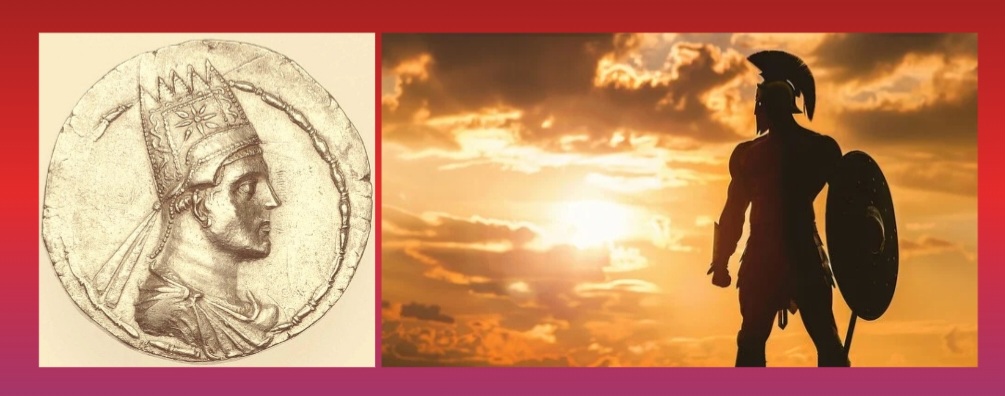
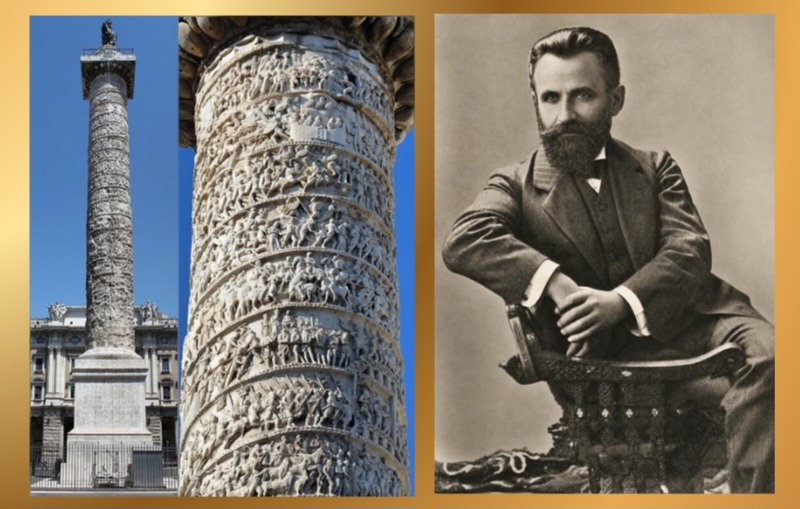
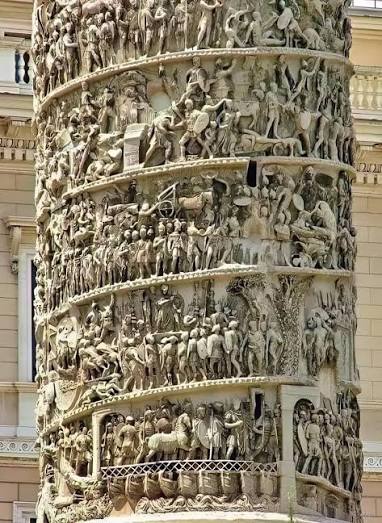
Standing in Italy, in Rome, before the column of Marcus Aurelius, Avetis Aharonyan calls to mind the tempestuous history of the Armenian past.
Below is the continuation of the passage taken from the written account of his reflections upon those episodes.
The beginning is in the preceding publications…
5
BELLO MAXIMO – THE SUPREME WAR
«Supreme war» – thus does the inscription on the column of Marcus Aurelius describe, among other things, the battles waged against Armenia as well.
From the standpoint of the military and political vigour of the Armenian people, of its unbending and tenacious aspirations to liberty, these words “Bello Maximo” (supreme war) in this inscription, set down here in the year 176, are supremely noteworthy and instructive. That is to say that some 220 years after the death of Tigranes (54 or 56 BC), the Armenia «subdued» by Lucullus and Pompey was still fighting ferociously for its independence – and for how many centuries thereafter…
It seems that the Armenian people, faithful to the spirit and the luminous aspirations of its greatest king, always bore within it the disquiet of its great destiny, as though seized by an unexampled travail. It was not in vain that its ancient bards sang:
«In travail were heaven and earth,
In travail too the purple sea»…
A people forever athirst for Light and for freedom…

But let us continue.
Already the immediate successors of Tigranes the Great possess the consciousness of the Armenian nation’s grave and magnificent mission and, in spite of the tragic reverse suffered by their great forefather, they are unwilling to renounce either his vast design, or their title of «King of Kings», or their political independence.
Tigranes’ son Artavazd submits, gnashing his teeth and with bitter grief, to the restrictions placed upon his state and upon his own rights. He has to deal with a man as dissolute as Marcus Antonius, and it is with difficulty that he extricates himself from this glory-hungry, adventuring, woman-mad Roman, who has chosen the East as the arena for his unbridled caprices and his savage instincts.
A poor general, an untalented statesman, lecherous and heedless, he falls all too easily into the trap of the Parthians and loses his entire army, having paid no heed to Artavazd’s prudent counsels. And thereafter the Armenian king, for all his circumspection, proves unable to deliver his country from the encroachments of M. Antonius, who accuses him of conspiracy against himself.
In order to make good in some fashion the defeat he had suffered at the hands of the Parthians, M. Antonius turns his gaze upon Armenia and, when his perfidious snares fail to bring the Armenian king into his hands, he suddenly attacks Artashat without declaring war and, taking Artavazd captive, carries him off to Egypt to serve as an ornament to his triumphal procession – for the gratification of his passion-consumed mistress, Cleopatra.
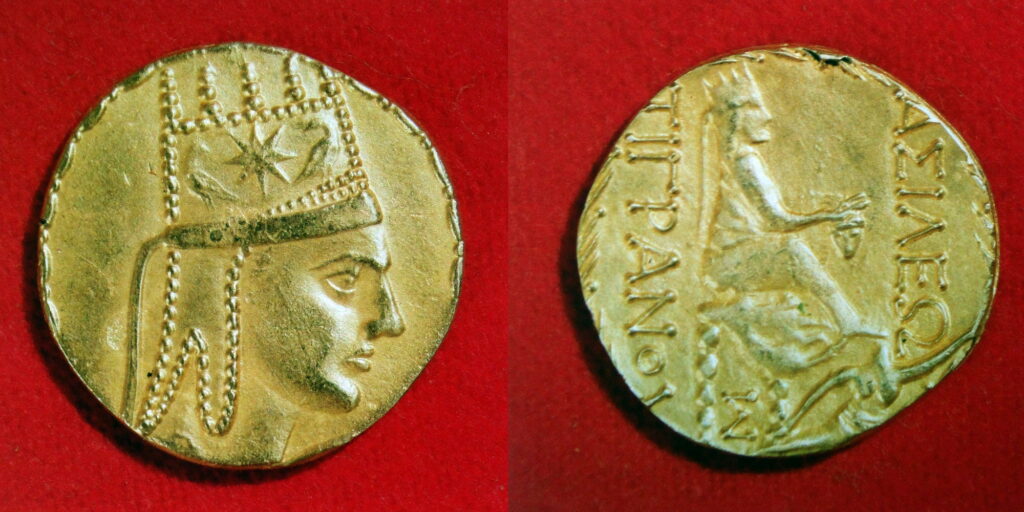
And even here, in this chained and ignominious condition, Artavazd did not for a single instant forget that he was King of Kings and the child of Tigranes the Great. And when Marcus Antonius compelled him to bow his head before Cleopatra, he – in defiance of the threat of death – refused that humiliation before a dissolute woman, with indignation and with contempt.
And the noble-souled Armenian king accepted death, but not the humiliation of himself and of his homeland.
This loathsome and base crime committed by the Roman consul shook the whole Armenian world. The country’s great mourning for the tragic end of its beloved king was equal to the dishonour it had suffered. The name «Rome» and «Roman», already devoid of any attraction, became abominable to the Armenian people. And when, in answer to this pitiable end of his parent, his son and heir to the throne Artashes ordered all the Romans in Armenia to be slaughtered, terrible massacres took place from one end of our world to the other.
The people, maddened with rage, was merciless – which is explicable only by the cruel mores that prevailed in those times.
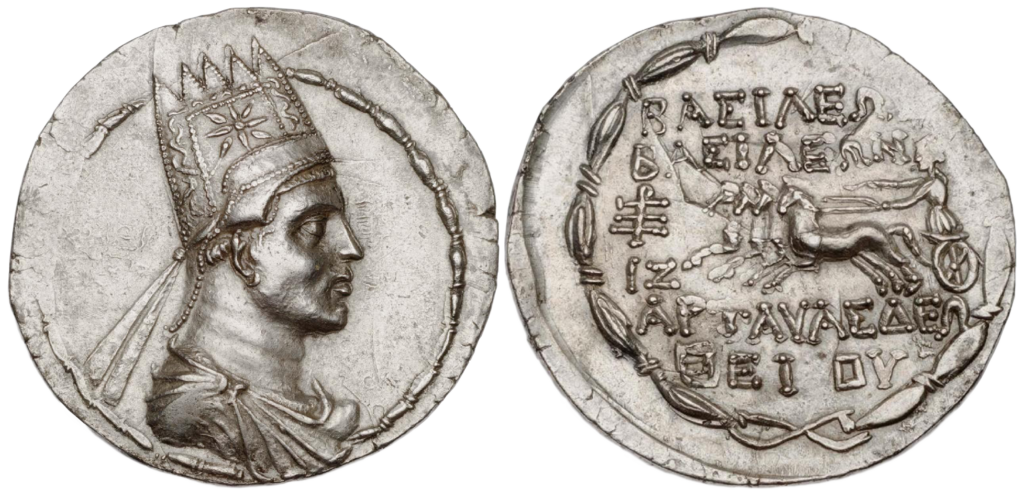
This was by now an absolute war against Rome, one which the Armenian people accepted
with a unanimous will. And it is understandable that Tacitus writes of this:
«Artaxias (Artashes), the son of Artavazd, whom his father’s tragic death made an implacable enemy to us, was able, with the help of the Arsacids, to defend both his own person and his dominion».
Two points in this testimony of Tacitus are important.
First, that the grandson of Tigranes the Great, Artashes, still vigorously continues the battles his grandfather began against Rome; and second, that in order to defend itself against the encroachments of the West, Armenia is obliged to extend its hand to the Parthian Arsacids.
In other words, the Asia Minor equilibrium that Tigranes the Great had established is by now upset, thanks to the Romans, and Armenia is seeking support for its very existence in the East. That is to say that already in the days of Tigranes the Great’s grandson, the lamentable consequences of Armenia’s diminution and fracture come to light.
The solid Armenian dyke between East and West has already been destroyed; Armenia, weakened and bowed down on account of the Romans, looks to right and to left and seeks a support outside itself.
Rome thereafter endeavours, in order to render impossible any conceivable alliance in arms between Armenian and Parthian, to appoint kings in Armenia compliant to itself and to be rid of the endless insurrections of the Armenian Artashesian line. In other words, to abolish the dynasty of the true House of Hayk.
But attempts of this kind on Rome’s part always remain without any serious consequence.
The Armenian people had bound its independence very closely to that royal house which was intimate and its own. It persistently and stubbornly rejects foreign princes alien to it, who in its eyes always remain the embodiment of Rome’s hated overlordship rather than of national independence.
To all appearances, the free, solid and conscious Armenian national independence created by Tigranes the Great and by his forebears has already borne its fruits. The proud and unbending spirit of Tigranes the Great lives on in the hearts of the generations; the great national movement created by his mighty arm no longer comes to a halt.
And for Rome, Armenia continues to remain the most rebellious and the most unsubduable of countries, one that wrestles on stubbornly.
And every time Rome wins a victory over Armenia – even for the sake of some fleeting dominion – it is counted the greatest success in the life of this or that general and causes boundless jubilation in the Senate, by whose pleasure and command new coins are immediately put into circulation in commemoration of an event so fortunate for Rome.
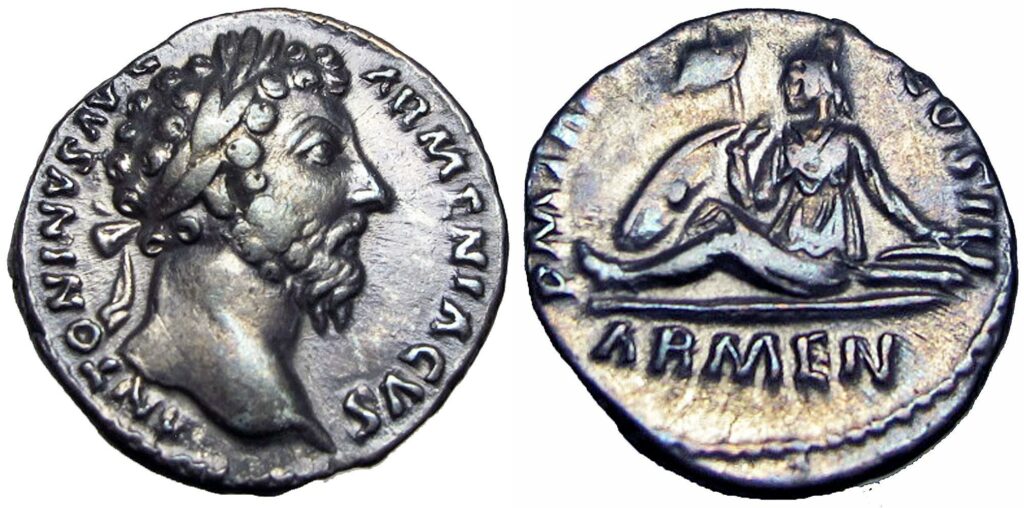
Now it is the vainglorious Marcus Antonius who strikes a coin bearing his own image and that of his concubine, with «Armenia devieta» – «Armenia defeated» – inscribed around it; on another occasion, as in the time of Augustus, on a new coin symbolizing Armenia’s defeat one sees the traditional «Victory» (Victoire) restraining a ferocious bull – Armenia – with this legend: «Armenia capta», that is, «Armenia taken captive».
And finally, here before me is the inscription on this column, where together with the Germans and the Parthians Armenia is commemorated as rebellious and struggling, subdued after a furious battle: «Bello maximo Armenia devietis» – «the Armenians defeated».
And on this occasion M. Aurelius and the general Lucius Verus, who fought in the East, are styled «Armeniacus».
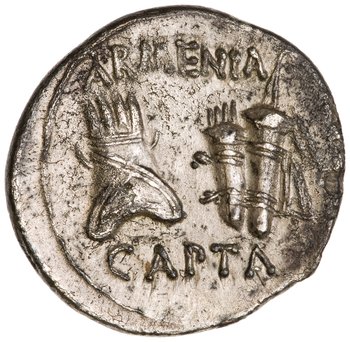
The fact remains, however, that all these battles and these victories were powerless to restrain Armenia once and for all. It is characteristic, from that standpoint, that on the famous and well-known tablet of Augustus, Armenia – contrary to these victories trumpeted by Rome’s historians – is not listed among the provinces annexed to the empire: it is once again independent and, at best, no more than an ally.
And it was this ever-agitated, high-headed, restless and rebellious condition of our world that Virgil summed up in his symbolic and celebrated line: «And the bridge-spurning Araxes seethes between its banks».
This is the greatest testimony, confirming in so vivid a manner the freedom-loving temperament and the martial spirit of the Armenian people.
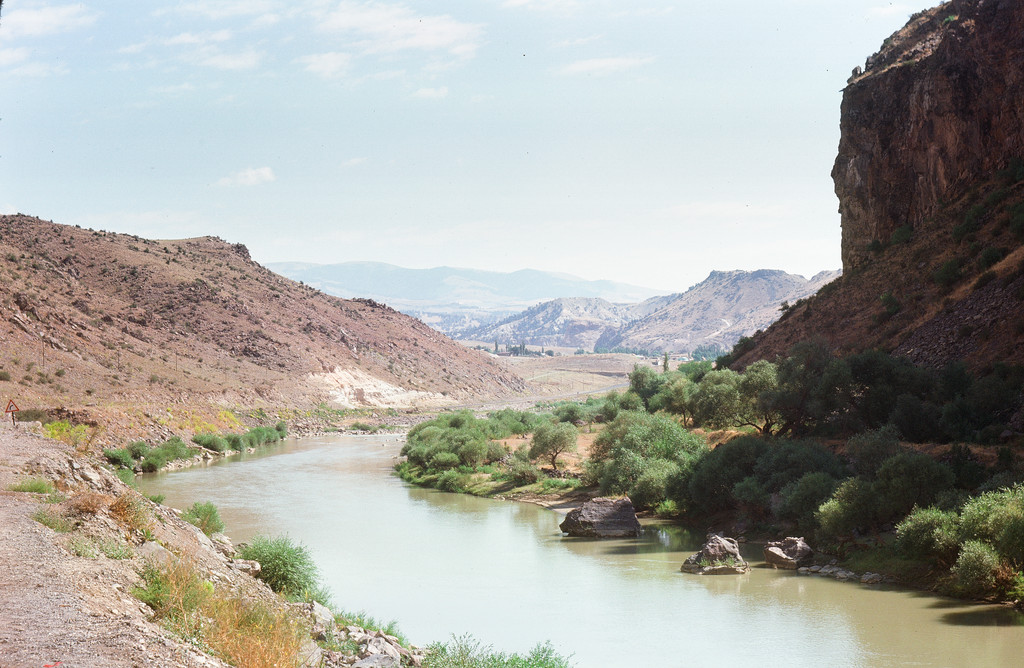
After numerous military undertakings aimed at calming the bridge-spurning and restless Araxes, Rome at last had recourse to the best method from the standpoint of its own interests. It recognized Armenia’s absolute independence and forged a treaty of friendship with it. Thus began, in the days of Nero, the reign of the first Arsacid Armenian king in Armenia.
The journey of our Trdat the First to Rome on that occasion was a major political event not only in our history but in Roman history as well. The Armenian king travelled as a mighty and independent monarch: with a cavalry force of three thousand, with a magnificent retinue, accompanied by his queen, who sat upon a beautiful steed, a golden helmet upon her head and her hair given to the winds – and who, it is worth saying, stands as the finest Amazon of the ancient world, having covered three thousand kilometres at a single stretch.
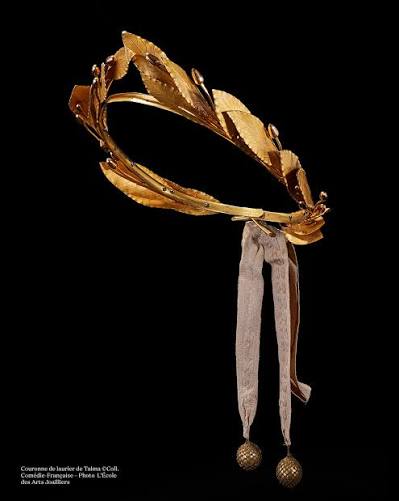
This journey of the Armenian king with a retinue of many thousands, carried out at Rome’s expense, cost the empire an enormous sum. From the frontiers of Rome’s dominion onward, by order of the Senate, honours befitting a great sovereign were rendered to Trdat the First all the way to Rome, where Nero received him with unheard-of splendour. The capital of the empire had never yet witnessed such lavish festivities as those with which Rome glorified the Armenian monarch come from the distant East. To crown it all, Nero with his own hand placed the gold-embroidered royal crown upon the head of Trdat of Armenia.
Certainly, profound and far-sighted Rome was not making all this expenditure and sacrifice merely to entertain the crowd or to honour a prince of the East. By this means the Senate was striving to put an end to the wars between Armenia and Rome and to establish a lasting peace on our frontiers.
A particular good fortune fell to Trdat the First. Brother to the Parthian Arsacid king and at the same time crowned in Rome, in his days Armenia stood as a kind of haven of peace between East and West, that is, between Rome and Ctesiphon.
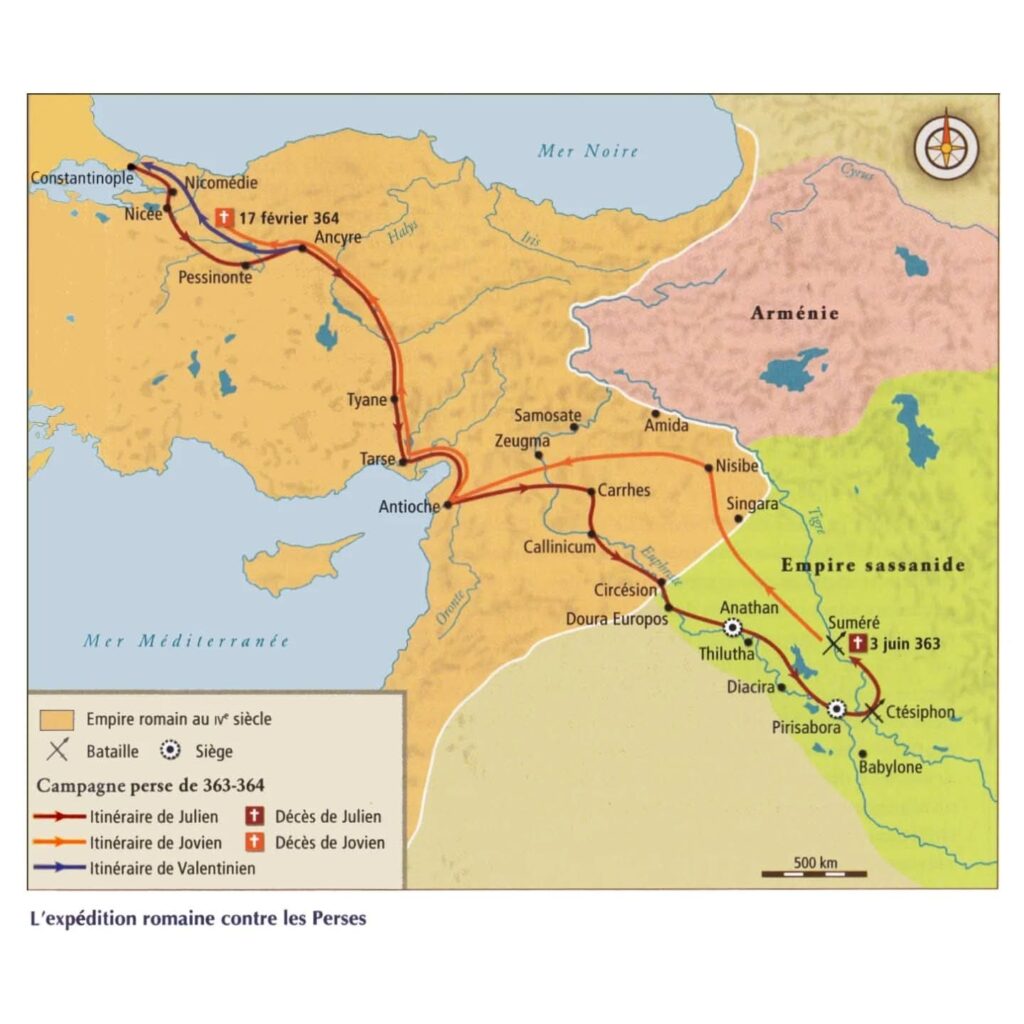
This tranquillity of our world naturally lasted only as long as the interests and the will of its two great neighbouring states required. Armenia’s fate was not in its own hands, and our later Arsacid kings – for all their far-sightedness, all their prudence and vigilance – always remained politically before a dangerous dilemma: Rome, or Persia?
And this cruel dilemma hung thereafter like a sword of Damocles over the Armenian world throughout all the centuries – down to the most modern times, down to our own days.
This is the whole of our history, our fortune, our misery and the greatness of our destiny.
How badly our history was handed down to us in our childhood days!
At least that is how my generation was educated: a rather colourless succession of Armenian kings, an Armenian homeland forever in a bowed condition, the greatness and the might of the enemy – of the foreigner – the devastation wrought by tyrants, the invasions of barbarians, and the boundless wretchedness of our nation, which, like a nightmare, descended in a cold autumnal fog upon our shivering childhood souls.
The wisdom of our history, its contemplative and soul-nourishing periods, as well as the true life and likeness of our renowned kings and incomparable generals, almost always either escaped our teachers or else were belittled and made insignificant by comparison with foreigners.
The spirit of Tigranes the Great and the impetus he gave to the Armenian world have been little understood and quickly forgotten. And yet it was precisely in his days that the pulse of our race had its healthiest and most vigorous rhythm. And what of the great Arsacids – Arshak, Pap…?
As I have already said, there is no history greater in its upheavals, more tragic in its crises, more moving in its episodes, than ours.
How badly our history has been handed down…
To be continued…