
























ARMENIA AGAINST ROME
(PART 4)
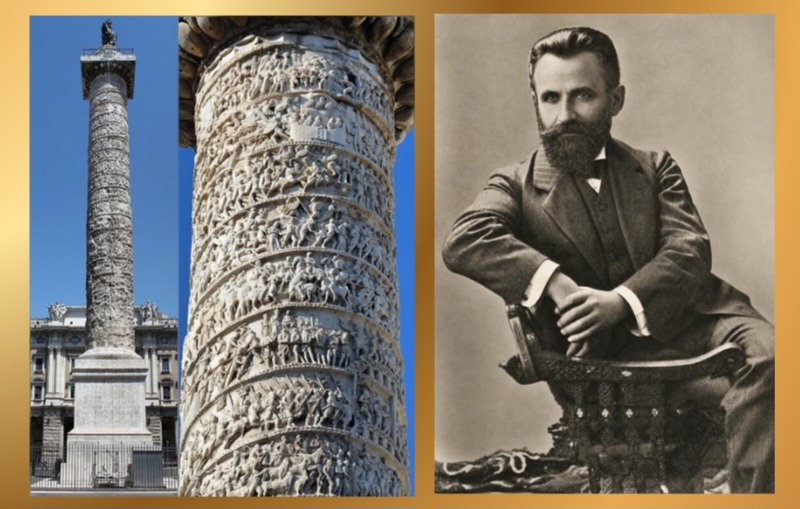
«Rome is a succession of the deeds and the shatterings of giants, one that stuns a man. Here the mightiest and the most complete of human passions have clashed with one another.
Man – that eternal enigma even to himself – one day entered here, like a tempest, upon all those stages of history towards which the later generations have striven, having as their guide and their goad a thirst for glory, an unbreakable strength, a boundless craving to rule, which reaches as far as the madness of deification»… (Avetis Aharonyan)
Below is the continuation of Avetis AHARONYAN’s article «ARMENIA AGAINST ROME», which was published in the magazine «HAYRENIK» in May 1929 (no. 7, p. 50).
The beginning is in the preceding posts…

4.
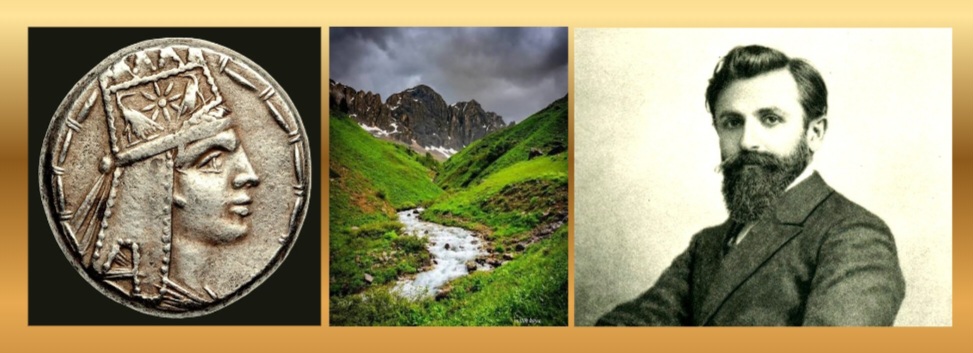
TIGRANES THE GREAT AND THE FATE OF ASIA MINOR
UNFORTUNATELY, the real and exact nature and character of these first battles between Armenia and Rome is wanting to us. Our national historians – even Khorenatsi – are either mute or else very terse and confused. The Greek and Roman historians are partial and often unacquainted with the affairs of the East and with its peculiar conditions.
Their accounts are for the most part accommodated to the interests and the ambitions of their own country.
Plutarch in particular, who writes most of all about the period of Tigranes, is manifestly biased and stands in need of cautious and thorough criticism.
His history is in many places dubious and sometimes an outright fabricated legend – in particular that scene in which Tigranes the Great, defeated, supposedly goes to Pompey’s camp and lays his crown at the Roman general’s feet, and that in the presence of his own rebellious son, Tigranes the Younger. All of this seems to us a mere fable, far from the truth.

The same may be said of the meeting between Mithridates and Tigranes after the latter’s defeat. Under Plutarch’s pen Tigranes is both petty-spirited and unmanly, devoid of noble feelings, whereas Mithridates is compassionate, virtuous and noble.
The moral personality of Tigranes has not been much clarified. But it is beyond doubt that he must have known the Romans well through the wars of Mithridates and that he was certainly conversant with, and fond of, Western civilization.
The very building of Armenia’s new capital, Tigranakert, is proof of the Armenian king’s high taste, his civilizing aspirations and his political wisdom.
This magnificent royal city, which by the will of Tigranes seemed to burst forth out of the ground, was indeed a marvel, uniting within itself all the splendour and all the art of East and West.

Greek sculptors were summoned to adorn the city and, no sooner was the theatre finished than Greek actors were invited to perform the finest works of Hellas. Numerous statues and other masterpieces of art Tigranes transported from the Greek cities to Tigranakert, in order to beautify his capital.
Already at his court Graeco-Roman civilization held sway.
Everyone spoke and wrote in the Greek tongue, and his son and heir to the throne, Artavazd, even composed tragedies and orations in Greek, of which even Plutarch speaks with praise.
Tigranakert was not the only one.
Numerous other cities rose by the Great King’s command in various parts of the Armenian world, for commercial or political purposes.
Whole provinces were displaced and settled elsewhere. Even the nomadic Arabs, by Tigranes’ command, abandoned their barbarous way of life and were trained to a settled existence, for the sake of trade and of civilization.
Despite his numerous wars, this great king thus found time to set the diverse tribes of his vast empire upon the path of civilization.
The whole country was astir, as though moved by a magic hand, to create and to build up.
The subject nations had at last found peace under the authority of the Great Monarch. The mutual bloodshed of petty tribes and princes had ceased. Syria, ever wretched and storm-tossed, had at last found rest, and the keen, beneficent and constructive Armenian spirit, under the leadership of its mighty and wise king, was impelling the whole of Asia Minor towards a luminous and prosperous future.
And all this in barely twenty-five years.
This is what Plutarch, in vindictive and unjust language, calls «twenty-five years of tyranny», and the greatest monarch of Asia Minor he unworthily styles a «barbarian».

The defeat of Tigranes and the fracture of the state he had founded are not a purely Armenian national question. It is a great historical reality of universal significance, whose consequences weighed not only upon the fate of Armenia but upon that of all Asia. Asia Minor, tormented and trodden underfoot for centuries, had at last found in the person of Tigranes the straight road to political unity, whereby to walk towards unity of civilization.
East and West, with their Cyruses, their Dariuses and their Alexanders (the Macedonian), had turned the whole of Asia Minor into a great and busy boulevard, through which world-conquering nations passed like tempests, trampling and bloodying the local tribes beneath their brutal heels. And it was for the first time that out of the bosom of the peoples of Asia Minor – out of Armenia – there rose a mighty king who, conscious of the interests of these suffering and wronged peoples, barred the road of the world-conquerors advancing from both sides, under the high motto «Asia Minor for its native inhabitants».
And it was Armenia in particular that was called, by virtue of its exceptional geographical position, to fulfil this great political mission throughout the whole of Asia Minor.
The Armenian Highland, with its sky-reaching, awesome mountains and its dark gorges, the central plateau of our whole world, which like a natural citadel commanded all the countries around it and descended on the one side towards the Caspian Sea, Persia and Mesopotamia, and on the other towards the Black Sea and the Mediterranean.

Armenia was the great gateway of the whole East, and it was Tigranes who first grasped the first-rank political and military value of his homeland and who, with a thought of genius
and with a solid will, resolved to keep the key of that gate in his own creative hands – to the glory of Armenia and to the welfare of the whole of Asia Minor.
And the Great King worked a miracle.
The many petty tribes, perpetually at odds and tearing one another to pieces in endless bloody clashes, were at last uniting and growing calm beneath the sceptre of the Armenian King of Kings. The phenomenon was new, and its beneficent consequences were bound to be incalculable and manifold.
Asia Minor was ceasing to be the boulevard of world-conquerors and was striving towards its own independent development and its life as a state.
It is impossible to deny the civilizing advantages bound up with Rome’s dominion; but in the present case, by trampling upon the newly rising Armenian empire in Asia Minor, Rome brought to nothing countless fine possibilities and inflicted immense and irreparable harm upon the peoples of the East.
By shattering the newly formed and promising unity of Asia Minor, which was the work of Armenian political genius, and by applying the well-known method of «divide and rule», Rome at a single stroke restored in these unhappy lands their former subordinate, nerveless, spineless condition, and wretched Asia Minor became once again a lamentable stage for the endless and bloody struggles of East and West.
The powerful state founded by Tigranes, which was to have been the natural and irreplaceable ideological and civilizing intermediary between East and West, was removed from the middle, leaving a clear field to the peoples once more invading from all four sides.
Asia Minor, thereafter, never again found its independence, its unity and
its peace, and always remained trodden underfoot, storm-tossed and devastated – down to our own days.
To be continued…