




















«AND THE SUN RISES
WITH THE MAJESTY OF A HIGH PRIEST»…
Hayk — with its provinces usually separated from one another by natural boundaries — by mountains and river basins, the entire Armenian Highland with its geographical position and its historical course have conditioned the character of the Armenian nation. The culture of the Armenians, shaped by the national worldview, has often been influenced by political events, by customs imported from abroad…
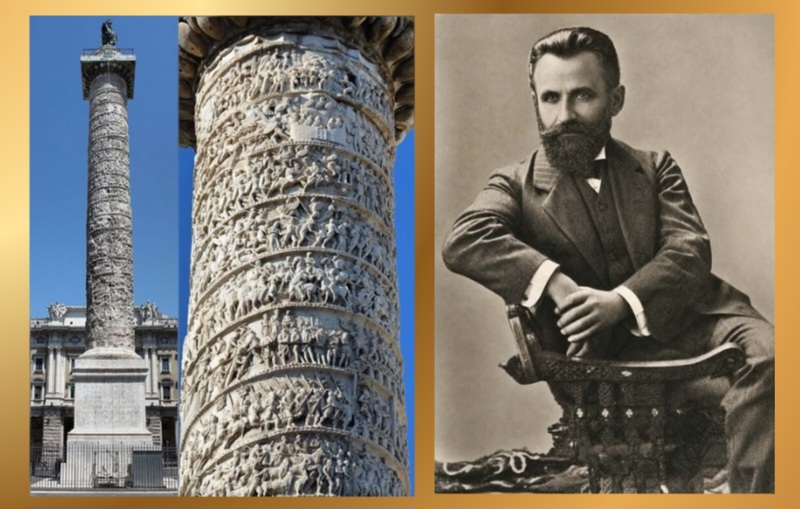
«The spiritual life of the Armenian people has undergone great ruptures and has been subjected to such unexpected turns that at times it was simply interrupted — entirely losing its connection with what came before.
Alarming political upheavals so shattered the chain of historical succession that at times the next generation fell into such ignorance and such a helpless state with regard to the not-distant past as we — today. The fragmented condition of the country and the frequent interruptions of the normal course of life hindered the elaboration and preservation of unified traditions.
As soon as the political storms calmed down, the acute periods of misfortune were left behind, and life entered its usual course, interest in the past awakened, the study of the monuments saved from the alarming times began — with the aim of understanding the connection with ancient times, of linking the present with the past in some way». (Nikoghayos Adonts).
At the end of the 19th century and the beginning of the 20th century, the heroes fighting weapon in hand in the liberation struggles waged by the Armenians were also encouraged by our intellectuals, pen in hand.
«The poet’s dreams and longings collided with leaden reality, were steeped in the sea of blood of the Armenian massacres, shattered or took on the crimson of blood. He tried «to weave a future, to create a world», whereas he could not present the painful truth, for prison and exile were ready. And often the poet turned to myth, to vision, to ballad, to fairy tale, to allegory and to dream, and with the boundless possibilities and genre particularities they offered he was able to create images of epic and popular heroes, as well as to glorify the eternal values of the survival of the Homeland.
At times, too, the spirits of freedom and the valiant men of pagan-chivalrous times were invoked — to inspire the heroes of the new times, to lead them to struggle and to build the desired world.
We read one of Isahakyan’s notes from the spring of 1896:
«O ancient world, mysterious world, dark and bright world, wonderful and marvellous world… «people» of the deep and inscrutable world. You were not weak, cowardly, lustful, tender like us, you were brave, strong, terrible, giants, the earth trembled under your feet, and the sky shone above your heads like a crown…
Awake from your graves, let your strength spread over us, let your mysteriousness and your aspirations, your fire and your flame possess us, warm us…
O ancient world, lavish, gigantic, tremendous world»…(Av. Isahakyan, Memorial Book, Yerevan, 1977, p. 231).
These pagan outbursts, the glorifications and invocations of manly strength and power, of free life and delight, were the daring ventures of the innovative poet, whose powerful echoes were heard later in Western Armenian poetry and became a dominant art — the «Pagan current».
Moreover, Isahakyan was one of those exceptional ones who invoked the Strength, the Might, the Valour, the Fire and the Flame of the mighty spirits of primeval times — in order to criticize the philistine, feeble and cowardly milieu of his days, to arm and to encourage the heroes of the new day.
He did not idealize the Ancient gods (the Dits, K.A.) and did not make them literary heroes, as other poets did.
He discovered the genealogical miracle of divine and mythical epic heroes in Azatn Massis — in the inner eruption of his Homeland, in the unprecedented exploits of the popular heroes of those days and in the immortal creation of our great epic» (quoted from A. Kh. Khachatryan’s article «Avetik Isahakyan’s epic poem «Massa Manuk»»).
To the armed Armenian braves fighting against violence — to the heroes «turned into holy lions» he wishes «Sun» — health and a bright life — in the spirit of the Haykazunis, who for millennia have glorified the Sun and the Light:
«Let us wish the Sun to the great braves –
To Andranik and to Vardan,
To Serob, that limpid spring …
To those thousand – thousand valiant lads,
Who have no number and no count,
those who, like the stars,
Glitter and have no name,
To the brave and fearless lads,
To those braves, the eye of the night,
Who know the language of the road.
To all, all the fedayis,
Who give light and have no count,
May they live long, a green sun,
May they remain bright» …
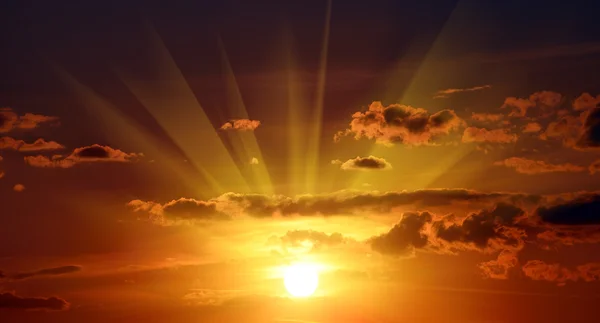
Like the Armenian Ancestors — «the Light glorified with the birth of the Dits» — the Sun, the light of day — the Eye of the «Unapproachable light» with its radiant beams, with the brilliance spread at dawn by its shining rays, continues to be praised to this day…
Light, joyful light…
And not the light of evening,
At the setting of the sun,
But the joyful light of righteous being —
Of the dew-footed morning…
…Kneeling Nature rises to its feet.
The night office is ending.
And the Dawn approaches slowly,
Like a watchful Sacristan —
Extinguishing and putting out
Every kind of lantern and lamp.
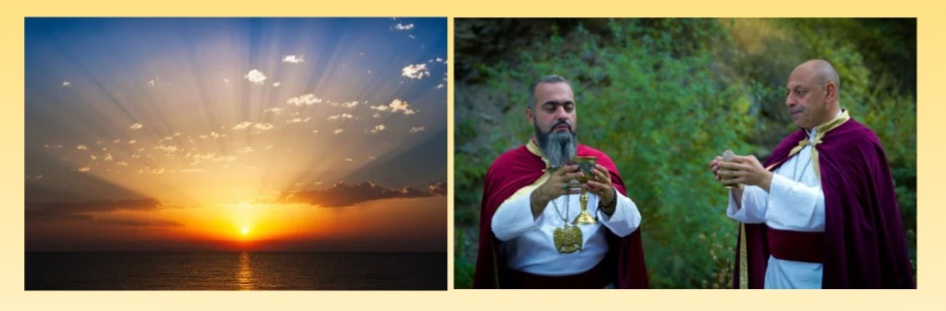
And the sun rises
With the majesty of a high priest.
And the lazily sprawled, fleshy shadows
Begin, as it were, to digest themselves —
They lose flesh, grow thin,
Gradually becoming taut
And slender —
Like a dark-skinned dancer.
The Dawn goes on blowing its crimson horn,
From all of whose narrow holes widely sprays
The Righteous Sun itself,
And there sounds that melody, simple and complex,
Which sounded with the birth of the gods:
«Light, joyful light»…
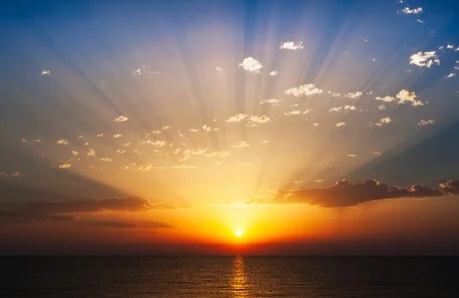
Light, joyful light,
Joyful and surpassing light,
Singing and playing light.
You daily apostle,
Who bring only faith,
But frustrate and drive away
Even veiled-disguised hopes.
You messenger, but also a pander,
You — a scout, but also an informer,
But above all — always love
And after all — always love…
Light, joyful light,
Like the rain
Pour down so,
That in the world
Only one-single shadow may remain,
And that only in the sky —
Only the curved shadow of the rain —
The rainbow…
Light, joyful light,
Act so,
That with your painter’s fingers
Even the hawks, colour-adorned,
May become, as it were, roosters
And sing again with a peculiar cock-a-doodle-doo
That melody, simple and complex,
Which sounded with the birth of the gods
«Light, joyful light»…
Light, joyful light,
Spray,
Sift down,
Bury yourself so and so deep,
That we may not live — like the fish
In its ever-dark, windowless state,
That under your skilful, all-penetrating rays
Even secretive water may become sincere-clear,
And from your noiseless strokes and your warmth
Every unbaked dream may crack at once,
And may be sung again even with that very crack
That melody, simple and complex,
Which sounded with the birth of the gods:
«Light, joyful light»…
PARUYR SEVAK, 1967