












«KHOJA CAPITAL»
PART C

ARMENIAN CLERICAL DIPLOMACY
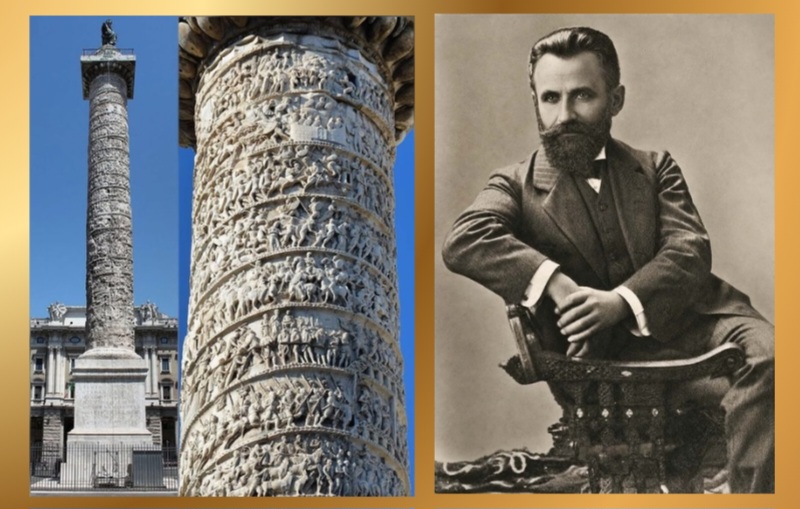
Born in 1860 in Artsakh — beneath the sheer cliffs of Shushi — in a large family of the village of Karin Tak, Arakel Babakhanyan — Leo, made an enormous contribution to Armenian culture with his historical studies, valuable works and publicistic articles…

Continuing the previous publications — one more passage from Leo — below…

«…And the immature Armenian politicians did not know why it turned out this way. They thought that it was the emperor’s counsellors who were bad men, and that this was why their Christ-loving begging had such a sad end.
And again there remained the faith that co-religiosity with the West is the only salvation that the Armenian people can expect.
Let us note here one more peculiarity of Armenian clerical diplomacy — the formulating of slogans in the name of all the Armenians.
«Death with piety rather than life with apostasy» – this meant that a whole world must die — for Christianity or, more precisely, for Illuminatorism.
And it turned out that a handful of people made themselves master and disposer of the physical existence of a whole people and delivered it to slaughter and extermination — before an adversary far stronger than it.
The representatives of Armenian clerical diplomacy did not know and have never known how to count all the victims they have snatched from the Armenian people.
They have been impetuous, short-sighted, irresponsible, and for this reason they have carried out the holocaust of a small and weak people with a calm conscience.
Yeghishe — in order to justify and substantiate the unfortunate and disastrous uprising of the Vardanants that he glorified, assures us that the whole world wanted to die for its religion, and that everyone ran towards the battlefield, like sheep — towards salt.
This is poetry, which has never been lacking in clerical diplomacy — for deceiving both itself and others.

Ghazar Parpetsi gives a description of the same war of the Vardanants, and there we see whole masses of serf peasants driven to the field of Avarayr by order of the feudal princes, who flee from the field before the battle has even begun. (Gh. Parpetsi, p. 153):
Feudal Armenia was laid in ruins by that uprising, which the Persians suppressed with all cruelty. But clerical diplomacy was neither terrified by so many victims, nor did it take instructive lessons from the great popular disaster.
In the Church there was a book that formed one of the greatest supports of the clergy, and whose name was the «Tonatsuyts»: Into that book was inserted the following commemoration:
«Of the holy Vardanants, our valiant ones, the one thousand and thirty-six martyrs, who were perfected in the great war»: (Calendar of Etchmiadzin, 1927, p. 35):
Clerical diplomacy granted this favour to the slaughtered people and thereafter could calmly continue its conduct. (Note. The same Calendar, 1464 years after the war of the Vardanants, treated the massacres that took place in 1915 as follows: «National feast. Memorial of the myriad martyrs during the world war; in the churches of Armenia a requiem is to be performed»)…

…«What we have seen up to now is repeated thereafter too in the course of long, long centuries. Nor can it be said that the clergy played such a leading role with regard to the political destiny of the country owing to the circumstance that it — in the periods of the decline and destruction of political power — was the official representative of the Armenian people.
First — this circumstance is refuted by our 4th and 11th centuries, the latter in the kingdom of Ani, when there existed a king (Gagik), but he was a plaything in the hands of Catholicos Petros, a self-seeking and disgustingly greedy cleric, who, united with a few feudal lords — sold that provincial independence of Armenia to the Byzantines, and yet, in clerical literature he has not only not received any reproach for that loathsome deed, but has even been adorned with the halo of a miracle-working saint («Getadardz»).

Second — the question is not being or not being the representative.
The question is the principle, the content, the understanding, the world view.
In the 19th and 20th centuries we have a number of facts when the leaders of clerical diplomacy are not even clergymen, but laymen, even such as considered themselves «socialists»:
It remains for us — in order to have preserved historical accuracy with regard to the whole duration of the phenomenon, to take the term «Byzantinism» and put in its place «Christian Europe». The essence, from this change, will not suffer a hair’s breadth for either side, and the situation will remain eternal – one side, that is — Armenian clerical diplomacy, a weeping beggar — «for the love of Christ», and the other side, Christian diplomacy — lying, deceitful, treacherous, making a trade of the blood of nations, itself a whore that sells itself.

How malignant a vice the cult of Armenian clerical diplomacy was, – this circumstance too Armenian history has emphasized with a number of major facts.
The first fact we have seen – King Pap — a victim. After him too, in Armenian reality there appeared figures who understood that the political interests of the country loudly command to let go of the wretched prop of co-religiosity and to find a language of reciprocity with the neighbouring strong, dominant, but non-Christian states.
After Pap the second place belongs to Theodoros Rshtuni (7th century), who — disgusted with the treacherous policy of Byzantium, allied with the Arabs — on terms very advantageous for Armenia — against Byzantium, but for this the Grecophile catholicos of the time — Nerses the Builder, raised enmity against him.
A more glorious example is presented by Prince Mleh of Cilicia (12th century), a very exceptional phenomenon in Armenian history. He allies with the neighbouring Muslim states, with their help wages a victorious war against the local Latin principalities. This was the only man who, casting aside religious prejudices, by that very means grew so strong that he waged wars even against Byzantium and was never defeated, until Emperor Manuel was forced to make peace with him.

But Armenian clerical diplomacy could not bear such a phenomenon, and Mleh was killed by the hand of his own people, having barely been able to exercise his rule for five years.
Another example, still more astonishing: King Hetum of the same Cilicia (13th century,) who, in order to free his country from the world-devastating Mongol invasions — concluded an alliance with the great khan of the Mongols and for this made an arduous and unusual journey from the shore of the Mediterranean Sea to Karakorum, the capital of Mongolia. Hetum undertook to help the Mongol armies with his troops, but in return preserved the peace and independence of his state.
The Armenian people, then, was not entirely deprived of the ability to see and weigh things at their true value and significance. But these testimonies that we have cited remain isolated and separate, as incomprehensible, persecuted exceptions under the complete and unlimited dominion of Armenian clerical diplomacy».