














«KHOJA CAPITAL»
PART B
ARMENIAN CLERICAL DIPLOMACY
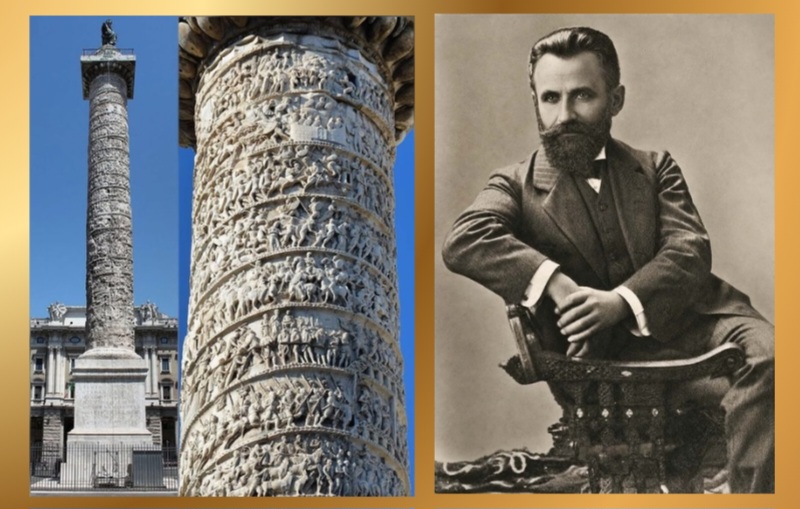
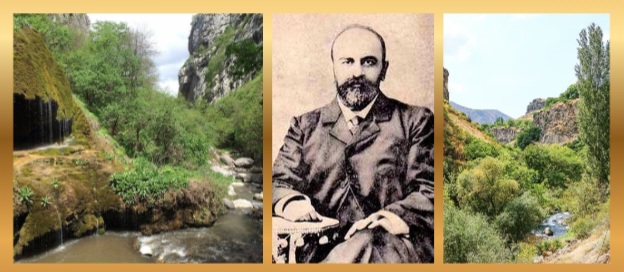
For nearly half a century, with his painstaking work and exceptional endurance, Leo, concerned with the destiny of his nation, excavated the known and unknown pages of Armenian history — examined historical events comprehensively and presented his conclusions in multi-volume studies.
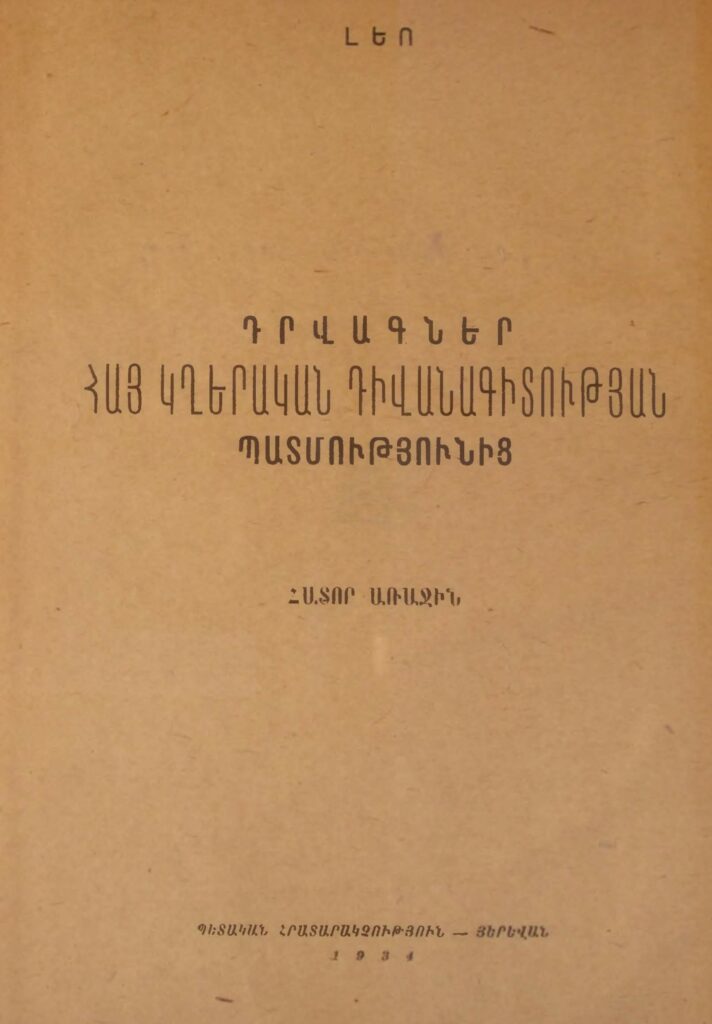
A few more pages from the book «Khoja Capital», published in Yerevan in the year 1934 — below…
«…That middle world of Armenia was becoming a European semi-colony, developing its own aristocratic way of life, civilizational demands and so on, while around it, on the highlands, the pastoral economy reigned in its poor primitiveness, which reached such a degree that there were places where the cooking of meat was still unknown (Khorenatsi, Book II):
But in the first quarter of the fourth century the Roman state was undergoing a radical change. Emperor Constantine, wishing to free the throne of the emperors from the republican traditions of the city of Rome and thus to strengthen the principles of autocratic power, raised Christianity to the rank of state religion, and then moved his throne from Rome to Byzantium, which was also called Constantinople after his name.
This was an exchange of two worlds. Pagan Rome, with its unbridled way of life, entirely unbelieving, was leaving the stage of history, and in its place there entered the stage the new religion worked out by the bishops, with its fanatical intolerance and ascetic dull-wittedness, which had grown particularly dense in the Greek milieu and were to conquer also dissolute and sated Rome.
Giving Christianity a state-conquering force, the emperor also took care that the new church should spread in other countries too, first of all, of course, in the vassal countries belonging to the empire. The vassal kings of Armenia and Georgia received the order to accept Christianity and make it the official religion: It is understandable that such a proposal could not be ignored, especially by the Armenian Arshakunis, whose fortune depended entirely on the Roman Empire.
However, Christianity was not an entirely unfamiliar religion to Armenia. It had long since made its way into that country, was spreading slowly, without causing great noise and movements. Perhaps, if left to the course of natural development, it would have succeeded in accomplishing the conquest of the country by means of peaceful propaganda. This was entirely possible for that new cult, because it was Syrian Christianity, which, at the same time as entering Armenia, had made its way even into Persia as a peaceful and neutral religious phenomenon and had made the Sasanian capital Ctesiphon the centre of its preaching, founding a church and an episcopal see there.
The only force and charm of the Syrian mission was the wandering commercial capital of the Syrian merchant, riding on whose shoulders the new religion went on spreading imperceptibly as far as India.
The Armenian Arshakunis paid no attention to that poor Syrian Christianity. There was Christianity and Christianity.
What was needed was not a merchant, but an imperial Christianity, a powerful state armed to the teeth, whose language is not so much the Gospel and the Psalm as iron and fire.
What was needed was Greek Christianity, which was coming in the East to replace Roman imperialism. This would be, above all, the best defence of the dynastic interests of the Armenian Arshakunis — against the Sasanian danger.
Thus was the great dynastic necessity being created in the Ararat centre. However, its realization was not at all easy. There could not be unanimity in such a many-headed feudal country, where the attraction of backward economic forms towards Iran, the different stratifications of cultural levels and so on were so great. What was entirely understandable and desirable in the heart of the dense urban economy of Ararat could be entirely obscure and alien in the fertile pastures of Armenia, where the nakharar economies were — consisting of great flocks:
It was on the ground of this great necessity, amid great perplexities and waverings, that there quickly emerged from obscurity, took the situation into its hands and began to act a family that has not left a particular family name; it is sometimes called Parthian, sometimes — Pahlav, but more often — by the name of its founder — the family of Gregory, and since this Gregory is deified in ecclesiastical literature with the title «Illuminator», it has become customary to call that family «the family of the Illuminator»:
It was he who introduced the Christianity of the emperors into Armenia and carried through the difficult task of consolidating the new state religion. But this success was not for the salvation of the Armenian Arshakunis, nor did it ensure the economic advancement of the country. On the contrary.
Historical criticism will never succeed in clarifying the true origin of this Gregory: Although he has his history, around which a whole literature has formed, yet that history is so cluttered with legends, miracles, efforts to stupefy and deceive human naivety, that one can only make conjectures about the truth, among which not even uniformity can be found.
By such pitiful means the Armenian clergy has already succeeded in accumulating veiled «holy» lies and frauds peculiar to the clergy of all countries and times, and by their multitude in leading prejudiced mankind astray and making Gregory a kind of demigod — as a reward for the great efforts thanks to which Armenia became a Christian state.
But the origin of a figure so infinitely exalted and glorified may also not interest us: What matters is not whether he was perhaps a Greek, an Armenized Parthian, or from some other nation and country: What matters is the work he did. And in the assessment of this work we are not so helpless.
The very history that has made him a hero and a saint — burying his person in admiring hymns of miracles, that same history, that same Agathangelos with his endless verbosity gives us much material to learn what kind of man was Gregory, the Christianizer of Armenia.
First of all we see that this is not the peaceful and meek disciple of the Christ invented by the poor, the deprived and the humble in general, but a merciless and cruel commander of the churchified, that is — militarized Christ clothed in sword and fire, in whose hand there is only one means of persuading and subduing – armed violence.
The history of the conversion of Armenia is a history of military campaigns. The king, whom ecclesiastical panegyric has also greatly puffed up and inflated, is a perfect nonentity before that man; he has given him his troops and weapons, and has himself stepped aside; probably content that the will of Constantine is being carried out and the throne of the Arshakunis in Armenia is being strengthened. Such an incompetent character was bound without further ado to be overcome before the energy, the dexterity and especially the great organizational ability of Gregory:
And the «Christianization» of the country was carried out easily, with lightning speed.
It was not an ideological movement introduced among the popular masses — to bring about conviction and consciousness.
It was an order, a formal ceremony.
Gregory illuminated not with the word, with persistent and long preaching, but — with fire and iron.
In pagan Armenia the temple was a feudal institution, strong and authoritative, especially in that it contained accumulations of riches.
To destroy those temples utterly, to kill or put to flight their officials – this is what «spreading Christianity» meant for Gregory, when he, at the head of the royal troops, flew from one place to another — to demolish temples and put Kurms to flight.
Agathangelos continually records the divine missions of his hero with such expressions. But he does not forget either to repeat continually and monotonously that Gregory did not destroy the gold and silver of the destroyed temple, but took it to use for various purposes.
The secret is out.
Sacred plunder – here is the main thing, the axis of the mission, the great guarantee of success.
The wealth of the temples, of course, was not only metallic.
In the feudal order the greatest wealth was land; with the same insatiability the lands belonging to the temples were also plundered. It was by means of the distribution of these riches that Gregory organized the Christian church in Armenia, its officialdom, its hierarchy and the political force on which he was to lean.
This entry of Christianity into Armenia must be regarded as a whole feudal movement, in which the traditional orders of the distribution of landed wealth are turned upside down — destroying the old lords, putting forward new feudal lords, either strengthening or weakening those who remain, depending on how the partisan interests of the new church demand.
Thus within the feudal class various groupings were forming with their own separate interests, which created opposing and conflicting situations, sharpening still further the acuteness of mutual relations and frictions.
Feudalism had already of itself prepared an environment rich in inflammable materials in its advance towards general and final victory; Christianity, falling into that inflammable environment, set ablaze a whole feudal conflagration — to hasten the feudal revolution:
The Christian church was becoming a new, strong and well-organized feudal institution, receiving abundant land allotments in every village and thus becoming one of the largest representatives of the serf economy: But in the ecclesiastical organization a particularly important role belonged to the head of the church, and Gregory arranged the position of that head personally for himself in the most magnificent way. He himself was the head and he would not give that place to another, and here that one, placed by the mouth of his glorifiers in the very highest rank of saints, that «angel in the flesh», that almost-god showed that he was a man well versed in accounts and profit, and at the distribution of riches kept the lion’s share personally for himself.
As high priest — he was becoming the richest man in Armenia, perhaps as rich as the king, consequently — the strongest and most authoritative in the feudal class. This, – if we were to ask a cleric, – not, of course, for his own person, for his «earthly frame», but solely and only for the glory of Christ.
Pavstos Buzand — a fanatical partisan of the family of Gregory the Illuminator, gives an almost unbelievable figure for his estates, – 15 provinces («History of the Armenians by Pavstos Buzand», Venice, 1832. 114):
Their crown and wreath was Ashtishat of Taron, «a temple of great treasure,- says Agathangelos,- full of gold and silver and many gifts of great kings, dedicated there». (Agathangelos, Venice, 1862, 606):
Besides this very rich content of its own, the temple was famed also for the beautiful position and natural riches of its estates. Gregory took possession of it with great difficulties, by means of a whole war, which is described in detail in the traditions that have remained under the name of Zenob Glak:
We see here a large priestly feudal land, such as Taron was, which put forward against the royal troops led by Gregory its own army — consisting of six thousand men, and this force is defeated after showing stubborn and bloody resistance. The wonderful estate acquired at such a dear price Gregory appropriated for himself.
After the head of the church came his princes – the bishops, who also received ample estates from Gregory. How generous he was in these earthly distributions and especially how he treated the lands belonging to the Armenian people, an approximate idea of this can be formed from the same traditions bearing the name of Zenob Glak.
There we see a letter attributed to Gregory, by which he invited bishops and priests from the West — to officiate in Armenia.
«All the more so,- he wrote to a bishop,- since you know that bishops and priests are needed for all these provinces. For although there are some, who have come and gathered from here and there, yet what are these for the six hundred and twenty provinces of the Armenians; in which barely one or two priests are found per province. For the children of this land are still at school, and none of them is sufficient for the priesthood… So we entreat you, do not stay behind from us, but with all confidence hasten to come after the men whom we have sent to you. And if you come, we hold the whole land of Ekegheats and of Harkh before you; in whatever see you settle — it shall be yours and those after you, as long as you and we are alive; and the land of the Mamikonians, if it seems pleasing to you; as you yourself said — give me the places of Innakn, and there I have ordained your very brother bishop, and according to his entreaties we changed the name of the place to his own name… But if he himself gives it, it is fully from us, for I add still more to the estates. But if not that, yet the whole land is before you, whichever you see as a fitting place for you»:
Bearing in mind this lavish distribution, let us listen to Agathangelos, who says that there were four hundred bishops ordained by Gregory and appointed overseers of sees. But this is not all. The church also had its great army – monasticism:
«And again,- writes Agathangelos,- he established many and countless companies upon companies of monks in inhabited and uninhabited places, plain-dwellers in villages and mountain-dwellers, cave-dwellers and recluses»:
It was about these that the bishop of Caesarea wrote to Gregory:
«And you shall gather in the same place about a hundred men, assign to them villages and large hamlets, so that the head of the monastery may pay from them, and they themselves may occupy themselves only with prayer and asceticism»:
Such were the land upheavals that the fourth century brought to Armenia with its official Christianity.
It must not be forgotten that the surface of the country was already cut up into large and small parts and divided among the secular feudal lords or nakharardoms, and their number, as they say, reached 900.
Even if we lower that number to 400, as some propose, we shall nevertheless have a country — cut up into exceedingly small parts, whose peasant serf population was forced to feed countless packs of secular and clerical parasites»…
To be continued…