














«LIGHT, CREATOR OF LIGHT, FIRST LIGHT»…

The Haykian teaching crystallized over the centuries since the most ancient times — Sun-worship, is the fruit of the Armenian perception of the world.
From the folklore of the Armenian Ancestors — the primordial mythical narratives, from the hymns dedicated to the Dits elaborated by the Kurms to the culture of present-day Haykazuns, in various creative fields, in the feasts and rites loved by the people, the traces of the cult of the Sun are present — with wonderful images of the praise of Light and the glorification of Life, with songs dedicated to Arevagal — to Sunrise…

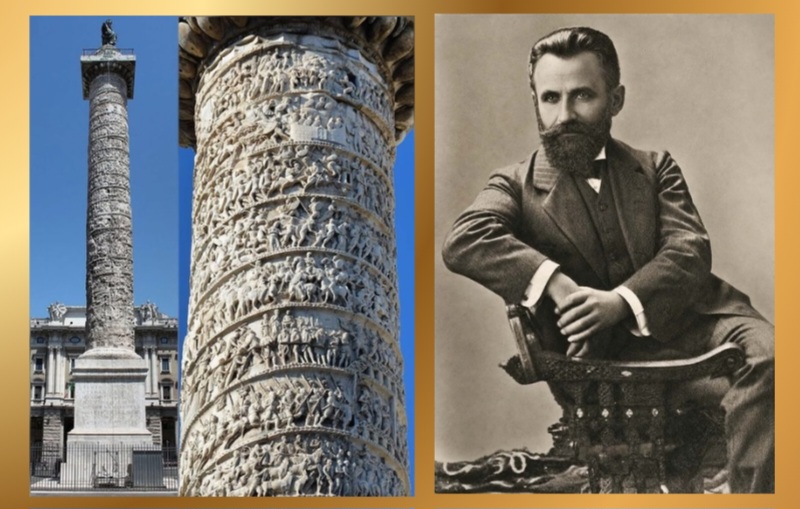
The Armenian literary scholar, Doctor of Philological Sciences Grigor Hakobyan (1907-1981), the themes of whose scholarly studies came from medieval Armenian literature, in the article «The «Arevagal» sharakans of Nerses Shnorhali, the songs «Morning of Light» and «All the World»» («Etchmiadzin» journal, 5 (May) 1958) analyses the Christian sharakans attributed to Shnorhali and brings to light their national character — emphasizing that they are taken from the most ancient culture of the Armenians, that the songs of Arevagal, in which there is the glorification of Sunrise — of dawn, are among the hymns of Sun-worship:
The said article — with some abridgements, below:

«Shnorhali’s Arevagal sharakans deserve special attention from the point of view that by their essence and forms of expression they differ from our usual sharakans and to a certain extent are the distant echo and expression of the religious world-view and thinking of the Armenian pagan period.
Our Sharaknots is a priceless poetic treasury, a collection of countless songs: Together with their religious tint, these songs have a national colour, a defined metre and form, and in our medieval spiritual poetry they form a respectable independent type:
It must be said that not all these sharakans by their essence were the exclusive property of the Christian religion: For the most part they were born, grew and developed in the Armenian reality, on the national prepared ground that had existed in the soul and heart of the Armenian man since the pagan period:
Not only the sharakans, but also certain modes of our church music are likewise Eastern and national: In the initial period, bearing the influence of the ideology of neighbouring nations — especially of the old religion of the Persians, later, developing and taking shape, they became an independent national music:
In the pagan period the Armenians were in close religious-ideological connection with Iran: Persian Zoroastrianism is known in the ancient world: The latter, according to the Zend Avesta, had a rich spiritual music — dedicated to the gods, to good spirits, to fire, to light:
As close and similar as the sacred ceremonies, the rituals of the pagan Armenian and the Zoroastrian Persian were, so close and similar can be the spirit, the mode of the Persian and Armenian spiritual songs:

At the time when Christianity entered Armenia the Armenians had their rich religious poetry and music, which in the initial period was already original and nationalized:
And these pagan elements entered our spiritual song, especially of the early period, and then later — the sharakans:
Even in the first centuries of Christianity, Zoroastrianism and especially the religion of Mithra had a strong influence not only in the East, but also in the west:
«In the first four Christian centuries, – says Professor M. Abeghyan,- the religion of Mithra (Mihr), the Persian god of the Sun and of light, which — thanks to its attractive mysteries (secret rites, K. A.) was spread also in the vast Roman Empire, influences the organization of the Christian creed» (M. Abeghyan, «History of Ancient Armenian Literature», Book I, p. 501):

It is natural that this religion strongly influenced our spiritual poetry as well, as a consequence of which the cult and glorification of light and the sun was created, sometimes allegorically and sometimes in a direct way: Armenian spiritual song, as a branch of our national literature, is Eastern, national, colourful and sunny: And among these spiritual songs the Arevagal sharakans attributed to Shnorhali are the glorification of true and intelligible light.
The allegories and comparisons in these songs are rich and many-hued:
It can be said with confidence that Shnorhali developed the «light-worship» existing in Armenian spiritual poetry and brought it to such a high degree, which in that period was an incomparable phenomenon in the literature of the East: Zoroastrianism itself is a religion of the cult, veneration and glorification of light.
But if we place especially our sharakans of light-worship and of Arevagal next to the light-hymns of the Zend Avesta, we will see that these songs of ours too breathe entirely with light and sun and are the deification and eulogy of that light:
It was these beautiful motifs of light and sun that passed from pagan Armenia as an inheritance to the new Christian world-view:
The cult and glorification of light was strong not only in the initial period of Christianity, but even in the time of Shnorhali and even after Shnorhali, up to Kirakos vardapet Erznkatsi, who sang light and the sun so beautifully and colourfully in his famous poem «East Most-Radiant»:
It is fitting to note here that it is not only in our Arevagal sharakans that the glorification of light and the sun appears strongly:

In most of our «Metsatsutse»-s — in many of the sharakans dedicated to the Mother of the Lord, with colourful, juicy images and allegory the image of the Mother of God is given entirely within light and luminous images, such as «Mother of light», «light from light», «east most-radiant», «morning of peace», «gladdening morning star», «pillar of light», «temple of light», «new tabernacle of the sun», «new temple of the ineffable light», «light-shining pearl» and so on:
Coming to Shnorhali’s Arevagal songs — it must be said that here the poet has masterfully been able to harmonize the praise of light with dogmatic or theological questions, which have become luminous hymns: With lofty feelings the poet sings to the creator of light or to the uncreated intelligible light: Here are samples from Shnorhali’s Arevagal sharakans.
«Light, creator of light, first light,
Thou who dwellest in light unapproachable…»:
«Light from light the dawning — Sun of righteousness»:
Then in the Arevagal sharakans dogmatic motifs rise — combined with light, the Father, the Son and the Holy Spirit.
Light, threefold and one indivisible Holy Trinity»:
And at the end of each stanza of this beautiful lyric poem beginning with these words «light» the following refrain is sung —
«At the dawning of the light this morning,
Make dawn in our souls Thy intelligible light!»…
…«To glorify the Light and the creator of light, to compose new hymns, the poet calls from east to west, from south to north, that all nations and tribes come and bless the Father of light, who gave light to the world.
«All nations and peoples,
Bless with a new blessing
The Creator of creatures,
Who made the light of the sun dawn
Today upon this world»…

…«It is not only in the Arevagal songs that Shnorhali venerates and praises light: This appears in almost all his poems, where Shnorhali consistently sings light — connecting with it his thoughts and feelings:
Light in the Bible symbolizes God: In the Gospels Christ appeared as «A Light to lighten the Gentiles»: Jesus called himself «the Light of the world»: Of course, in the light of these ideas, it would be wrong to attribute the cult of light in Shnorhali only to pagan influences: Shnorhali under the image of light sings God, Christ, the Mother of the Lord: His whole poetry is saturated with the metaphorical meaning of Christian light:
To substantiate what we have said let us bring a few characteristic lines from Shnorhali’s well-known sharakans and songs.

From the blessing of the second day of Vardavar.
«Ray of the Father’s glory, Thou Only-begotten Son,
Who didst enclose Thy boundless light in a body»:
From the sharakan of the third day of Vardavar.
«Christ, the Sun of righteousness
Dawned upon the world, chased away the darkness of ignorance»:
From «Today the Ineffable».
«Today the dawning of the ineffable light,
The fulfilment of our salvation…
The Light spoke in supplication,
For the return of the darkened one:
Thou torch of light in the morning,
On the Friday of the old Passover»:
From «Newly Created».
«Thou Light, uncreated, creative,
Didst command created light to be»:
From «Creative».
«From the Father, light, Thou didst dawn
Life-giver to our dead nature…
That bright light on the fourth day,
Gathered as matter into the sun,
The moon created in the image of light
And the choir of stars composed…»:
From «Look with Love».
«To Thee we look, Thou light unapproachable.
Hidden in perceptible light…
Thou Being of shadowless light,
With supplications we stand before Thee…»:
From the sharakan of the «Third Sunday of Lent».
«We praise Thee, Word and light,
Who Thy lordly image
Having found with the light of Thy lamp didst restore:
Light from light, birth and dawning…
Who the light of Thy divine word
Didst make dawn upon the world-covering darkness of ignorance…»:
Such songs could still be continued:
Shnorhali in our spiritual song created wonderful images of the glorification of the Light God, which run like a red thread through all his main works:
This cult and glorification of light through Shnorhali’s sharakans also influenced many sharakans that came after Shnorhali:

Among Shnorhali’s songs the famous songs «Morning of Light» and «All the World» are more loved and more popularized by the people because of their simplicity, accessibility and beauty:
These two simple songs are not included in the canon of the sharakans, but according to the Book of Hours are considered night songs»…
…«Morning of Light» has a language that is simple in the highest degree, smooth, having reached almost popular simplicity: This song was also simple in its content for the soul and heart of the ordinary believer: By the simplicity of form and content and the beauty of these two must also be explained the secret of this song’s becoming popular and beloved:
No sharakan, no tagh, no gandz has been so widespread, has entered the broad strata of the people and been sung both in the hour of sorrow and of joy, in church or outside, also often with the accompaniment of wind instruments, as «Morning of Light» has been»…