









«LEO — THE OAK OF THE MOUNTAINS OF ARTSAKH»

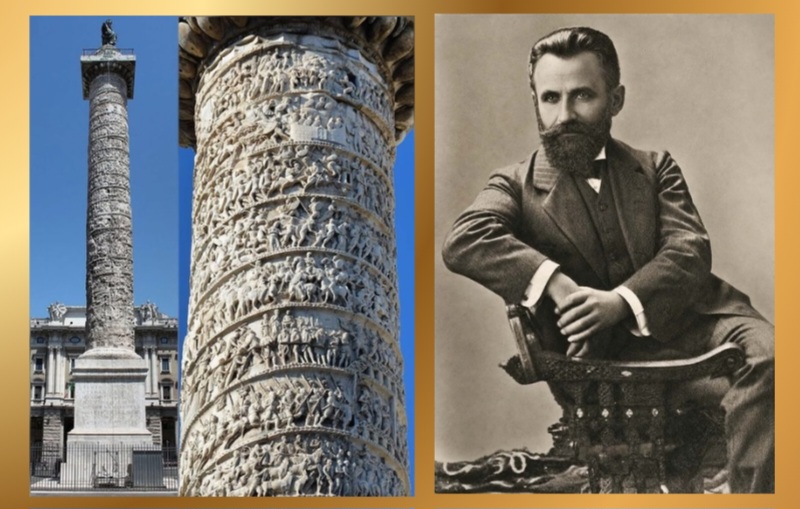
As a result of the decades of painstaking work of the distinguished historian Leo, born in Shushi — Arakel Babakhanyan (1860-1932), Armenian historiography was enriched with multi-volume studies.
The voluminous works of this tireless and indomitable scholar, firm as «spiritually the oak of the mountains of Artsakh», shed light on numerous episodes of our history and culture.
«… He — being the child of a family without means, under heavy material privations, having finished the city school of Shushi, was thrown while still in his adolescence into the struggle of life — to provide for the family’s livelihood.
Possessed of inexhaustible energy and exceedingly hard-working — he devoted himself to self-education and built and forged out of himself that literary force which for many years was one of the dominant figures in the intellectual life of Caucasian-Armenian society.
As a greatness created by self-work, Leo is a very interesting example.
One could hardly find a man who worked so relentlessly. No doubt his strong, healthy physical constitution also contributed to this.
Without losing time, he studied incessantly, read and wrote, wrote and read — from his school days until old age, until he reached half-blindness of the eyes.
He had no life outside books and writing, knew no other pleasure; he was a singular lover of reading, a book-worshipper, a book-maniac.
A few times a year you would barely meet him outside, in the street, at celebrations, at public gatherings.
What had he not read and what was he not reading — literary books, critical, geographical, historical, scientific, philosophical. He devoured the sea of Russian original and translated literature and was never sated. And there was no old or new Armenian book that was unfamiliar to him. Boundless was his curiosity.
From the age of eighteen he set foot in the literary arena — adopting the name «Leo» of the hero of Spielhagen’s famous novel, and for a full 55 years held the pen and died — pen in hand.
Being an enthusiastic disciple of Gr. Artsruni, with all the impetus of his passionate temperament he propagated and popularized the liberal theories of his revered master and waged a merciless struggle against the Armenian conservative currents.
Very often partial and partisan — his pen sent forth poison and had the sharpness of a lancet.
Many-branched are the paths of his literary activity.
As a publicist, he signed countless articles, which in their time were read breathlessly, with enthusiasm».

… «I remember that recently in Yerevan one day, at Leo’s house, we together counted his writings, whose number reached some two hundred and still remained incomplete.
However, Leo’s just renown lies mainly in his historical works»…
…«A man must have a life of at least 200 years to gnaw at science and be able to build a scholarly monument»,- he once said to me — raising his grey head from the disheartening books and looking with tired eyes into my astonished eyes:
Leo with his legendary energy and diligence began his excavations over the years, brought and rummaged through the archives and libraries of Tiflis, Baku, Yerevan, Etchmiadzin, Shushi. Countless numbers of books, newspapers, journals…
And one after another the volumes of his historical works began to appear, which — while not being free from shortcomings, to this day have no equal in our literature»…

«After being absent from the Caucasus for many years, when I returned again to the homeland, I saw my old friend Leo in Yerevan:
I found him prematurely aged and his health impaired, yet spiritually he was the same oak of the mountains of Karabakh:
He lectured on Armenian history at the University of Yerevan: And after the lectures — eternal reading and writing…
He was again the same man; the room — full of books, on the shelves — splendidly bound books (how he loved books in luxurious bindings, how he cherished books and trembled over them):
On the table — books, on the chairs — books, newspapers, everywhere — book, paper, and his white head bent — his forehead reaching down to the book…
The years had changed nothing; the same book-maniac Leo, morbidly book-mad:
Until late at night, sitting before the writing table, we would converse: His formidable memory, which had not withered at all, seemed to flood over me:
He told of his childhood, of Shushi, of the old and new of Karabakh, of the life of the meliks, the catholicoi, the khans, of wars, of writers, authors, of books and books, and a thousand events, faces, happenings, persons, anecdotes…
…The horrors and disasters suffered by the Armenian people in the Great War had filled his soul with bitterness: He had been crushed by the weight of that impossible grief»,- wrote Avetik Isahakyan in the year 1933. (Av. Isahakyan, «From my memories», Collected works, vol. 5, Yerevan, 1977):
Leo stressed the role of science and education in the development of society, in the progress of mankind and, especially, for the Armenian nation – «considering intellectual activity as the most powerful bulwark of existence».
Some fragments from Leo’s rich and multi-genre literary heritage — below (and in the next ones)…

«The basis of the idea of divinity is man.
Worshipping one god or numerous gods, man worships himself, his nature, as he understands himself. This principle is shown very clearly in the conceptions of the most ancient, primitive man».

«Provinces:
a) Daranaghi (now — Kamakh)
… Ani of Daranaghi was founded on the Euphrates and is of important significance both as a very strong fortress and as the site of one of the principal temples of the pagan Armenians. Its religious significance was so great that the Arshakuni kings were buried there. There too the royal treasure was kept.
The Christian religion, entering Armenia, was bound to clash first of all in this religious place with the old pagan (national, K. A.) religion: And indeed, the early traditions of the Armenian Church testify that Gregory the Illuminator began his preaching activity from the province of Daranaghi and especially from Ani»…

«… The largest pagan centre was the famous village of Ashtishat or Hashtishat at the foot of Mount Karke, on the Aratsani. There were three great and very rich temples in that village.
- Vahevahyan,, dedicated to the worship of Vahagn,
- the temple of Golden-mother, Gold-born, Gold-cast Anahit, where the gold-cast statue of that goddess (Goddess, K. A.) was, and
- the temple of the Goddess Astghik, which was also called «Vahagn’s Chamber».
Christianity here had a great clash with paganism. And after conquering, it made this sacred place a Christian sanctuary. The church built in place of the destroyed temples was the first in Armenia as a mother church. The small forest «Paradise of the Bread-trees» is mentioned,, which was located at the foot of the plateau occupied by the Vahevahyan temple and consisted of bread trees.

A famous pagan place was also the place called Innaknyan on Mount Karke, where the altars of the gods Gisane and Demeter were. In their place was built the monastery of St. Karapet, which is a famed Christian sanctuary to this day. It is also called «Innaknyan monastery», «Glak monastery». It occupies one of the most beautiful places of Taron»…
«The sun-worshippers called themselves Arevordi.
This name was preserved within the borders of Armenia still in the 12th century. It is probable that the name of the most ancient Armenian cult too was that»…

«… To the first days of our literature go back those spiritual songs which are renowned among us under the name «sharakan». Tradition shows by name and by person which are the sharakans composed by Sahak and Mashtots. What they began was continued by their disciples, so that the Golden Age handed down to its following centuries a great series of spiritual poems.
Those songs had a strictly defined form and metre, represented an entirely separate, independent type. And remaining obedient to these features with all faithfulness, the spiritual singers of later centuries too increased the number of sharakans, and thus the generations of long times completed a great poetic treasury, our «Sharakan».

Turning to the significance and value of that treasury, it must be noted first of all that the sharakans were not the exclusive property of the Christian religion, but were born among the Armenians on a prepared ground that had long existed, which was Armenian paganism (in particular — Sun-worship, K.A.):
A distant echo of this fact is the circumstance that our church singing with its modes has a close kinship with Persian singing. It is known that the Armenians had a religious-ideological connection with Iran in their pagan time, when the one playing a very great role was Persian Zoroastrianism, and this, as the Zend-Avesta shows, had rich spiritual chants, dedicated to the gods, to good spirits, to rituals.
The close connection of Persian modes with Armenian modes could have arisen only from the similarity of the cults of sacred ceremonies.
And thus among the Armenians, at the time of the entry of Christianity, there already was an extensive religious poetry and singing, which, remaining faithful to the Persian model, had become nationalized. And these elements too entered the poetry of the Christian church. The modes of singing were not borrowed by the figures of the Armenian Church from the Greek or the Syrian, but were taken from the nationalized songs existing in the country, and this is proof that in the Armenian singing in a Christian way there spoke the layers, nuances and inspirations of the old national pagan poetry.
Today too these old modes resound in our churches, and our «first tone» is the Persian «hejaz», while the last tone’ is the Persian «sabahin» or «siharin», the «senior side»’ — «segah» and so on. Even the Persian word «ganz» has been preserved in the name of one kind of our church songs – gandz»…
To be continued…