























ARMENIA AGAINST ROME
(PART 3)
A nation preserves its existence not only by political power, but also by culture, by national memory, by creative force…
In his travel reflections, Avetis Aharonyan addresses the role of the historical past and of national culture in the shaping of a new identity.
In Italy, before the monuments of the past, the Armenian intellectual meditates upon the influence of civilization and upon self-examination…
How does a people preserve its memory? How does art contribute to the development of national self-consciousness?…
The continuation of «Italian Sketches» is below.
The beginning is in the preceding publications.
3.
THE «NO» OF TIGRANES THE GREAT
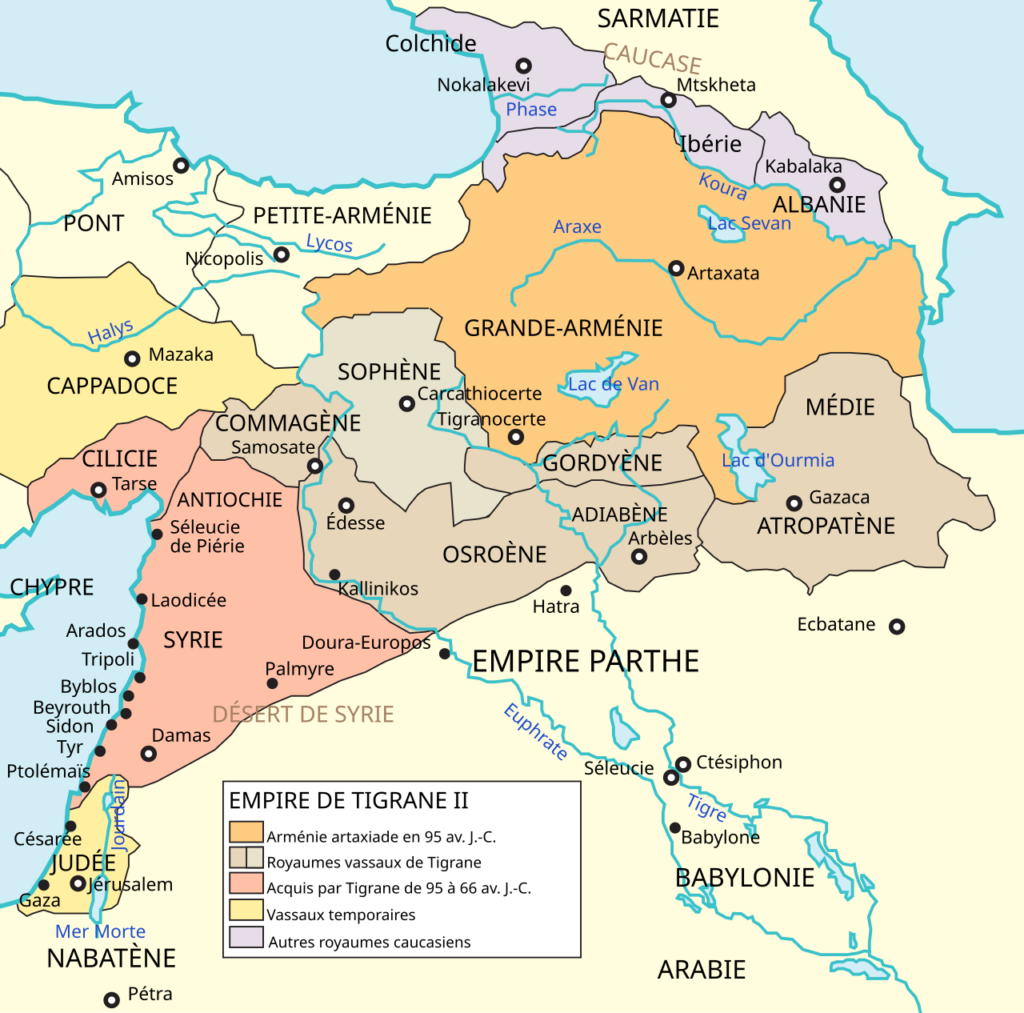
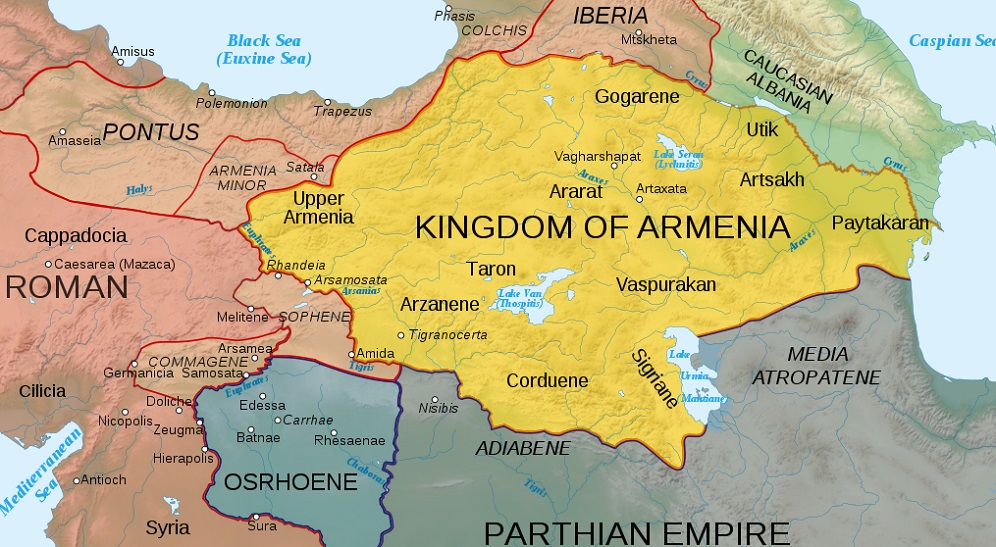
I am not writing history, but historical and literary sketches. Yet how am I to leave unmentioned the fateful meeting of Tigranes the Great with Rome’s first envoy, Claudius Appius, at Antioch, which at that time lay under the suzerainty of the Armenian King of Kings? Certainly the Romans were not unacquainted with Tigranes; but the interview at Antioch took place in such extraordinary circumstances that it might truly be called dramatic.
Mithridates had already been defeated by Lucullus and, a fugitive who had escaped by a hair’s breadth, had thrown himself within the borders of Armenia, seeking refuge and protection from his son-in-law, the mighty king of the Armenians. Tigranes knew that Rome’s envoy had come, in the name of Lucullus, to demand that Mithridates be surrendered to Rome.
The Armenian monarch received Appius with all his royal pomp and splendour. He was seated upon a gold-embroidered throne, surrounded by his generals, his high-ranking courtiers and his counsellors, the sceptre in his hand and the pearl-strung crown upon his head.
Tigranes was by then an elderly man, long past sixty. The years, however, had bent neither his back, nor his manly vigour and strength, nor his royal bearing.
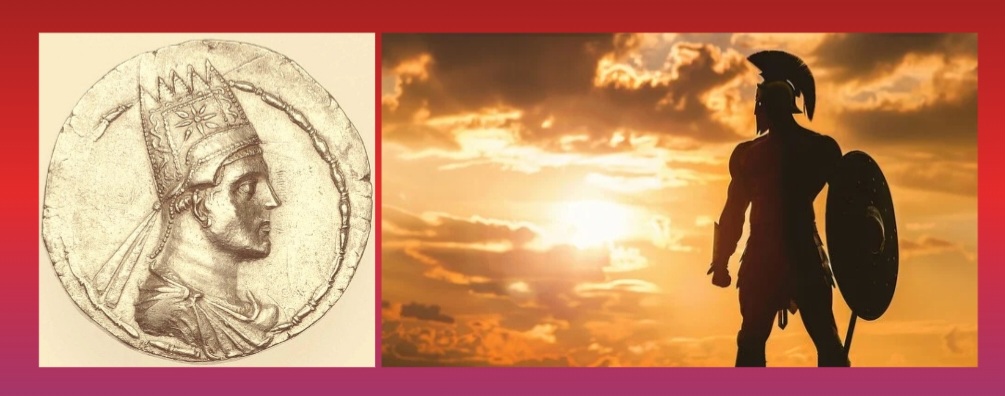
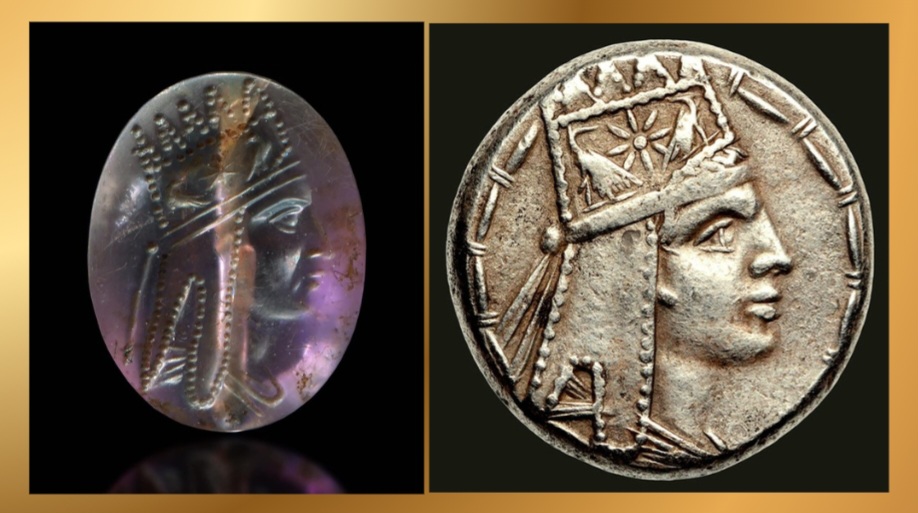
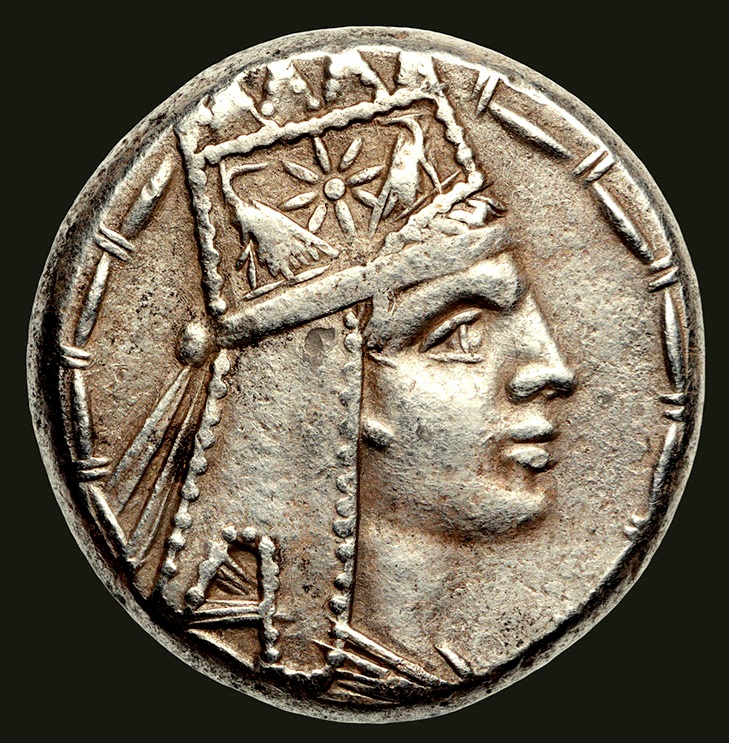
He was a powerfully built man; clean-shaven after the Roman fashion and sinewy, he seemed far younger than his years. His strong profile, dominated by a shapely nose and a firm, obstinate jaw, his high and proud forehead, his wise and deep-set eyes and his thunderous, thoughtful gaze were all comeliness and strength, and an unforced, spontaneous majesty. At least thus do we see him upon the coins he left behind, which are reckoned the finest in the history of numismatics.
Before the Armenian king sat Appius Claudius, the young Roman, the envoy of Lucullus, who, in spite of his age, possessed the world-conquering spirit and consciousness of his great and powerful homeland, and bore himself with the cold-blooded composure of a seasoned and elderly man.
And there sat face to face not two men, but two worlds: East and West.
On that day, at that hour, in Antioch, in the palace of the Armenian king, the fate of numerous nations was being decided for centuries to come. To whom was Asia to belong – to Armenia or to Rome? The aged Armenian king looked from beneath his brows at the bold young man seated before him. Not only did he already know the purpose of this Roman’s coming, but he was also well acquainted with all the intrigues that Appius Claudius had contrived against him along his way, within his own country. His agents had kept the King of Kings informed hour by hour of his guest’s perfidious undertakings, and he knew full well which of his vassal princes had forged a secret alliance against him.
Plutarch tries in vain to persuade us that Tigranes was merely an Oriental despot, filled with boundless arrogance and captive to the fluctuations of his violent and elemental temperament, and above all to his wrath.
Tigranes’ diplomatic capacity is indisputable: he knew how to weigh his word and his deed. Otherwise he would have been incapable of directing the destiny of the peoples of Anterior Asia for twenty-five years. He grasped profoundly the fateful value of the moment; he knew who was seated before him, even though the Roman strove to give his bearing a simple and innocent character. This, no doubt, was the reason why, over the gloom of his keen eyes, there lay a subtle, ironic smile, which Plutarch inaccurately calls «an open and cheerful countenance».

Tigranes received Appius with restraint and courtesy, and the latter handed him the letter of Lucullus, in which the Roman general had deliberately omitted the title of King of Kings … Tigranes frowned severely: this was his most sensitive point and, in spite of his sharp inner agitation, he once again restrained himself. He understood well that this contemptuous attitude of Lucullus towards his person was a political act greater than a mere want of decorum: brutal in its form and weighty in its presumed consequences.
It was by now clear to him that Rome, in disowning his title, was indirectly refusing to recognize his dominions and the empire he had founded.
The great and historic struggle between East and West was beginning anew.
What Tigranes had heard was correct. By his letter Lucullus demanded Mithridates, which Appius confirmed orally as well, adding that he had come expressly to take away the king of Pontus, who belonged to the victories of Lucullus, and that if Tigranes refused, then there would be war.
Silence fell.
This declaration of the young Roman was audacious. The king’s entourage waited with bated breath to hear what Tigranes would answer. And suddenly, in the stony silence, the word of the sombre king was heard.

«NO»,- said Tigranes in a deep and tranquil voice,- «No, Mithridates is the guest of the Armenian King of Kings and shall never be surrendered to you. And if Rome needs war, he will be able to defend himself.
Say so to him who sent you».
He deliberately refrained from calling Lucullus a general, just as the latter had intentionally ignored his title of «King of Kings». In this same manner, by his command, his letter of reply to the Roman general was drawn up.
The audience was at an end. Between Armenia and Rome there was war.
Tigranes cast his heavy sword decisively into the scales of Mars…
For the sake of Mithridates?
No, certainly not.
Tigranes knew perfectly well that Lucullus’ demand for Mithridates was merely a pretext for declaring war upon him. He was profoundly convinced that the war against Armenia had already been resolved upon long before the coming of Appius.
Tigranes, who had succeeded in bringing almost the whole of Asia Minor, together with Mesopotamia, under his authority not only by the power of arms but also by his extraordinary abilities as a statesman, would not have been so imprudent and short-sighted as to expose his state lightly to danger for the sake of Mithridates, even though the latter was the father of his beloved wife Cleopatra.
The great collisions of nations do not spring from the caprices of individuals, nor from anyone’s love: the war of Troy, supposedly waged for the sake of the beautiful Helen, is a charming myth that cradled the childhood of mankind.
The true causes of wars escape the sight of the crowds and always remain hidden, and armies are very often set in motion by attractive pretexts.
After settling its accounts with Pontus, avaricious Rome had turned its predatory gaze towards Armenia. Tigranes knew this very well and grasped very quickly that to accept humiliations at the hands of Lucullus, or to make himself abject and abase himself, was not only unworthy of his royal glory and his political standing, but also entirely useless for the peace of himself and of his state.
And he accepted Rome’s challenge in a manner befitting a king.

The outcome of this war proved unfortunate for Armenia. Lucullus, and Pompey who succeeded him, raised the glory and the might of Rome in Armenia after Pontus.
A little above we saw that this was inevitable for many reasons.
Did Tigranes expect these consequences? Probably not. But whatever might come, he could not bow his head to Rome without a fight. Otherwise he would have had to destroy with his own hands the structure of that vast and glorious empire raised by twenty-five years of effort.
It is fitting to recall here that this fateful «no» of Tigranes the Great, as an expression of our racial temperament, was repeated afterwards, by an astonishing coincidence, in the most anguished periods of our history. Every time the Armenian people was called upon to speak its decisive word, between the independence of its homeland and submission to the foreign tyrant, its answer was always a firm and conscious «no».
Thus, some five centuries after Tigranes the Great, when Yazdegerd II of the Persians demanded of the Armenian people the renunciation of its conscience and of its freedom, the Armenian nation rose up once more as one man and uttered its contemptuous and audacious «no». And in the year 451 the Armenian national assembly of Ashtishat, in spite of extraordinary and difficult circumstances, at once found its national hero, who embodied the will of the race, and placed the ancient Armenian sword in Vardan’s mighty right hand.
And thereafter, how many, how many times did the Armenian people, often leaderless and its homeland parcelled out piece by piece, rise to its feet against the mightiest of enemies for its freedom and for its just, unfettered conscience.
Let me recall at least the very last of these, the one accomplished in our own days, before our own eyes, which so recalls the sacred war of the Vardanank. I speak of the Armenian National Assembly convened at Alexandropol in the spring of 1918. The Russians had fled from the Caucasus, the neighbours all around us were against us, the Turkish invasion was advancing menacingly towards our frontiers, and our army, though self-sacrificing and brave, was few in number and still young. And behold, at that anguished hour the representatives of the nation were called, as in the fifth century, to accept either struggle or slavery. The Turk demands the acceptance of the Treaty of Brest-Litovsk. «NO», answers the Armenian National Assembly once again, unanimously, and accepts war against the superior forces of the enemy.
After the event, expert diplomats are born who will perhaps attempt to cast a shadow over the supreme and magnificent onslaught of a freedom-craving nation. There will come wise knights of submission who, clad in priestly purple, observe with narrowed eyes the storm-swept course of history and make attempts at condemnation or at vulgar criticism addressed to the leaders of the nation’s anguished days. All this is understandable and logically inevitable. But a defeat suffered in a terrible and decisive struggle has a meaning that escapes the eyes of the faint-hearted and that silently governs the destiny of defeated and bowed-down peoples.
Nations deprived of freedom and broken often draw courage out of tears and bitter grief. The searing memories of defeat and the gnashing of teeth never remain without consequence.
To be continued…
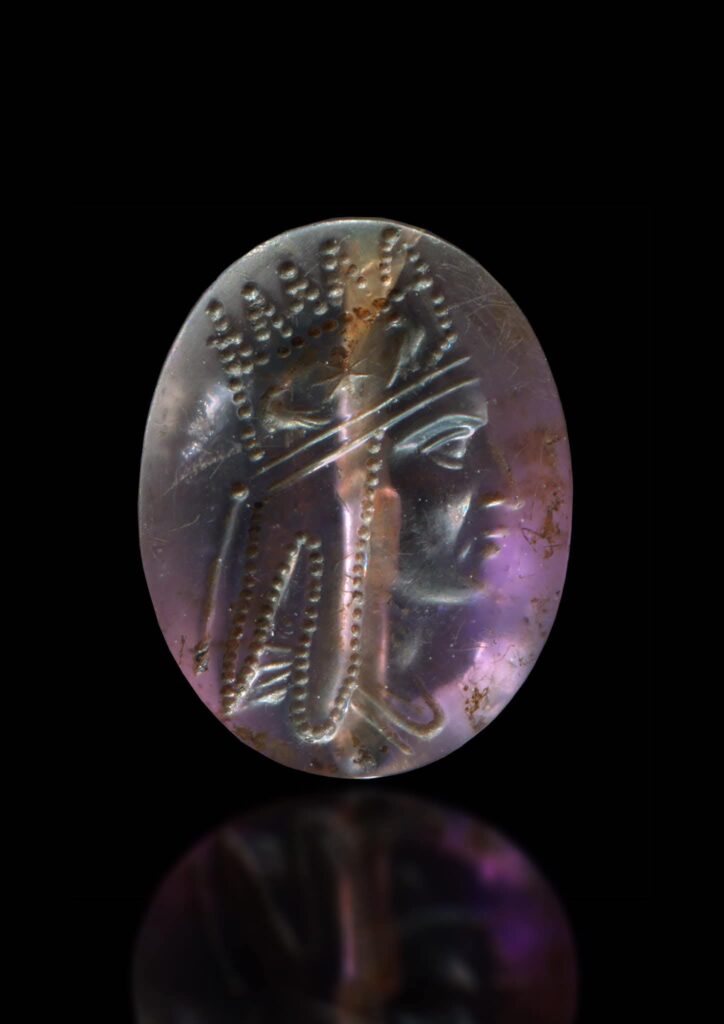
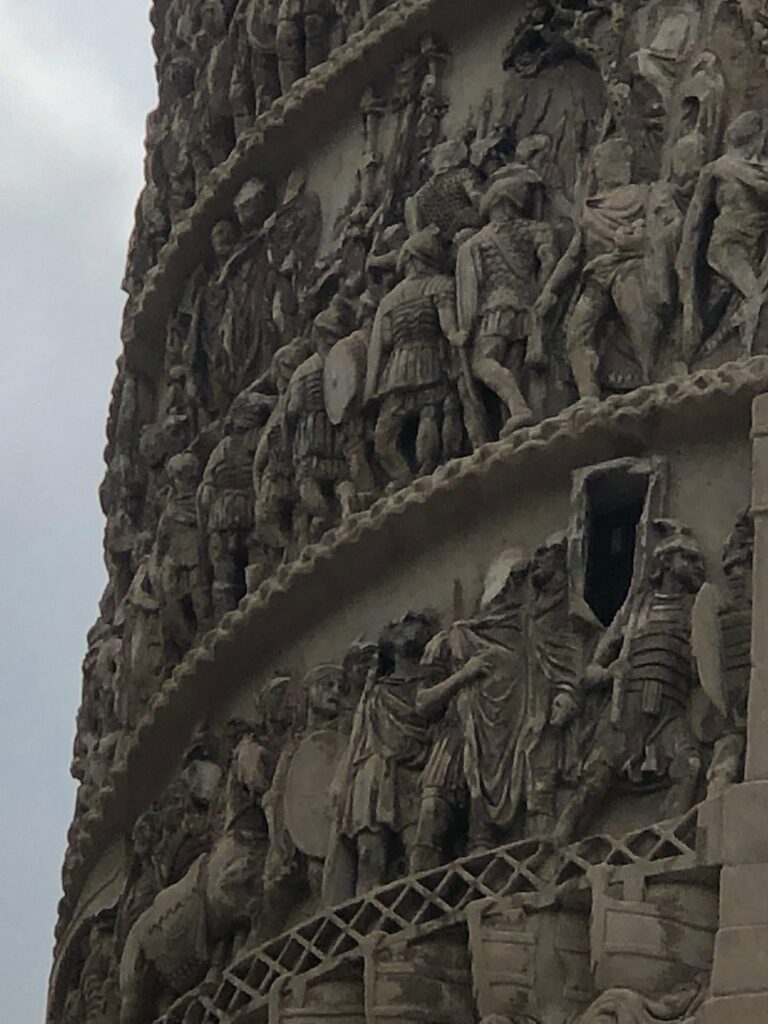
In the photograph:
From the personal collection of Guillaume Aral:
The profile of Tigranes the Great