

















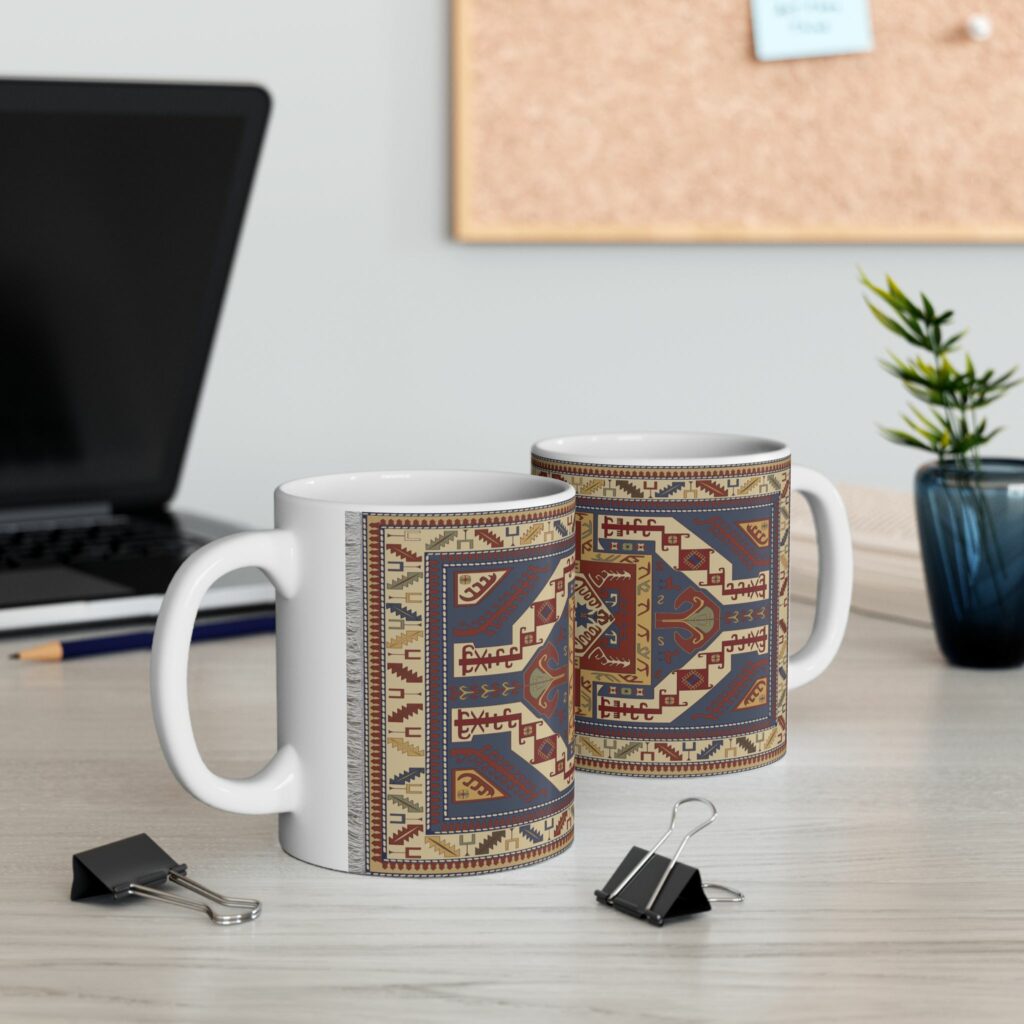
«LET THEM REMAIN ALIVE»…
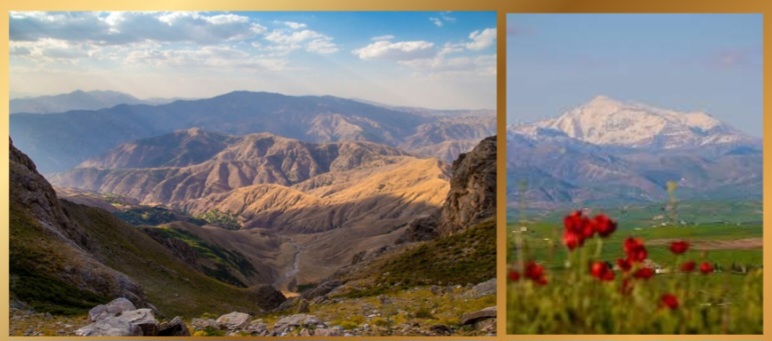
In the year 1904 the enemy had set out on a great campaign against Sasun. The people of Sasun were in armed revolt — going out to unequal battle and defending themselves with a freedom-loving spirit…
Karo Sasuni’s story «Let them remain alive» — below…
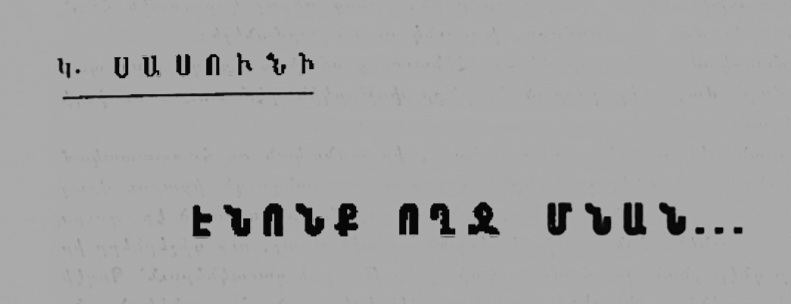
«LET THEM REMAIN ALIVE»…
A
Poghe and Moso, two valiant brothers, one day, of the days of horror and injustice, went up Tsovasar and from there they never returned.
The gunpowder smoke that spring had come down from the high mountains and remained spread over the plain. The warm vapour rising from the wooded places of Argavank brought the smell of gunpowder to the ploughmen , who had their wrinkled brows bent to the plough-beam. The cannon was roaring there — above, to stifle the voice of freedom.
The life of the village was moving, but the mouths remained shut, and the clenched lips locked the village’s care in storm-tossed hearts. The oxen were drawing the fate of these men of the soil, who had ancestral hearths of centuries, but had no free life.
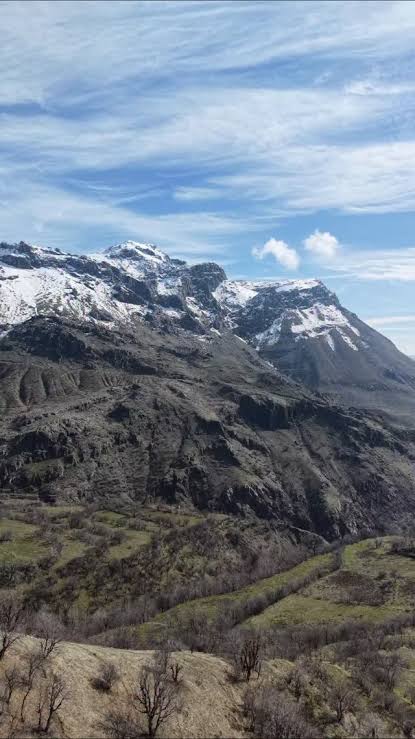
Poghe and Moso never returned from Tsovasar…
The mourning for these unburied heroes — mixed with the spring snowmelt, with the turbid waters — came and troubled the bright hearts of Argavank, which were proud as the mountains of those two self-sacrificing men.
They were the glory and the honour of the village, set like statues on the mountain peaks. And the village could not even weep its mourning. In the ring of oppression the Armenian’s bones had been crushed.
The Poghean’s tonir remained extinguished that day.
No one had the heart to lay a finger on a mother’s supreme grief.
The ploughmen, bowed under the yoke of suffering, scarcely dared to speak with their oxen.
– Ah, alas, today no smoke rose from the Poghean’s roof…
And the oxen with silent patience carried this mourning through the furrows — like an ancient fate.
Seyran, the mother of these two unmatched valiant ones, a stout and thick-boned woman of the plain,.struck through the heart as with a dagger, with a firm palm seized the mouth of her wound and, like a wounded bear — for weeks withdrew into the tondrtun. There,.in her solitude, she pressed out the maternal tears, until the last drop dried from her veins.
The two young brides also cast off the crimson veil, became ghosts wrapped in black,.they went in and out of the old hearth, and with the loss of their love they lived also a mother’s anguish, deep and incurable.
Little by little the tonir smouldered. To keep the lamp of the ancient hearth alight — the mother set her dried breast against the storm and melted like oil.
Seyran took the black kerchief upon her head, wrapped her manly and steadfast jaw in it, clenched her lips stubborn and bold one upon the other and with a deep and quiet gaze, in which death was buried, came out of the tondrtun. There, on the wall blackened with smoke, where at night she would lay her head to sleep, she hung the caps of her splendid sons — of Poghe and of Moso, the fezzes bordered beside them, the sole remembrance from the wedding chest of the young bridegrooms.
Those two caps — crowned with black fezzes, took the place of image and statue, and the wall of the tondrtun — above the mother’s head, became the sacred sanctuary of the Poghean’s house.
The tonir inherited from seven generations was kindled every morning, the black pillars and beams bound an ebony arch upon the jet-black walls. The mother’s deeply mysterious house came to resemble an ancient pagan mehean, and Seyran — like a high priestess, faithful and steadfast — with a resolute brow came out into the village. She became, silent, yet mysterious, unknown, yet the embodiment of a palpable force for those around her.
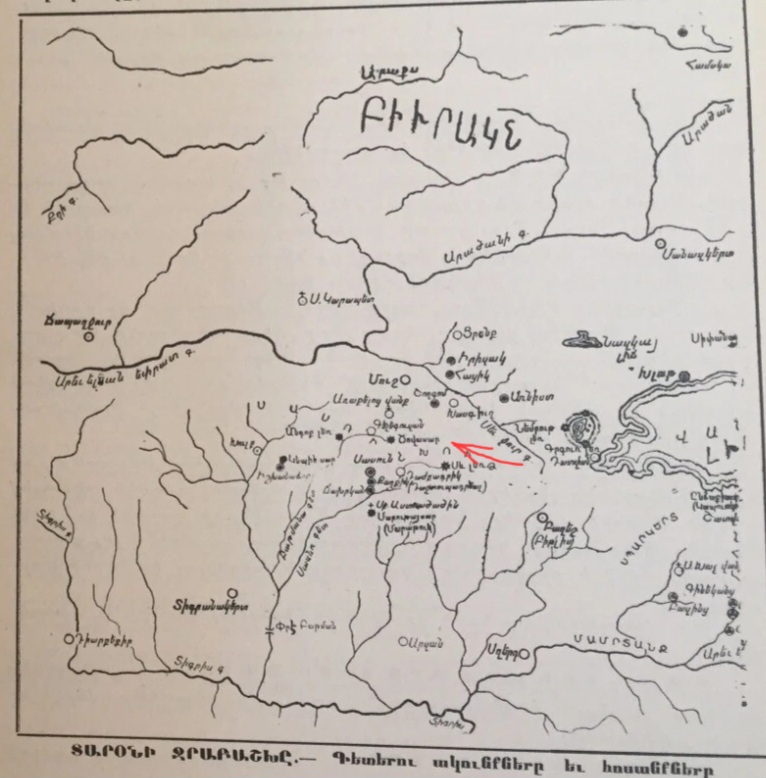
The secret of the revolution had often come and gone by unknown roads to nest under the Poghean’s roof. Hrayr with his comrades had broken bread at Seyran’s table. And Seyran, when she unpicked the threads of their charukhs — had nourished a maternal feeling toward these motherless giants fallen from the mountains. When one day Poghe and Moso took the road to Tsovasar, Seyran became the true mother of all the devotees, who had no number, and whose death was spreading a conscious immortality in the soul of the Armenian community.
Seyran with a deep faith proper to women believed in the covenant of freedom,.she became the embodiment of sacrifice on the road of the supreme mystery and, when she kissed the brows of her two green suns in the last midnight, beside the maternal heartbreak, the noblest feeling of self-sacrifice was flooding her soul: was she not herself cutting her own heart in pieces — to send it as an offering to the holy purpose.
Now Poghe and Moso had fallen by the enemy’s bullet, but for Seyran they were not dead.
The fighting spirit was everywhere and Seyran, baptized in the font of self-sacrifice — had forgotten the world, had pressed out all maternal weaknesses with her tears and had opened wide her spiritual heart to all those who passed through the mountains like ghosts, and spent the night with the wolves in the caves.
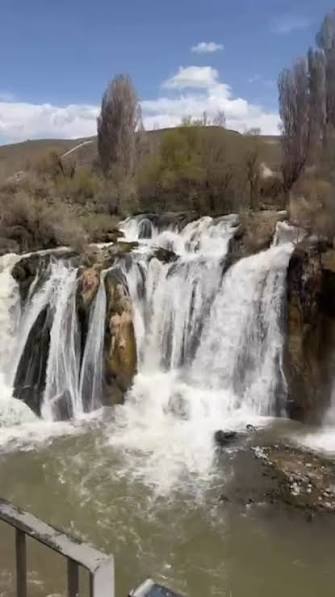
A mysterious secret always remained folded under her brows, and she,, like one who has no need of consolation — consoled others for their personal griefs. People, keeping pace with time, found it natural that this woman, firm as an oak, should live and think for others, with virtuous impersonality.
B
Seyran ten years ago lost her husband. Alone, like a stout pillar, she set her shoulder to the Poghean’s great hearth, until the boys matured. The tempest came and cast down the two fresh and high-grown branches: only a shoot remained upon the trunk.
And now, that the elders were gone, Seyran spoke like a grown man with Gale, who was a young herdsman barely eighteen years completed.
– Gale, my boy, you remained the Poghean’s only lamp,- and stretching her hand toward Poghe’s and Moso’s caps — – You shall keep their honour.
Gale’s and the brides’ eyes filled with tears. While Seyran with a tender glance measured the boy’s slender stature: as if she did not wish to notice the tear in those two fragile beings, and went to a corner — to prepare bread.
That night travellers were to pass through the village,
A secret breeze slid under the eaves: unknown shadows rubbed against the walls, and at midnight the Poghean’s door opened. Seven weary and armed men fell into the tondrtun. There was silence and peace in the village.
Seyran unpicked their charukhs, and washed their feet. Crushed by this noiseless maternal tenderness — they – men of arms who had forgotten how to speak – were bewildered before the word of consolation. Their comrades’ mourning was fresh, the mother’s wound — bloody.
In the dim light of an oil lamp — they were eating bread, and with their feet hanging in the tonir — they were warming themselves. They were silent, and the silence with a stone weight was weighing upon their shoulders.
At last…
– Mother, how are you?
– May you remain alive, may they remain alive…
Seyran’s hand was directed toward the caps, faithful and unconquerable.
The fedayis, strengthened by a mother’s this faith in immortality — felt a double force in themselves, to take the mountain road before the dawn had yet risen.
The secret, swift as a breeze, impalpable as a shadow, would come and pass through the Poghean’s tondrtun.
The next day, Seyran, her waist firm,.her lips pressed, a bundle of wood on her back — was heading toward the city. She would linger before a number of shops,.then she would go as far as the Armenian Prelacy, and after sliding the secret letter into the secretary’s hand — a piece of bread and cheese wrapped in her apron, she would stand near the gate of the great prison.
The country’s chosen sons were gathered there in chains.
Seyran — doing and not doing — would get a word or a couple of lines through to them, and from them would seize a word in her fist — to carry to the outer world, which would go to echo as far as the distant mountains.
The years passed thus.
The Poghean’s great hearth was worn under the feet of secret travellers. Seyran’s knees grew calloused on the roads of the prelacy and the prison.
Yet the tonir always remained alight in memory of her immortal dead: and, every evening, Seyran prayed before Poghe’s and Moso’s caps — for the success of her hero sons scattered in the mountains.
The house, which for a hundred years continuously had been called the Poghean’s hearth after the great grandfather’s name, and from generation to generation those who bore that name kindled the buried fire — for the sake of continuance, now, by many, was called Seyran’s house — granting a maternal right to this faithful and self-sacrificing woman, who embodied the force of the secret revolution in the hearth that was dying out little by little.
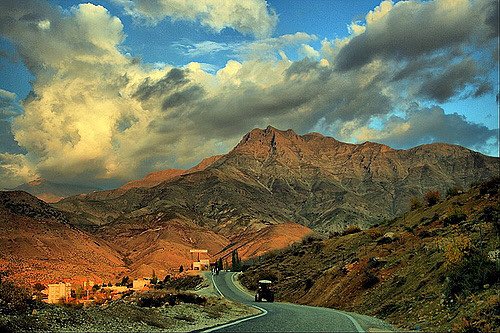
C
1904…
The mountains had become tongue, and Tsovasar was speaking. The village-world of Taron was seized by a spiritual conflagration. David of Sasun — standing at the head of Tsirin-Katar — was shouting with a shepherd’s voice.
- Hey, you who are asleep, stand awake,
You who are awake, take up arms…
And the voice from the mist of Mush was sending a wave under the walls of hundreds upon hundreds of villages.
The underground houses were shaking, the ghost of freedom was setting the souls on fire, and the blood was boiling in the veins of the peaceful tillers of the soil.
The Armenian inner world was thundering.
The tiller now would approach the manger of the enraged buffalo with more love, and after scratching its ears, with a warm shudder would feel the door of the secret store of the weapons, which would open before the unspeaking one — to wipe his rifle, the light of his eyes, his treasure.
It was another thing, another thing… The Armenian tiller’s life was turning out of its axis.
The cannon-smoke again formed piles of cloud on the summit of the high mountains. Those shouting «salavat» from the four sides of the world had gathered — coiled like a seven-headed dragon at the skirts of the Taurus. The people’s eye hung from snow-clad Tsirin-Katar, weaving in the soul a thousand and one tales of freedom.
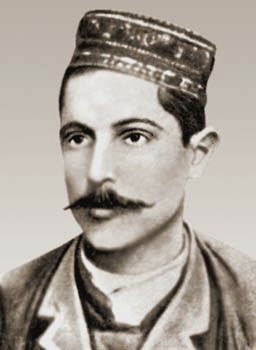
Hrayr’s call of fire, passing from hiding-place to hiding-place, came down from Tsovasar into a dark stable of Mush. Blind Yako wove a song from it and called… And the song spread from mouth to mouth through the villages and the towns, swift as a fire, kindling as a fire.
Whoever is brave — what is he waiting for,
Already it is time — let him come.
It is the hour of death-war,
Whoever is a fearless brave — let him come.
Man of iron, soul of stone…
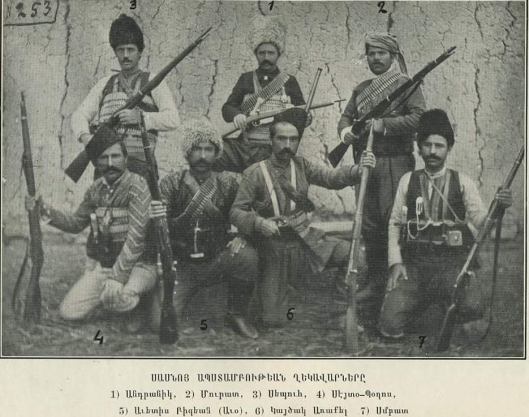
And the souls of stone were trembling with revolutionary fever. Death and freedom weighed equal in two scales.
The spirit of valiant men had risen again. The challenge had set the village secret bands in motion. The sworn young men were in feverish preparation.
Arms and armour, charukh and stocking, glove and head-wrap — their soul folded in them — were waiting for the band-leader’s command — to split the snow toward Tsovasar.
The mass was breathing the atmosphere with full lungs. The Armenian Inner World was thundering.
That evening’s twilight was cloaking a mystery in the streets of Argavank. At the open doors of a few houses women were standing like an unmoving shadow: as if their eyes had grown cold after a departing traveller.
The band of Argavank was holding its last meeting in a stable crouched in the corner of the village. That night seven devotees were to become man of iron, soul of stone, and were to go to take part in the fateful fight. The village was sending its offerings to Tsovasar…
Gale was a fresh young man, matured under Seyran’s hand and before the sanctuary of Poghe’s and Moso’s caps.
He had already passed into the ranks of the village’s sworn ones, and that evening, fevered by the secret breath,.his soul was swaying between his mother and the mountain road. Yet the blood was boiling in his heart and he was valiant — to the point of not blinking an eye before the bullet. He felt that he would not be able to stay behind from that road, but with his head hung from these thoughts — he reached the door of the stable, where the band-leader and the helper were keeping watch.
The band without hesitation had given its verdict. The only lamp of the Poghean’s house could not be extinguished.
Gale they had not counted among the ranks of the devotees.
– Gale, go home, the band has decided that you shall not go up the mountain…
– Can such a thing be, brother…
The word remained unfinished. The band-leader repeated commandingly.
– It is the verdict of the revolution.
Gale was accustomed to the secret band’s strict discipline.
He hung his head, swayed a little, wanted to speak, but felt that it was superfluous, and turned back toward home.
Seyran — kneeling before Poghe’s and Moso’s caps — was journeying in spirit through deep snow-clad gorges — to bring bread and water to the fedayis’ positions, where it seemed she would find her two lions — still leaning on their rifles. And having opened her heart wide to all — she would take into her maternal bosom the valiant ones stuck in the snow and kiss their brows — under the hail of bullets.
At that moment, Seyran’s soul, without a direct touch, in a general self-sacrifice, wanted to be reconciled with Gale’s departure.
Gale’s return with hung head woke the mother from her distant dreams. She stood up and approached her bewildered and crushed only boy. They looked at each other silent and heavy with thoughts. In Gale’s eyes the ray was dimmed, the soul defeated and from shame the glance remained hung to the ground. In his mother’s questioning gaze he discerned the gleam of Poghe’s and Moso’s eyes and he was afraid to raise his brows toward the caps.
– Gale, my boy, why did you come early…
Gale’s head remained hung. Seyran’s voice was coming from the deep, bathed in a wave, as if it were the voice of great-grandfather Poghe, sounding from the world beyond. Seyran’s soul, crossed with abysses — the maternal fire was trembling upon this one single flickering ray, but her being had long been cut off from the everyday surroundings and bound to the idea of immortality, which was eternal and filled her tender heart.
Faith had become a hardened fact in this woman, who believed that Poghe and Moso had been killed, but were not dead, and their breath was hovering over the mountains, where the valiant ones passed swift as an eagle,.firm as stone.
Seyran, without repeating the word, looked sharply at Gale. A desertion, which might bring a stain upon this self-sacrificing roof, had thrown the mother into inner agitation.
This tondrtun, anointed with the memories of Poghe and Moso, was for Seyran more sacred than the Cathedral of the Illuminator.
Gale whispered.
– They did not enrol me among the devotees. It is the band’s decision, it is the verdict of the revolution…
Seyran’s eyes darkened, but in the soul a pride stirred for her valiant boy. And this refusal — well-meaning and comradely, she regarded as an insult to the Poghean’s hearth, to her hearth.
The slight from the comrades brought down a pillar from her heart. The house seemed to collapse upon her head. The walls, the beams and the pillars made the black mourning felt sharp and deep.
The hearth remained standing upon Poghe’s and Moso’s caps.
She approached, took Gale by the hand, like a schoolboy,, with a voice barely audible from clenched lips and set teeth said.
– Gale, my boy…
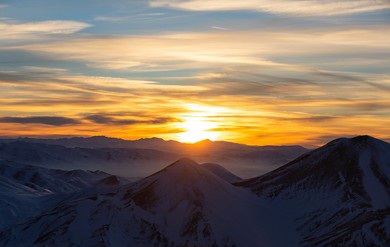
Silent and with a heavy heart they passed through the dark streets and stood at the door of the stable, where the sentry was waiting. From within the whisper of low voices was heard, so mysterious. A deathly silence reigned inside. But the sentry thrust his head in and said.
– It is Seyran and Gale, there is no danger.
Seyran entered with resolute steps, still holding Gale by the hand (however much a boy may grow, for a mother he is a little child). She looked at all of them — with maternal pity, and the sacred covenant warmed her dried heart. There was blood in everyone’s eyes. The weapons were gleaming before them. Wonder was playing on their faces. They were looking at one another’s faces.
The silence thickened with mystery in the humble hiding-place. The clenchings of Seyran’s lips increased.
– Can such a thing be, what you are doing, you turn the honour of Poghe’s and Moso’s house to dust… If on this day’s day no devotee is to go from our house, then why do we live… Let such a thing not be: the house will be torn down upon my head.
Emotion seized them all. The feeling of self-sacrifice gave a warm wave under their hearts. A mother’s supreme sacrifice was passing beyond their imagination. They knew Seyran — with her stubborn will and in many secret works and they knew that she had a more resolute voice than the village band.
The band-leader in vain poured out his reasons, but he could never say. – «It is the verdict of the revolution».
All of them felt that the spirit of the revolution had come and nested in that bereaved mother’s heart: – a heart, where there was room for all those who were wearing out the mountains and the gorges for the covenant of freedom.
Seyran’s heart was full, but her eyes were dry and her lips stubbornly clenched.
– Gale, you too prepare…
And the band no longer made two of Seyran’s one word.
Seven devotees, at midnight, kissed their comrades, received Seyran’s blessing, and threw themselves into the snows like wild goats.
The village was proud. Hearts were swollen with joy, and the song was sounding under roofs blackened with soot.
– Man of iron, soul of stone,
Be the avenger of the Turk…
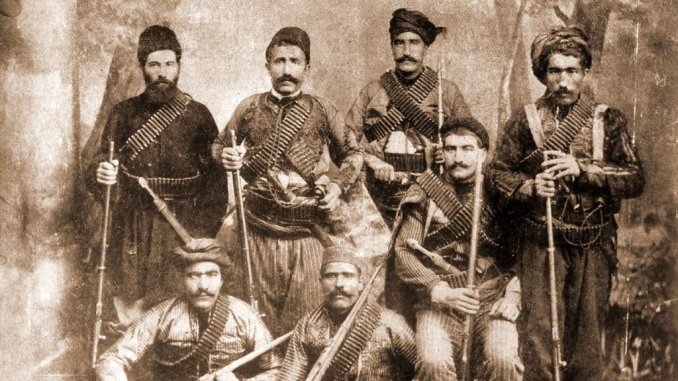
D
The storm hovered with force over the heights of Tsovasar.
Tsirin-katar fell silent and remained standing like a monument. Under a rock Gale’s corpse remained unburied. The black tidings came with the dark clouds and thickened above Seyran’s hearth. The village crouched upon itself and was terrified of that great mourning, which was extinguishing even the last spark of an ancestral hearth.
Seyran shut herself in the tondrtun. Those coming and going heard and were silent. Chin in hand she thought, she thought…
With a thin and deep grief she watched the brides, who like a shadow would appear and moan Gale’s loss, which was making their old wound bleed. Seyran’s heart was wrung with inexplicable pains, and not even a drop of tear was pressed from her eyes, that the heart might grow light. In the dark of night, until light, she spoke with herself. She judged, she wept in spirit,she dreamed, she wandered the mountains, she bound the wounds, she wiped the sweat and the blood of the fighters and the wounded, she took heart and returned to her faith…
One morning, the brides saw Gale’s cap and fez hung beside the others, which formed three little sanctuaries for this faithful mother’s heart.
Seyran came out of the house with the weight of her mourning, but self-sacrificing and wholly devoted she opened her heart to those who had grief. She consoled those mothers and brides who had a wandering valiant one.
– May they remain alive, our dried blood a sacrifice on their road.
And in this consolation Seyran would find her consolation too, because when she said «THEY», the three caps hung from the tondrtun would become fedayis, and she would see the stout statures of Poghe, of Moso and of Gale, who were passing from Tsovasar — clad in sword and armour.
Seyran came out again — to wear out the road of the prelacy and the prison.
She was silent as stone, and the soul firm — as iron, which has no longer anything fresh.
The Poghean’s bright house entered its shadow. The plough passed to others. The remaining fields the neighbours ploughed and sowed by halves. The oxen were emptied from the great stable, and only a few milch cows remained — to wet the dried hearth.
The younger bride could not bear all this, she received leave and passed to her father’s house. Seyran pressed her heart and with a movement of the head gave her consent, but the bride’s departure weighed on her heart like a millstone, and the world appeared hollow to her eye. This one opened like a wound, which she could not forget until her death.
The elder bride bound herself to Seyran’s shadow, she withered her youth within these mourning walls, and together with the mother, like two candles they burned and melted before the sanctuary of the caps — consoled by the faith of immortality.
The fedayis — in the days of persecution, by fives and tens directed their steps toward Seyran’s house, at midnight they pushed the door softly and entered, as they would before a safe cave. The memory of three heroes, and especially Seyran’s presence, had turned the Poghean’s house into an unbetraying fortress of the revolution, where those who had given up their life could sleep one day — without a trembling of the heart.
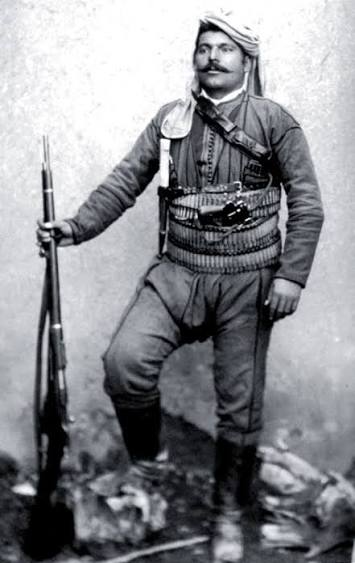
The fedayis would dry their soaked bodies over the ever-burning tonir: and Seyran would become a thousand pieces — to lavish her tenderness on these valiant sons, with the longing and the dream of whom she would pass every night,
In the quiet and dim light of an oil lamp,.when the beaten fedayis would gather around the tonir — to eat fresh bread and sour soup, the tragedy of the hearth would possess these men of stone, who would have the heart to ask.
– Mother, how are you?
– May you remain alive…
After this warm heartfelt answer, the lips would clench — to restrain the wave of the heart: she would raise her brows toward the row of caps and from the depth of the soul, faithful — she would add.
– May they remain alive… May you remain alive.
A religious silence would descend upon them all»…
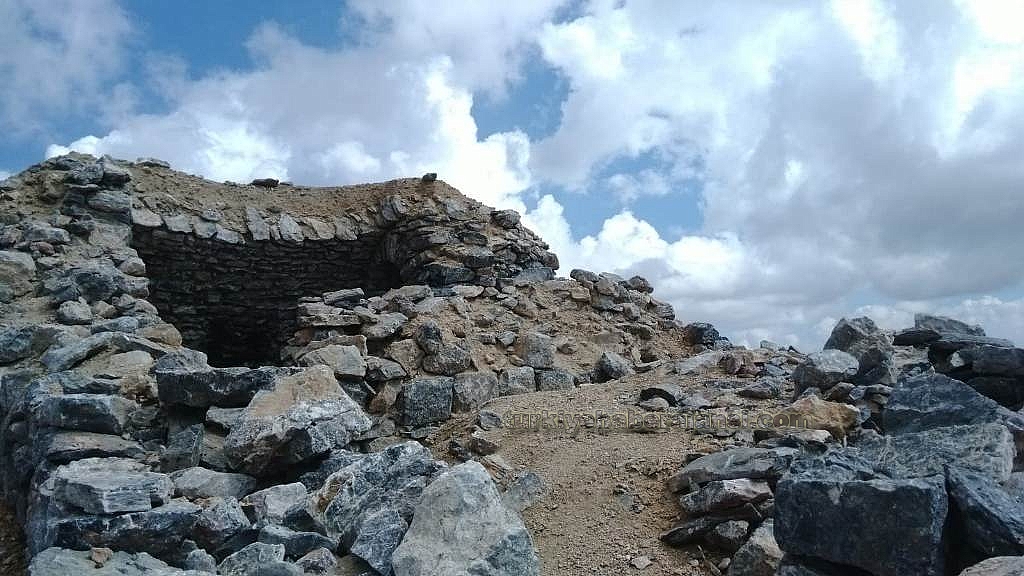
…«The tottering tondrtun would remain standing by the sacred memory of her three sons.
She remained clinging to the memories, and her eyes watered from waiting for the immortals.
Z
That Sunday Argavank was in a bustle. The village had lost its monotonous quiet. And people were moving more quickly, the conversations were proceeding aloud and vigorous, instead of the usual silence.
The general inspector of the schools, for the first time, was to visit Argavank,.and his visit had a double significance in the eyes of this labouring multitude, which had heard from mouth to mouth that the new inspector was the founder of the revolution and its apostle at the same time:, the type of the self-sacrifice of old days, the greatest of all revolutionaries, and the object of worship. The inspector had come and gone from distant horizons to spread light and spirit in the ancient light-giving cradle of Sahak and Mashtots.
And the village, which awaits an extraordinary event, once a year to burst out of its unmoving and silent life, with the confusion of a torrent was piling one upon another — seizing the lower streets and the roofs of the village, and having formed many-coloured clusters — was leaning toward the opposite road, which led to the city.
Only in that rare short moment, the villager would forget the field and the palm, the plough and the sickle, so that, a little later, his curiosity barely satisfied, he would return to everyday life, quiet as the soil, patient as the ox, a fatalistic eternity on his face.
The apostle of the revolution is to come…
The news, which like fire from tonir to tonir had passed making the circuit of the village, under Seyran’s roof was recorded only with the title of representative of the revolution,.the inspector given over to oblivion. Each one in the manner of satisfying his soul’s curiosity would understand this coming. The elder and the elder’s deputies, the village-head and the schoolmaster, wanted to greet the inspector, to appear with a white face before him — to secure a contribution for the school.
The village committee and the band-leaders wanted to present themselves to the representative of the revolution with a display of their whole composition. The old comrades crouched in modesty were nourishing a dim light — to greet a revolutionary apostle of past days, simple and unspoiled, the ideal and unbending leader.
For the multitude that had remained rustic the one coming was the great one of the nation, endowed with all kinds of attributes, and the word «nation» had the meaning of revolution with this multitude.
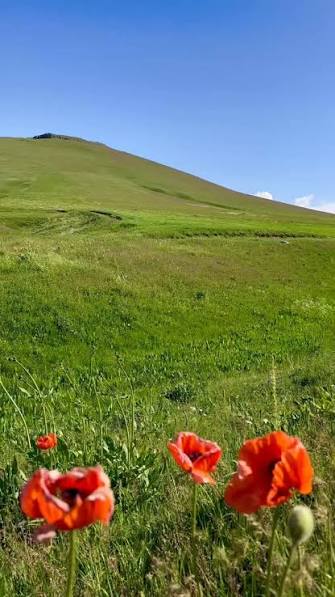
The inspector had set out from the city. On foot he was passing through the villages, leaning on a pastoral staff. He was dressed simply and without care. From his shoulder hung a leather bag, in which were placed his notebooks and a piece of bread. His greying beard and hair given to the wind — he was passing through the flowering fields.
Bright was his broad brow, and on his face there was a sweet and captivating smile. A deep and dreamy mystery was shining in his radiating eyes. He,.like a warm and widespread breath — would open to his surroundings, would embrace the soil and the villager, man and nature. From his appearance a complete dedication was reflected, as if he were an ancient hermit newly come down from the mountains, from whose silence wisdom and goodness were dripping.
The inspector had come from smiling and prosperous capitals, from the webs of glory, where the dailies in large letters would record the names of orators, where the pedestals of ambition were arrayed in an open circus, where men confused enthusiasm with great victories. Having voluntarily renounced all the pleasures of life — he had always avoided the glittering glories,.like his shadow,.without being able to lock them in his eyes,.the soul always troubled,.he mixed with the toiling and silent multitudes and was imbued with their deep and immeasurable emotions.
The founder of the revolution was filled with sadness from this glory-seeking atmosphere, he branded the proud,.he rained thunderbolts on the heads of the unscrupulous, moral terror became the lot of all the great ones and for a moment doubt possessed this firm soul. Unable to bear these mad self-denials, one day he left Polis, which was on fire with speeches,and took the road of the land of Taron — to become a brother there with the silent and petrified hearts, to take the smell of the labourers’ sweat and to read the history of nameless heroes written in blood upon that soil and those rocks.
Here, where fifteen centuries having taken tongue — were speaking to him from ruined fortresses, from the cupolas of monasteries, from split rocks,.he found a silent and iron people — bent over the plough, but sometimes seizing Tur-Getzak, full of wounds, but — valiant, flayed, but — proud, nameless, but — wise and self-sacrificing.
And he loved his faith — concerning the revolution founded by his own hand. The founder of the revolution found the true temple of his great work in that country and with consolation approached all those who in their soul kept buried the faith of the sacred covenant.
Night and day, a pastoral staff in his hand, he wandered mountain and plain, heard and recorded the crucifixion and the martyrdom of the believers of past days, became acquainted with all the folds of the secret work, prepared the list of names of all those silent men who walked through the darkness — lit by the lamp of their soul, grew familiar and made friends with those of whom the papers had not written, from the platforms whose names had not sounded, who however formed the salt of Armenian life, – the moral building of the revolution was rising upon their shoulders.
The apostle approached all these like an old and known comrade, spoke with them without a preface, as if to continue a conversation left unfinished years before.
The pedestal of the great and the powerful cracked. A moral blight touched their faces. The sleep of prelates, abbots and notable men fled. And they were bewildered by the scourge of this unofficial called one, who had come to cleanse the sacred temple of the revolution of Pharisees…
The apostle that day had taken the road of Argavank filled with old thoughts and emotions, and drunken with the life-giving mystery of the abundant plain, to the teacher accompanying him he was speaking of the soil and the village, of future possibilities. He was a learned man, and at the same time an inspired believer.
Argavank was spread before him. Below the village the road had come and plunged into the black piles of fallow, and like a long grey sheet was shivering in the open plain. The inspector paused a moment,.he embraced the surroundings, drew a deep breath. A memory — like an old dream, played in his thoughtful eyes. A tragedy known to him, ever known, come and gone,.fresher, more palpable, flooded his heart.
A deep silence descended upon them. And they like weary pilgrims approached the village.
The village in the order of its stature,.in official position has seized the mouth of the road.
Confusion, questioning glances.
– Is it he, is it not he…
Doubt, movement, disappointment.
Neither horseman, nor pomp. But the one coming in his simplicity seems to carry an unnamed awe. The villagers for a moment think upon the simplicity of hermits. At last, the village schoolmaster recognizes.
– It is the inspector, yes, yes, it is he.
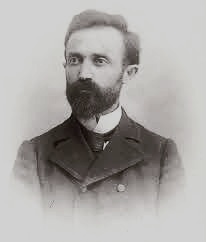
The feet of the village-head, the band-leader and the schoolmaster become entangled with one another.
– Welcome, a thousand welcomes, upon our head, upon our eye.
– Greeting…
And the people crowded behind them and upon the eaves still look into the distance, to greet the appearance of horsemen.
– Pray enter, pray enter.
The village elders take the word from one another’s mouth. The inspector — leaning on his staff, kind, very kind looks at them, but he thinks.
– I wish to visit Seyran’s house.
– Mr. inspector, let us go, rest, then…
The village and the inspector do not understand one another.
Two old fedayis — with worn-through treks and earthy breast, approach. In their eyes there is a spark, and on the face — a heart-moving joy.
The spirit of old, old days had woken in them — with the recollection of their lost comrades.
– Let us go, comrade inspector… Let us go to the Poghean’s house, they were our old comrades…
The apostle without a word accompanied them. The village elders kept the official order, and the current with dignity turned and followed them. The memories of harsh days trembled on the lips of mature men. The village as if were newly waking from the drunkenness of the Constitution, with a broken body, thoughtful.
One of the old comrades ran to give Seyran the news. Seyran was standing at the door, far from the rustic mass, but in spirit with them and with a panting beat of the heart she was waiting for him who was to come from Tsovasar.
And behold, from the lower street a humble one was coming up, a compassionate and speaking smile on his face, bringing an old and known breath with him, and the village swaying — was following him. In Seyran’s eye Hrayr was pictured, who ten years ago, one day of the bloody days, thus humble, thus apostolic, wearing treks — with lively steps was coming up toward the Poghean’s bright hearth.
After years of long waiting and despair, this coming opened like a miracle in Seyran’s soul. She was seeing with her eyes the return of her worshipped self-sacrificing ones, and with them — the fresh statures of her three valiant sons were filling the Poghean’s threshold.
Seyran forgot the years’ bottomless grief, the joy of finding the sons lost in the mountains sent a wave from the maternal dried veins, and the emotion rose like a warm torrent toward her face. Like a silent and unmoving statue — she was watching the traveller approaching her.
The tears drop by drop were falling from her eyes dried for ten years, and the furrows of tears were dividing in two the smile of happiness, which was trembling on the pale face.
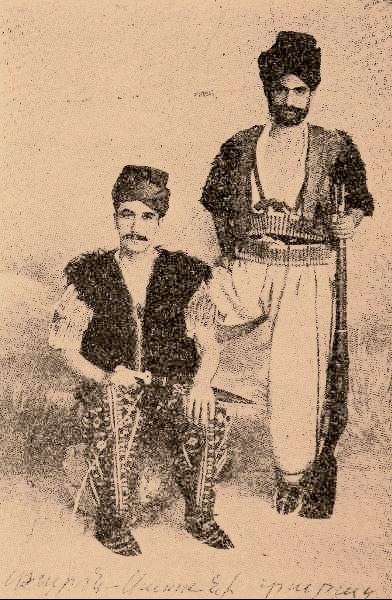
The founder of the revolution and Seyran greeted one another like old acquaintances and fellow-working comrades.
The past had no curtain for them, and time remained on the arrow of past days. They were silent, but their soul was kindled with memories.
– Welcome, you came upon my eye, a sacrifice to the road by which you came…
The inspector with an impossible emotion could only make a tender movement.
They settled in the tondrtun. The old revolutionaries coming and going had broken the salt and bread of the Poghean’s hearth.
The inspector was watching with admiration Seyran’s face, where an impossible tragedy was recorded. The two fedayis — filled with the joy of orphans who have found their parents, were pressed close to the great comrade, one may say — had gone under his arms, intimate and tender.They that day had the psychology of one carrying a victory: the word belonged to them. The village notables were arrayed along the walls, silent and waiting.
The tondrtun — mysterious like a place of prayer, as if was speaking to all of the tragedy enclosed within its four walls.
From Seyran’s eyes tears were flowing of themselves.
She was silent and quiet and on her face a pale smile of happiness was glittering.
The bride was standing by the pillar, unmoving as the pillar, with a pale face.
The fedayis, in an almost inaudible whisper, told the leader of the revolution the history of the lost comrades. Imperceptibly from Seyran they pointed to the caps hung from the wall, which had turned this house into a revolutionary pantheon.
The apostle was filled with boundless sadness. The tragedy of the Poghean’s house and this bereaved mother’s faith were growing – to the degree of becoming boundless – in the apostle’s eye , the hardness of the revolution with its whole weight was presenting itself to the founder of that pitiless movement, and he, bewildered before this untold grief remained — not finding a word of consolation and of comfort to address to a mother, who without being brought down had stood like an oak against terrible storms.
Crushed and exhausted by that bitter and storming reality — he instinctively took refuge in the ordinary expression.
– How are you, mother…
Yet the ordinary question, which had been given without the expectation of receiving an answer, was sounding deep, very deep within Seyran’s heart, and she, filled with tenderness and dedication, with a bright and faithful face would answer.
– May you remain alive… May they remain alive…
Seyran’s hand and eyes remained stretched toward the caps of Poghe, of Moso and of Gale, and the face was anointed with a wondrous vision.
A shiver passed through everyone’s body.
The apostle of the revolution saw the treasury of his great founded work embodied in this woman. With a reverent soul he looked at Seyran, looked at the Temple of the Immortals, bowed and with great emotion kissed the mother’s hand.
Silence had stood as a liturgy in everyone’s soul. The old revolutionary spirit was smouldering under the Poghean’s ceiling — with the fragrance of incense. And the breezes — thousand-winged, having taken the moral breath condensed in the atmosphere — were carrying it to the distant villages and towns.
The idea of immortality having risen again — once more wandered in the Land of Taron — like a ghost.
Seyran that evening stood long on the threshold of the house and looked at the high mountains. When twilight descended and thickened upon the roofs of Argavank, she returned to the tondrtun and told the bride that with her eyes she saw Poghe, Moso and Gale, who like rocks giving one another their backs — were passing armed down the slopes of Tsovasar…
K. SASUNI
«THE MYSTERY OF THE MOUNTAINS» («Let them remain alive», «BAGIN» monthly, 1977, no. 11, Beirut)
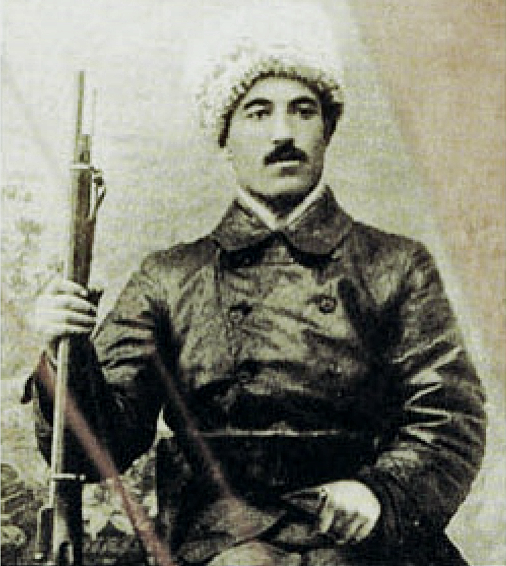
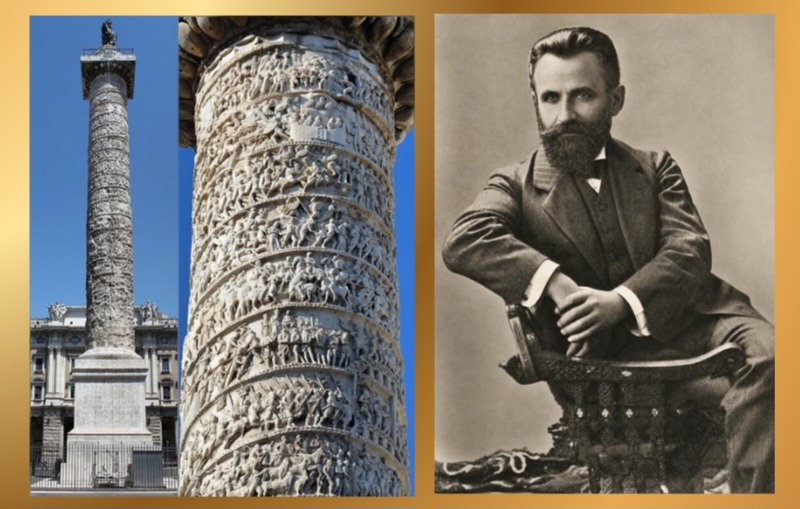
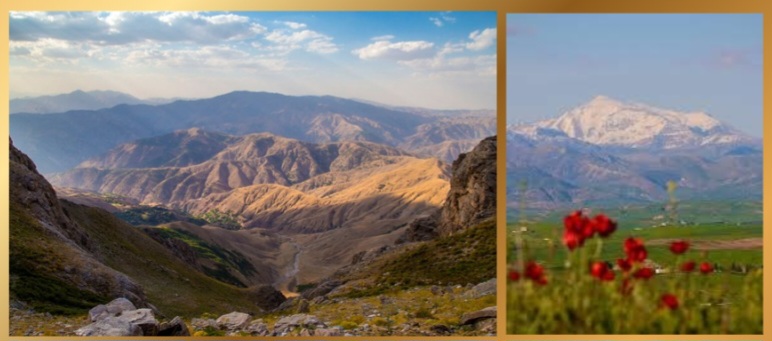
From Karo Sasuni’s photographs