






















TRNDEZ – «THE GREAT MIST FELL, THE SNOWMELT FELL»…
At the sources of the most ancient feasts and rites is Nature, the mystery of Cosmic order, the cycles of the year, by which Man’s vital activity, the continuance of Life, is conditioned.
Consequently the ritual calendar is strictly regulated and any change breaks the logical chain.
The Armenian calendar, formed on the basis of the Haykian teaching — Sun-worship — is a testimony of what has been said.
The Haykazunis have for millennia marked and to this day mark the beginning of the new year at the coming of spring — glorifying the successive Reawakening of ever-renewing Nature, when after the winter «slumber» vegetation blooms again, the soil bears fruit and again calls to life the whole animal world…
«The great mist fell, the snowmelt fell,
The soil breathed, the breeze came,
The sun rose, brightly rayed,
It made inquiry, bent toward the soil.
The Sun
— Pretty girl, what shall I send you.
The Girl
— I want flowers of every kind.
The Sun
— O springs, o little rivers,
Are you still asleep beneath the ice.
Come out, come out,
Quickly, toward the light,
With new liveliness
And with new strength
Babble
And call
The pretty ones asleep in the soil —
The flowers and the shoots»…
In this poem written by Hovhannes Tumanyan in the year 1913 is the joy brought by the snowmelt — the tidings of Nature’s Reawakening — of the Earth’s «new breath»…
This mystery is marked by the Armenians who have remained faithful to the Armenian national traditions — with the feasts of Trndez, of Barekendan — glorifying the fire and the light distributed by the life-giving Sun…
Trndez has come —
The great mist fell…
In parallel with the passing year, people take leave of «the old» — by special rites they purify their mind, their body and the surrounding world (the house, the dwelling, the streets…).
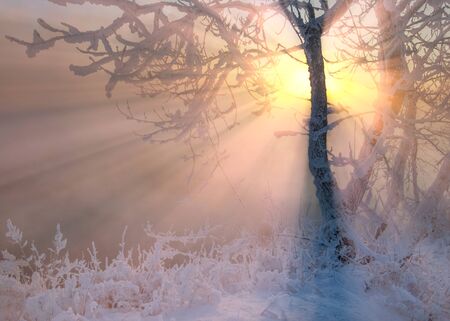
In order to mark the ripening of Nature and with the aim of stimulating the coming fruitfulness they organize special ritual celebrations, among which are Trndez, Barekendan.
The firebrands taken from the ritual bonfire of Trndez — the half-burnt sticks — they turn around their house, they light the dark corners of the rooms and of the stable, with those firebrands they light the lamp of the house, they renew the fire of the tonir, with burning sticks they hold firework displays in the gardens, in the meadows and in the fields — with a view to abundant harvest.
After the «bitterness» of the harsh winter, after the «distresses» caused by the winds, the frosts, the snowmelt brings the tidings of the approaching coming of spring — the awakening of people shut in their houses, of animals that have wintered in their dens, of the plant world that has gone to sleep under the soil — from the «wintering-place — the winter rest».
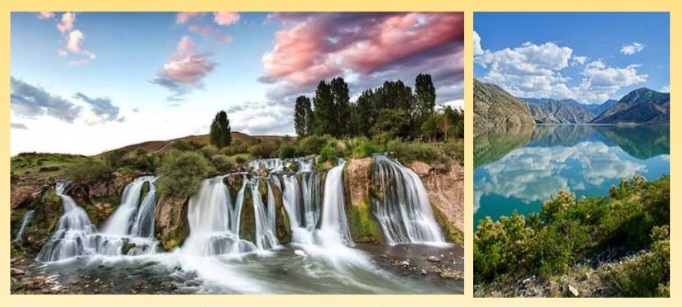
When «the downpour of snow» and «the blizzard of the wind-beaten winter» pass, the snowmelt announces the coming of spring — the stirring that replaces the winter quiet, when the ice splits and beneath it the murmur of the river is heard – the Good Vitality of the Earth…
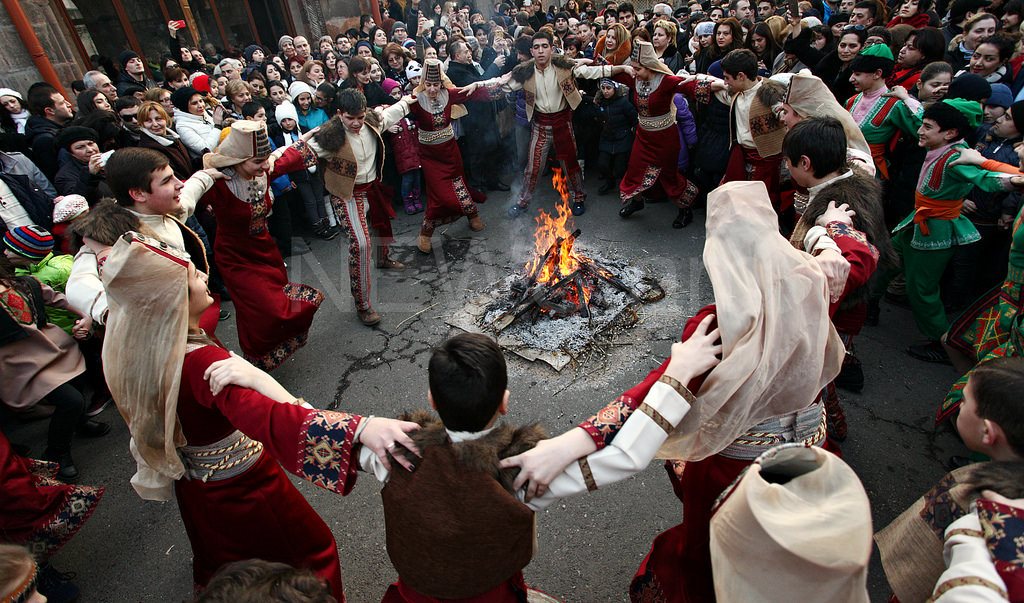
«The feasts and rites marked from the most ancient times until today at different times of the year are not simply calendar events, but deeply mysterious rituals, which are a means of restoring Man’s connection with the Universe, with the general order of Nature, with the value-system of the Ancestors»,- the Kurms of the Haykian Brotherhood explain.
«The feasts have been formed in commemoration of the continuance of Life, in glorification of the inexhaustible vital force, in confirmation of the succession of the seasons upon the Earth — of the transitional moments — to stimulate the fruitfulness of the soil, of animals, of people, and, in the memory of generations, to strengthen the cultural bond with the Forefathers.
Consequently every action of the ritual bears an exceedingly great mystery and it is important to present the whole rite in its exact meaning»,- writes Kurm Mihr Haykazuni and continues.
«Among the principal feasts of the Haykian calendar is Trndez, which is one of the four auxiliary feasts — with a Creative mystery, and also — the feast of love. We mark it in the month that closes the year — on the Hrand day of the month of Hrotits (on the 15th of February) and it symbolizes the passage toward the coming of spring.
Hrotits – the fire from the foot — in help, in assistance of the upper Fire of the Sun.
The patrons of the feast are Victorious-armed Vahagn and Glorious Mihr the Gods — as bearers of the mystery of the Fire element that symbolizes martial valour, the will, for the mystery of the feast is Fire, around the Fire the ritual ceremonies unfold.
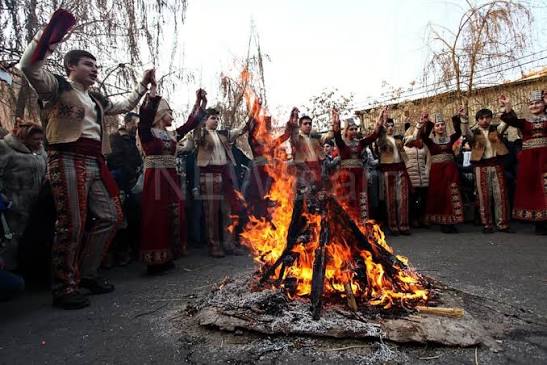
The etymology of the word «Trndez» – «atr end dez»: the fire under the dez — the pile of wood…
The feast is dedicated to Fire, which of the four elements is «the finest and the lightest — burning and light-giving». The symbolic colour of the feast is yellow.
Fire in the form of a blazing bonfire is the symbolic assistance by Fire to man’s foot — to the root, to the foundation, and also — to the body, to the soil, to the whole of Nature — hastening the snowmelt that begins after the harsh months and the return of sun-blazing days.
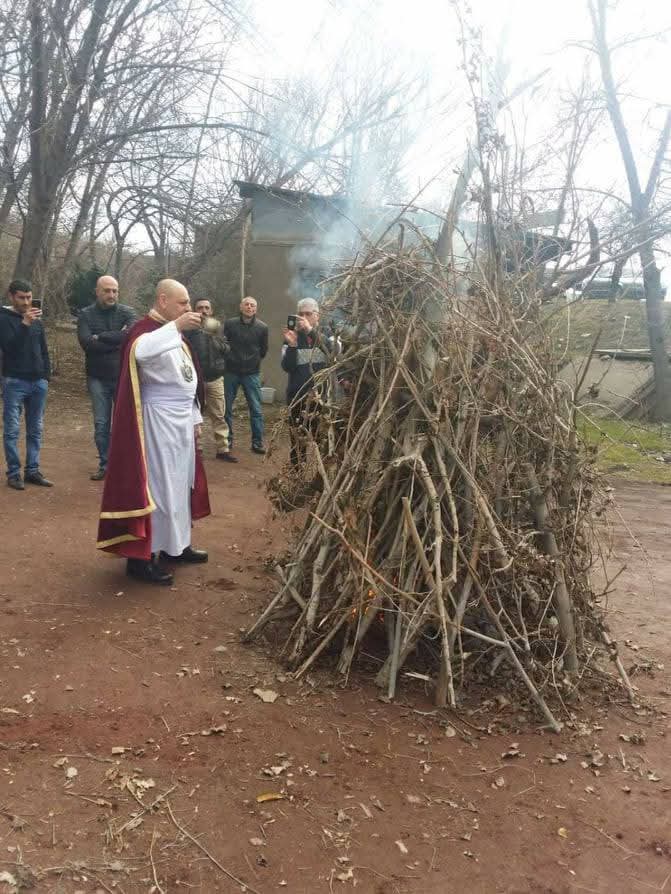
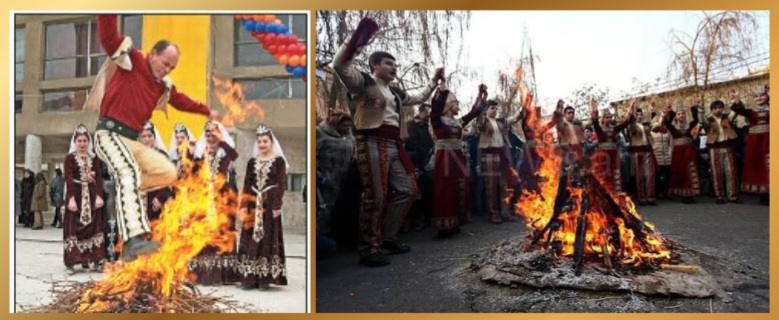
On the feast of Trndez people jump over the hill-shaped piled flame-burning bonfire, so that «the fire may take to man’s body», so that the fire with the light and the warmth of its rays may flood people’s body and mind — consciousness.
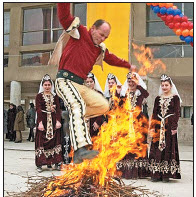
For people fire is not only a source of warmth or of light, but also — a means of living connection — between Man and the Universe.
It has the mystery of the Creative First-beginning and is perceived as the symbol of the Life-giving Sun — upon the Earth. Hence also — one of the principal mysteries of Sun-worship — the Ever-burning Fire that burns in the temple — in the sense of the continuance of Cosmic order.
Fire has a purifying, transforming power and in that regard is greatly applied in various rituals (the circling around the fire, the jumping over the fire, the «anointing» of weapons with fire — the purifying)…
The principal rite of the feast of Trndez is the kindling of the bonfire — with fire brought from the hearth. Its hot flames in a symbolic sense «strengthen the warmth of the Sun upon the Earth». Over the bonfire jump the newlyweds, the young people, the families — in sign of Rebirth, of fruitfulness of harvest, of driving away illnesses, of ensuring abundant fruitfulness…
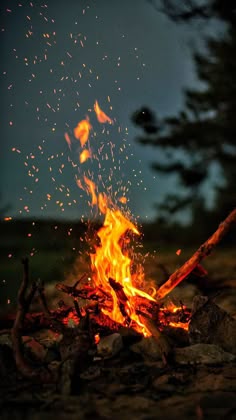
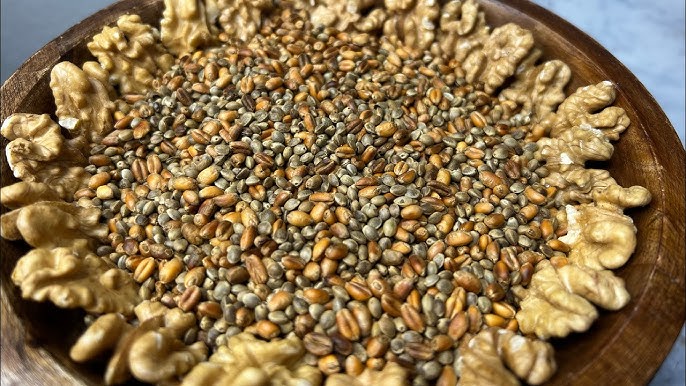
The ritual bonfire of Trndez is kindled with the help of offered grains placed under a stack prepared beforehand of specially chosen, clean wood, with the addition of rose-oil, of fragrant plants. From that sacred fire a spark — a particle people take to their home — in sign of the continuance of the Light of Life, of well-being… They divide it and offer it to close ones, to kinsmen.
At the end they do not extinguish it with water, but with the ash of the bonfire they quench the last glimmerings of the fire (or they cover it with earth).
At the coming of spring — the feast of Trndez that precedes the Areg day of the month of Areg — the Armenian New Year — has also the meaning of being freed by fire from «the old». The Coming of Spring that follows the passing winter announces a new beginning — new plans, new fruitfulness…
With the round-dances unfolding around the ritual bonfire the Haykazun Arevordis send off the cold of winter and greet the awakening of Nature from the winter «drowse», when the Sun «born» on the Mihr day of the month of Mehekan is already 54 days old and with the return of the warmth of the weather the period of Nature’s coming ripening, of fruitfulness, begins — in expectation of the Earth’s «motherhood».
In harmony with Nature, people too prepare for the re-blossoming of the vital forces — with the happy expectation of love and of fruit-bearing.
With the ritual fire of Trndez the Haykazunis warm, purify the body, the heart and the consciousness of the newlyweds, of the lovers, they honour love — offering one another reciprocally symbolic gifts, sweets…
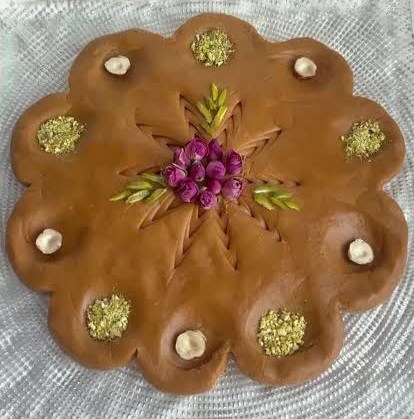
After the celebrations that end with merry feasts announcing the coming of Nature’s reawakening — of Good vitality, of well-being — of prosperous days, with ritual foods, with national dishes, with tables rich in pulses, aghandz, pokhindz, dried fruits, the period of fasting begins — with the restriction of food, with abstinence, the purification of man’s body — of the «inner temple» — and of the mind, and the preparation for greeting Nature’s successive blossoming…
They take leave of winter with the summing-up of the works accomplished in the passing year and they compose the plans of the coming year»: