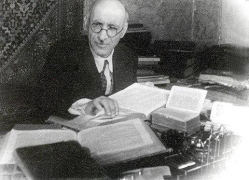











«FROM THE MEMORIES OF MY LIFE» (H. ACHARYAN)
Part B
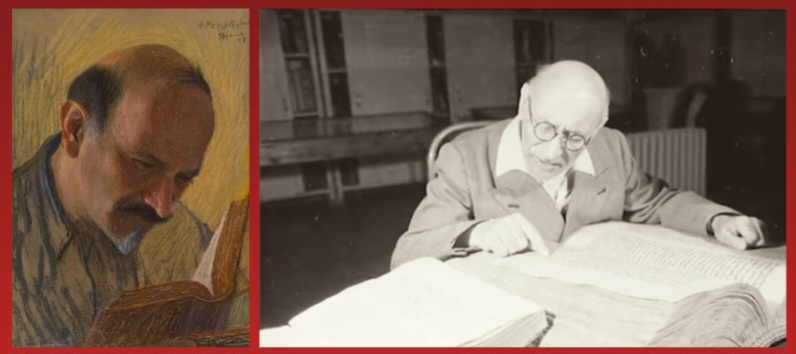
From the very first years of study there appeared the wide range of interests of the future much-accomplished linguist, his boundless love for Armenian studies and his great diligence.
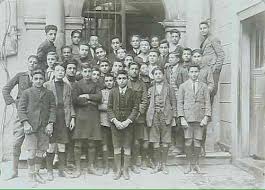
The four years of study spent at the Kedronakan school of Constantinople (1889-1893) are described in his memoirs by Hrachya Acharyan with particular warmth and enthusiasm. It was those years that paved the way to the renowned European seats of learning — preparing the fruitful activity of the scholar’s long years.
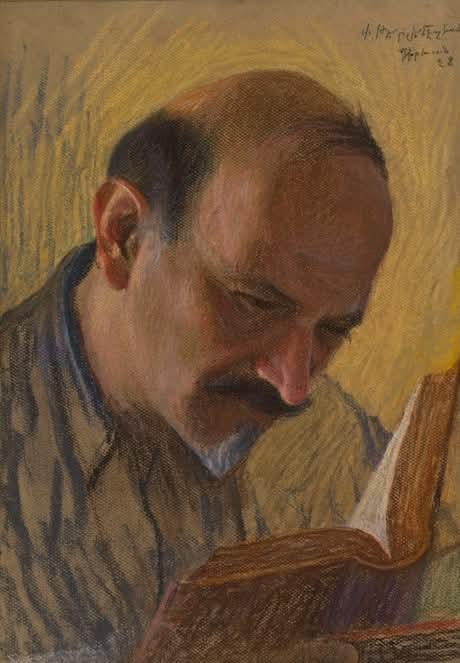
«From the date of entry every pupil received a number at the Kedronakan. The first pupil, who had entered the school in 1885, was a boy from Sebastia named Garegin and bore the number 1. I received the number 150, Nerses — 151.
There were foreign teachers who could not pronounce our names.
They called us up to the lesson by numbers.
We all wore a black uniform — with a high collar and red stripes. On both sides of the collar was written in gold letters — «Kedr. Varzh». On our heads we wore a fez. In this form our uniform was not distinguished from a military one, and often the soldiers standing guard in front of government buildings saluted us, especially at night. In the classroom we wore a long grey smock, on whose breast our number was written.
Pupils who did not know the lesson exchanged their smock with a pupil who knew it, and they themselves received his good mark.
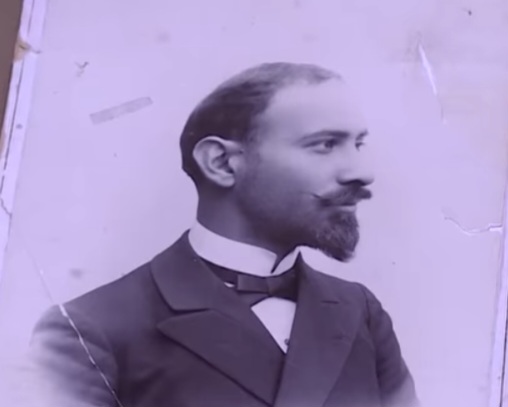
My entering the second class at one go had a great influence on my life.
If I had finished the Kedronakan a year later, I would not have been able to go to Europe, I would have stayed in Constantinople during the period of the massacres and perhaps would have become a victim of prison or slaughter, as many of my comrades did»…
…«One day Karagash brought to class and began to read a paper, in which he wanted to establish that Khorenatsi is not an author of the V. century, but of the IX. I raised my finger and said:
- How can Khorenatsi be an author of the IX. century, if the author of the VII. century Movses Kaghankatvatsi mentions him?
- Eh?!,- he went, confused,- who told you that Kaghankatvatsi mentions him?
- You taught us!
- You do something about this!
He meant to say — «you find the answer to that question».
I did something.
I took the two volumes of Kaghankatvatsi home, read them in one night and noticed that the history that has come down to us under the name of Kaghankatvatsi is a compilation, in which writings of various centuries are gathered. I also found two principal authors, one — from the V. century, the other — from the X., who edited this book.
In this way Karagash was saved.
I wrote an extensive article on this subject and read it at the next lesson.
Karagash, as a former vardapet, put his hand on my head and blessed me.
At that moment the inspector Mostichyan saw us through the window and came in. Karagash related the incident in detail and blessed me once more.
My article was printed in the Venetian «Bazmavep», in the May issue of 1897. The same was written by Doctor of philosophy Manandyan — in July of 1897».
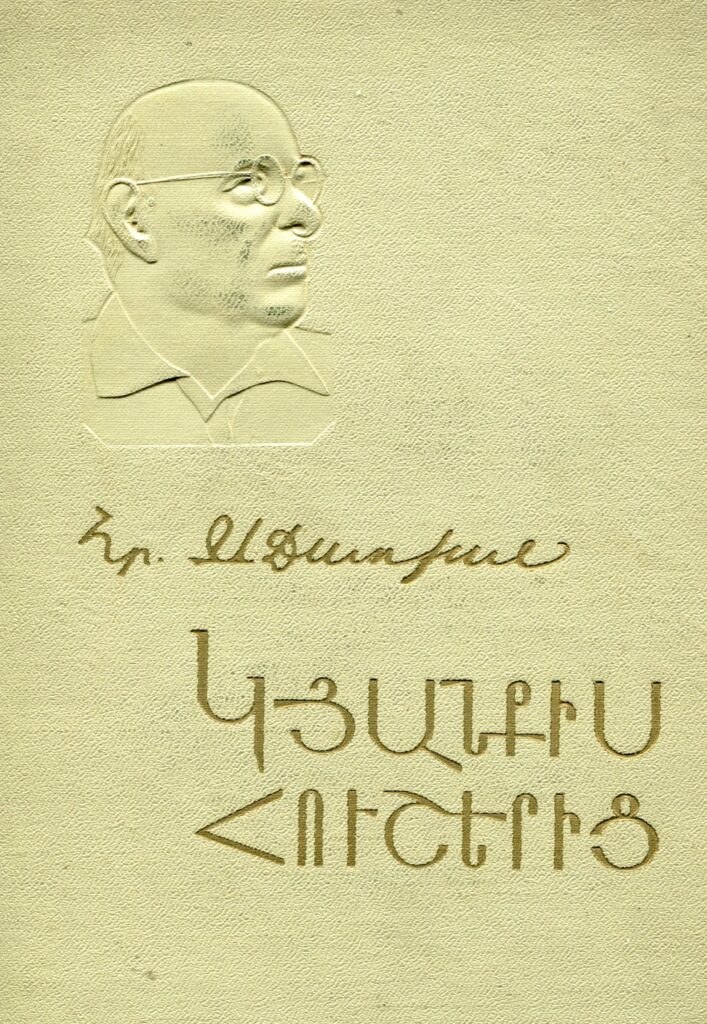
Another passage from H. Acharyan’s book «From the memories of my life» — below…
MY COURSE OF STUDY AT THE KEDRONAKAN
«At the Kedronakan I stayed 4 years (1889-1883)…
The Kedronakan had opened in the year 1886; it gave its first graduates in the year 1891; of the graduates I remember the first — the young man named Garegin from Sebastia, who was the first pupil to enter the Kedronakan.
The second was Ghevond Srvandztyants (from Van); of the others I remember the eminent poet Arshak Chopanyan, who already in his school years was publishing literary articles and poems in the newspapers — under the pseudonym «Fantasio»; in his last year he published a novella — entitled «Paper glory». Then a notebook — entitled «Tremors» and later a volume of poems named «Chimes of dawn».
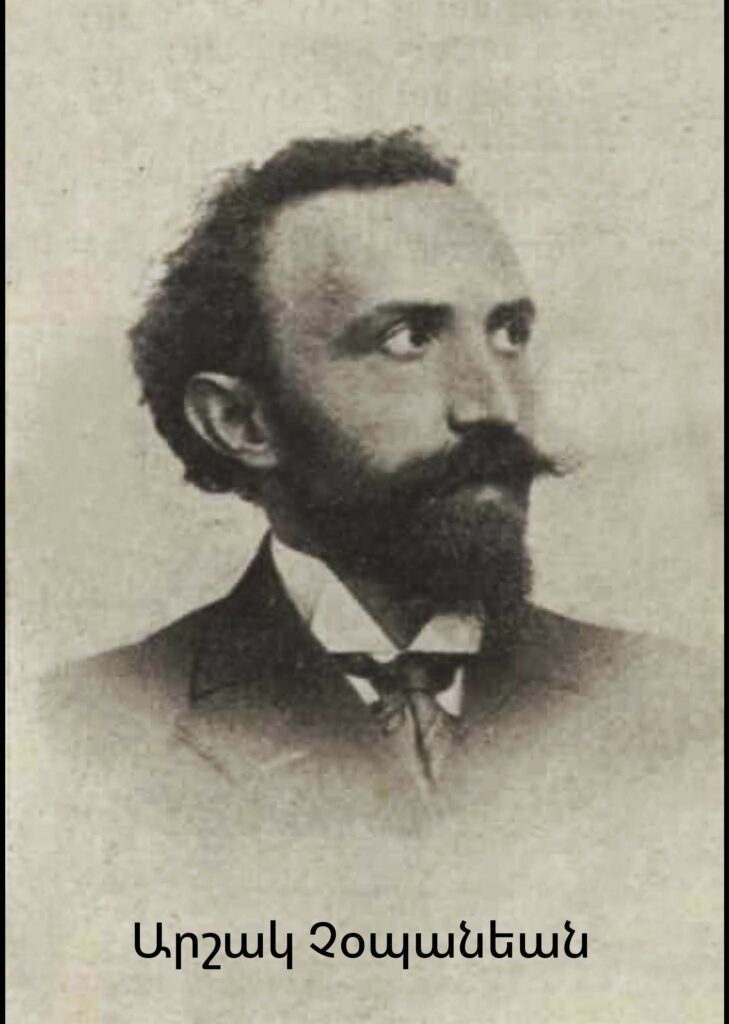
After that he went to Paris, where he published the journal «Anahit».
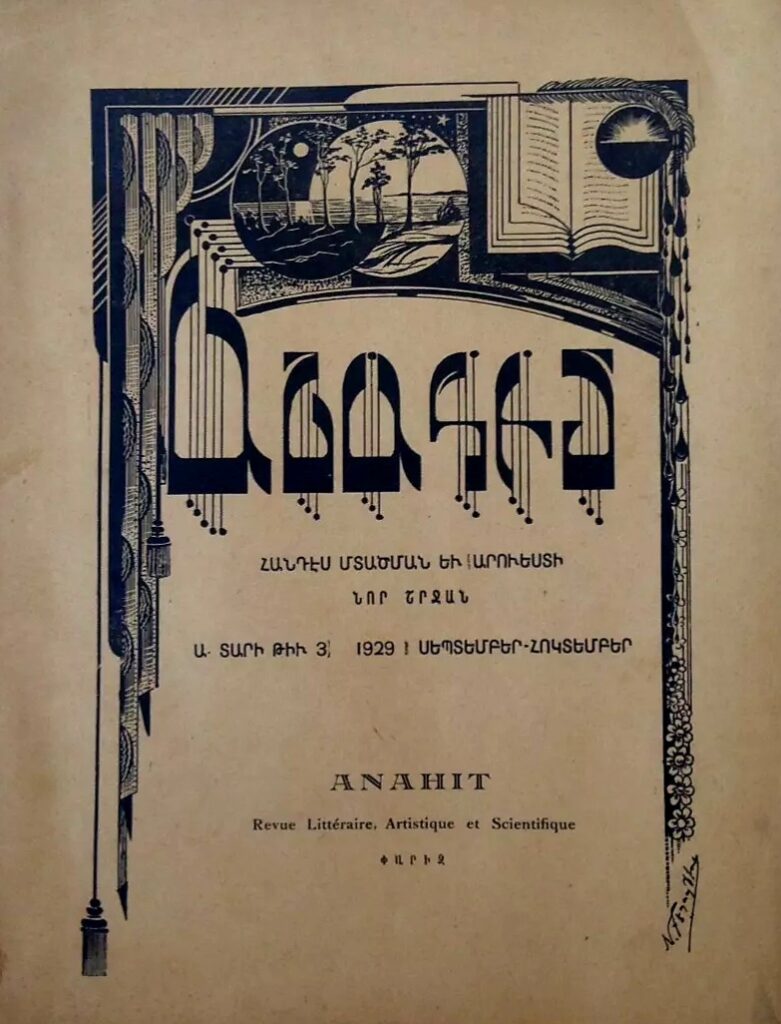
I also remember the young man named Vagharshak, who after graduating went to Paris, studied medicine and became a resident physician of a hospital; a post that few manage to attain.
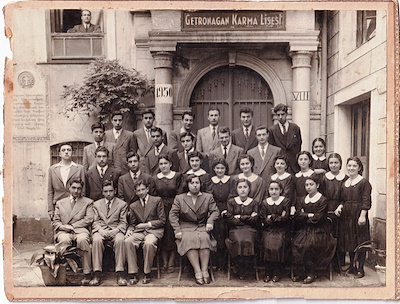
A pupil from Samatia named Mihrdatyan also studied in Paris and became a notable engineer.
But the most notable of all was Yervand Manvelyan, from Hasköy, who also went to Paris — to study at the university. The following interesting incident is told about him.
In Paris the professor lecturing on chemistry writes a group of formulas on the blackboard. Among the students is also Manvelyan, who suddenly, jumping up from his place, shouts: «C’est faux!» (it is wrong): All the students begin to whistle and to beat the floor with their feet. The professor silences everyone and calls Yervand to the platform and asks — «What is wrong?»:
Yervand, explaining all the formulas, stops at one point and says: «Here it is wrong». The professor looks for a long time and says: «You are right»:
All the students are astounded. The lecturer asks:
«Who are you?»:
— «Je suis Arménien», (I am Armenian),– Yervand answers boastfully,- I am a pupil of the Kedronakan school».
After that the lecturer takes Yervand under his guardianship and follows him attentively until graduation.
After graduating Manvelyan enters the Pasteur establishment (Institut Pasteur), whose name is already venerable.
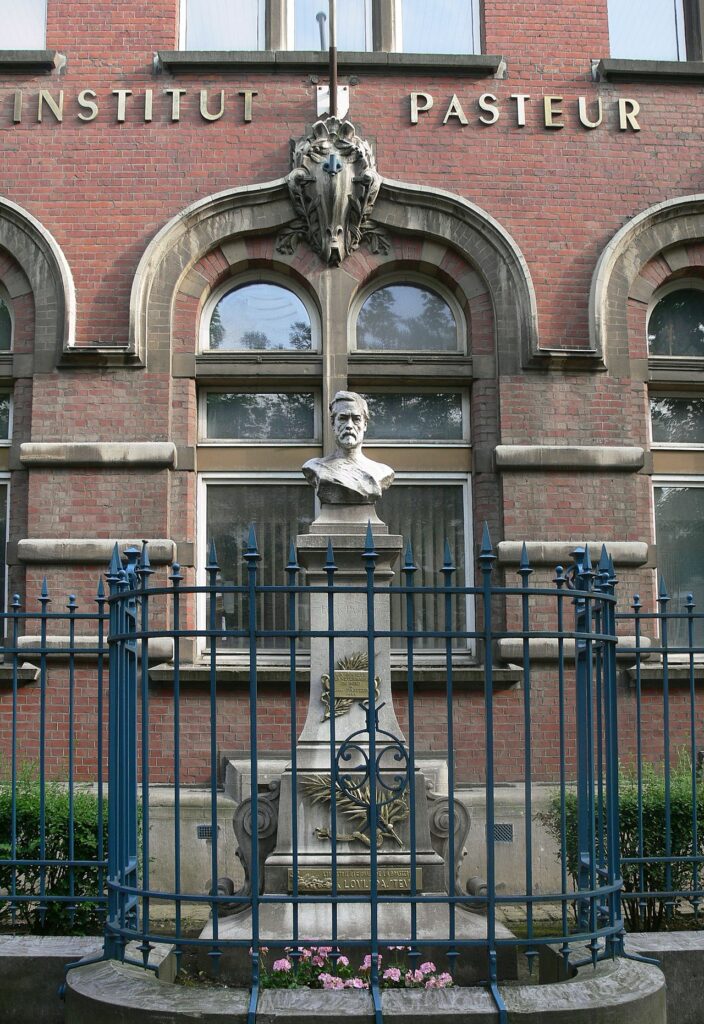
Pasteur was a French scientist who devised in medicine a particular system of treatment, which is called Pasteurian after his name. With this system he first found the remedy for curing rabies, which has spread throughout the whole world. But Pasteur was unable to find the microbe of rabies and bequeathed that one of his pupils should find it. Yervand Manvelyan found that microbe. He also found numerous important secrets about the structure of the brain and became a notable scientist. A couple of years ago our Academy invited him to Yerevan to give a few scientific lectures, but he was unable to come»…
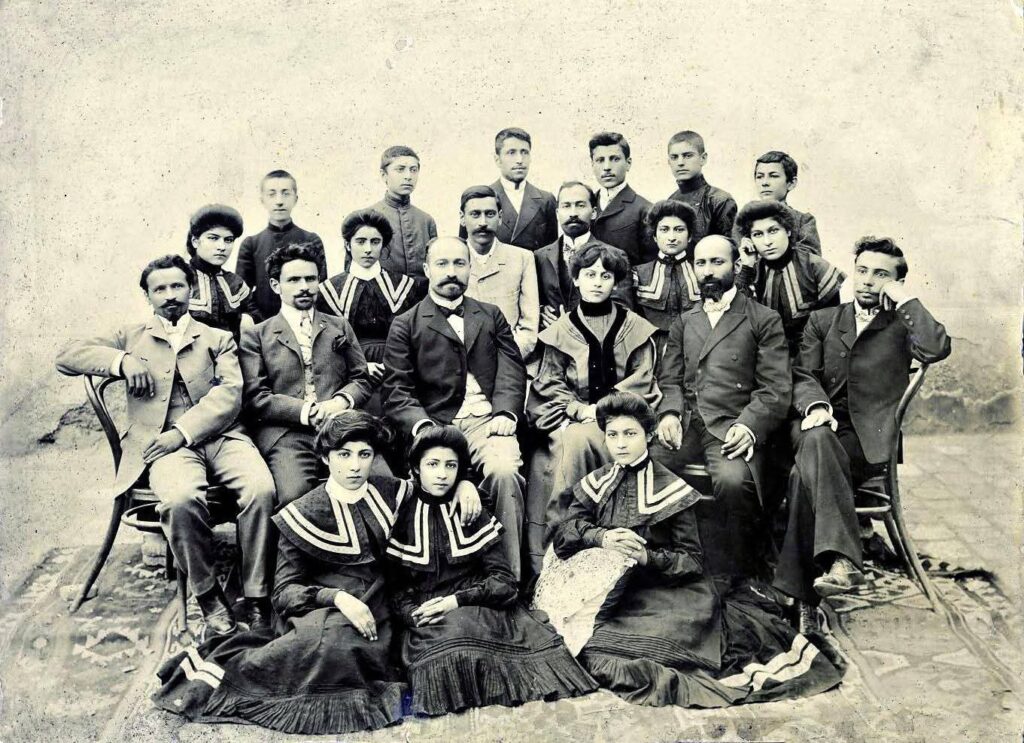
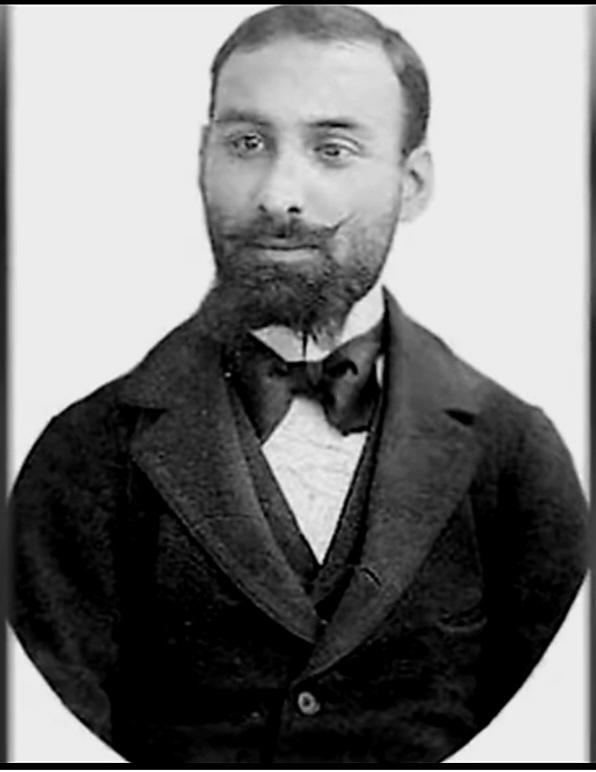
«… Our teacher of Armenian was the worthy-of-memory Anton Matatia Karakashyan, whom we called by a short word Karagash Efendi (at that time by saying Armenian we understood Grabar; while we did not learn the grammar of Ashkharhabar, but only wrote compositions). Karagash was one of the Mekhitarist fathers of Vienna; he was one of the first authors of the discovery of Golden-Age Armenian; later he — adhering to Büchner’s materialist (materialistic ) philosophy, had left the habit and become a layman.
He knew Grabar as no one knew it. The most unusual word — when we asked, he immediately began to enumerate that the word is used in such and such a chapter of Eznik or in such and such a passage of Chrysostom, and immediately recited those attestations by heart.
Unfortunately in our time there was no Grabar literature; history books were forbidden by the state; Chrysostom, Ephrem the Syrian, Basil’s Hexaemeron, Eusebius and similar books were not available on the market — because they had been printed in Venice.
All that we had learned only from the history of ancient literature, whose teacher was Karagash Efendi himself. Our textbook was Eznik, which we had almost learned by heart.
Besides that, we continually made Grabar translations of La Fontaine’s fables.
Karagash — being a fanatical Golden-Age man, did not allow us to read any later Grabar book, and as for the books written by the Mekhitarists of Venice, he hated them with a passion.
The «Telemachus» translated by Hyurmyuz he called «the language of persuading a whore».
Ashkharhabar was for him a monstrosity:
«What does «under the power» mean? «under» — what is it? «under»… say «ynd ishkhanutyamb»:
The dropping of prepositions is vulgarity; that is Turkish».
Such extreme words, in other cases inadmissible, Karagash used, but we listened to his words with great reverence.
He — following Büchner’s materialist philosophy, was godless:
«What is God?»,- he would say and, pointing to his tobacco tin or to other objects, would say: «Here, this is God, that too is God, everything is God»:
That is — matter itself is God, and God himself is matter.
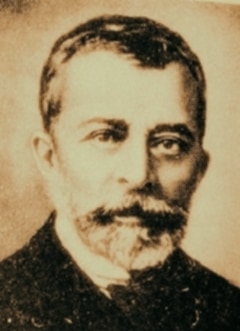
«Karagash»
He was a decrepit old man, but still had all his wits about him. Boundlessly kind, he taught not as a teacher, but as a comrade. During the lesson he gathered us all around him and studied with us that way.
He was exceedingly naive. One day, one of the pupils standing on his left whispered in Karagash’s ear that the pupil standing on his right side was a thief.
Karagash looked at him in fear and, taking his watch out of his right pocket, put it in his left pocket.
Another day, on entering the classroom, he had brought in his hand something wrapped in a red handkerchief and, as if secretly, quietly put it under the lectern and began the lesson.
One of the pupils looked and saw that what he had brought was jujubes.
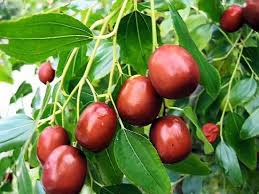
In a few minutes we ate up all the jujubes.
When the lesson ended, and Karagash, having forgotten his jujubes, was leaving, «Karagash Efendi, you had put something here»,- we called out.
Karagash remembered and came back, bent down under the lectern and, seeing only the empty handkerchief, said:
«I had brought something here».
«What thing?»,- we asked — as if knowing nothing.
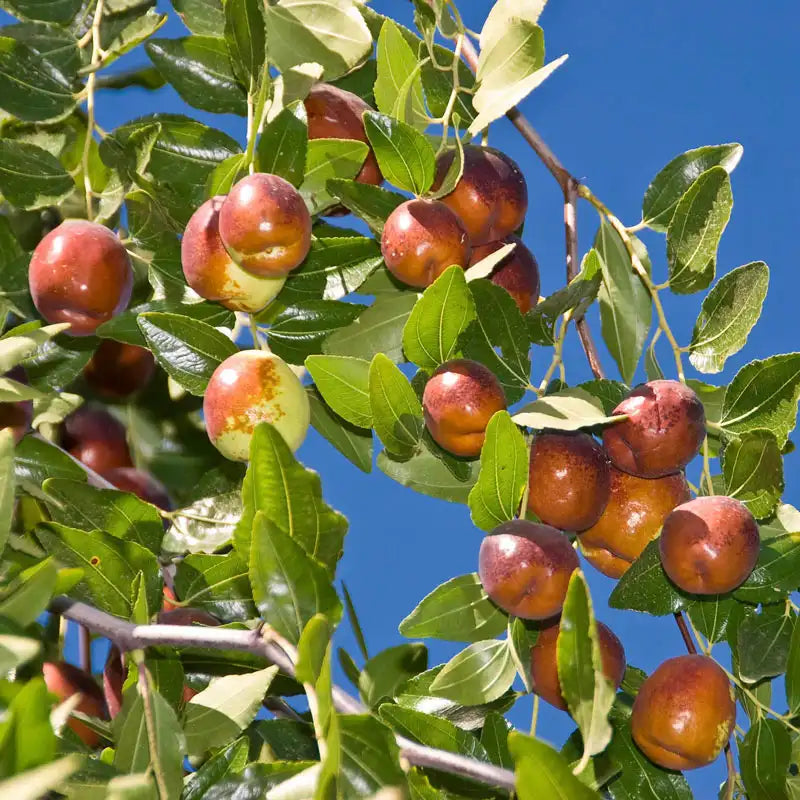
Karagash was ashamed to say, but in the end said that it was jujubes.
«Oh, why didn’t you tell us, we would have kept them; there are many mice here, the mice have carried them off».
That is how naive he was»…