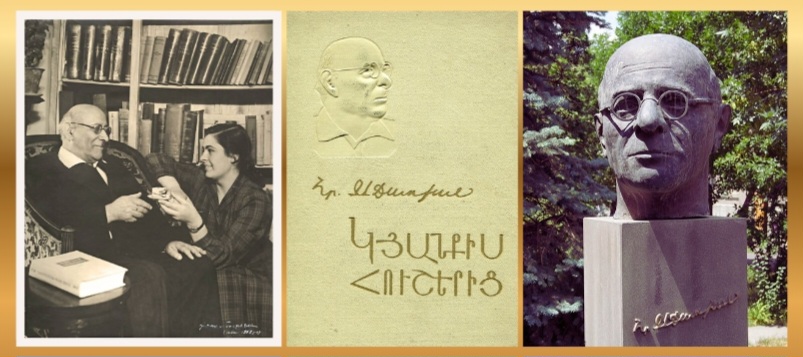
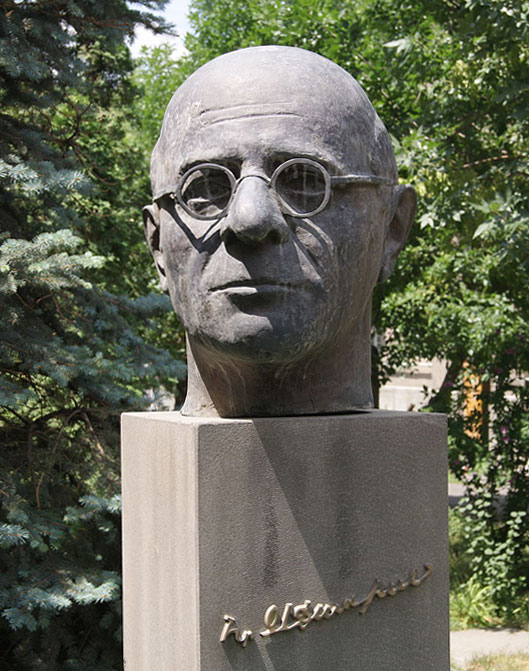
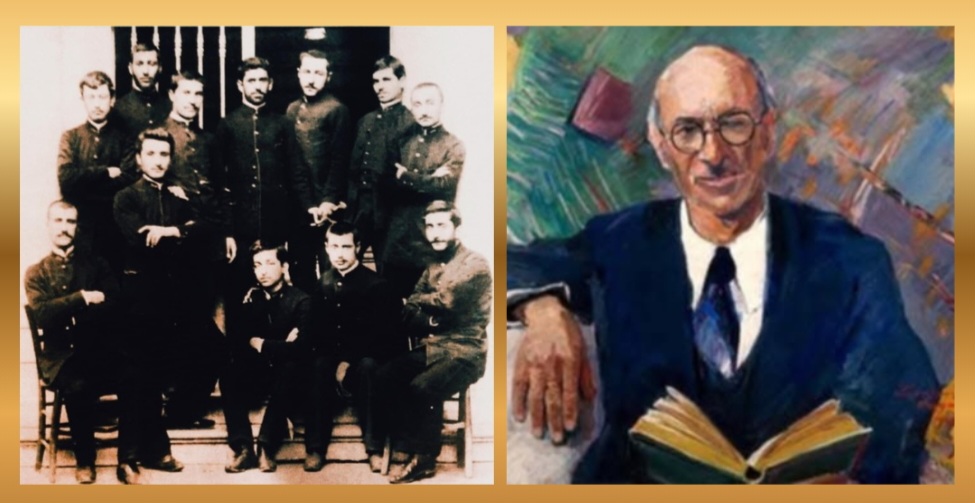
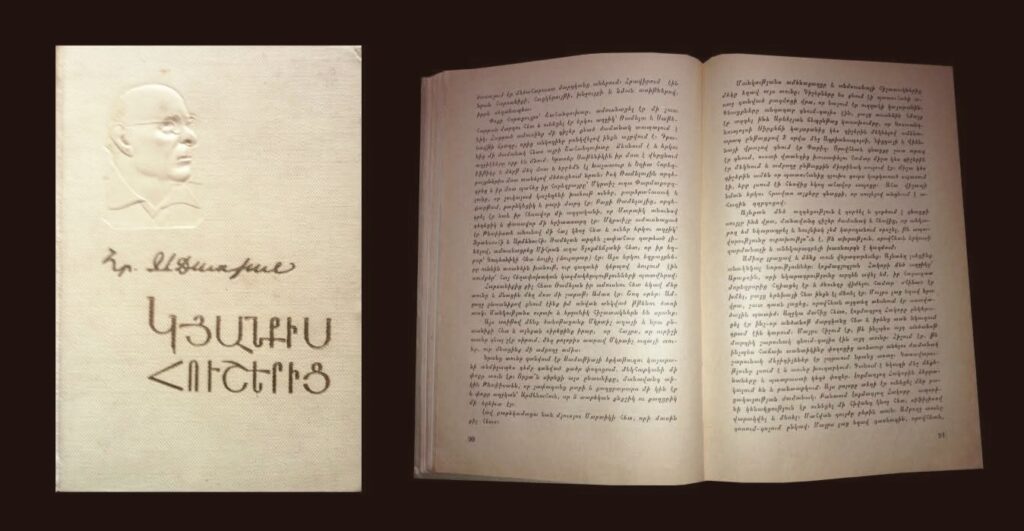
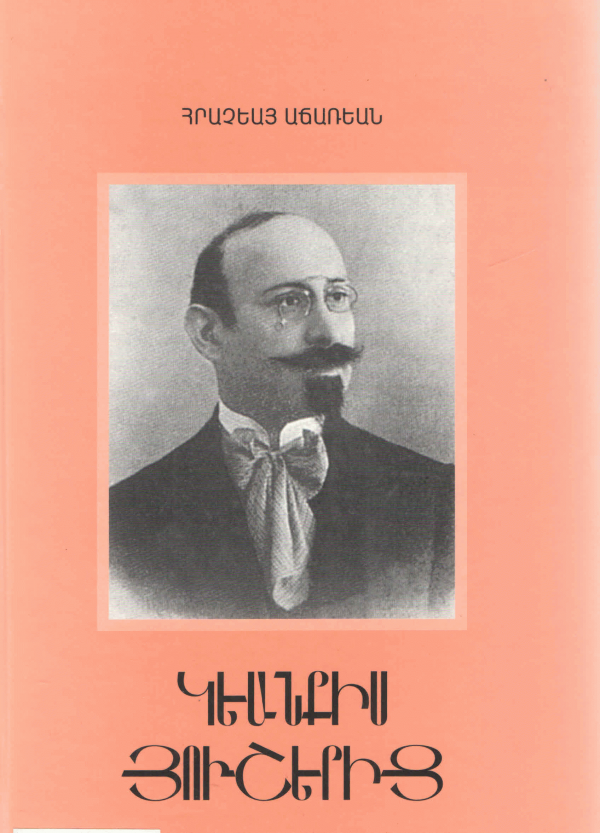
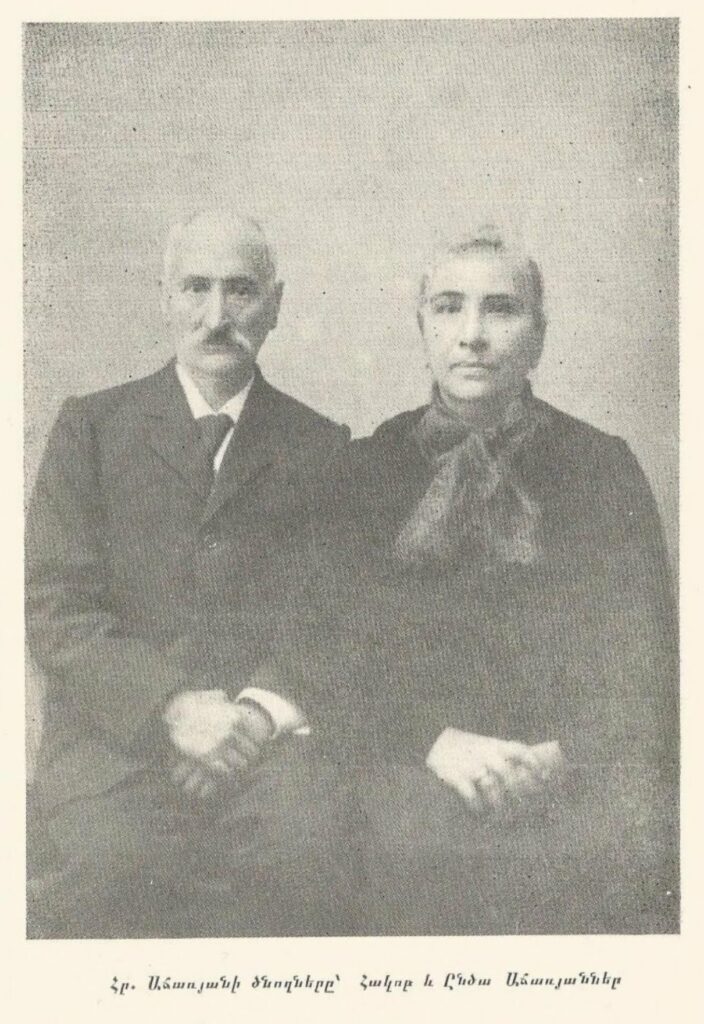
«FROM THE MEMORIES OF MY LIFE» (H. ACHARYAN)
Part D
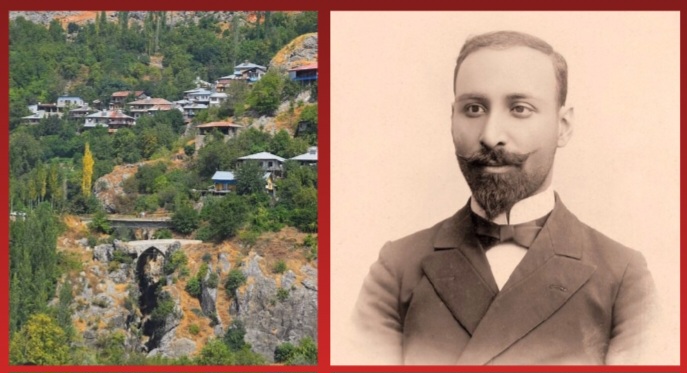
When in Zeytun in 1895 the freedom-loving sons of Armenia rose in revolt and, besieged — resisted bravely for months on end — without food and ammunition…
Again a few pages from the memoirs of Hrachya Acharyan — below…
THE ZEYTUN UPRISING
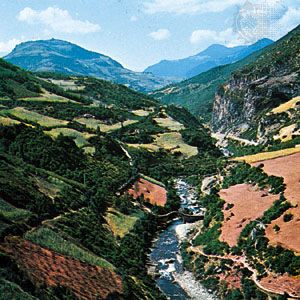
During the massacres of the Turkish Armenians Zeytun rose against the Turkish government. The news of the fighting was reported day by day by the telegraph agency and published in Paris. At first things went well, suddenly they worsened, and one day the telegram reported that Zeytun was besieged by the Turks, and that the Zeytunians were in need of outside help.
This news greatly moved us: a group of young men prepared to leave for Zeytun. I too joined them and wanted to set out for Zeytun.

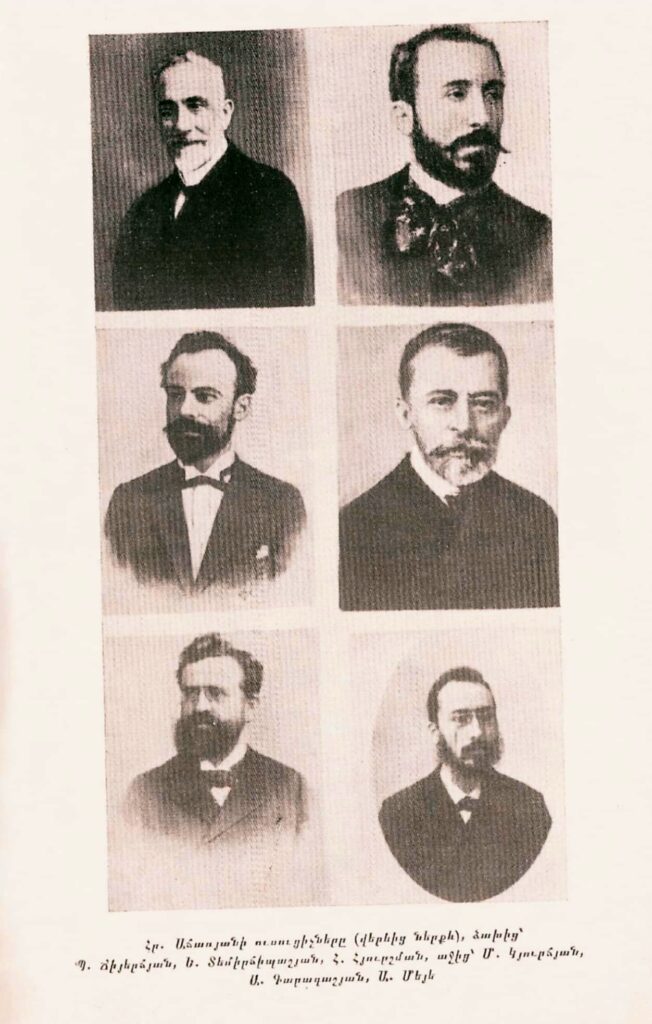
Naive youths! Where were we to go? Zeytun is not on the seashore, so that on getting off the ship we could enter it at once. From the seashore to Zeytun, over the tops of mountains, there is an enormous and difficult road. How were we to cross that road, who was to guide us, where were we to find the means of money? Would the Turks not notice us, foreigners? Nobody asked all this. Before leaving I spoke with Meillet and said that I was going to Zeytun to fight. He praised my idea, he said:
— You are doing very well, every man is obliged to serve his nation and to come to its help in hard days. But would it not be better if you waited a few more days, saw the course of events and then left?
— There is need of immediate help,- I said.
— And if the government suppresses the uprising before you arrive?…
— It cannot suppress it.
— Why can it not suppress it?
— Because above all it has no money to feed its army.
— It will find it: for a government finding money is very easy.

We waited a couple of days and suddenly a new telegram came:
«The Zeytunians have seized the kaymakamate and have taken under their rule the surroundings for a day’s journey all around».
We rejoiced and felt that the Zeytunians had no need of us for the time being.
At that time the Hunchak party was conducting propaganda and collecting money in favour of Zeytun.
I do not know whether it was the head of the government himself and editor of «Hunchak», Avetis Nazarbekyants (from Tabriz), who came to Paris in person, or his representative. They convened a general meeting in Paris: all of us Armenians were present. The chairman delivered an impressive speech and proposed to start a collection on the spot.
I, in an utterly poor condition, in need of a morsel of bread, seized a moment and, catching the senior of our students outside, donated my 20 francs kept for dire need, asking that my name never be given. When after a short break the meeting continued, the senior stood up and announced:
«One of our student comrades, who has no bread to eat, donated 20 francs on condition that his name never be revealed: take example from him». Everyone was looking at my face, because there was no student more needy than me.

Months passed. The Zeytun uprising ended successfully. Through the intervention of the Powers the Turkish government made peace with Zeytun, making various concessions. One of the concessions was that the leaders of the Zeytun uprising (6 people) should leave freely for Europe.
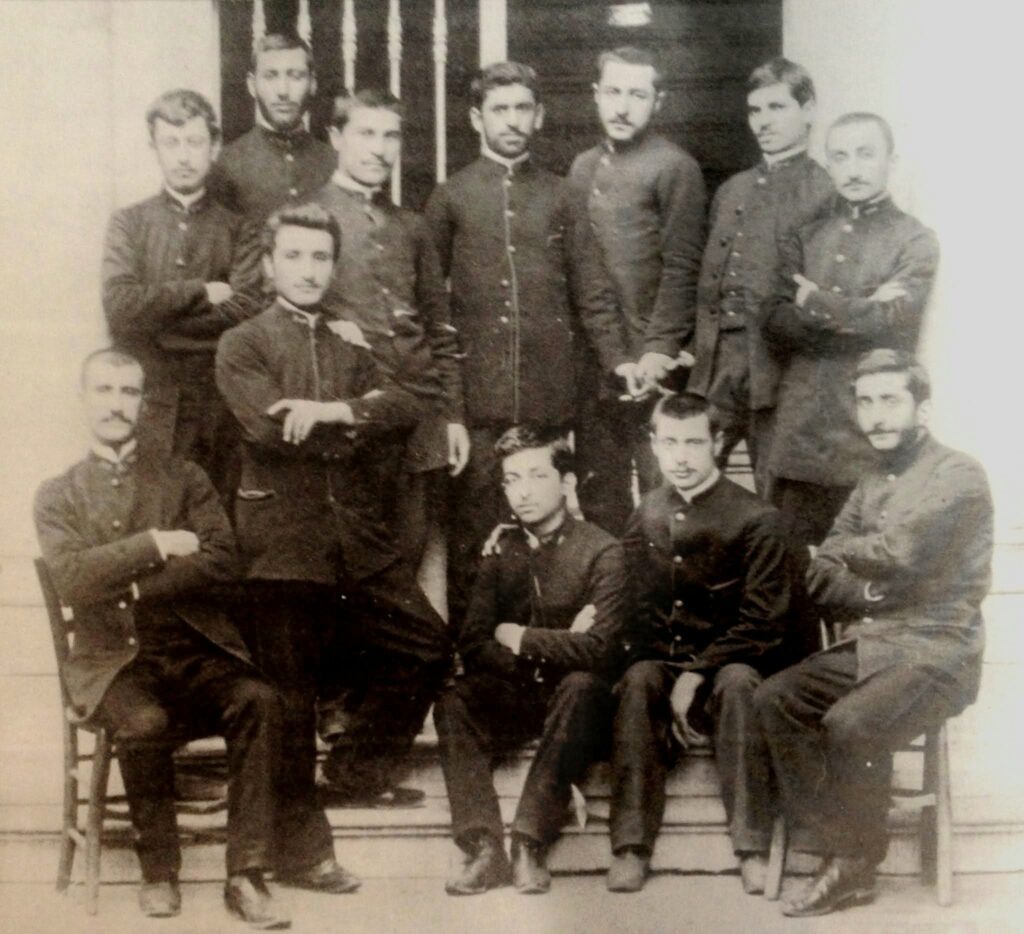
Indeed, a short time later they came to Paris. A large meeting was convened, at which the leader of the Zeytun uprising, Aghasi, spoke. He was from Hajin, his real name was Karapet Tur-Sargsyan (number 35), with whom I had been a classmate from class B to the end.

He was a very poor boy: his father was a coffee maker and at the end of Finjanjilar street had so small a shop that only he himself could fit in it: when I went to see him, I had to stand on the pavement.
So poor was Karapet that he did not even have a shirt to wear, and one day the physics teacher, the Frenchman Blanchon, was not ashamed to throw his poverty in his face and said:
— Shame on you, you do not even have a shirt to wear.
And indeed, he wore his jacket directly on his body. From class D he entered revolutionary activity. Rifles were being transported from Europe to the Homeland. One day Karapet showed me one of those rifles: outwardly it was an umbrella, but very heavy: it could be opened and held under the sun or the rain, but at the same time inside it was a rifle. Another time he showed me a walking stick, which, however, when pulled by the handle, became a bayonet or a sword. After graduating from the Getronagan he had left for Cilicia and had put himself at the head of the Zeytun uprising.

At length he told of the events of Zeytun, whose last episode was the following touching incident.
After the long siege and battles Zeytun no longer had either bread to eat or gunpowder to fight with: no one knew anything about it. It was necessary to get word to Patriarch Izmirlian and to report the true state of affairs. But all the roads were closed, it was impossible to pass through the ring of the Turkish army. A «woman of loose morals» undertakes to accomplish this task. She enters the Turkish army and, singing, dancing, amusing herself with the soldiers, breaks through the army and passes, reaches Marash and from there telegraphs Izmirlian. The Patriarch at once applies to the ambassadors and brings the work of peace to success.
The chairman of the meeting was Chopanyan.

He asked Aghasi: «What was that woman’s name?» «Mariam»,– said Aghasi. Chopanyan proposed that the meeting stand up and applaud her. Aghasi wrote an extensive history of Zeytun, which Chopanyan translated into French and published in Paris.

Aghasi went to America. Later I heard that he, remaining dissatisfied with revolutionary activity, had gone into trade and had acquired a paper factory. In a private conversation Aghasi told me that during its whole uprising Zeytun did not receive a single kopek of help from outside: the whole sum collected went into the personal accounts of the editor of «Hunchak». His wife (Maro) was so «patriotic» that she had not given even one holey stocking of hers to the nation.
My unfortunate 20 francs too had gone into Maro’s pocket.

A GREAT DEMONSTRATION IN PARIS
The Armenian massacres, the Cretan uprising and the Greek war made a great stir in Europe.
The French Chamber of Deputies delivered stirring speeches, liberal newspapers continually wrote articles against the Turkish government. Students held noisy demonstrations and at last a great demonstration was organized, the like of which I had neither seen before nor saw again.
Notices were posted everywhere and everyone was invited to take part in the demonstration on such and such a day. The meeting place was the square in front of the Panthéon. The demonstrators numbered 150.000 people.
I too was in the first row. The leader of the demonstrators was a Polish student, who, bareheaded, umbrella in hand, issuing orders right and left, was leading the crowd. Right on his left side I was standing. The crowd of 150.000 went down from the Boulevard Saint-Michel. In front of all the windows and balconies the people, filled with enthusiasm, were cheering.

Singing and with loud shouts we went down to the Boulevard Saint-Germain. Here, at the point where the boulevards cross, mounted soldiers were standing (in great numbers), who watched us smiling.
No one touched us. We passed on. Suddenly behind us the attack took place. When half of our army had passed, the cavalry regiment attacked the crowd from the right side, broke through it and split it apart.

Thus the 150.000 had turned into 75.000. They applied the same method a few more times, whereby the number of our group was greatly reduced. On the Boulevard Sébastopol the police arrested 8 people from the first row, about whom the newspapers had written: «parmi lesquels un Arménien – among whom an Armenian».
That Armenian was I.
They took us to the police station. It was rather cold, the policemen had lit a fire, and we too, gathered round the fire with them, were warming ourselves. All the policemen were talking with us like old friends, not a single bitter allusion to the demonstration. I asked what they were going to do with us. «What are we going to do, we shall wait until midnight, after which we shall let you go».
Before the demonstration, the state had announced that it would punish the demonstrators severely, and if any foreign subject was found among them — it would expel him from the country.
Midnight came: they wished us a good journey. Later I learned that the number of demonstrators, continually shrinking, had come down to 30; they went to the Turkish embassy, sang, shouted, stoned the windows and went away.
JAURÈS’S SPEECH
The students, having rented a large hall, had organized a large meeting there. At first a lady spoke at length in French…
…After the lady the eminent national figure Minas Cheraz went up onto the stage, who also spoke in French and began to tell of the massacres to which the Armenians had fallen victim in various cities.

The hall, that spacious hall, was full from end to end of a select crowd.
The students had specially invited all the deputies, literary figures, renowned scholars and so on. At the very back — sitting on the amphitheatre were we — the students.
In one of the first rows of the audience someone suddenly said in a loud voice:
«All that is a lie».
Cheraz was shaken, stammered, said in fright:
«I have gathered all that information from English sources».
The students made an uproar.
Behind me stood Artashes Neturyan — one of the pupils of the Getronagan, a class below me, a handsome, tall boy.
At once he leapt from his place and, stretching out his long stork-like legs, jumping over our heads, reached the first row.
Below, the students sitting beside this young man had climbed on his back, and to protect himself he had hung his head down.
Neturyan arrived and from the front gave a strong kick to his nose and mouth.
In accordance with French law, they called in the policeman standing by the door and announced that this young man was disturbing our meeting: the policemen took him and led him away.

When Cheraz began to stammer… Jaurès leapt from his place like a lion and with his thunderous voice began such a speech that the whole audience greeted it with jubilant applause.

He said:
- That information is not merely gathered from English telegrams, but is known to the whole world: the Turks have always massacred the Christian peoples, and now too they are massacring the Armenians.
Let all of us Europeans protest unanimously and demand from our governments — to curb at last these violences of the Turks.
How magnificent Jaurès’s speech was…
…The meeting ended and we dispersed.
Some time later at the university I saw a young man, with whom, having become acquainted, I was talking. Suddenly I noticed that his nose was crooked. - What happened to your nose?- I asked.
- These Armenians of yours did it, – he said,- during Cheraz’s speech, when I remarked that that information was not true, your Armenians attacked me, and one of them broke my nose with a kick.
- What nationality are you?- I asked.
- Swedish.
- What are you saying, the Swedes are an honest people. What reason did you have to stand up and speak against the Armenians?
- I knew nothing. That day I had gone on business to the Turkish embassy: there they said that Cheraz and Jaurès were going to speak about the Armenians, but, they said, their information about the Armenian massacres was not true. And I too expressed my opinion at the meeting.
- You have got the punishment you deserved, another time you will not commit such foolishness.