Month: March 2025

  • «WHY NAGORNO-KARABAKH (ARTSAKH), ACCORDING TO INTERNATIONAL LAW, DOES NOT BELONG TO THE REPUBLIC OF AZERBAIJAN»
    «WHY NAGORNO-KARABAKH (ARTSAKH), ACCORDING TO INTERNATIONAL LAW, DOES NOT BELONG TO THE REPUBLIC OF AZERBAIJAN»

    «WHY NAGORNO-KARABAKH (ARTSAKH), ACCORDING TO INTERNATIONAL
    LAW, DOES NOT BELONG TO THE REPUBLIC OF AZERBAIJAN»

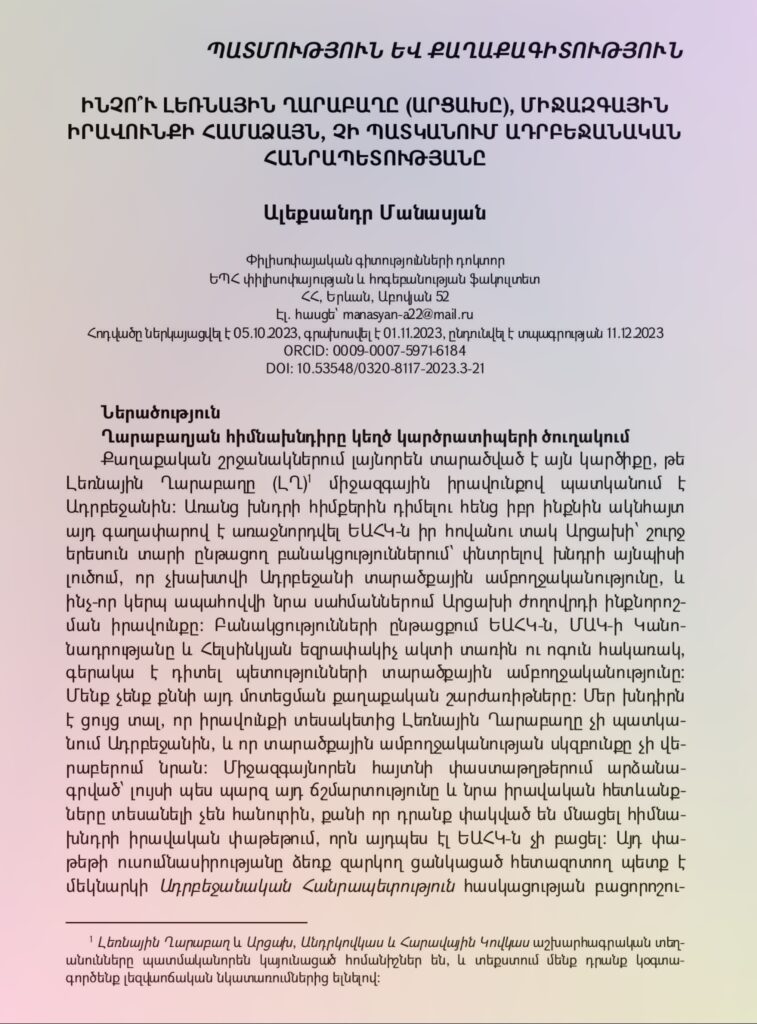
    IN VOLUME 3 (SEPTEMBER-DECEMBER) OF THE YEAR 2023 OF THE FOUR-MONTHLY JOURNAL «HERALD OF SOCIAL SCIENCES» OF THE NATIONAL ACADEMY OF SCIENCES OF THE REPUBLIC OF ARMENIA was published the article of Doctor of Philosophical, Sciences Alexander Manasyan —
    «WHY NAGORNO-KARABAKH (ARTSAKH), ACCORDING TO INTERNATIONAL LAW, DOES NOT BELONG TO THE REPUBLIC OF AZERBAIJAN», from which we quote small fragments.

    «Introduction

    The Karabakh problem in the trap of false stereotypes
    In political circles the opinion is widely spread that Nagorno-Karabakh (NK) by international law belongs
    to Azerbaijan:
    Without turning to the foundations of the problem, it is by this supposedly self-evident idea that the OSCE was guided in the negotiations on Artsakh conducted under its auspices for about thirty years — seeking such a solution of the problem that the territorial integrity of Azerbaijan would not be violated, and that somehow the right of the people of Artsakh to self-determination within its borders would be ensured:
    In the course of the negotiations the OSCE, contrary to the letter and spirit of the UN Charter and of the Helsinki Final Act, regarded the territorial integrity of states as paramount:
    We will not examine the political motives of that approach:
    Our task is to show that from the point of view of law Nagorno-Karabakh does not belong to Azerbaijan, and that the principle of territorial integrity does not concern it:
    That truth, clear as light, recorded in internationally known documents, and its legal consequences are not visible to all, since they have remained closed in the legal package of the problem, which the OSCE never opened:
    Any researcher who undertakes the study of that package must start from the clarification of the concept of Republic of Azerbaijan, since under that «hat» there are three different Azerbaijans, and often it is not clear in the name of which one Baku is speaking»…
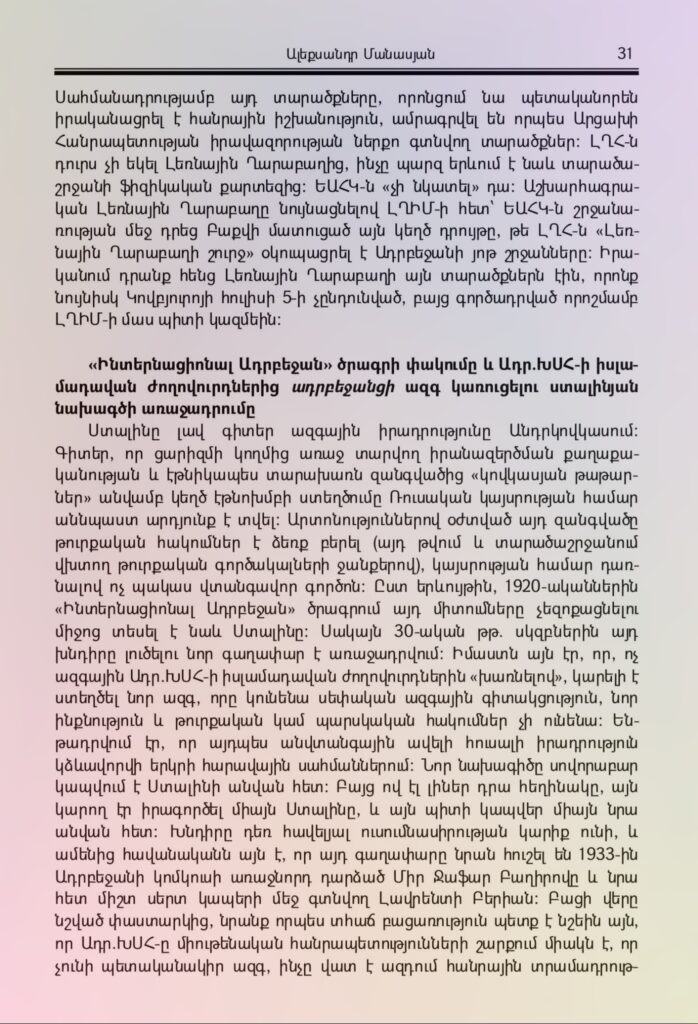
    «Conclusions

    There is no legal basis whatsoever to assert that Nagorno-Karabakh (Artsakh) in the 20th century was/is part of any of the three states called «Azerbaijani» in Transcaucasia:
    The ADR founded by the Turks, having received a refusal of membership in the League of Nations, left history without established or recognized borders — without Artsakh:

    Artsakh was also not the sovereign territory of the Az.SSR founded by the 11th Red Army of Soviet Russia, since —

    1. the Az.SSR was not a sovereign state, 

    2. Artsakh found itself within its borders by the not adopted, but executed «decision» of July 5, 1921 of the Caucasian Bureau of the Communist Party of Soviet Russia, when it had already been proclaimed part of Soviet Armenia, 

    3. Baku acknowledged that the Az.SSR was an illegal formation by the constitutional act of 1991 on the independence of the Az.R, from which also follows the illegality of the Kavburo «decision» to bring Artsakh into the borders of that unlawful formation: 

    From the point of view of international law Artsakh also does not belong to the present-day Republic of Azerbaijan, which appeared in 1991 in the course of the dissolution of the USSR, which restored the ADR founded by the Turks, which existed in 1918-1920, to which Artsakh did not belong: 

    On December 10, 1991, by referendum, Artsakh gained independence in territories not belonging to the present-day Az.R: 

    In 1991 Europe ignored this and, disregarding international law, decided to recognize the ADR together with Artsakh, when it was known that in the XX century not a single «state» that appeared under the name «Azerbaijan», including the Az.R, had come onto the scene by an act of self-determination (by a referendum on independence)»:

    «Summary

    In the 20th century in Transcaucasia three illegal formations under the name «Azerbaijan» laying claim to Artsakh/Nagorno-Karabakh (NK) appeared:
    The first was the Azerbaijan Democratic Republic founded by the Turks (1918-1920), which the League of Nations in 1920 did not recognize as a state, and which left history without de facto established or recognized borders, without Artsakh:

    In the same 1918-1920 Artsakh was a de facto independent formation and had legitimate authorities in the person of the Congress of Plenipotentiary Representatives of Nagorno-Karabakh (NK CPR) and of the People’s Government:
    On April 28, 1920 the NK CPR declared Nagorno-Karabakh an inalienable part of the Republic of Armenia (RA):

    The second illegal formation under the name «Azerbaijan» — the Azerbaijan Soviet Socialist Republic (Az.SSR) was founded by the XI Red Army of Soviet Russia on April 28, 1920 — as a non-national, international republic of a new type having no titular nation:
    Within the borders of the latter NK, already proclaimed part of Soviet Armenia, was brought in by the not adopted, but executed decision of the Caucasian Bureau (Kavburo) of the Communist (Bolshevik) Party of Russia:

    To give the annexation a legal appearance, a part of NK alienated from Soviet Armenia had within the borders of that non-national republic the status of an autonomous oblast, and after the formation of the USSR — like all autonomies, also of a subject of the national-state system of the USSR:
    During the USSR Artsakh periodically demanded by mass petitions to correct the injustice committed against it in 1921: In 1988 this took on the character of a nationwide movement:

    The third illegal formation under the name «Azerbaijan» — the Republic of Azerbaijan came onto the scene in the course of the dissolution of the USSR:
    By the constitutional act on State independence of October 18, 1991 Baku characterized the sovietization of Azerbaijan as its occupation by Soviet Russia:
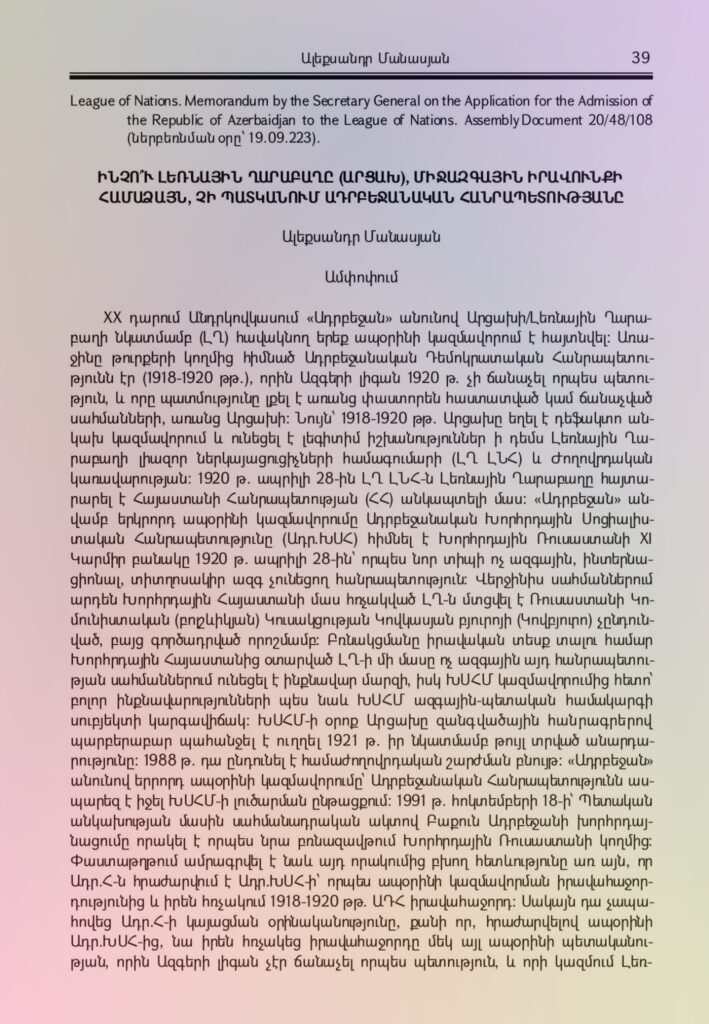
    On December 10, 1991 the referendum on the independence of the Republic of Artsakh took place in those territories not belonging to the present-day Az.R where Baku had not managed to complete the ethnic cleansing:
    Europe «did not notice» the NK Republic, which had proclaimed independence in a manner irreproachable from the point of view of international law:
    In December 1991, when the process of the dissolution of the USSR had approached its final line, the European Community decided to recognize the Republic of Azerbaijan with unknown status and borders, where until then there had been no act of self-determination and no referendum on independence:

    In the thirty years of negotiations on the settlement of the Az.R – NKR conflict under its auspices, contrary to irrefutable legal facts, Europe «did not see» that the NK Republic had been established in territories not belonging to the Az.R., in its structures, and giving the genocidal Azerbaijan a passport for admission to the UN:
    As a result of the aggression unleashed against the Republic of Artsakh in 2020-2023, Artsakh today is a territory occupied by the Az.R
    »:

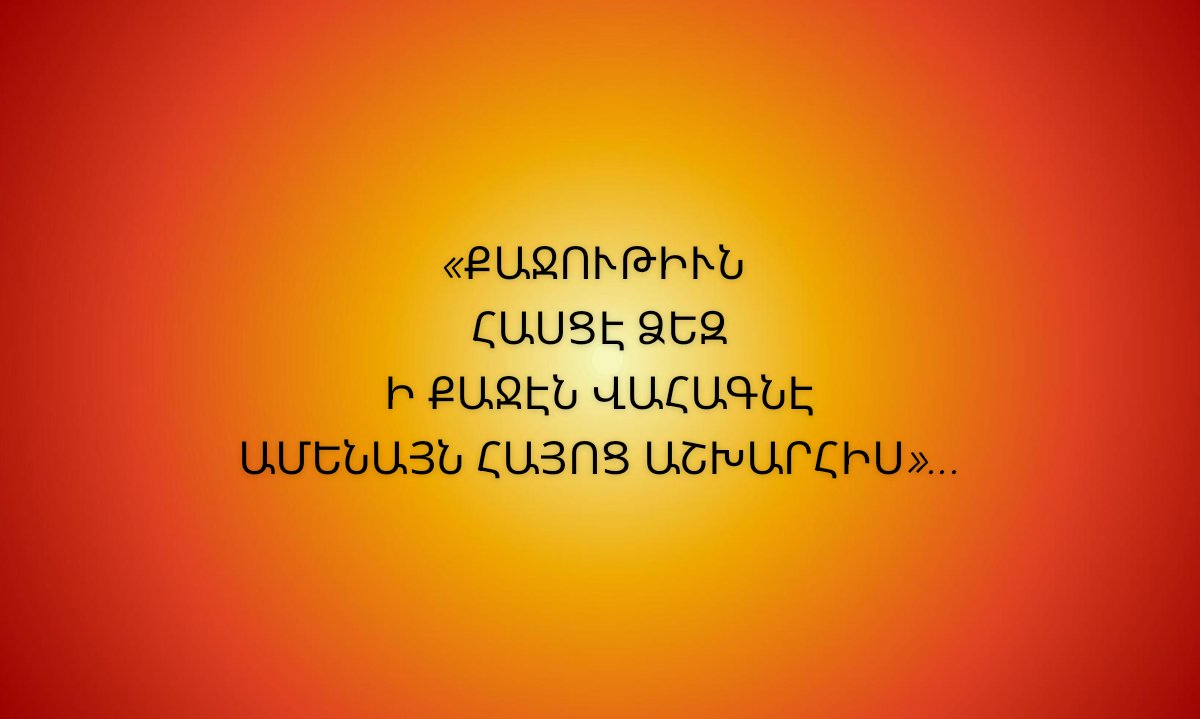
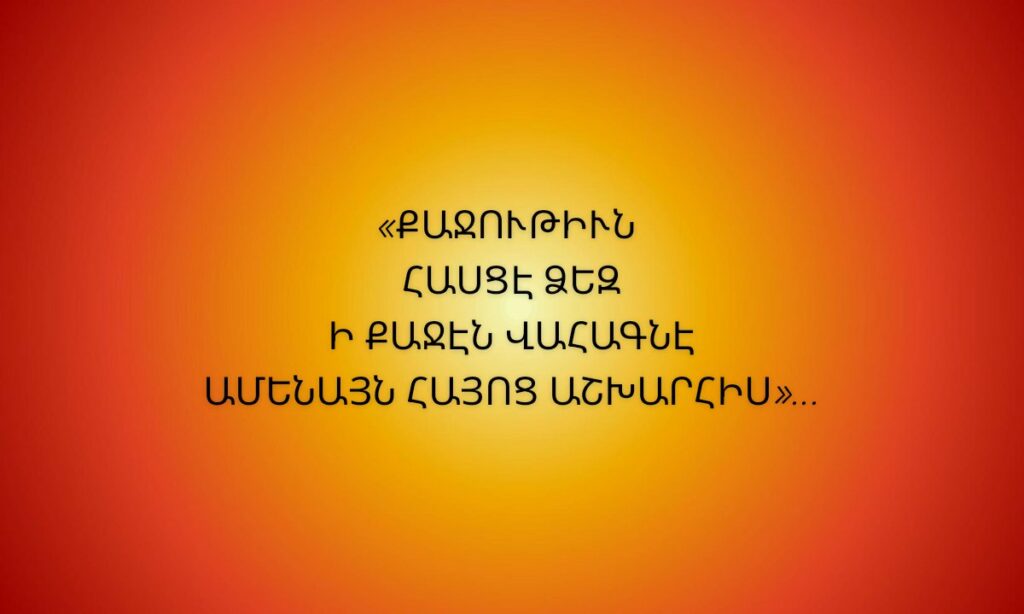
  • «MAY VALOUR COME TO YOU FROM THE VALIANT VAHAGN, ALL OF THIS LAND OF THE ARMENIANS»…

    «MAY VALOUR COME TO YOU FROM THE VALIANT VAHAGN, ALL OF THIS LAND OF THE ARMENIANS»…

    «MAY VALOUR COME TO YOU FROM THE VALIANT VAHAGN, ALL OF THIS LAND OF THE ARMENIANS»…

    It is the millennia-old Haykian teaching, grounded in the laws of the Universe, of Nature, that forms the world-view of the sons of Hayk faithful to the traditions of the Haykazuns.
    The celebration of the New Year beginning on the Areg day of the Areg month – of the New onset of spring, is followed by the Hrand day of the Areg month, when, according to the explanation of the Kurms of the Haykian Brotherhood, «the day surpasses the night by one degree, and our Ancestors celebrated it as the birth of Vahagn Dits.
    Vahagn Dits, brave and of mighty arm, is also the symbol of the Armenian man»…

    Numerous sons of Hayk imbued with the spirit of freedom and with patriotism have at various times with their pen — in prose or in various poetic metres and with colourful vocabulary — striven to encourage the nation — awakening anew the indomitable spirit of struggle of the Armenians — reminding their compatriots who had strayed from their roots of their own sources — «the gilded past of the race», the most ancient rich national culture, which had been dubbed «pagan» by the spreaders of the foreign religion (the word «heathen» is etymologized from the word «ethnos» — in the sense of «race», «national»)…

    «Pagan life captivates me day by day:
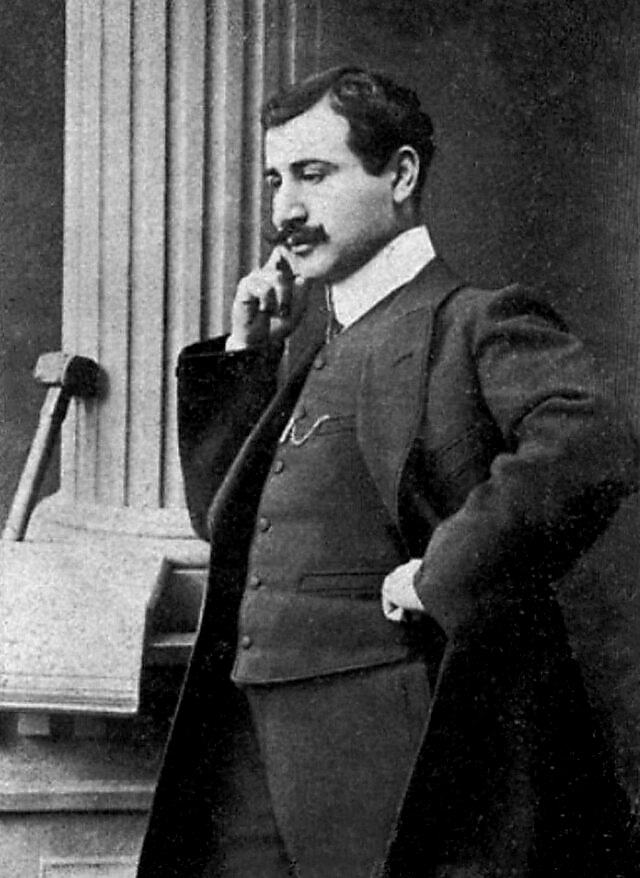
    If it were possible today, I would change my religion and would embrace with love poetic paganism»,- wrote Daniel Varuzhan in the year 1908 — in a stormy period of the history of the Armenians, when they were years of the survival, of the struggle of the nation:

    «…Let me remind, it was the beginning of the 20th century, the Armenians, still under the domination of the Turk, lived in a constant insecure condition, the only aim of life was the struggle for bread, keeping one’s head on one’s shoulders, harnessed day and night to one’s work, persecuted,- writes Marie Rose Abousefian — turning to the work of D. Varuzhan, and continues: «The collective life of the Armenians was led absolutely by the church, with its moral principles:
    The religion of the Armenian and, particularly, the clergymen persuaded the Armenians to accept the violence of the Turk with humility: They considered rebellion and struggle a danger: Religion had also persuaded that the natural human feelings of loving, of being loved, of pleasure, of delight are immoral thoughts, and these remained generally outside the thoughts of the people»…

    «…Varuzhan, filled with free ideas, was undoubtedly suffocating in this milieu:
    Before «Pagan Songs» he was thinking about the pains of the Armenians, about the liberation of the homeland, about guiding the despondent people, and led it in that direction:
    In the collection «Pagan Songs» his approach was entirely different: This collection was a kind of open protest against those mores, those constraints in which the Armenians lived:
    His main task was to awaken the people, and he saw that in those conditions its awakening was impossible: And he resorts to a bolder step:
    Naturally, the collection was to raise a great stir around it: It seemed to everyone that the author of «The Massacre» was extolling only paganism:
    Whereas, this collection was more than the praise of paganism:
    Varuzhan’s talent had found a splendid solution: by presenting the advantages of the worship of the Armenians before Christianity — of paganism, he emphasized, he focused the attention of the people on the fact that the Armenian before Christianity had lived independent and free on his lands:
    The Armenian as an individual and as a people had been free of all constraints, had been mighty, had been a ruler, had worshipped beauty, the feelings of passion, of delight had been accepted naturally, as nature had bestowed them, the beauty of the female body had been extolled and appreciated in all its details:

    In this collection too Varuzhan includes two different headings — «Pagan Songs» and «Flowers of Golgotha», whereby he emphasized the two opposite sides of Armenian life:
    In the section «Pagan Songs» — he reminded his people of the vast and independent free life that his nation had lived 20 centuries before, when the Armenian, as I noted, was great and mighty, widespread and invincible, with his temples, mighty gods, unconstrained pleasures, the woman, voluptuousness, wine, art, the worship of beauty, the free man»…

    «…He hailed the advantages given by paganism, which had liberated human thought from constraints, «Where Beauty and wakeful Strength were worshipped»…
    «…He extols an era where the Armenian lived with different notions and mores, did not become wretched, man was free from constraints, the beautiful, the great, the mighty, the natural impulses were glorified»…

    «O thou, Vahagn, O god of my fathers,
    I pray… I pray
    For the strength, for the religion of thy arm»…

    And by whose departure — «man has fallen under the heel of a giant, deaf Jewish God», as a result of which man has become submissive in mind and soul, a slave, petty and deceitful: That with the destruction of the might of the old gods vanished.
    «Behold, all our forests and seas,
    The springs and the peaceful hearths
    Have become desolate and dreary»,
    that instead of their gold-woven marble-built beauty
    «Only above my bed hangs a triumphant Cross —
    Where there is only the glory of Death»…»:

    «Varuzhan’s was a patriotic lyre, bound with priestly devotion to the heart of his race»,- wrote E. Melekian («Phiunik» monthly, 1920, May):
    «Varuzhan’s is not our usual weeping literature:
    A rebellious, proud, noble spirit storms in him, the spirit of the freedom-struggle of the last three decades, perhaps, crystallized in him, worked into wonder by the anointing of the sacred traditions of the past: That is why, when he is tempted to pray, his god is not the Jesus of Golgotha, but the sun-eyed Vahagn of our Forefathers — the flaming youth «through the reed», before whom the poet kneeling entreats.-
    For the strength, for the religion of thy arm,
    With which one day thou didst tear the mouths
    Of dragons, didst scatter in the sky
    Like seeds of the sun, the stars of the Straw-Thief;
    For the strength, which is the flight and the soul
    Of endless Creation,
    Under whose boundless kiss is born
    From the worlds part flower, part flame,
    The principle of Immortality lives in the atom,
    And in the brain and in the will,
    Under whose mighty finger
    The seeds split, the sap, singing,
    Rises up to the summit of the oaks,
    For the strength — which fills the breasts,
    Rocks our cradle and us, after death
    Carries us up to the stars, and up to
    The creative cause of a second life,
    Which raises a Nation like a pack of lions,
    Pours thy arm into its arm,
    And like a fiery bird of paradise — under the folding
    Of its luminous flights broods
    In the bosom of our mothers
    Heroes, geniuses:
    For that holy Strength I say, of which thou
    Art the overflowing intellectual spring,
    O thou, Vahagn, – behold, stretched out to thee
    My bloodstained arms,
    I pray… I pray»…

    The saving melody that revives the spirit of the Armenian is the call of the Ancestors, their clangour of struggle and vengeance…
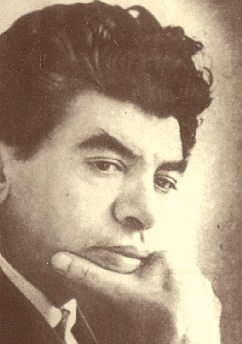
    Paruyr Sevak too has sent his message to the Vahagns of our days.


    «…Vahagn,
    Thou grandson of Vahagn the Dragon-reaper,
    Can it be that thy grandfather’s blood has turned to water
    In those busy veins of thine, in which
    The white milk of Astghik was changed into blood?
    Can it be that under every Armenian roof
    At dawn too, in love, are no longer in travail
    Earth, heaven, and then the purple sea,
    That you from the bosom-flame of the little red reed
    Should run fire-haired, and flame-bearded, and flame-moustached,
    Run towards that dragon which only
    Changes its form, but its essence — never!

    That dragon, which with its cracking body
    Has drawn a ring around thy paternal land —
    Its bloody head laid on its tail,
    And any moment now it will bite its very tail:
    But it will not bite its tail if thou
    Dost not resist, dost not endure and perish:
    But it will not bite its tail if thou
    Through the jazz dost not hunt out the pandir of Goghtn:
    And it will not bite its tail if thou —
    Perhaps thyself already a Jacques or Juliette,
    Tomorrow with unfeigned repentance dost not baptize thy children
    Again Vahagn and Astghik»…

    «There comes a moment when protesting is no longer enough, one must act!»…

  • AS AN EVER-BURNING LIGHT

    AS AN EVER-BURNING LIGHT

    AS AN EVER-BURNING LIGHT

    The Haykean teaching is a priceless treasury — an ever-burning Light, by which for millennia the Haykazuns have been educated, with the system of values fashioned by their Forefathers.
    Aspiring to perfection, having as an example the Gods who symbolize the highest human virtues, the noble-minded and brave sons of Hayk followed and to this day follow the Wisdom of their Ancestors, keeping in everything and everywhere «the canonical measure», «sobriety».
    The source that grants joy to the spirit and health to the body is the balance of the person, which begets and nourishes the ever-wakeful and calm mind, sound thinking, vigilance and justness.

    To the food necessary for a person’s healthy life and vital activity, naturally, special attention has been paid from time immemorial.
    The Haykean teaching attaches importance to a right diet based on plant food. Plants, grains, fruits and vegetables ripened by the warmth of the Sun, by their beneficial effect, contribute to the regular activity of a person’s body and mind.
    The Haykazun Kurms have urged the Arevordis to feed on vegetation that has absorbed the life-giving light of the Sun’s rays. And today too their descendants remind us of that precept, stressing the importance of purifying the body by fasting, as well as of clearing the mind by meditation, of keeping the peace of the spirit undisturbed.

    Turning to the period of Fast that follows the feast of Trndez, celebrated on the day of Hrant of the month of Hrotits in the Haykean calendar, Kurm Harut Arakelyan, a representative of the priestly order of the Haykean Brotherhood, stresses the necessity of a strict limitation of foodstuffs, of abstaining from animal food —
    in order to greet the Armenian New Year-Easter at the spring equinox, on the day of Areg of the month of Areg (on 21 March), with a purified, renewed spirit and body.

    Presenting the book «Raw-Eating» (Vegetarianism) of «the Enlightened Haykazun, Arshavir Ter-Hovhannisyan, born in Iran», in which the author treats of ancient wisdom, he writes:
    «And may it be that our Creator’s Life-giving Light become a source of life in the hearts of all Pious Haykazuns»…

    «The ancient sages had a developed system for communing with the spiritual biosphere, which developed, revealed the sense-organ of the human mind» (ATERHOV – Arshavir Ter-Hovhannisyan, 1898-1990).