










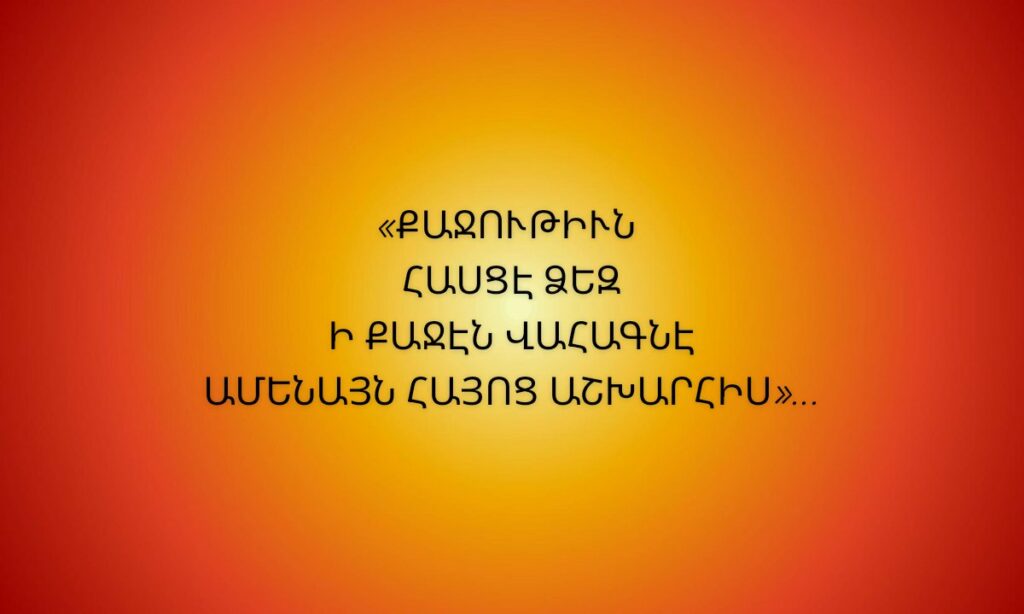
«MAY VALOUR COME TO YOU FROM THE VALIANT VAHAGN, ALL OF THIS LAND OF THE ARMENIANS»…
It is the millennia-old Haykian teaching, grounded in the laws of the Universe, of Nature, that forms the world-view of the sons of Hayk faithful to the traditions of the Haykazuns.
The celebration of the New Year beginning on the Areg day of the Areg month – of the New onset of spring, is followed by the Hrand day of the Areg month, when, according to the explanation of the Kurms of the Haykian Brotherhood, «the day surpasses the night by one degree, and our Ancestors celebrated it as the birth of Vahagn Dits.
Vahagn Dits, brave and of mighty arm, is also the symbol of the Armenian man»…
Numerous sons of Hayk imbued with the spirit of freedom and with patriotism have at various times with their pen — in prose or in various poetic metres and with colourful vocabulary — striven to encourage the nation — awakening anew the indomitable spirit of struggle of the Armenians — reminding their compatriots who had strayed from their roots of their own sources — «the gilded past of the race», the most ancient rich national culture, which had been dubbed «pagan» by the spreaders of the foreign religion (the word «heathen» is etymologized from the word «ethnos» — in the sense of «race», «national»)…
«Pagan life captivates me day by day:
If it were possible today, I would change my religion and would embrace with love poetic paganism»,- wrote Daniel Varuzhan in the year 1908 — in a stormy period of the history of the Armenians, when they were years of the survival, of the struggle of the nation:
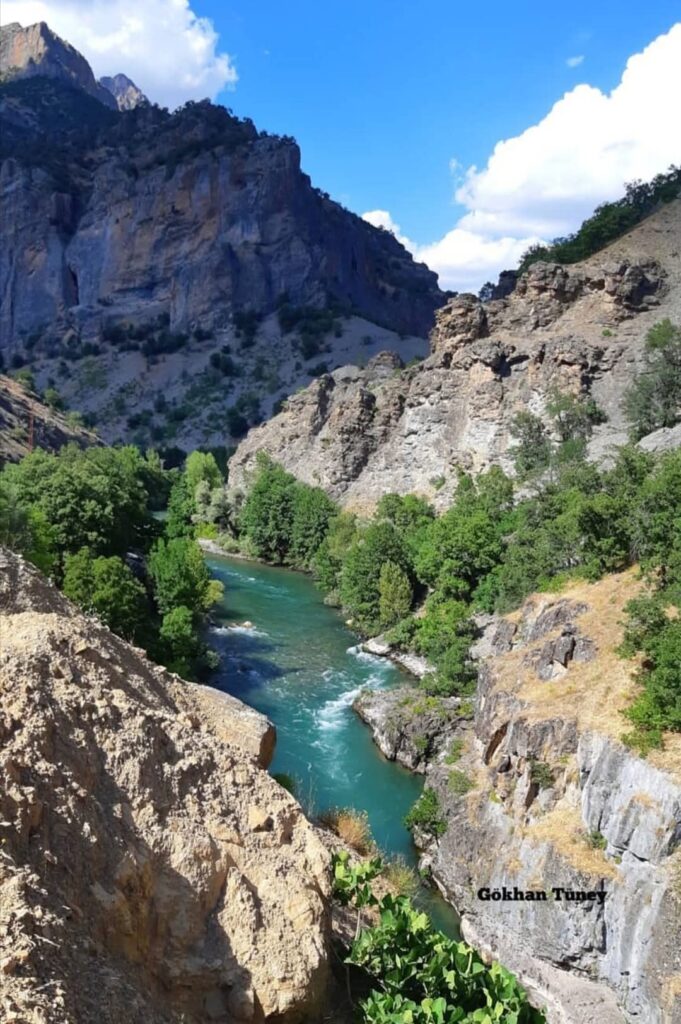
«…Let me remind, it was the beginning of the 20th century, the Armenians, still under the domination of the Turk, lived in a constant insecure condition, the only aim of life was the struggle for bread, keeping one’s head on one’s shoulders, harnessed day and night to one’s work, persecuted,- writes Marie Rose Abousefian — turning to the work of D. Varuzhan, and continues: «The collective life of the Armenians was led absolutely by the church, with its moral principles:
The religion of the Armenian and, particularly, the clergymen persuaded the Armenians to accept the violence of the Turk with humility: They considered rebellion and struggle a danger: Religion had also persuaded that the natural human feelings of loving, of being loved, of pleasure, of delight are immoral thoughts, and these remained generally outside the thoughts of the people»…
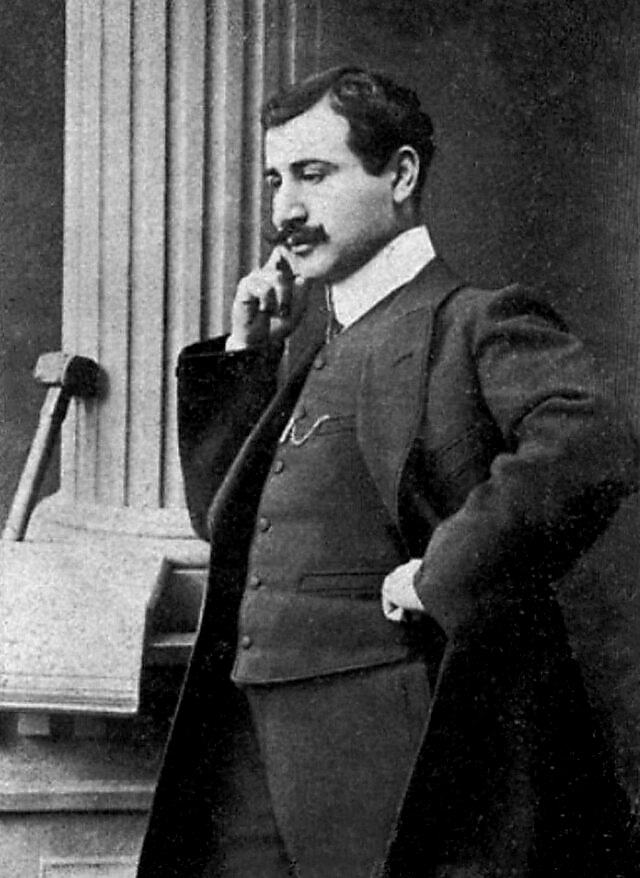
«…Varuzhan, filled with free ideas, was undoubtedly suffocating in this milieu:
Before «Pagan Songs» he was thinking about the pains of the Armenians, about the liberation of the homeland, about guiding the despondent people, and led it in that direction:
In the collection «Pagan Songs» his approach was entirely different: This collection was a kind of open protest against those mores, those constraints in which the Armenians lived:
His main task was to awaken the people, and he saw that in those conditions its awakening was impossible: And he resorts to a bolder step:
Naturally, the collection was to raise a great stir around it: It seemed to everyone that the author of «The Massacre» was extolling only paganism:
Whereas, this collection was more than the praise of paganism:
Varuzhan’s talent had found a splendid solution: by presenting the advantages of the worship of the Armenians before Christianity — of paganism, he emphasized, he focused the attention of the people on the fact that the Armenian before Christianity had lived independent and free on his lands:
The Armenian as an individual and as a people had been free of all constraints, had been mighty, had been a ruler, had worshipped beauty, the feelings of passion, of delight had been accepted naturally, as nature had bestowed them, the beauty of the female body had been extolled and appreciated in all its details:
In this collection too Varuzhan includes two different headings — «Pagan Songs» and «Flowers of Golgotha», whereby he emphasized the two opposite sides of Armenian life:
In the section «Pagan Songs» — he reminded his people of the vast and independent free life that his nation had lived 20 centuries before, when the Armenian, as I noted, was great and mighty, widespread and invincible, with his temples, mighty gods, unconstrained pleasures, the woman, voluptuousness, wine, art, the worship of beauty, the free man»…
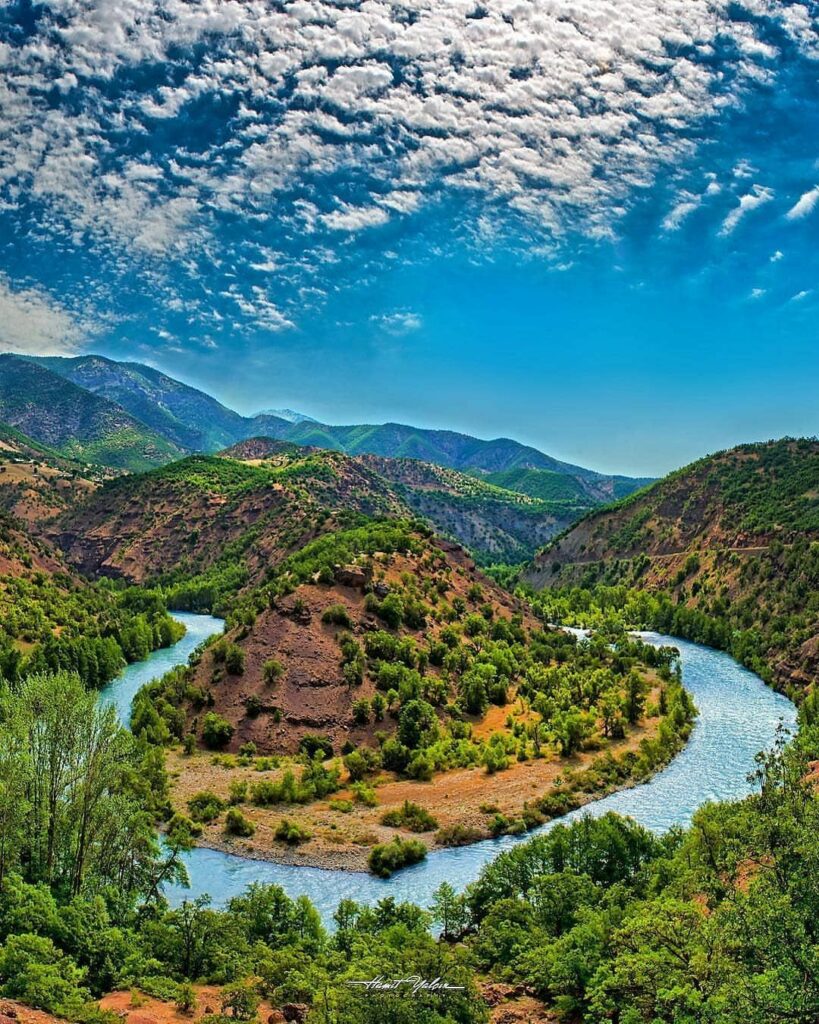
«…He hailed the advantages given by paganism, which had liberated human thought from constraints, «Where Beauty and wakeful Strength were worshipped»…
«…He extols an era where the Armenian lived with different notions and mores, did not become wretched, man was free from constraints, the beautiful, the great, the mighty, the natural impulses were glorified»…
«O thou, Vahagn, O god of my fathers,
I pray… I pray
For the strength, for the religion of thy arm»…
And by whose departure — «man has fallen under the heel of a giant, deaf Jewish God», as a result of which man has become submissive in mind and soul, a slave, petty and deceitful: That with the destruction of the might of the old gods vanished.
«Behold, all our forests and seas,
The springs and the peaceful hearths
Have become desolate and dreary»,
that instead of their gold-woven marble-built beauty
«Only above my bed hangs a triumphant Cross —
Where there is only the glory of Death»…»:
«Varuzhan’s was a patriotic lyre, bound with priestly devotion to the heart of his race»,- wrote E. Melekian («Phiunik» monthly, 1920, May):
«Varuzhan’s is not our usual weeping literature:
A rebellious, proud, noble spirit storms in him, the spirit of the freedom-struggle of the last three decades, perhaps, crystallized in him, worked into wonder by the anointing of the sacred traditions of the past: That is why, when he is tempted to pray, his god is not the Jesus of Golgotha, but the sun-eyed Vahagn of our Forefathers — the flaming youth «through the reed», before whom the poet kneeling entreats.-
For the strength, for the religion of thy arm,
With which one day thou didst tear the mouths
Of dragons, didst scatter in the sky
Like seeds of the sun, the stars of the Straw-Thief;
For the strength, which is the flight and the soul
Of endless Creation,
Under whose boundless kiss is born
From the worlds part flower, part flame,
The principle of Immortality lives in the atom,
And in the brain and in the will,
Under whose mighty finger
The seeds split, the sap, singing,
Rises up to the summit of the oaks,
For the strength — which fills the breasts,
Rocks our cradle and us, after death
Carries us up to the stars, and up to
The creative cause of a second life,
Which raises a Nation like a pack of lions,
Pours thy arm into its arm,
And like a fiery bird of paradise — under the folding
Of its luminous flights broods
In the bosom of our mothers
Heroes, geniuses:
For that holy Strength I say, of which thou
Art the overflowing intellectual spring,
O thou, Vahagn, – behold, stretched out to thee
My bloodstained arms,
I pray… I pray»…
The saving melody that revives the spirit of the Armenian is the call of the Ancestors, their clangour of struggle and vengeance…
Paruyr Sevak too has sent his message to the Vahagns of our days.
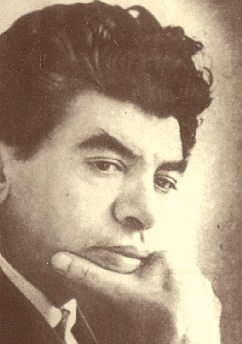
«…Vahagn,
Thou grandson of Vahagn the Dragon-reaper,
Can it be that thy grandfather’s blood has turned to water
In those busy veins of thine, in which
The white milk of Astghik was changed into blood?
Can it be that under every Armenian roof
At dawn too, in love, are no longer in travail
Earth, heaven, and then the purple sea,
That you from the bosom-flame of the little red reed
Should run fire-haired, and flame-bearded, and flame-moustached,
Run towards that dragon which only
Changes its form, but its essence — never!
That dragon, which with its cracking body
Has drawn a ring around thy paternal land —
Its bloody head laid on its tail,
And any moment now it will bite its very tail:
But it will not bite its tail if thou
Dost not resist, dost not endure and perish:
But it will not bite its tail if thou
Through the jazz dost not hunt out the pandir of Goghtn:
And it will not bite its tail if thou —
Perhaps thyself already a Jacques or Juliette,
Tomorrow with unfeigned repentance dost not baptize thy children
Again Vahagn and Astghik»…
«There comes a moment when protesting is no longer enough, one must act!»…