
























ARMENIA AGAINST ROME
(PART 2)
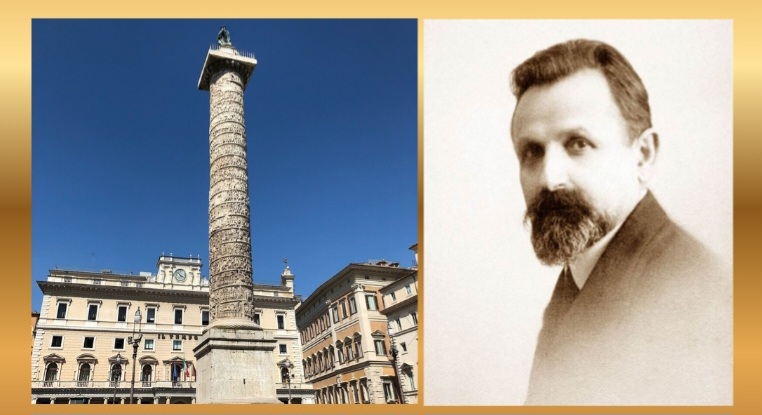
«Igdirmava, 1866.
Even a man possessing the most elementary and meagre acquaintance with Armenian literature knows that this proper name, lost and forsaken among those distant plains, set side by side with a date a hundred years old, signify only and always the Swarthy Aramazd of Armenian literature, that is to say the one born in the very heart of Armenia itself,
Avetis Aharonyan»…
So wrote, on the occasion of the centenary of Avetis Aharonyan’s birth, the Armenian poet, prose writer, publicist, critic, editor and teacher Eduard Boyajian, who was born on 9 April 1915 and was three months old when he took shelter upon the mountain together with the other participants in the heroic battle of Musa Dagh, and was afterwards moved to Egypt.
The continuation of Avetis Aharonyan’s «Italian Sketches» is below (the beginning is in the previous publication).
2.
A PREMATURE AND FATEFUL ENCOUNTER
Indeed, Armenia did not easily bow its head before Rome. This «supreme war» befitted, more than anything else, the audacious and obstinate resistance of Armenia. And this in spite of the wholly exceptional and unequal conditions in which that collision took place, from the very outset.
Rome moved towards the Near East and Armenia in the period of the full maturity of its governmental, military and political development, when almost the whole of today’s civilized West had, as we have said, long since been bent beneath its sword and its law. It had a thousand years of military glory and experience. It had assimilated the exemplary military and political methods of Hellas and knew how to apply them admirably.
It knew the last word in the military art of those days, and its army, mercenary though it was, loved its trade of war, in which the hope of gain and plunder and of easy enrichment, rather than of glory, was very often borne out.
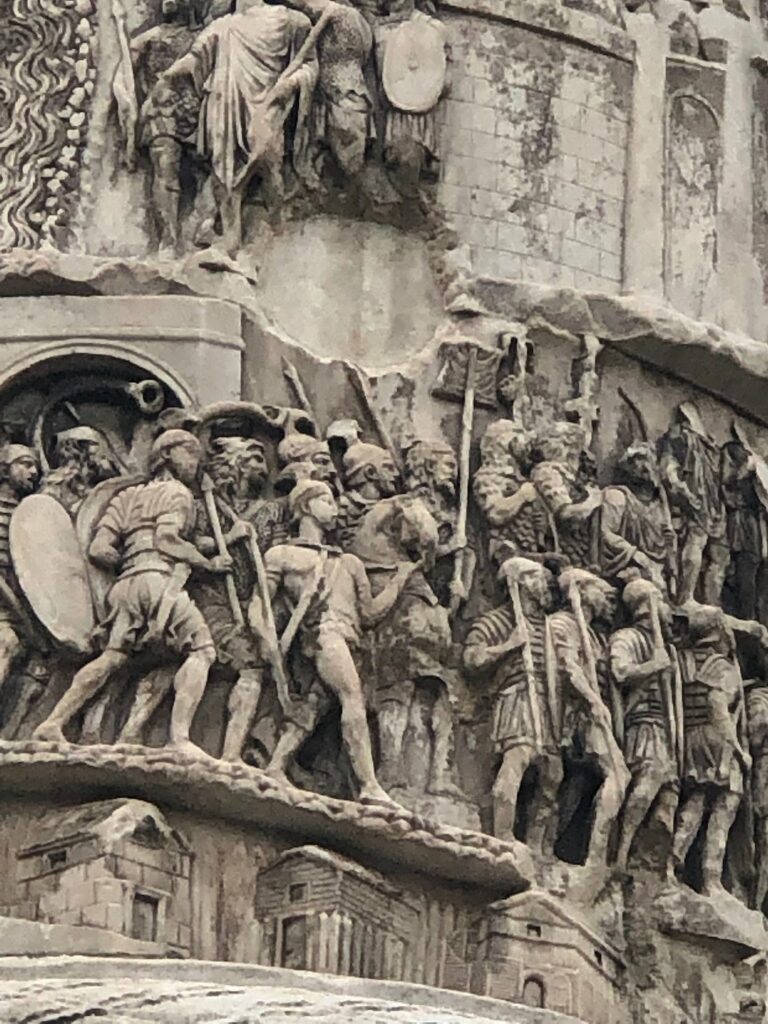
Thus, in the first century (B.C.), Rome’s rear was quite untroubled for a campaign towards the East, since the West, after numerous convulsions, had already grown calm. And around the command of the army of the East there was every time a tremendous struggle among the ever-renowned generals.
Thus Lucullus, Pompey, Crassus, Marcus Antonius – each in his turn was obliged in Rome to overcome great obstacles, to resort to many machinations, to make his way through intrigues, in order to secure the command of the army of the East. Victory there seemed easy, and glory assured.
And then, the whole of Asia Minor, with its wealth and its opulence, was as alluring as a promised land.
Already in all of Rome’s campaigns the thirst for gold occupied a foremost place. The generals returning from the East in particular entered Rome with boundless riches, and in their triumphal processions what most enticed the avaricious and pleasure-loving crowd of Rome was the variety and the abundance of the booty brought back by the hero. Certainly these fortunate commanders did not forget their own persons either. Lucullus and Pompey are very interesting examples from this point of view.
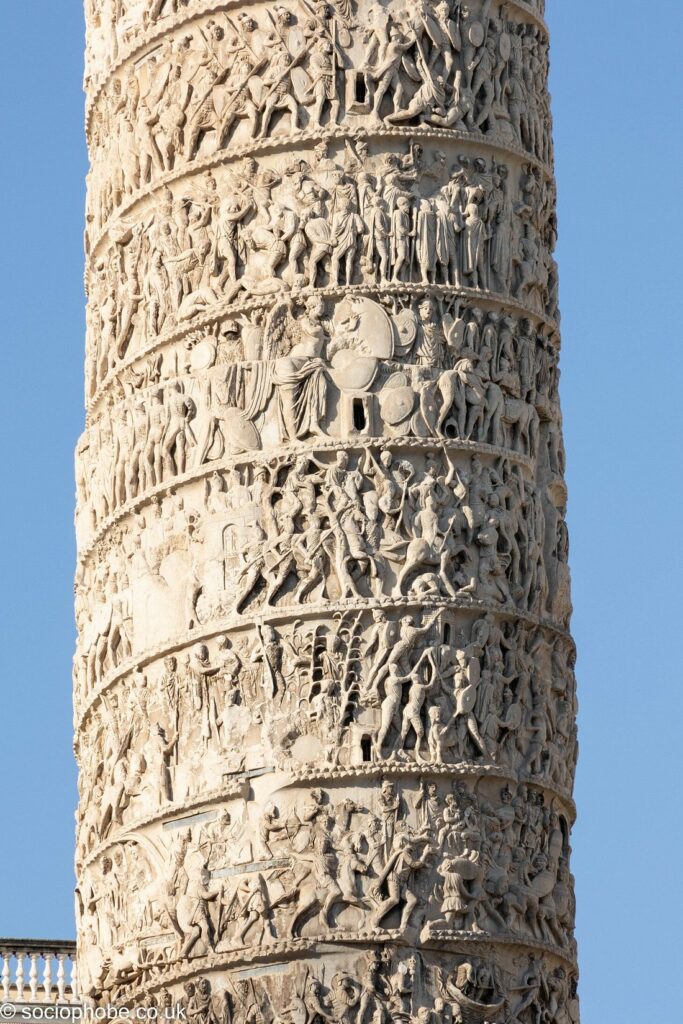
Such was this thousand-year-old Rome, suckled at the teats of the she-wolf, implacable in its ferocious appetite, which moved in solid array, militarily, politically and as a state, against our Tigranes the Great, in the first half of the first century (B.C.).
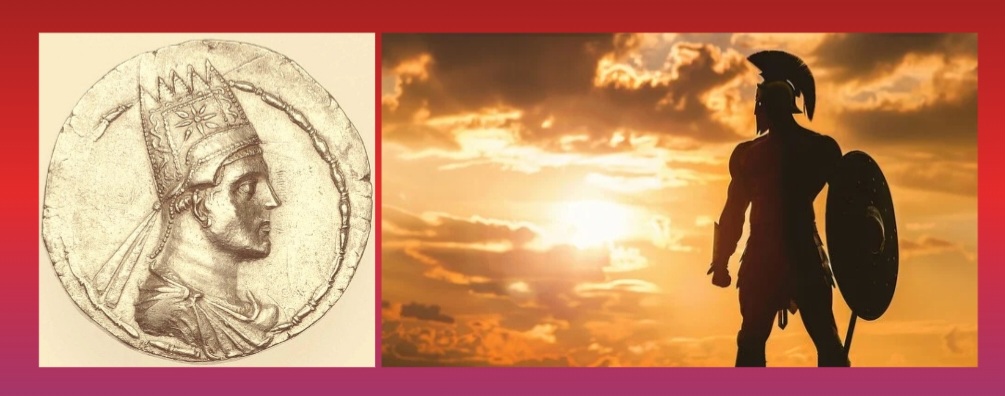
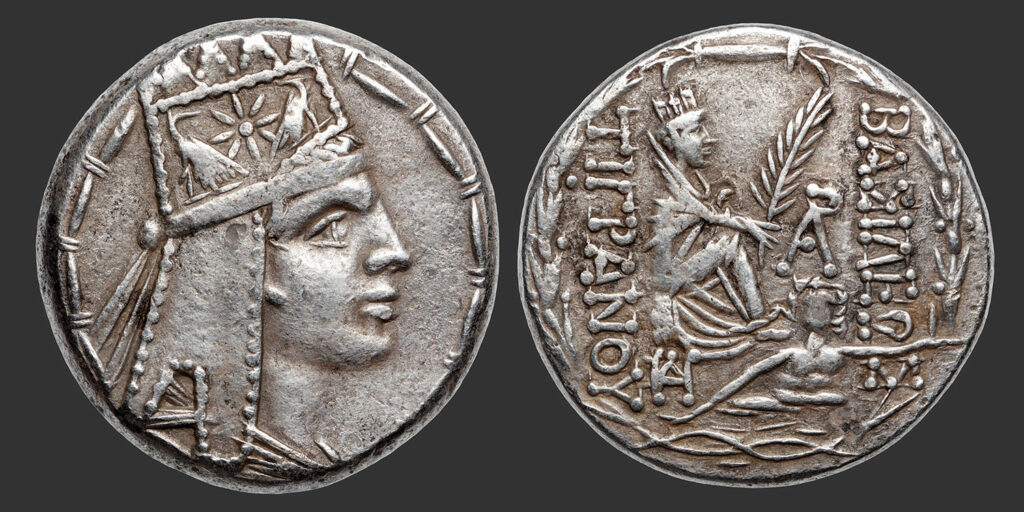
It is true: Armenia at that time was a mighty world-ruling state, and Tigranes II was emperor of the Armenians, or King of Kings, as he was then called.
And by the power of arms he had already brought under his imperial sceptre the numerous nations on all four sides of him. He had wrested from the Parthians the title of «king of kings»; he had subdued Greek, Jew, Seleucid, Arab and Mede, as well as numerous Caucasian hordes. All the countries stretching from the Caucasus range and the Caspian Sea to Ecbatana (Hamadan), Mesopotamia, Syria, Palestine and Cappadocia were united to Armenia, under the absolute authority of Tigranes the Great.
«This King of Kings,- says Plutarch,- who is so mighty that he has snatched Asia from the Parthians, who has transported whole Greek cities as far as Media, who has subjugated Palestine and Syria, has exterminated the successors of the Seleucids and has carried off their wives and daughters into captivity» (Plutarch, volume 2, page 516).
«He, Tigranes,- Plutarch continues,- with very slender means was able to subdue numerous nations and to humble the state of the Parthians, as no other prince had ever been able to do before that.
Tigranes peopled Mesopotamia with Greeks, displacing them from Cilicia and from Cappadocia, and he removed the nomadic Arabs from their dwelling places and settled them within his borders, in order to make them serve commerce» (Plutarch, volume 2, page 526).
Furthermore, what Plutarch says of the court life of Tigranes and of the captive kings, four of whom supposedly served him like slaves, seems a fable whose purpose is to present the Armenian emperor as a ferocious Oriental tyrant.
Here, as in many other instances, it is not the historian who speaks, but a partial man who, being a Greek, cannot tolerate the dominion of Tigranes, especially over the Greeks.
It is evident too that Plutarch, by exaggerating the might of Tigranes, strives to make his defeat more stupefying, the sting of the humiliation suffered more searing, and the worth of the victory won greater. The fact is, however, that however truly mighty Tigranes may have been in the East over the Parthians and over Asia Minor, the empire he had founded was still an infant compared with Rome. The nations he had crushed and subjugated, for the most part barbarous hordes, were utterly devoid of any conception of statehood. And the more civilized Greek and Jewish elements were to him a veiled enemy.
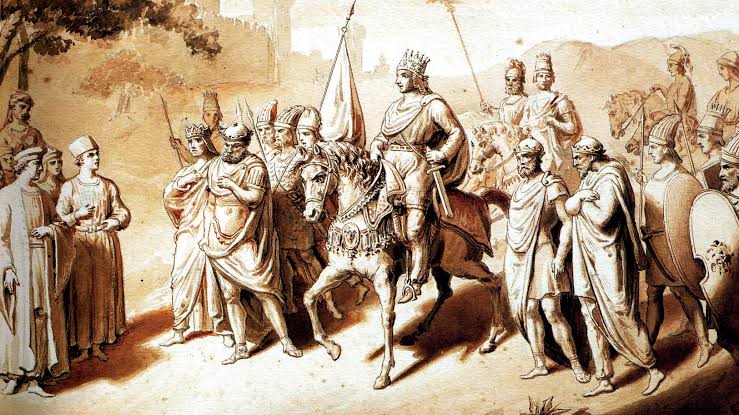
Rome had evidently long been working to destroy the state of Tigranes from within, since Plutarch speaks explicitly of a Roman party in Armenia. Thus Appius, who was going as envoy from Lucullus to Tigranes to demand Mithridates, was able along his way to win over to the side of the Romanophiles, very easily, many kings who were disaffected with the authority of Tigranes.
«Numerous newly subjugated cities,- says Plutarch,- secretly sent envoys to Appius, who promised them the help of Lucullus, enjoining them, however, to remain quiet for the time being until the hour should come».
And then Plutarch adds in passing, as an insignificant fact: «The dominion of Tigranes was unbearable to the Greeks» (Plutarch, volume 2, page 525).
And certainly the real and secret aim of Appius’ mission was precisely this: to contrive intrigues against Tigranes.
The whole secret of the history of Tigranes lies here.
The numerous Greek cities that lay under his dominion had already undermined the foundations of the Armenian empire even before the coming of Lucullus. The appearance of the Roman armies was merely the signal for dealing the final blow to the newly formed state.
The new capital of the empire, Tigranakert, which Tigranes founded in great haste by the force of his sceptre in order to place the centre of his state in a fitting location, was not free from the malady of this anti-Armenian policy. Its Greek inhabitants were waiting for the Romans to arrive, in order to revolt.
Armenia, upon this path of world dominion, still had neither the military, nor the governmental, nor above all the civic traditions by which Rome was so strong. Everything was new and unsteady, and needed time in order to be consolidated.
And that time was fatefully wanting to it. This collision of Armenia and Rome resembles a struggle between a strong, fully armed man and a promising, stout-hearted, sprightly youth with a rich future before him, the outcome of which was not difficult to foresee.
The greatest calamity of our whole national existence and of our racial destiny was Armenia’s premature collision with the invincible might of Rome. Our entire subsequent history has borne the disastrous consequences of that collision, and bears them to this day.
To be continued…