
























«THIS FABLE SHOWS THAT»…

Among the most ancient means of teaching and upbringing are precepts and fables. Through exhortation and fable-telling — with examples of brief stories presented allegorically, they admonished and educated children as well as adults.
The educational role of the fable has been valued in all ages, in many countries, and various versions of many fables have «travelled», reaching distant places. Fables with similar content are found in the folklore of many peoples.
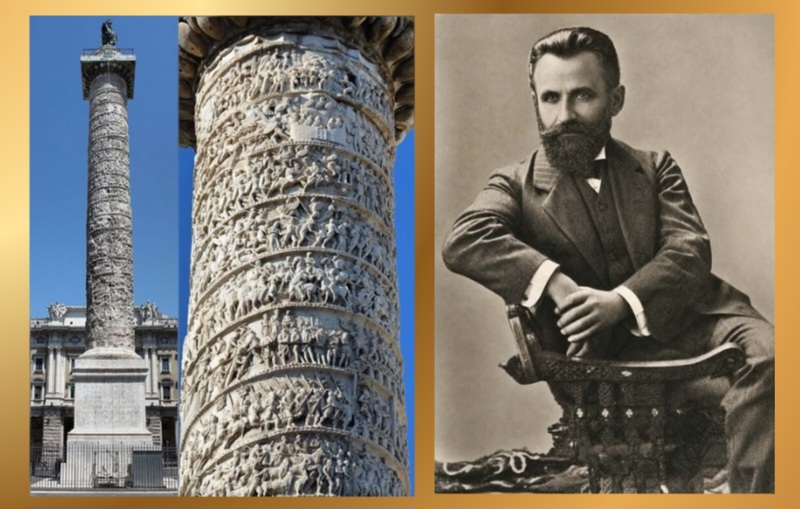
As early as the end of the 19th century Nikolai Marr carried out a meticulous, comprehensive study of the collections of Armenian fables, of individual tales, of the original texts, and proved that many fables were translated from Armenian manuscripts and adopted by other peoples, gaining international recognition.
«N. Marr proves in a strictly scientific way that the Arabic «Book of the Fox» is translated from the Armenian collection of the same name and brings many facts confirming this conclusion. He notes that in the Armenian «Book of the Fox», alongside classical Grabar, there are passages written in the vernacular, which, compared with the uniformity of the Arabic, present a very motley language and cannot be the result of a translation. Besides this, over many pages and with rich linguistic examples he points out the traces of Armenian words in the Arabic translation. Thus, for example, the translator, sometimes not understanding an Armenian word correctly, replaces that word with an entirely different word.»,- writes A. Dolukhanyan («Armenian medieval fables in the research of N. Marr»).
«Assimilating and developing the fundamental tenets of his renowned teacher, academician Hovsep Orbeli expressed himself more definitely:
«Many of those fables,- he wrote,- entered Georgia in translation, merging with Georgian folklore. Many others entered the Arab milieu in Arabic translation — thereby paving the way toward the distant West» (quoted from the article «The Theory of Fables in Medieval Armenia» by Doctor of Philological Sciences P. H. Hakobyan).
«Yes, wise people found that device solely in fables.
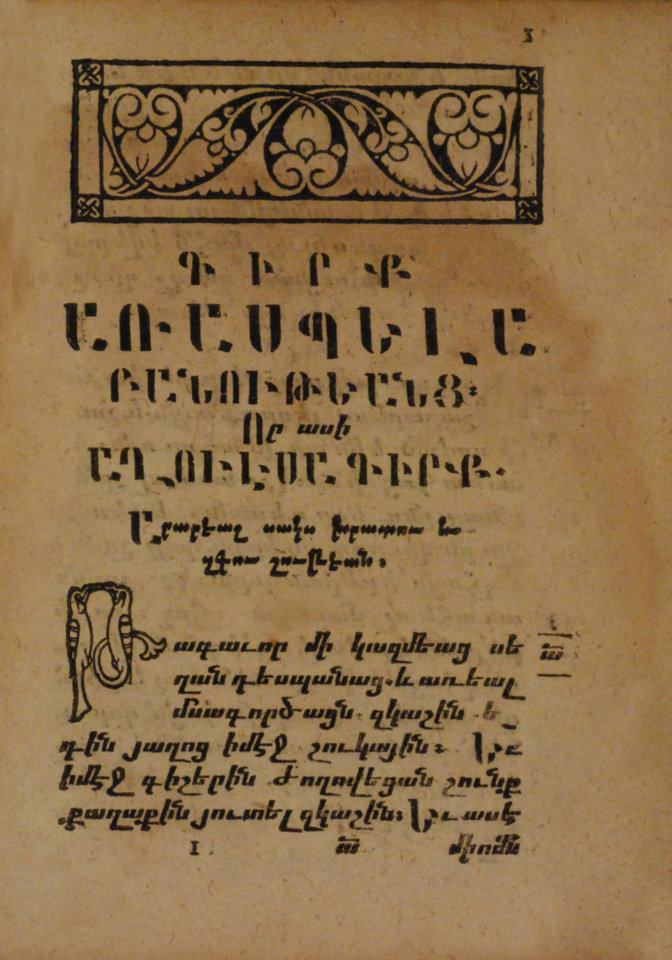
What was to be made known and warned of by fables — from the king down to the lowest commoner, it was impossible to make known and to admonish otherwise»,- we read in the preface of «The Select Fables of Mkhitar Gosh, Olympianos and Aesop», published in 1878.
The abstruse, hidden meaning of fables captivates everyone to this day.
«This fable shows that»…
Fables are accompanied by a clearly formulated moral.
Here is a fable by Aesop.

THE FROG — A DOCTOR

«He who is unlearned cannot be a teacher and counsellor for others.
The frog, dweller of the swamp, came out onto dry land and announced in the hearing of all the animals: «I am a doctor and I know all the remedies better than even Paeon, the physician of the gods».
But the fox objected: «Now how are you going to cure others, when you yourself are yellowed and earth-coloured like a sick man, and unable to cure yourself»…
«The undertakings of ignorant and conceited persons incapable of seeing their own shortcomings must end in failure and ridicule, should such persons become counsellors to those more experienced and wiser than themselves» (quoted from the cited article of P. Hakobyan)…