



«THE NAVASARD GAMES»
The scant fragments of songs rescued from the most ancient Armenian epic, handed down orally from age to age, «by word of mouth», later appeared in manuscript codices, bringing down to us the breath and the spirit of far-off days…
«Who would give me the smoke of the chimney,
And the morning of Navasard,
The running of the deer,
And the coursing of the stags;
We sounded the horn,
And we beat the drum,
As is the custom of kings»…
K. Atoyan addressed the Navasard games in an article decades ago, which we publish below.
THE NAVASARD GAMES
Among all the most ancient peoples, the Armenians included, beginning as early as the pagan period, a great place was given to mass festivals and rites, in which, together with other ceremonies, sporting festivals and games were also held.
The sporting festivals introduced into those celebrations were regarded by the ancient Armenians as a means of developing physical qualities (strength, agility, speed, endurance, suppleness), as well as of cultivating moral and volitional qualities.
Among the ancient Armenian celebrations it is important to mention the Navasard festivals, which encompassed a number of popular games. It is of course of interest to know whence these celebrations or games received the name «Navasardian». Since the ancient Armenians held their greatest and most thronged (national) feast in the month of Navasard, which corresponds to the present-day August and in part to September, these feasts were therefore called «Navasardian», and the sporting festivals that found a place in the programme of those feasts, «the Navasard games».
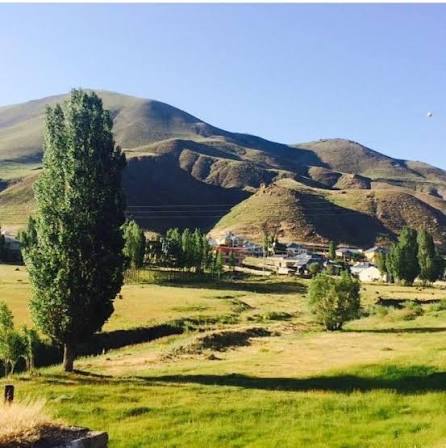
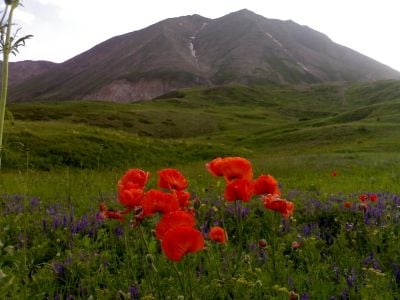
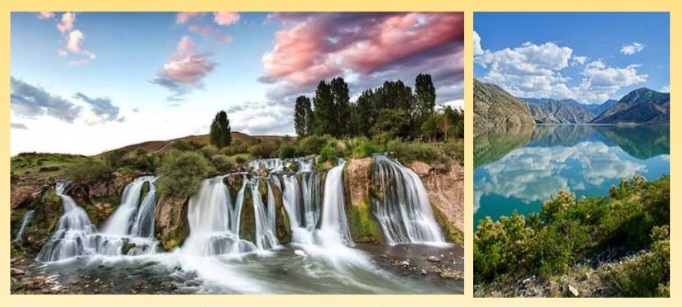
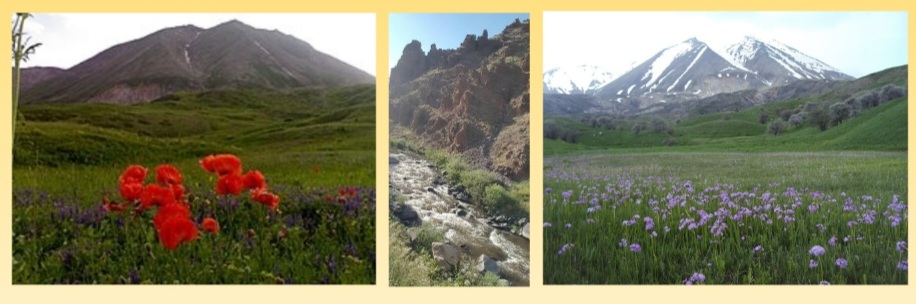
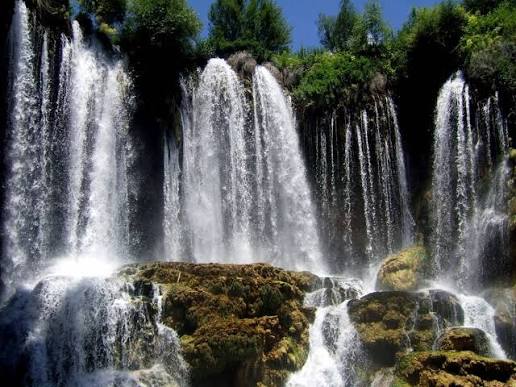
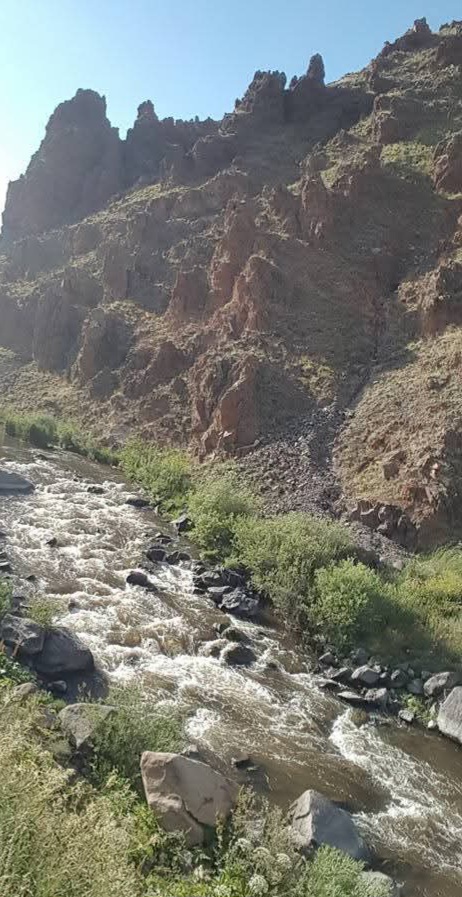
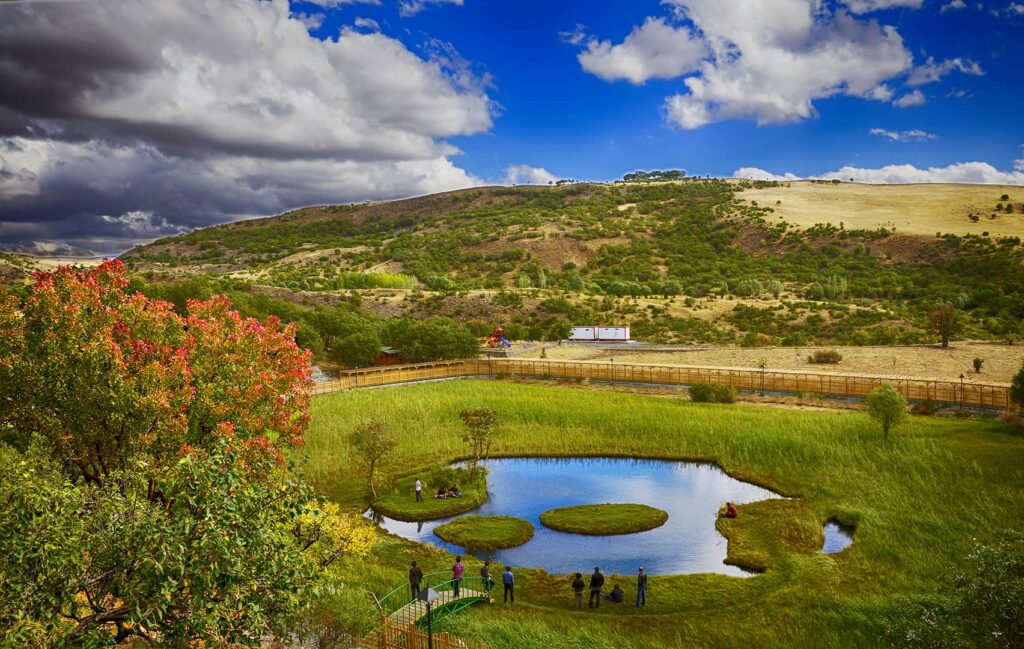
Among the ancient Armenians, physical culture and the activities comprised within it are bound up with the picturesque places of Armenia, in whose embrace the popular celebrations and the sporting festivals were held.
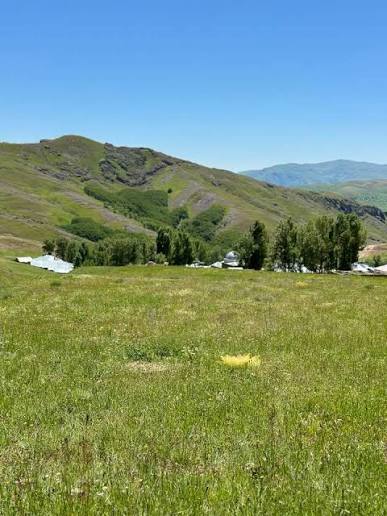
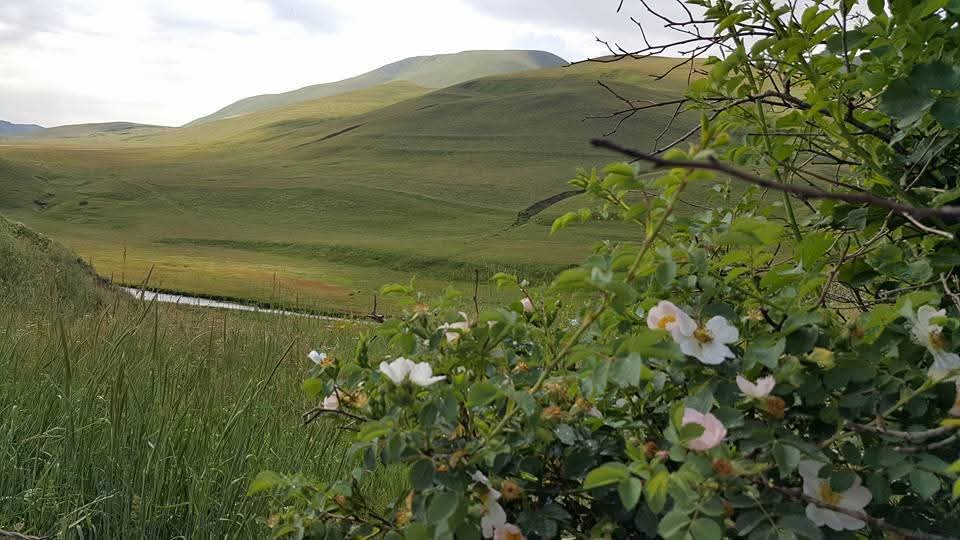
Even foreign chroniclers speak of the fact that the ancient Armenians loved to hold a number of mass festivals in the open air. The Navasard celebrations and the sporting festivals that found a place in their programme were concentrated and held at Shahapivan in Bagrevand, a place «fair to look upon» and «fragrant with flowers».
The Navasard celebrations, and among them the sporting festivals, were held with the participation of a great throng of people.
Armenian historians describe how people came from every extremity of Armenia in order to take part in these celebrations; on foot (day and night) the people covered hundreds of kilometres in order to take part in their national feast, and some part of them in the sporting festivals as well. As to the time from which the Navasard sporting festivals or celebrations began to be held, the first to report it is Alishan, according to whom the Navasard celebrations were held for the first time 2492 years before our era. If that date is correct, then it must be said that the Navasard celebrations, and among them the Navasard sporting festivals, have a history of approximately 4450 years. The sporting festivals were held over a duration of 6 days.
The 6th day of the celebration was dedicated to Hayk, the «forefather» of the Armenians, who, according to tradition, having entered into a wrestling match with Bel, the tyrant of Assyria, defeated him and delivered Armenia from destruction. The feast dedicated to Hayk was held on the 11th of August.
In the sporting festivals of the celebrations dedicated to the memory of Hayk, the forms of single combat (wrestling, spear-fighting, swordsmanship and the like) found an especially large place; in the course of these, valiant young men, displaying their strength and their other physical qualities, wished to be like brave Hayk.
These forms of sport, like other games of strength, the people displayed also on the day dedicated to Vahagn, who according to tradition was held to be the god of valour.
There is information that «special games» were also given a place in the ceremonies dedicated to these two mythological heroes, but as to what games these were, nothing is said about it. Therefore, taking into account that at the Vardavar celebrations various games were held, active ones as well as sporting and military ones, it must be supposed that these games found a place in the Navasard celebrations or sporting festivals as well, since the Vardavar celebrations are by their nature almost the same as the Navasard celebrations, or their continuation in the Christian period.
The ancient Armenian Navasard sporting festivals resembled in their nature the world-renowned Greek Olympic games.
From our historians we learn that at the Greek Olympiads the victors received a laurel wreath as a prize. There was an award of the very same kind for the victors of the Navasard games as well. At the same time other gifts too were presented to the victors. The awarding of the victors took place in the presence of the king or of the nobles.
Another of the features these two most ancient festivals had in common is that, if at the Greek Olympic games the kindling of the Olympic fire was a tradition, then a ceremony of the same type found a place in the Navasard celebrations as well.
There is information that the unquenchable fire of the Navasard festivals was kept burning upon the «Mirhakan Mehyan» of the city of Bagrevand for as long a time as it took for the festivals to come to an end.
In the Navasard sporting festivals a large place was found by the idea of the harmonious or beautiful development (build) of the body, something which found its expression among the Greeks as well.
There is information that at the Navasard sporting festivals many of the wrestlers anointed their bodies with various oils, which served, first, the purpose of making holds more difficult; second, so that the body should shine and take on a beautiful appearance; and third, as Yeghishe, the 5th-century Armenian writer, says, this anointing also had a strengthening significance.
We see the same among the Greek professional wrestlers, who, after anointing their bodies, also rubbed themselves with dry sand.
The Armenian people, in spite of the fierce resistance of Christianity,
was able to preserve the Navasard celebrations and the sporting festivals inherited from the pagan period, because these celebrations, besides their other purposes, were also held to be the largest and most popular of the ancient Armenian sporting events. In these festivals the people found the very means of all-round physical development; it fostered, cultivated and developed a number of moral, volitional and physical qualities which, in that period, were a necessity in the struggle against foreign tyrants as well.
Now a few words about the contests.
There is information that the Navasard sporting festivals were held in an organized manner and took place after the completion of special rites, in which the whole multitude took part. The principal and mass contests were held in special arenas (according to the data reported by our writers, by «asparez» are understood the grounds for horse racing, games, wrestling, foot races and the like).
Both youths and grown men took part in the contests.
Besides the individual contests, competitions were also held between the athletes of the provinces. In the Navasard celebrations a large place was found by the contests of wrestling, or, as the historians call it, «fighting locked in close embrace», in which both youths and grown men took part.
The fist-fighters (boxing) competed as well.
They wore upon their hands special bindings of leather or of cloth, which took the place of gloves. As a military game, swordsmanship was very widespread; during it the combatants also bore shields upon them in order to protect themselves from the blows.
What is interesting is that in the forms of sporting single combat the combatants, in order to give the people amusement, would mask themselves by putting on various costumes, and only then fight (it must be supposed that such festivals were also considered theatrical spectacles).
In the programme of the Navasard sporting festivals a large place was found also by the various games connected with running, by races over various distances, by spear-fighting and the throwing of the spear, by various active and military games and the like. In these festivals a large place was found, and great amusement given to the people, by the various exercises connected with equestrian sport (horse races, various games on horseback), and by the ball game, which must be considered a specimen of stick-play,
in which the players struck the ball with sticks.
Besides those mentioned above, at the Navasard celebrations the people also made use of various water games, of buffalo-loosing (bullfighting), of the releasing of doves and the like.
It must not be thought that in antiquity the Armenians took part in such manifold celebrations in every period. Our forebears held events of this kind in the peaceful years, which were of a temporary character. Such thronged rejoicings, and among them the mass sporting festivals, were repeatedly disrupted on account of the invasions of foreign tyrants.
Besides the foreign enemies, Christianity too organized a great campaign against the ancient Armenian culture that took its beginning in the pagan period.
After being recognized as the state religion in Armenia, Christianity began to wage a merciless struggle against every domain of the centuries-old culture created in the pagan period, including the sporting festivals, calling them «satanic» performances.
In spite of the fact that Christianity became an obstacle to the holding of the old popular celebrations and of the sporting festivals, and in the course of its struggle attained certain «successes», it was nevertheless unable to do away with them entirely.
The Navasard celebrations and the sporting festivals that found a place within them, with their characteristic features, passing from century to century and from generation to generation, have been preserved in living form down to our own days.
In the course of its existence of many centuries the Armenian people has fashioned a rich and substantial culture, one of whose constituent parts is physical culture, which comprises within it an entire system of physical education. The sporting festivals that found a place in this system, and the various sporting games and exercises comprised within them, received their origin, as well as
their development, for the most part from the Navasard festivals.
K. ATOYAN
Senior lecturer at the Armenian State Institute of Physical Culture