«ARMENIAN PERSONAL NAMES» (Part D)
H. ACHARYAN

The continuation of H. Acharyan’s article «Armenian personal names» — below (the beginning — in the three preceding posts).
«Now I speak about surnames.
When the community is small, the name is enough to distinguish the individual from the remaining members of the community.
For example, in a village where there are only 10-20-30 householders, dividing the two sexes, only about half of it will be men and as many women.
So if there are some 100 names, that number is enough; everyone will know who Karapet is, or who Grigor is.
But when the community grows, the number of houses rises to 100s and
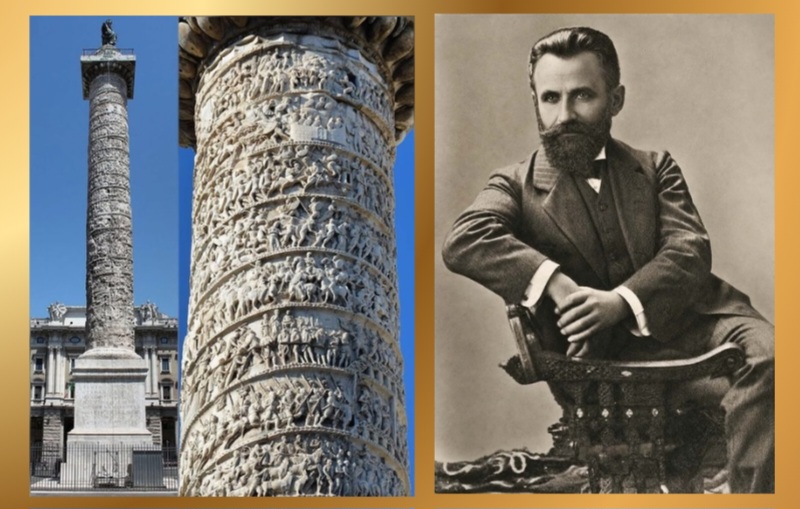
1000s, those few names are no longer enough. So either the number of names must be increased, which they do, or they must add to the names a second distinguishing means. The first stage of this development is formed by the adjective. On the name they put an adjective. They take some characteristic point from the outward or inward character of the same individual. For example — one of the emperors of the Romans was called Julius; this was an ordinary name among the Romans; there were many Juliuses; so, to distinguish this Julius from the other Juliuses, they called him «Julius Caesar». What does «caesar» mean; «caesar» means «with belly cut open»: When Julius’s mother was in labour, the birth was very difficult; the doctors were forced to cut open the mother’s belly and bring the child out that way; Julius was called «Julius with belly cut open»: Thereafter Julius Caesar became a great emperor, and his epithet «Caesar» came to mean «great emperor»; this is the word «kaysr».

Names with adjectives are very common both in history and in our ordinary life; for example — Lenk-Timur (Lame Timur), Ivan Grozny (Ivan the Terrible), Ashot the Merciful, Vahan the Wolf, Ashot the Iron, Vasil the Thief, Bullock Amram, Blind Tatos, One-armed Sargis, Paltara Martin, Naprasni Gordi and so on:
After adjectives one can put the individual’s place, the city where he was born or lived; thus — we have Grigor Narekatsi, Grigor Tatevatsi, Movses Khorenatsi, Khachatur Taronatsi, Gevorg Skevratsi, Nerses Lambronatsi and so on:
The third means is the use of the patronymic; thus — Grigor son of Hovhannes, Trdat son of Khosrov, Smbat son of Ashot: Among the Turks — Huseyn oghlu Ali, Ali oghlu Suleyman and so on: Among the Arabs — Hasan ibni Ali, Ali ibni Vehpi, Mehemmet ibni Suleyman: To all of us the custom accepted among the Russians is known, the patronymic as a title of respect: Nikola Aleksandrovich, Vladimir Sergevich, in the feminine — Anna Grigorievna, Sofia Gerasimovna and so on:
All three of these means we can call individual, or rather nicknames, than surnames.

A surname is that which is placed on the whole generation or generations of a family and can continue from century to century. Thus — Mamikonyan, Bagratuni, Artsruni, Gnuni, Slkuni, Khorkhoruni, Hovnuni, Dziwnakan and so on, the nakharar families of the ancient Armenians, which continued for long centuries and in the Arab period gradually came to an end.
There are nations that stop at the patronymic and do not pass on to the surname; such were the Turks and the Persians, who knew only Huseyn oghlu Ali or Huseyn Puseri Ali; and only in the last twenty years, following European orders, did they pass to the surname:
It is interesting, I think, to know how the Persians passed to the surname. It was in the year 1918; the Persian government announced that henceforth titles would be abolished and everyone must choose a surname for himself. Everyone fell into the depths of reflection and invented something from somewhere and
announced in the newspaper that I am taking such and such a surname. No one else had the right to take that surname any more. Two years that operation lasted and every family or household became the owner of a different surname:
The Arabs too have stopped at the patronymic, and since the patronymic alone was too little to distinguish the various members of the community from one another, they added to it also a nickname and the place that person is from:
Among the Arabs there is also another strange custom, which is peculiar to the Arabs alone. Let us suppose a man named Hasan; let us suppose that he is the son of Huseyn, so he becomes Hasan-ibni-Huseyn; he is, let us say, from the city of Baghdad, so he becomes
Hasan-ibni-Huseyn-el-Baghdadi; he has a nickname, let us suppose — Fattah; the whole becomes Hasan-ibni-Huseyn-el-Baghdadi-Fattah: But this much is little; he married, had a son named Ali; the father now takes upon himself apu-Ali, that is — the title «father of Ali» and becomes Hasan-ibni-Huseyn-el-Baghdadi-apu-Ali-Fattah: The sons multiplied; he had two more sons, one Mustafa and the other Suleyman. So that man became — Hasan-ibni-Huseyn-el-Baghdadi apu Ali-apu-Mustafa-apu- Suleyman-Fattah: In Arab history and literature we very often come across such yard-long names; for example — there is a poet whose name is — Izz-ed-din-Abdul-Futavel- Ardul-Vahap-Amad-ed-din. ibn-Ibrahim-el-Senjani: The secretary of one of the sultans of Egypt is Sheykh- ar – Rayis -Safi – ad- Davlav ibni – abu – Maali – ibni-Sharafi:
One of the Arab travellers is called Abu – Abdallah – Muhammed-bin-Abdullah – bin-Muhammed-bin-Ibrahim-el-Vatiwed-Danji-ibni Batuta – Nemm – ed – Din: There is an Arab physician whose name is Zia-ed-din-apu-Muhammed-Ardallah – bin- Ahmed-en-Nubati-el-Malaqi: The Arab historian Ibn-Khallikan in his book «Vefayat el Aayan» (trans. G. Msrlyan, Cairo, 1935, p. 8), names one of the emirs of Khorasan thus: – El emir Kuteyba bin abi Salih Muslim bin Amr bin el Hoseyn bin Rabia bin Khalid bin Esid el Kheyr bin Kudayi bin Hilal bin Salama bin Saalaba bin Vail bin Maan bin Malik Aasar bin Saag bin Kays Aylan bin Modar bin Nizar bin Muadd bin Adnan el Bahili:
This is the whole genealogy of that man. Ibn-Khallikan another time also gives the long name of a prince and then adds: «The rest I do not remember»:
Unfortunately I too do not remember the page.
Patronymics can be repeated, that is — putting the name of the grandfather and of the grandfather’s father, perhaps also of the grandfather’s grandfather.
The Arab custom little by little or partly spread to subject or co-religionist tribes; for example — one of the kings of Madagascar is called Andrianampoinimerina:

The Spaniards too love to form long names. There is a fable.
«In South America a Spaniard has lost his way in the forest at night; forced, he knocks at the door of an Englishman and asks him to let him spend the night; the Englishman, opening the window in the dark, asks — who is it?
The Spaniard answers: «Fernando-dellos-Vestos-Servalos-Minkos-Santa-kuzeno-Tikhonos»:
Our house is small, there is no room for so many people, says the Englishman and closes the window»:
To be continued…