«ARMENIAN PERSONAL NAMES» (Part E)
H. ACHARYAN

The last part of H. Acharyan’s article «Armenian personal names» — below (the beginning — in the previous four publications)…
«Other nations know name, patronymic and surname; for example — the Chinese, whose words are very short, follow this custom; let us recall from Chinese names — Kon Fu-Tsi, Li Hung-Chang, Sun Yan-Tsen, Shi Hoang-Ti, Shun Yeu-Yue and so on: Among these the first syllable is the surname, the second — the patronymic and the third — the name:
Among the Russians too, as is known, the surname with name and patronymic is in use; for example — Ivan Fyodorovich Paliev and so on:
Europeans make wide use of the surname: The name among the French is so worthless a thing that by saying name they understand surname, while for the name they use «little name» (petit nom). One person can have 3–4 names, but only one surname: Thus of my classmates in Paris let me recall —
Edouard-Marie-Antoine-Aude
Louis-Marie-Jean-Bodin.
Lucien-Elien-Albert-Broche
Charles-Jean-Marie-Brou.
Pierre-Paul-Narcisse-Fernand-Chilot
Joseph-Jean-Baptiste-Vendryes.

After these general notes let us particularize our discourse on the surnames of the Armenians:
Among the ancient Armenians the common people probably used name-patronymic, while the nobles bore a surname: Surnames in the most ancient period were formed with the particle «uni», which later became «ean» (yan):
In the 6th century the Armenians take from the Persians the plural particle «an, ean» (yan) and make surnames like theirs, even by the Persian law of the izafet; in the letter written by Catholicos Nerses, among others the following princes sign.
Hamazasp i Gugvaramean
Sameh y-Artavazdan
Grigor i Hmayakan
Sahak i Vardanan
Datoy i Garjughean
Zavrak i Gazavonan
Varaz-Yohan i Yohanan
Vardan i Mushegean
Sahak i Hmayakean
Ashot i Varaztirotsean
Mushegh i Hmayekean
Vriw y-Artashran
Sahak i Manuelean and so on, and so on: (Book of Letters, p. 74):
This is the period of Persian influence: In the time of the Arabs surnames disappear, inasmuch as the princely clans are wiped out: Later — in the time of the Turks, likewise there is no surname: In Turkey, in the time of my childhood, only the patronymic was used in the form of a surname; for example — at school I was registered as Hracheay Hakobean (by my father’s name) and in conversation they often said in the shortened form Hracheay Hakob: In the year 1888 the system of surnames entered the school: The board of trustees ordered all of us to go home and, asking and learning from our parents — to bring a surname: In general the pupils made their grandfather’s name their surname, others some nickname and so on:

The history of my surname is interesting: I went home and asked what our surname is: My father proposed taking his father’s name — Harutiwn and being called Harutiwnean: I was then 12 years old, but already had some linguistic taste: To my taste a surname formed from a name was not pleasing; so I rejected Harutiwnean and wanted something else: My paternal aunt said that their clan in Rodosto was called Hyupryuk oghlu, so she proposed writing Hyupryukean: I did not then know the origin of the word Hyupryuk; I did not know that it too is a name, Hyuperik, which is very rarely used: In Yerevan a few years ago there was someone named Hyuperik: I did not like the surname Hyuperikean either and rejected it: (In Constantinople the nickname is often confused with the surname, and instead of saying surname, they say nickname, in Turkish laghab, that is — mock-name):
I asked my father what mocking name they give you; he said: «They call me Krchin Akob»: I liked this name and took the surname «Krchinean», whose meaning was unknown:
I presented myself to the board of trustees and said that my surname is Krchinean:
One of the trustees said that there is no word «Krchin», it must be «Krchik», and made my surname Krchikean: For a whole year at school I bore the surname Krchikean: My comrades continually mocked me — calling me «krchik, mrchik, trchik, khrchik, brchik»: The year came to an end, I finished the elementary school and entered the secondary one: I — tired of krchik, decided to change my surname: The Grabar of the word krchik is «achar», which seemed to me very euphonious, and at the new school I made my surname — Acharean, which my father also accepted:
42 years ago from now, at the Seminary of Etchmiadzin, when I told this incident, Manuk Abeghean said laughing: «We have not seen a Turkish Armenian who did not have a made-up surname»: True, but Abeghean’s surname too is made up: He was originally called Aghbeghean, that is — with a Turkish word — «son of the white-moustached»: Abeghean rightly found Aghbeghean unpleasant, cut it in the middle and made it Abeghean, which is the name of one of the nakharar families of the ancient Armenians:
I told an individual incident; but it is the indicator of one of our social phenomena: The passing from patronymic to surname was one of our progressive steps:
Today among us everywhere the surname is accepted; it is a thing recognized and established by the state, which cannot be changed at any moment one wishes with such ease:

Our surnames are formed in 4 ways:
The first is the surname from a name. thus — Hovhannisean, Grigorean, Karapetean, Nersisean and so on: With these can be placed surnames of the Ter or Melik form; such as — Ter-Karapetean, Ter-Grigorean, Ter-Hovhannisean, Ter-Martirosean or Melik-Abrahamean, Melik-Shahnazarean, Melik-Parsadanean and so on:
All these were formed for the first time from the name of someone’s grandfather or of the grandfather’s father:
They are all products of a late time; so we do not find among them Hracheaean, Artavazdean, Vramshapuhean, Meruzhanean and similar surnames, because those names are very old:
Thus, surnames from names are formed naturally in the male line; but there are surnames too that are formed from female names: Thus, Manandean is formed from the name «Manand», which is a woman’s name; likewise — Nayunts, Shushanean:
There are families where the woman is a more influential personality than the man; in this case they say not the son of Karapet or of Grigor, but the son of Mariam baji or of Takush khanum and so on: Thus a surname is formed from a female name:
The second form of surnames is the surname formed from a mock-name or nickname: Someone was given a mocking name, that mocking name passed to the sons and a surname was formed: Such are for example — Erkaynean (or in Turkish — Uzunean), Karchikean, Kolotean, Shirinean (sweet), Garagashean (with black eyebrows), Gharakyozean (with black eyes), Topalean (lame), Cholakhean (with a broken arm), Terpeterean (slovenly), Khachanean, Purnazean (with a big nose), Chortanean (he was a miser who lived only on chortan), Tervishean (careless): Surnames of this kind sometimes bring the matter to tastelessness; for example — in literature a Catholic vardapet from Constantinople is known — Poynueyriean (crooked-necked), in Evdokia there was Yaghlighatmeremezean (son of the one who does not eat oily pastry):

The people of Nor-Nakhijevan are notable for their strange, often unseemly surnames; such as — Chatalbashean (with a split head), Khapakhpashean (pumpkin-headed), Ayuean (bear-son), Tilkiean (fox-son), Bughaean (bull-son), Tatspeshean (his nose always ran, he wiped it with the hem of his clothes, they named him Tatspeshean): There was a lawyer Porkshean (his belly always ran), there was an actress Gozotean, the rest go entirely beyond the bounds of politeness: As we notice — most of these surnames are Turkish:
The third form of surnames is the surname from the native place, from the name of the country:
Thus we have — Vantsean, Stamboltsean, Halabean, Shamlean, Izmirlean, Khrimean, Spartalean, Ortuean, Trapizontsean, Bagheshtsean, Payputean, Erevantsean, Ajemean («ajem» means «Persian»; when the Caucasus was under Persian rule, whoever emigrated from these parts to Constantinople, to Turkey, was called Ajemean, as a Persian Armenian): In our teaching staff we have Aghuzumtsean; «Agh uzum» — there was a village named «white grape»; they emigrated from that village and received this epithet:
The fourth form of surnames is the surname from the name of a craft; this forms a very large number and is common especially among the Turkish Armenians. for example — Voskerchean, Kuyumjean, Zargarean, Artsatpanean, Hekimean, Snikhchean, Perperean, Zhamkochean, Sujean, Kepapjean, Tokmajean, Devejean, Chilingarean, Nalbandean, Mehanajean, Zurnajean, Saponjean, Hiwsean, Durgarean, Plotnikean, Ashjean, Khalpakhchean, Poyajean, Nerkararean, Krasilnikean, Temirjean, Ghasapean, Kerestejean:
These too are generally Turkish; only a few are Armenian:
In the years of the 1900s, at the time of the Armenian-persecuting campaign of the Hamidian regime, when some of the public figures of Europe had begun to analyse the Armenian question and to seek its root cause, there were among them such malicious, bribed people who accused the Armenians of being a merchant people: At the time of that unjust explanation there was found a French writer — Pierre Quillard, who wrote an article on that occasion in the paper «Рго Armenia»:
He said: «Wrong is the opinion that the Armenians are a merchant people and live by exploiting others:
Yes, there are merchants among the Armenians, but the majority of the people are farmers in the villages and craftsmen in the cities»: As proof of this he cites a list of these surnames of the fourth kind, as I too have mentioned: Proceeding from the standpoint that a surname has an antiquity of at least several hundred years, he confirms the idea that the Armenians are craftsmen and have always been — in the long period of Turkish domination: Thus, behold, the simple occasion of examining surnames is used for the explanation of social and public phenomena»:
(The End)
H. ACHAREAN
EDITORIAL NOTE – In this work of Professor Acharyan there are points that are conclusions of his early period of study, which he revised later:
Among such is, for example, the question of the interaction of ancient Armenian culture with the cultures of neighbouring peoples — emphasizing the independence and high development of ancient Armenian culture.

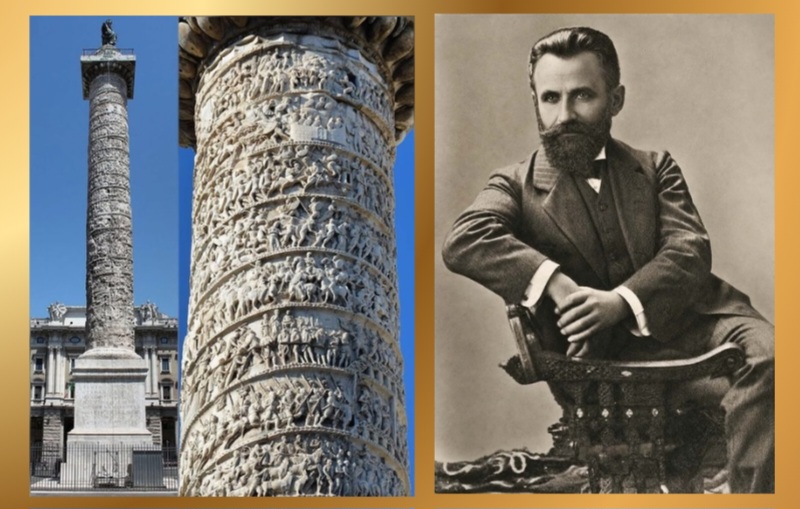
In the photo — Hrachya Acharyan with his daughter — Knarik