Year: 2025

  • «MAY VALOUR COME TO YOU FROM THE VALIANT VAHAGN, ALL OF THIS LAND OF THE ARMENIANS»…

    «MAY VALOUR COME TO YOU FROM THE VALIANT VAHAGN, ALL OF THIS LAND OF THE ARMENIANS»…

    «MAY VALOUR COME TO YOU FROM THE VALIANT VAHAGN, ALL OF THIS LAND OF THE ARMENIANS»…

    It is the millennia-old Haykian teaching, grounded in the laws of the Universe, of Nature, that forms the world-view of the sons of Hayk faithful to the traditions of the Haykazuns.
    The celebration of the New Year beginning on the Areg day of the Areg month – of the New onset of spring, is followed by the Hrand day of the Areg month, when, according to the explanation of the Kurms of the Haykian Brotherhood, «the day surpasses the night by one degree, and our Ancestors celebrated it as the birth of Vahagn Dits.
    Vahagn Dits, brave and of mighty arm, is also the symbol of the Armenian man»…

    Numerous sons of Hayk imbued with the spirit of freedom and with patriotism have at various times with their pen — in prose or in various poetic metres and with colourful vocabulary — striven to encourage the nation — awakening anew the indomitable spirit of struggle of the Armenians — reminding their compatriots who had strayed from their roots of their own sources — «the gilded past of the race», the most ancient rich national culture, which had been dubbed «pagan» by the spreaders of the foreign religion (the word «heathen» is etymologized from the word «ethnos» — in the sense of «race», «national»)…

    «Pagan life captivates me day by day:
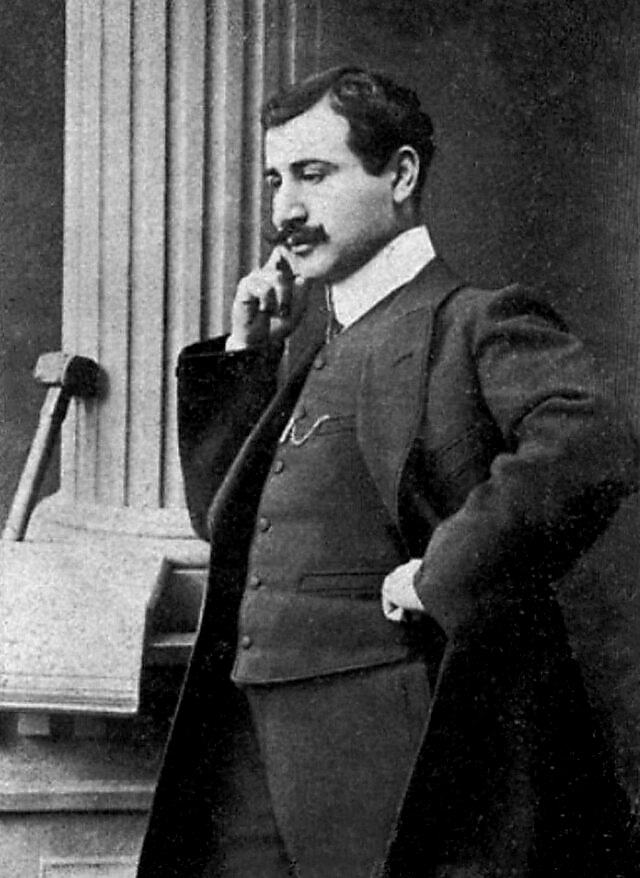
    If it were possible today, I would change my religion and would embrace with love poetic paganism»,- wrote Daniel Varuzhan in the year 1908 — in a stormy period of the history of the Armenians, when they were years of the survival, of the struggle of the nation:
    «…Let me remind, it was the beginning of the 20th century, the Armenians, still under the domination of the Turk, lived in a constant insecure condition, the only aim of life was the struggle for bread, keeping one’s head on one’s shoulders, harnessed day and night to one’s work, persecuted,- writes Marie Rose Abousefian — turning to the work of D. Varuzhan, and continues: «The collective life of the Armenians was led absolutely by the church, with its moral principles:
    The religion of the Armenian and, particularly, the clergymen persuaded the Armenians to accept the violence of the Turk with humility: They considered rebellion and struggle a danger: Religion had also persuaded that the natural human feelings of loving, of being loved, of pleasure, of delight are immoral thoughts, and these remained generally outside the thoughts of the people»…
    «…Varuzhan, filled with free ideas, was undoubtedly suffocating in this milieu:
    Before «Pagan Songs» he was thinking about the pains of the Armenians, about the liberation of the homeland, about guiding the despondent people, and led it in that direction:
    In the collection «Pagan Songs» his approach was entirely different: This collection was a kind of open protest against those mores, those constraints in which the Armenians lived:
    His main task was to awaken the people, and he saw that in those conditions its awakening was impossible: And he resorts to a bolder step:
    Naturally, the collection was to raise a great stir around it: It seemed to everyone that the author of «The Massacre» was extolling only paganism:
    Whereas, this collection was more than the praise of paganism:
    Varuzhan’s talent had found a splendid solution: by presenting the advantages of the worship of the Armenians before Christianity — of paganism, he emphasized, he focused the attention of the people on the fact that the Armenian before Christianity had lived independent and free on his lands:
    The Armenian as an individual and as a people had been free of all constraints, had been mighty, had been a ruler, had worshipped beauty, the feelings of passion, of delight had been accepted naturally, as nature had bestowed them, the beauty of the female body had been extolled and appreciated in all its details:

    In this collection too Varuzhan includes two different headings — «Pagan Songs» and «Flowers of Golgotha», whereby he emphasized the two opposite sides of Armenian life:
    In the section «Pagan Songs» — he reminded his people of the vast and independent free life that his nation had lived 20 centuries before, when the Armenian, as I noted, was great and mighty, widespread and invincible, with his temples, mighty gods, unconstrained pleasures, the woman, voluptuousness, wine, art, the worship of beauty, the free man»…
    «…He hailed the advantages given by paganism, which had liberated human thought from constraints, «Where Beauty and wakeful Strength were worshipped»…
    «…He extols an era where the Armenian lived with different notions and mores, did not become wretched, man was free from constraints, the beautiful, the great, the mighty, the natural impulses were glorified»…

    «O thou, Vahagn, O god of my fathers,
    I pray… I pray
    For the strength, for the religion of thy arm»…

    And by whose departure — «man has fallen under the heel of a giant, deaf Jewish God», as a result of which man has become submissive in mind and soul, a slave, petty and deceitful: That with the destruction of the might of the old gods vanished.
    «Behold, all our forests and seas,
    The springs and the peaceful hearths
    Have become desolate and dreary»,
    that instead of their gold-woven marble-built beauty
    «Only above my bed hangs a triumphant Cross —
    Where there is only the glory of Death»…»:
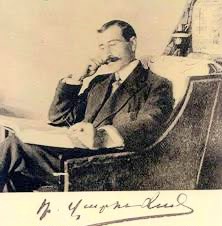
    «Varuzhan’s was a patriotic lyre, bound with priestly devotion to the heart of his race»,- wrote E. Melekian («Phiunik» monthly, 1920, May):
    «Varuzhan’s is not our usual weeping literature:
    A rebellious, proud, noble spirit storms in him, the spirit of the freedom-struggle of the last three decades, perhaps, crystallized in him, worked into wonder by the anointing of the sacred traditions of the past: That is why, when he is tempted to pray, his god is not the Jesus of Golgotha, but the sun-eyed Vahagn of our Forefathers — the flaming youth «through the reed», before whom the poet kneeling entreats.-
    For the strength, for the religion of thy arm,
    With which one day thou didst tear the mouths
    Of dragons, didst scatter in the sky
    Like seeds of the sun, the stars of the Straw-Thief;
    For the strength, which is the flight and the soul
    Of endless Creation,
    Under whose boundless kiss is born
    From the worlds part flower, part flame,
    The principle of Immortality lives in the atom,
    And in the brain and in the will,
    Under whose mighty finger
    The seeds split, the sap, singing,
    Rises up to the summit of the oaks,
    For the strength — which fills the breasts,
    Rocks our cradle and us, after death
    Carries us up to the stars, and up to
    The creative cause of a second life,
    Which raises a Nation like a pack of lions,
    Pours thy arm into its arm,
    And like a fiery bird of paradise — under the folding
    Of its luminous flights broods
    In the bosom of our mothers
    Heroes, geniuses:
    For that holy Strength I say, of which thou
    Art the overflowing intellectual spring,
    O thou, Vahagn, – behold, stretched out to thee
    My bloodstained arms,
    I pray… I pray»…
    The saving melody that revives the spirit of the Armenian is the call of the Ancestors, their clangour of struggle and vengeance…
    Paruyr Sevak too has sent his message to the Vahagns of our days.
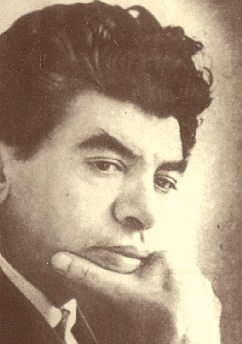

    «…Vahagn,
    Thou grandson of Vahagn the Dragon-reaper,
    Can it be that thy grandfather’s blood has turned to water
    In those busy veins of thine, in which
    The white milk of Astghik was changed into blood?
    Can it be that under every Armenian roof
    At dawn too, in love, are no longer in travail
    Earth, heaven, and then the purple sea,
    That you from the bosom-flame of the little red reed
    Should run fire-haired, and flame-bearded, and flame-moustached,
    Run towards that dragon which only
    Changes its form, but its essence — never!

    That dragon, which with its cracking body
    Has drawn a ring around thy paternal land —
    Its bloody head laid on its tail,
    And any moment now it will bite its very tail:
    But it will not bite its tail if thou
    Dost not resist, dost not endure and perish:
    But it will not bite its tail if thou
    Through the jazz dost not hunt out the pandir of Goghtn:
    And it will not bite its tail if thou —
    Perhaps thyself already a Jacques or Juliette,
    Tomorrow with unfeigned repentance dost not baptize thy children
    Again Vahagn and Astghik»…

    «There comes a moment when protesting is no longer enough, one must act!»…
  • AS AN EVER-BURNING LIGHT

    AS AN EVER-BURNING LIGHT

    AS AN EVER-BURNING LIGHT

    The Haykean teaching is a priceless treasury — an ever-burning Light, by which for millennia the Haykazuns have been educated, with the system of values fashioned by their Forefathers.
    Aspiring to perfection, having as an example the Gods who symbolize the highest human virtues, the noble-minded and brave sons of Hayk followed and to this day follow the Wisdom of their Ancestors, keeping in everything and everywhere «the canonical measure», «sobriety».
    The source that grants joy to the spirit and health to the body is the balance of the person, which begets and nourishes the ever-wakeful and calm mind, sound thinking, vigilance and justness.

    To the food necessary for a person’s healthy life and vital activity, naturally, special attention has been paid from time immemorial.
    The Haykean teaching attaches importance to a right diet based on plant food. Plants, grains, fruits and vegetables ripened by the warmth of the Sun, by their beneficial effect, contribute to the regular activity of a person’s body and mind.
    The Haykazun Kurms have urged the Arevordis to feed on vegetation that has absorbed the life-giving light of the Sun’s rays. And today too their descendants remind us of that precept, stressing the importance of purifying the body by fasting, as well as of clearing the mind by meditation, of keeping the peace of the spirit undisturbed.

    Turning to the period of Fast that follows the feast of Trndez, celebrated on the day of Hrant of the month of Hrotits in the Haykean calendar, Kurm Harut Arakelyan, a representative of the priestly order of the Haykean Brotherhood, stresses the necessity of a strict limitation of foodstuffs, of abstaining from animal food —
    in order to greet the Armenian New Year-Easter at the spring equinox, on the day of Areg of the month of Areg (on 21 March), with a purified, renewed spirit and body.

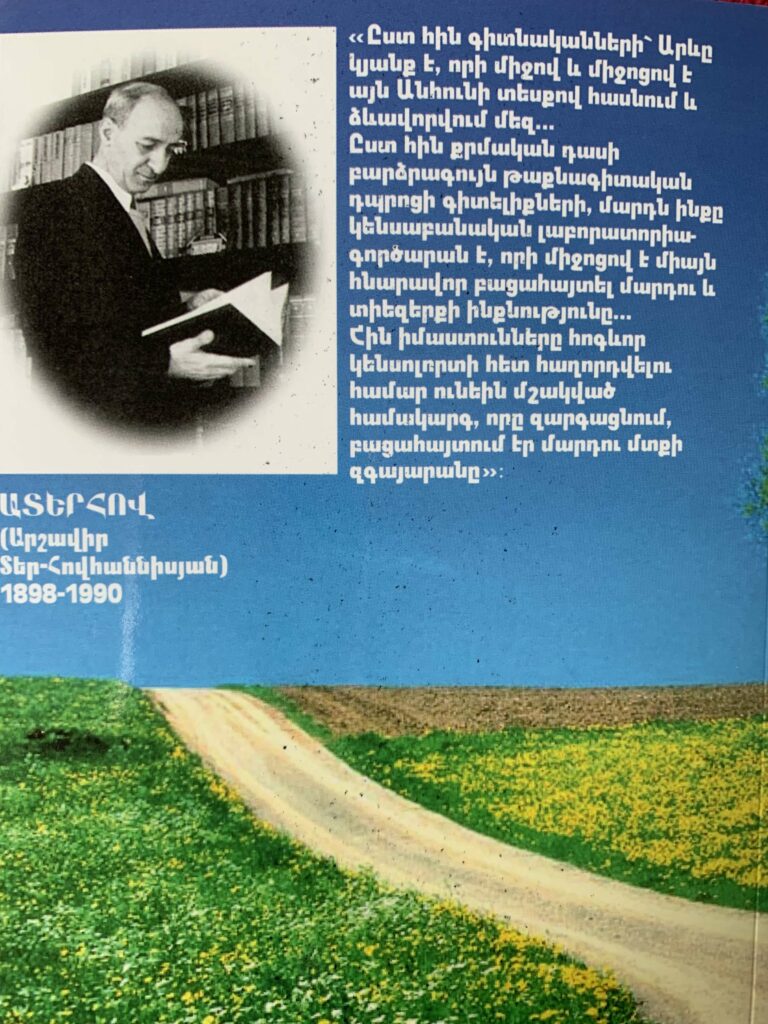
    Presenting the book «Raw-Eating» (Vegetarianism) of «the Enlightened Haykazun, Arshavir Ter-Hovhannisyan, born in Iran», in which the author treats of ancient wisdom, he writes:
    «And may it be that our Creator’s Life-giving Light become a source of life in the hearts of all Pious Haykazuns»…
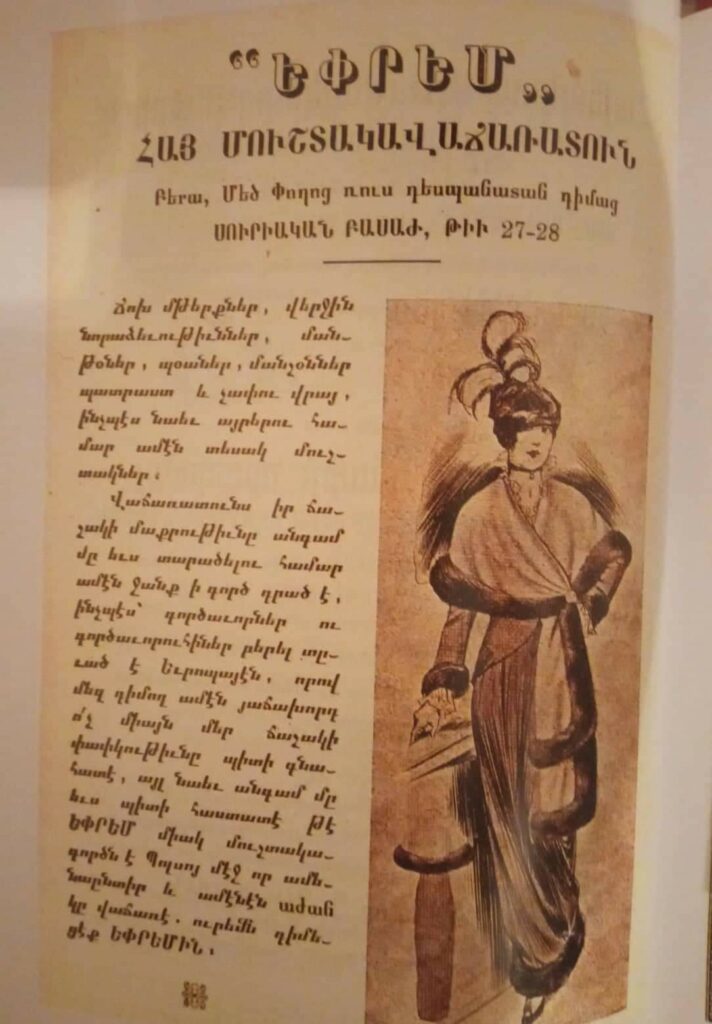
    «The ancient sages had a developed system for communing with the spiritual biosphere, which developed, revealed the sense-organ of the human mind» (ATERHOV – Arshavir Ter-Hovhannisyan, 1898-1990).

  • «… ACCORDING TO THE FIRST ORDER OF THE ROYAL LAWS HE PUT ON THE HONOURABLE GARMENT»…
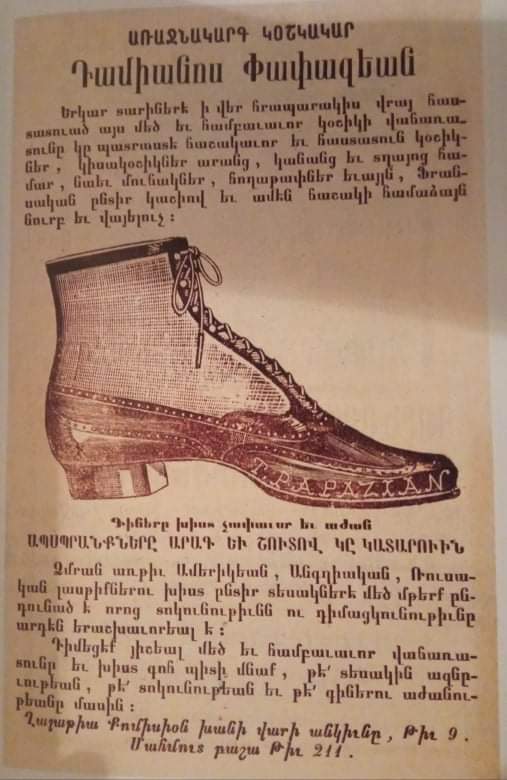
    «… ACCORDING TO THE FIRST ORDER OF THE ROYAL LAWS HE PUT ON THE HONOURABLE GARMENT»…

    «… ACCORDING TO THE FIRST ORDER OF THE ROYAL LAWS HE PUT ON THE HONOURABLE GARMENT»…

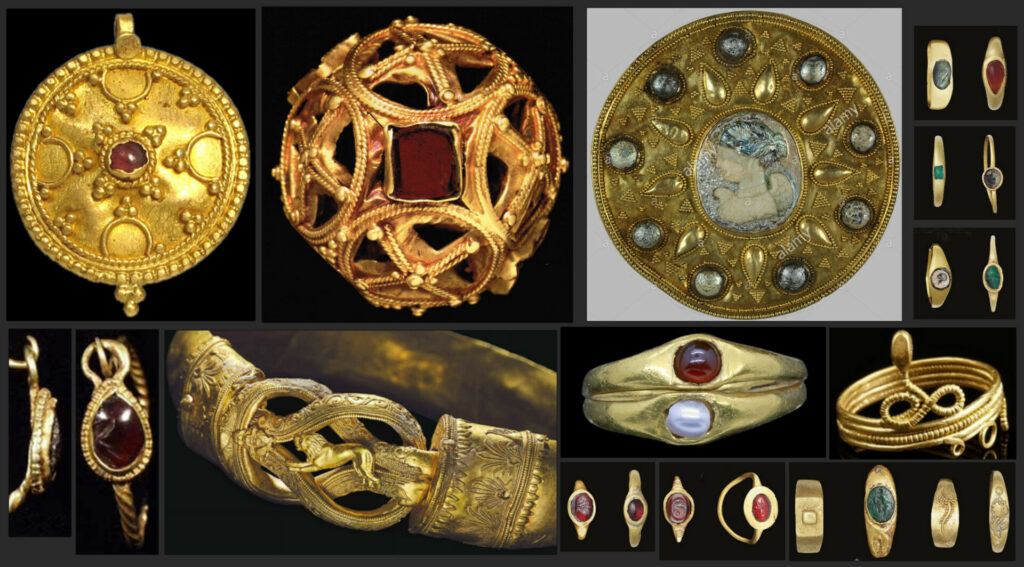
    Since the most ancient times — «for glory and for honour» — royal insignia — numerous distinguishing marks of clothing, of ornament have been used — as an indicator of the order of «cushion and rank» of the person bearing them.
    «Like the pearl or precious stones», which comelily adorn the artakhuyr of kings with its fluttering end and the magnificent crown — «like a ray of light»…

    Babken Arakelyan in his valuable study «Armenian figurative reliefs in the 4th-7th centuries», (Yerevan, 1949) writes.

    «Of the applied arts of the 4th-7th centuries almost nothing has reached us, though rather extensive literary testimonies concerning them have been preserved in contemporary and later authors:
    Princely gold-woven, gold-embroidered garments, crowns, and khoyrs, ornaments, ornate weapons, coats of arms, church vessels, objects of table use – goblets, bowls, plates, small objects of household use, beautiful chased furniture of the house and the church, chandeliers, lamps, ivory and metal bindings of books; the making of all this belongs to the branch of the applied arts:
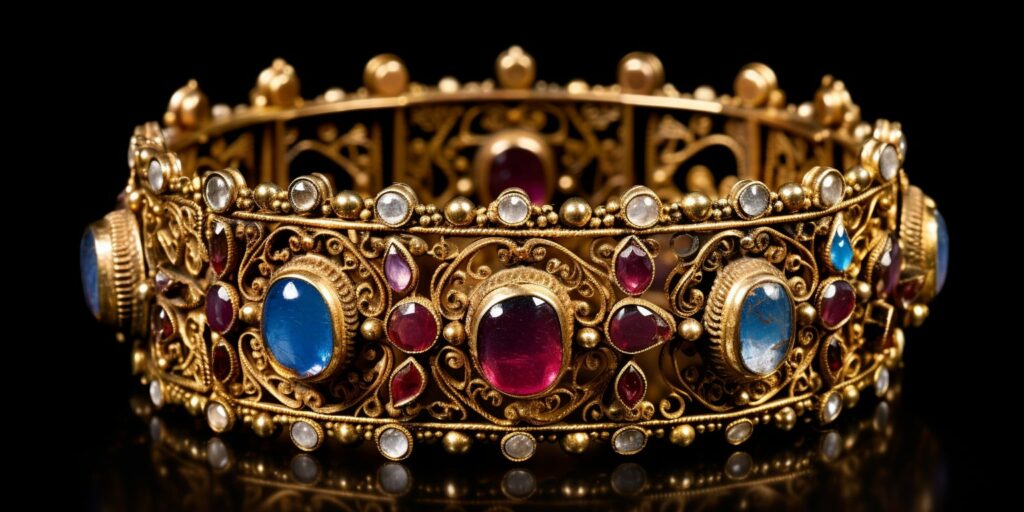
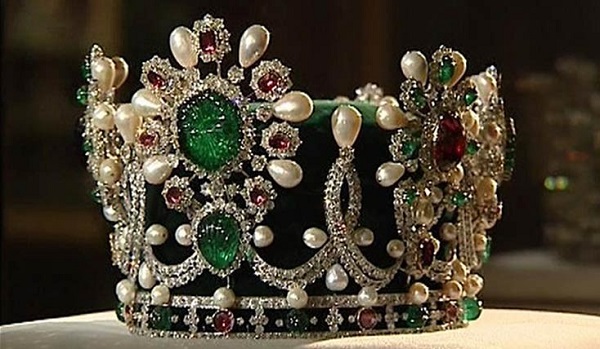
    The Armenian royal and princely crowns and khoyrs were made of noble metals and were inlaid with pearls and other stones: Agathangelos testifies that numerous «great-travelling merchants» — crossing sea and land, exposing their lives to danger — engaged in commerce and even brought from India pearls and various precious stones, multicoloured silks, with which they adorned the kings, their khoyrs. «precious stones from the land of India, which for the comeliness of ornament they would adorn the kings in the khoyr of the crown» (Agathangelos’s «History of the Armenians», Tiflis, 1909, p. 6): Or the ray of light of the stones adorning the crowns «makes the kings magnificent in the likeness of the artakhuyr of the crown fluttering at its end» (Agathangelos’s History of the Armenians, Tiflis, p. 7):

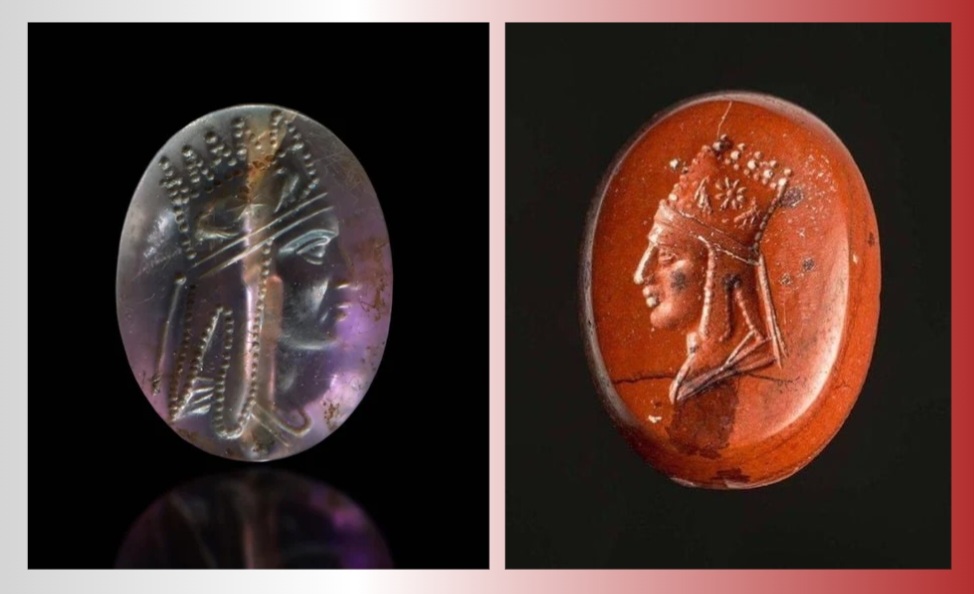
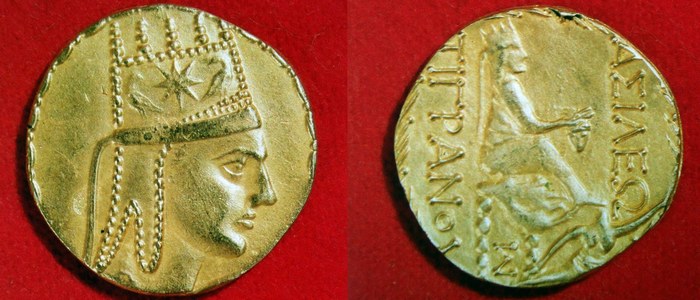
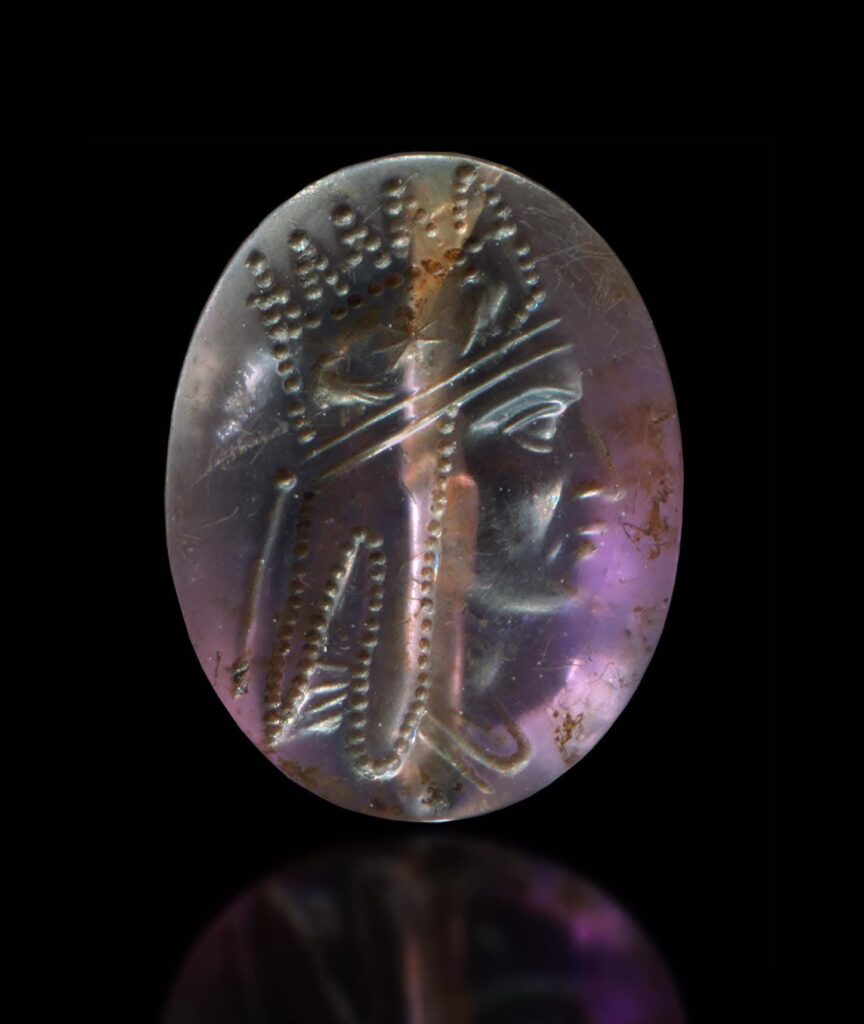
    The Armenian crown that has reached us on the coins of Tigran, which was preserved also later, is adorned with pearls, and on the tips of the upper rays of the khoyr large gems are fitted.
    By this the expression «the artakhuyr of the crown fluttering at its end» becomes comprehensible.

    Ghazar Parpetsi speaks with great sympathy about the work of the craftsmen engaged in the extraction of stones and metals, in their working and in making artistic objects.
    «Who (the craftsmen) not only show by visibility, bringing the profitableness of benefits to men, but even more to the abundantly-searching workers teach the benefits hidden under the earth, to amass for themselves profits and the enjoyments of this world for the greatness of kings and for the wealth of tax-collectors, gold and copper and iron and precious stones; which, received by artful hands — they adorn the kings with magnificent composed ornaments, which they inlay into the khoyrs and into the crowns and into the gold-woven embellished garments» (Ghazar Parpetsi’s «History of the Armenians», Tiflis, 1904, p. 10):

    In this testimony what is of great value is that the crafts were the source of the magnificence and enjoyment of kings and of the enrichment of the tax-collectors.

    According to Armenian custom — the king, when appointing princes to administrative offices or confirming the eldest head of a nakharar house, gave them «honours», which had the form of a diadem, and these «honours» the princes wore on their heads.
    The oldest of these, known to us from literature — is the honour of Bagarat the crown-placing knight, which consisted of three rows of small pearls, without gold and other stones, which Bagarat wore when going about at court: (Movses Khorenatsi’s «History of the Armenians», Tiflis, 1913, p. 110):

    Later the princes too sometimes had rayed khoyrs of gold and inlaid with precious stones, such as was the khoyr of Vasak Syuni, which he placed on his head after tying the honour: (Eghishe’s «History of the Vardanians», Tiflis, 1904, pp. 197-198):

    The historians sometimes describe the royal or princely garments and ornaments corresponding to the royal etiquette, which «were gold-woven, embellished, inlaid» — thanks to artful hands:
    The Parthian king Arshak appoints his son Arshak the younger king of the Armenians, whom the knight Bagarat crowns.
    The historian describes a few ornaments of the one being crowned.
    When Arshak comes to Armenia, then «there goes out to meet him,- says Sebeos,- Bagarat Parazean of the sons of Aramenak, a great nakharar with troops: He offers him a gift of gold and silver; and adorns him with the sndr («sndr» means helmet, vakas — the part hanging from behind the helmet onto the shoulders, according to the author’s note), and with the vakas; crowns him upon the gold-plated jewel-studded thrones; and gives him his daughter as wife» (Bishop Sebeos’s «History», 1939, Yerevan, p. 9):

    We find the fuller description of ornaments and garments corresponding to the palace etiquette in Eghishe.

    In the year 451 the Armenians rebel against the domination of Sasanian Persia; after the suppression of the rebellion many nakharars are taken captive, while Vasak Syuni — the marzpan of the time, enters the Persian court in the expectation of becoming king — wearing garments and adornments which he had received from the same Persian court.
    We bring that interesting description.

    «And he (Vasak), according to the first order of the royal laws put on the honourable garment which he had from the king, tied also the honour of the hair and placed the golden khoyr on top, and the hammer-wrought cast-gold belt inlaid with pearl and precious stones he put around his waist, and the earrings in his ears, and the necklace on his neck, the sables on his shoulders, and having put on himself all the insignia of honour — he went to the court, he appeared to the multitude more magnificent and conspicuous than all» (Eghishe’s «History of the Vardanians», Tiflis, 1904, pp. 197-198)»:
    (In modern Armenian — «And he (Vasak) — according to the former orders of the court — put on the honourable garment received from the king, tied also the hair-band and placed on his head the golden khoyr, and tied around his waist the hammer-wrought cast-gold belt woven with pearl and precious stones, hung the earrings from his ears, and the necklace — from his neck, threw the sable fur over his shoulders and went to the court. He appeared to the eye of the multitude more magnificent and blessed than all», K. A.).

    «Here we find the description of the garments and adornments of the first order of royal etiquette, which was accepted at the Sasanian court:
    Honours of the same first order were also bestowed on Prince Smbat Bagratuni, who at the end of the 6th century and the beginning of the 7th century was a great state official with Khosrov Anushirvan and had shown great feats of valour and the gifts of a great statesman, as also on the famous Aghvan prince Jevanshir, who in the time of the same Khosrov was the governor of the land of Aghvank:

    Khosrov Anushirvan gives Smbat Bagratuni gold, royal garments, a gilded artakhurak and a zangapanak — adorned with stones and pearls:
    A second time too he bestows honours on him, on which occasion Sebeos writes: «… the king gives him (Smbat) the lordship which was named Khosrov Shum, adorns him with exquisite things, with a cap and with a robe of fine linen anointed with gold, magnifies him with tremendous honours, with a jewel-studded belt, with a gumartak, and with silver thrones»: (Sebeos’s «History», Yerevan, 1939, p. 66):

    «…The historians have also preserved testimonies concerning local artistic objects and garments; the Armenian princes wore silken gold-woven garments. Armenia, famous for its production of silks and having gold and silver mines, which exported its silks to the neighbouring countries, produced artistic garments and adornments locally»…

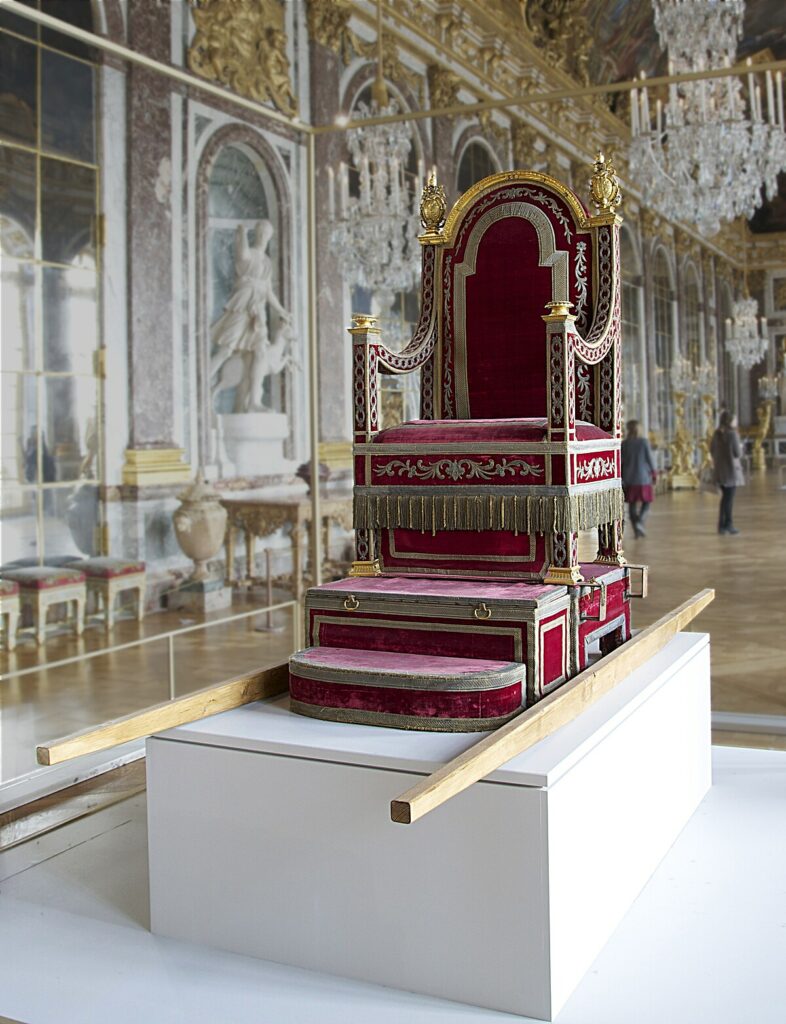
    «… Palanquins (despak, litter) and especially the thrones and cushioned seats were greatly esteemed at the Armenian court, inasmuch as transporting the ladies of high rank and the ladies of ladies in palanquins was part of the established etiquette.
    As regards the thrones and cushioned seats, their significance is known from the Armenian Gahnamak: They were more or less high and magnificent, made of noble metals and inlaid with gems, nearer to the king’s throne or farther from it — according to the officially established order and corresponding to the position and rank of the state officials and princes:
    Even on the march of war that etiquette was strictly preserved»…

    Photo — from Guillaume Aral’s page — with gratitude:

    A highly valuable specimen with the portrait relief of Tigran the Great — from the personal collection of Guillaume Aral.

  • HAYKAR or HACHAR – “A type of stone, originating from the land of the Armenians”…

    HAYKAR or HACHAR – “A type of stone, originating from the land of the Armenians”…

    HAYKAR
    Or:
    HACHAR – “A type of stone, originating from the land of the Armenians”…

    The Armenian Highlands, famous for their therapeutic mineral waters, have also played a crucial role in the history of mining, metal extraction, and metallurgy, thanks to their vast natural resources.
    Due to the presence of rich ore deposits, metal tools were already in use here as early as the 5th–4th millennia BCE. Ancient specimens have been uncovered on the shores of Lake Van, in the Angegh Tun province, in the Ararat Plain, and along the shores of Lake Urmia…
    By the 3rd millennium BCE, Armenian Mesopotamia, Rshtunik, Julamerk, and Sasun served as the “metal storehouse” of the ancient Near East. Later, in the 2nd millennium BCE, they held a dominant position in metal extraction and exchange.
    Excavations in Lchashen, Metsamor, Karmir Blur, and the regions surrounding Lake Van, the Erzinka Plain, and other sites within the Armenian Highlands provide evidence of an advanced metalworking tradition.

    From ancient times, both Armenian and foreign historians have documented the wealth of Armenia’s mines and the exceptional quality of its valuable minerals.
    Movses Khorenatsi, in his History of Armenia (Book I, 23), praises the Ancestors and glorifies the great Tigran, emphasizing how he expanded the “treasury” of gold and silver (“He multiplied the treasures of gold and silver…”).

    The Roman writer, naturalist, philosopher, and military commander Pliny the Elder, in his 1st-century work Natural History, while discussing pigments and the minerals used to create them, mentions Armenia’s mines (“Mines of Armenia”) and the superior materials they produced.

    Lapis lazuli, with its mesmerizing, unfading deep blue, has been referenced in written sources since ancient times, including in the Epic of Gilgamesh. Traded from Egypt and Mesopotamia, it eventually reached Armenia, where it was surrounded by myths attributing mystical powers to it.
    At the site of Ebla, an important Hurrian cultural center about 60 km south of Aleppo, archaeologists discovered 25 kilograms of lapis lazuli.
    This precious stone was crafted using raw materials imported from Armenia.

    For over 6,000 years, the famed Lapis Lazuli, known as the Blue Stone, has been valued as a symbol of protection, courage, success, and victory. It was believed to ward off evil and serve as a link to divine wisdom, enhancing spiritual awareness and enlightenment.

    Theophrastus (371 BCE – 288 BCE), a notable Greek philosopher, naturalist, botanist, and alchemist, and a disciple of Aristotle, mentions Armenian stones in his writings on minerals, noting their use in seals and various applications. He also refers to a special “earth” from Cilicia, which, when boiled, became sticky and was used to protect grapevines from pests.

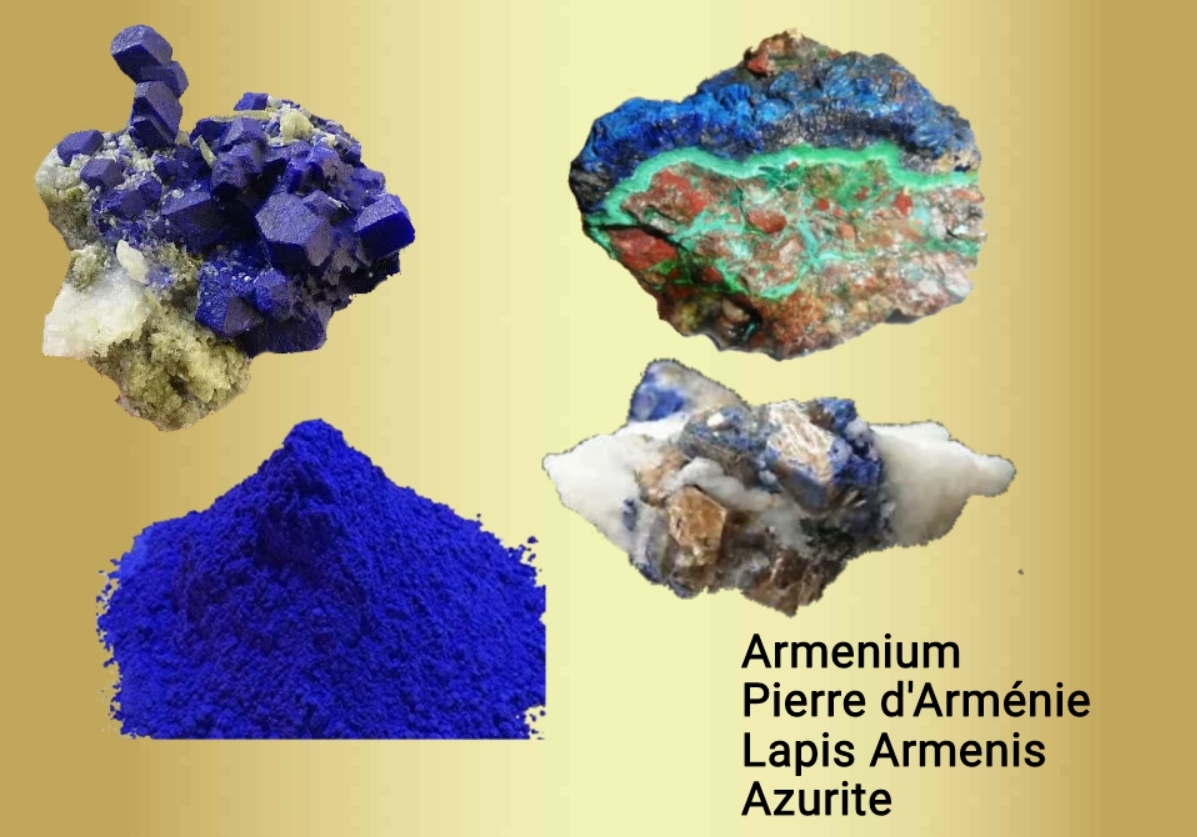
    Theophrastus calls the famous Lapis Lazuli the “Stone of Armenia” or “Lapis Armenis”, also known as “Arménium” or “Haykian Stone.”

    This name persisted throughout the Middle Ages and the Renaissance, with the mineral often called “The Blue of the Mountains.”
    In 1824, geologist François Sulpice Beudant named it “Azurite,” based on its deep blue color.

    In medicine, the “Haykian Clay” (“Kav Haykian”), was known to Galen as “Haykian Earth.”
    Various Armenian earths—some blue, golden, or reddish-yellow—were widely prized since antiquity.

    Pliny the Elder mentions natural resources from Armenia, including nitre (Book 33, §15) and describes the finest Chrysocolla—with gold-bearing veins—as originating from Armenia (Book 34, §5).

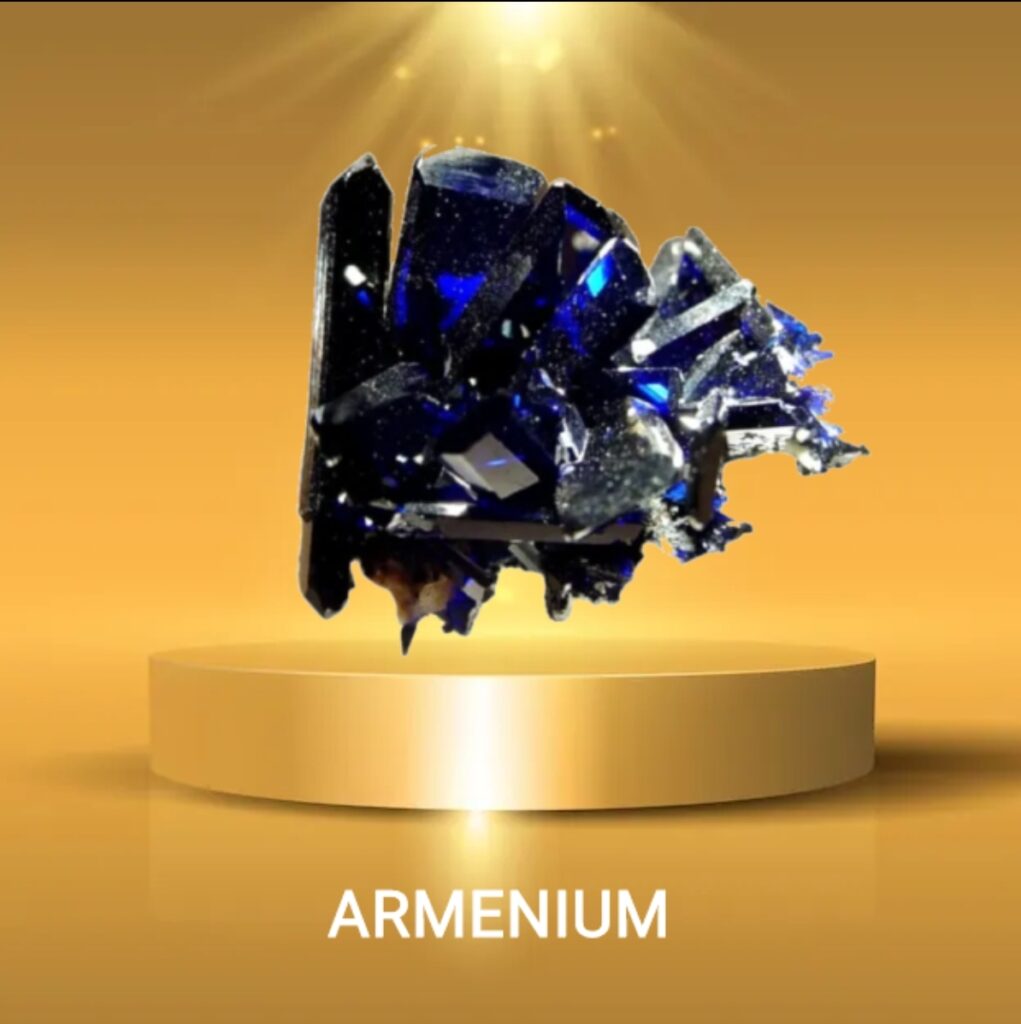
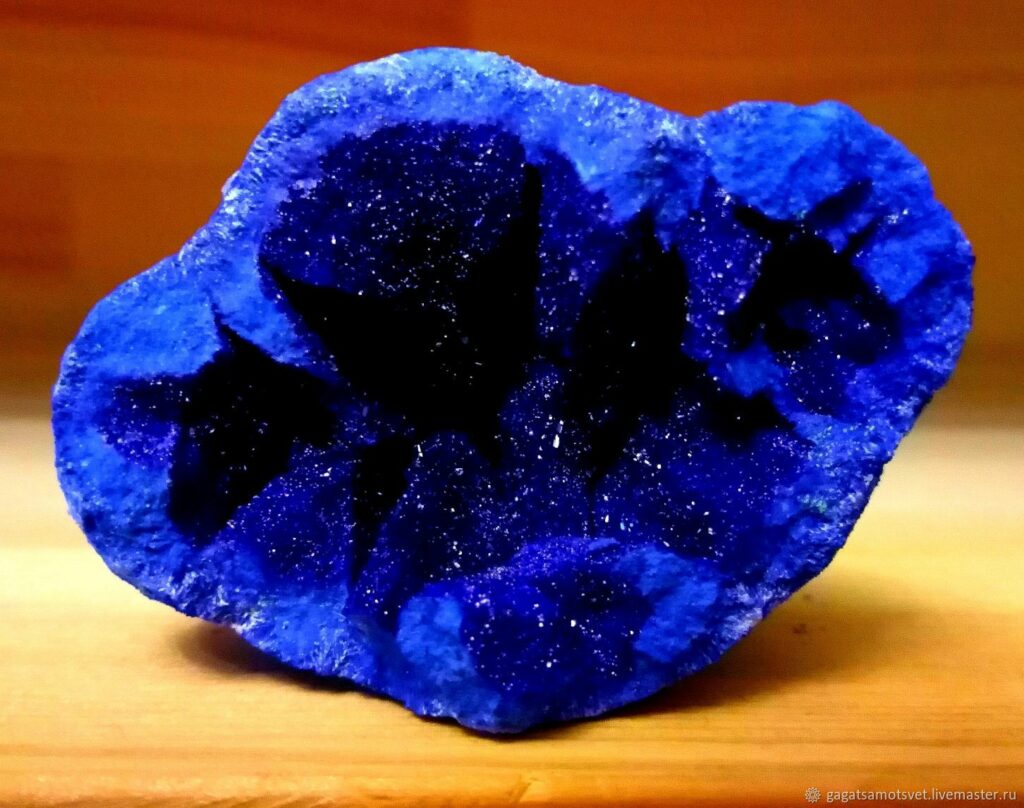
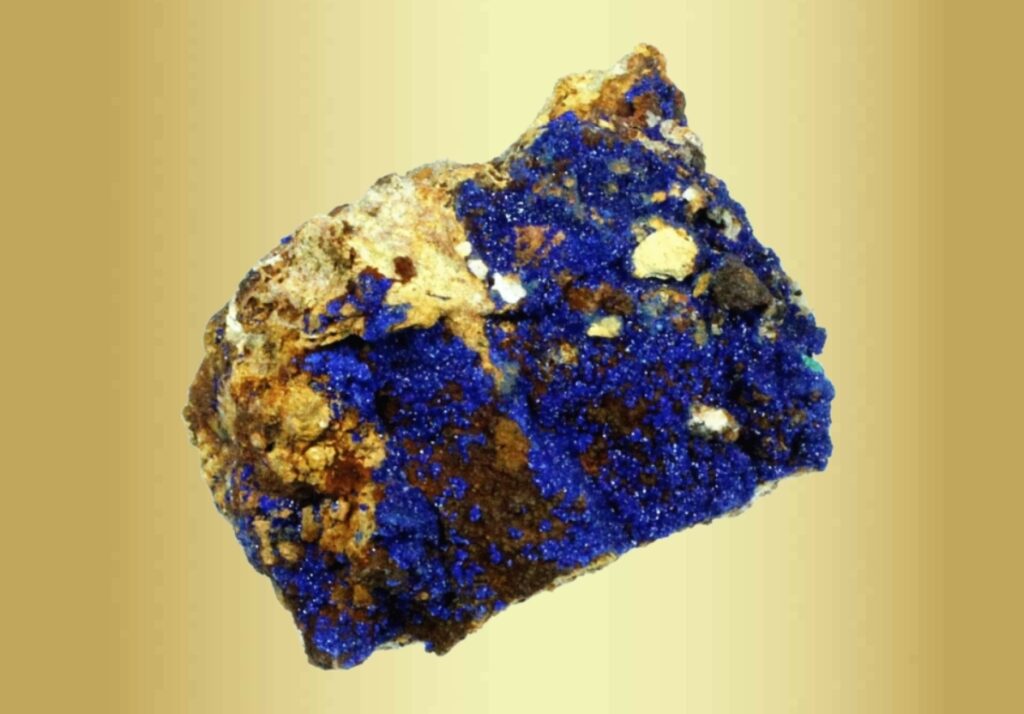
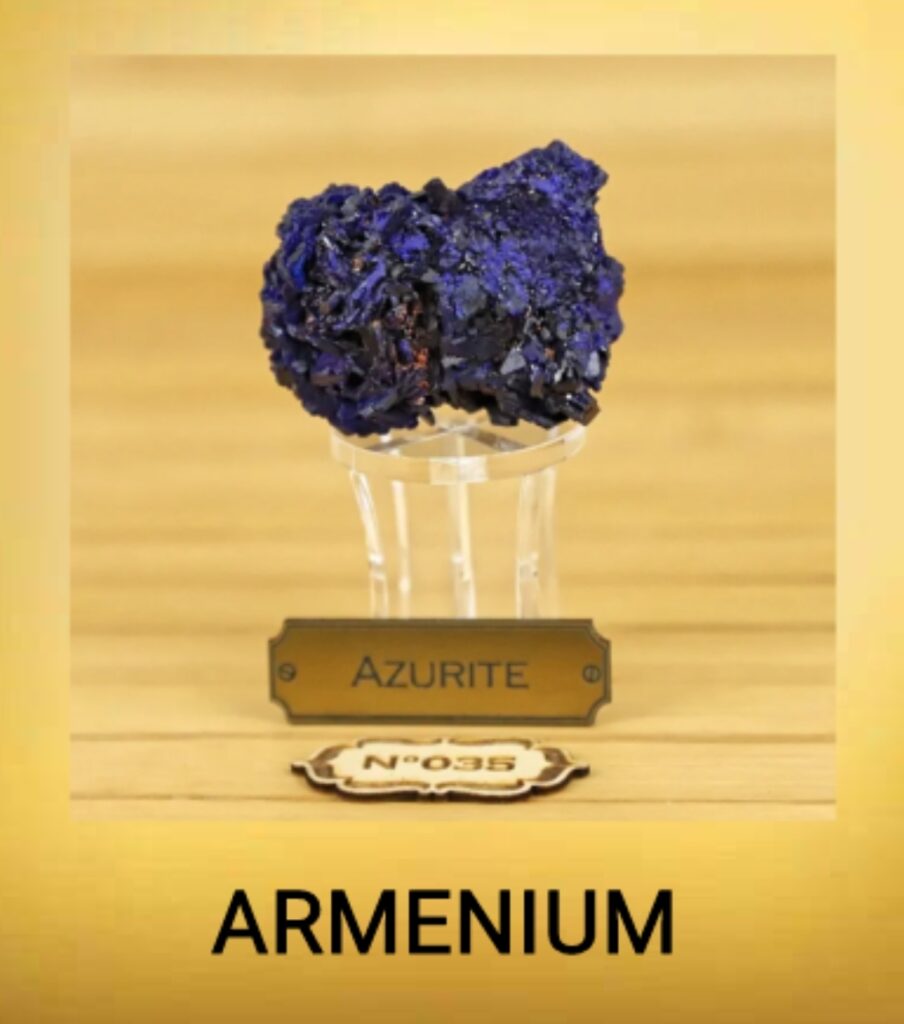
    In Book 35, he refers to Arménium (Azurite), writing:
    “Armenia exports the material that carries its name. It resembles Chrysocolla, with the best variety being the one closest to it in deep blue hue…
    In medicine, it is used mainly for hair treatment, particularly for eyelashes (bol d’Arménie).”

    Since antiquity, crystalline bodies, composed of varied chemical elements such as copper, oxygen, and others, have intertwined to form new materials that accompany humanity.

    One such crystalline mineral, copper arsenate (pghndzarjasp), known for its deep lazurite-blue hue, has been used extensively despite its high toxicity.
    Apart from being crafted into talismans and jewelry, Haykar also served as a pigment.
    Several colorless and colored stones and powders found applications in medicine, mirrors, and other fields—some of which are recorded in ancient Armenian dictionaries…

    “Hachar—a type of stone originating from the land of the Armenians,” note medieval medical texts (New Dictionary of the Haykazian Language).

    “Haykar—a variety of khazhak stone, bluish and soft, resembling gojasm.” (Arménite, Pierre d’Arménie – Armenite, Armenian Stone).

    “Gojasm—a precious deep blue, opaque stone with golden veins; there also exists a yellow variety.” (Ligourion).

    “Lajvard—an exquisite blue pigment extracted from gojasm.”

    “Lajvard—a precious blue stone, classified among the flint family, once used to produce lajvard or lazurite pigment (Lapis lazulite).” (S. Malkhasyants, Armenian Explanatory Dictionary).

  • “The Tale of the Hamaspyur Blossom” or “Concerning the Flower”

    “The Tale of the Hamaspyur Blossom” or “Concerning the Flower”

    “The Tale of the Hamaspyur Blossom” or “Concerning the Flower”

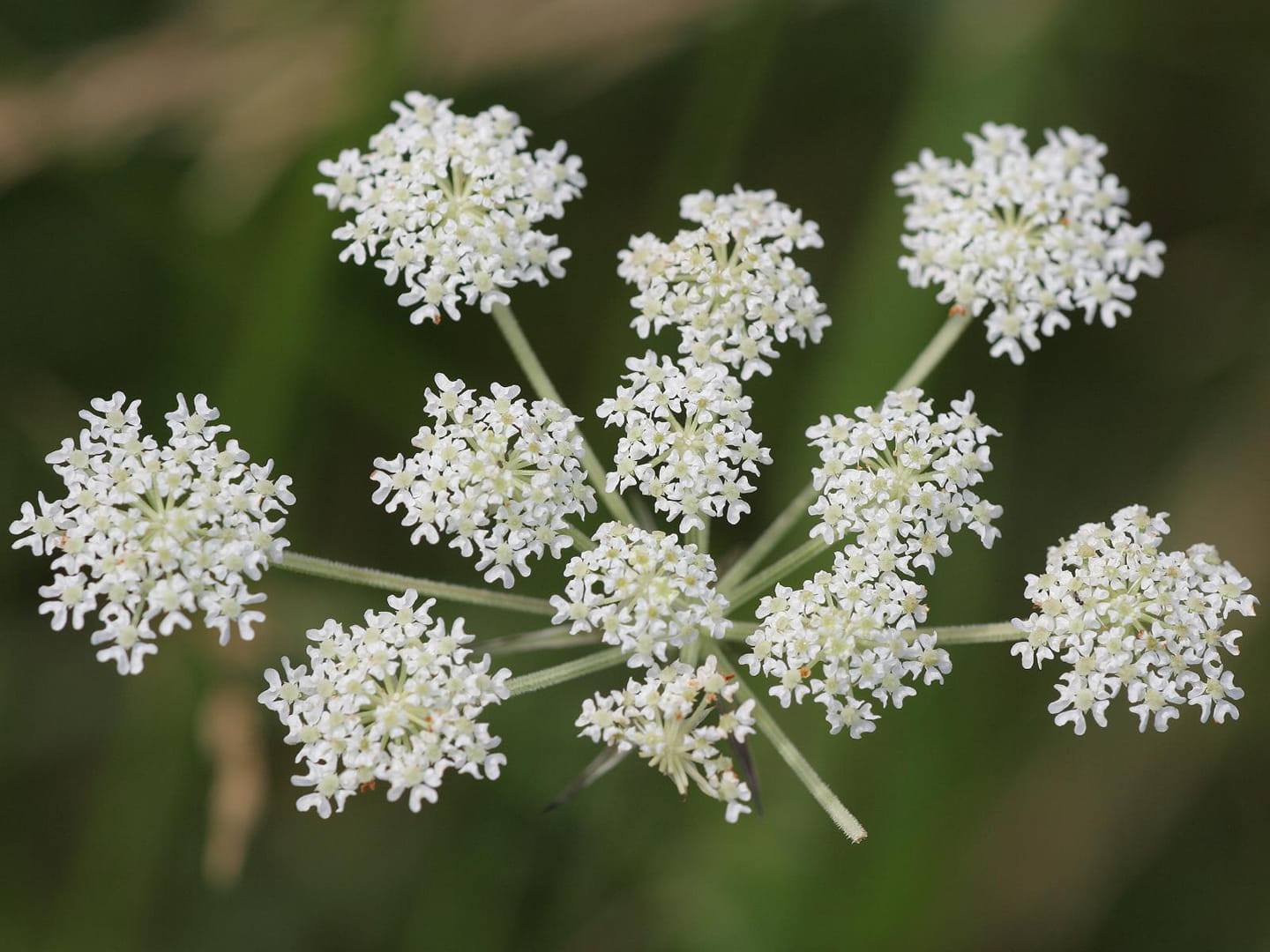
    Upan (Laserpitium)

    Fairy tales serve as a magnificent reflection of national thought—often originating from ancient myths and passed down orally through generations, whether as magical (fantasy) or realistic stories…

    Rich in symbols and allegory, these age-old tales, which have accumulated wisdom over millennia, also preserve traces of various customs and traditions.

    The fairy tales passed down from time immemorial offer a vivid portrayal of human thought.

    Within them, we also find numerous ritual scenes, such as references to the mystical power of pearls and coral, mentions of the magical properties of different stones and flowers, and detailed descriptions of them (as we referenced in Beads from Shamir’s Sea)…
    Interestingly, modern scientific studies confirm that certain natural stones can have either beneficial or harmful effects on the human body.

    The concept of Fire obtained through sunlight—generated by friction with flint and concentrated using a mirror to harness the Sun’s rays—held deep significance in our ancestors’ worldview, symbolizing the connection between the Celestial and Earthly Fires…

    And these ideas echo through fairy tales as well.

    In the enchanting folktales beloved by our ancestors, there is even mention of a wondrous flower called Hamaspjur.

    In S. Malkhasian’s Armenian Explanatory Dictionary, it is described as follows:

    “It has twelve branches, each bearing a flower of a different color; it restores sight to blind eyes, and its fragrance provides strength.”

    In the Armenian Dialect Dictionary (Yerevan, 2001), its equivalent in the Van dialect is given as Khambek…

    At the Matenadaran in Yerevan, among thousands of ancient manuscripts, nine unique manuscripts preserve an ancient legend about the miraculous Hamaspjur flower, titled The Story of the Hamaspjur Flower or On the Flower (also known as Hamaspran)…

    Reflecting on research into these manuscripts decades ago, S. Avdalbegyan wrote:

    “This tale recounts the miracles attributed to this flower.”

    The conversation states:
    “If you bring it to your ear, you will hear and understand all human languages, as well as the voices of animals, beasts, and birds. If you bring it to your eyes, you will see all living beings. If you bring it to your nose, you will perceive the sweet fragrance of the heavens. If you bring it to your tongue, you will speak in all languages and dialects, share wisdom, and teach knowledge. If you bring it to your fingers, you will master all crafts… And many other great and mighty miracles are attributed to the flower.”

    Another version quoted by S. Avdalbegyan, in Mkhitar Gosh’s 26th fable, tells of the selection of the king of plants. While the flower’s previous abilities are not emphasized, additional qualities are listed:

    “After much debate—some claiming the lily, others the achrizan, and many favoring the hamaspjur—it was ultimately decided that hamaspjur was the most worthy… for it holds dominion over all things and, above all, has great healing powers, curing the sick, sharpening vision, enabling one to walk on water, and granting wisdom to the ignorant.”

    In the 17th-century poem Hymn to Flowers, David Saladzortsi writes:

    “The little serpent king, white as snow,
    Follows Hamaspjur and draws strength from its fragrance.”

    This “serpent king” derives its power from the king of flowers, while its own strength lies in its deadly gaze.

    According to legend, during Alexander the Great’s siege of an Asian city, the serpent king killed 300 of his soldiers simply by staring at them from a crack in the fortress wall (Bazmavep, Venice, 1850).

    An episode of the manifestation of the power of guardian-animals, touched upon in the previous post…

    Hamaspjur (Hamaspram) is also mentioned by Ghevond Alishan in his book Ancient Faith or the Pagan Religion of the Armenians.

    Turning to the plant “Penna, which turns a person to the love of holiness,” as presented according to ancient traditions by “the twelfth-century fabulist Mkhitar Gosh vardapet,” he mentions a canon encountered in medieval medical books and books of omens — similar to the rites and prayers performed from the Mashtots — written concerning the manner of gathering the penuan: with the recitation of prayers, with the cross, the Gospel, incense, a candle, and so forth. Let us quote:

    “Along with the Loshtak and the Phenuna, we Armenians have also had a third wondrous and sacred flower, one not well known but which appears to be natively Armenian: it is the one called hamaspyur or hamaspram.”

    According to the aforementioned vardapet, and according to his namesake and near-contemporary, the great physician Mkhitar Heratsi, the hamaspyur “has a single root and puts forth 12 branches, and each has a flower of a different color, blue and purple, lily, and it is adorned with every other hue.”

    The hamaspyur blooms in summer, but in order to find it “one must seek the flower at night, for at night it appears more radiant to the eyes of those who seek it.”

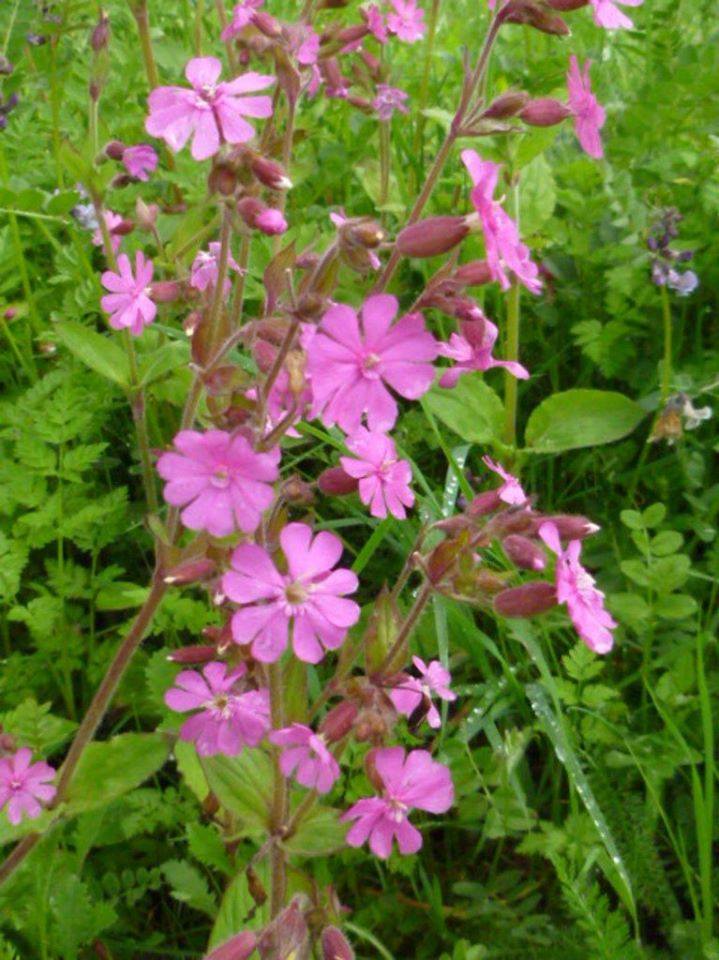
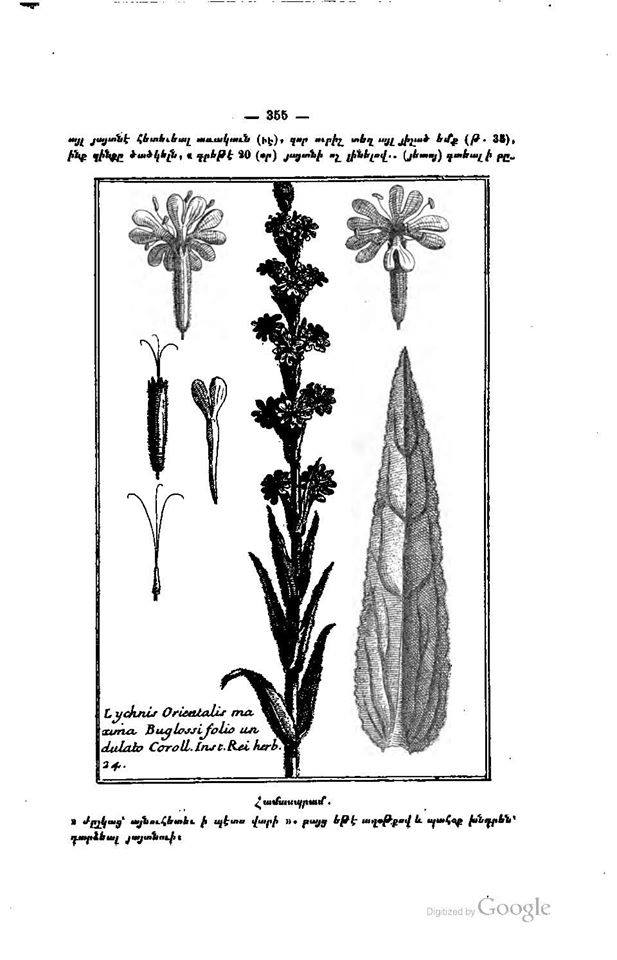
    “We leave it to botany to describe the flower’s colors and its other properties, to determine its habitat and of what genus of plant it is — probably among those called Lychnis, and especially Lych. Orientalis, which at the beginning of the last century was observed and described by the celebrated French botanist Tournefort.”

    The history of this flower of the carnation family, the Hamaspyur (Hamaspram), has also been examined in detail by Tamar Hayrapetyan in her admirable study Archetypal Conjunctions in Armenian Magical Folk Tales, from which here is a brief quotation (p. 79):

    “According to manuscript evidence, Anania Shirakatsi personally took part in the searches for rare species of medicinal plants — the hamaspyur, for example.

    The signs of the flower (the hamaspyur) are these. It has one root; and it puts forth 12 branches; and each has a flower of a different color, blue and purple and lily, and others, with which the Hamaspyur is adorned in every hue.”

    The medieval account is also of value from the standpoint of applied medicine.

    According to Alishan, “Hamaspram, Hamaspran, Hamaspyur, though compounded of different words,” are one and the same hamaspyur flower, and it must not be confused with other fragrant flowers…

    Pliny the Elder, in his Natural History, attests that Armenia and Media were in antiquity the homeland of a number of valuable resin-bearing plants, among them the celebrated upan (Laserpitium), whose healing properties were highly prized in Rome.

    Upan and Hamaspyur, once revered as plants of life, were relentlessly exported from Armenia for centuries, only to vanish completely from the Armenian landscape.

    The Tree of Life, known as the Tree of the World, finds its embodiment in Hamaspyur, a flower that, according to Mkhitar Gosh, frees humankind from death, bestows wisdom, grants strength, and endows one with the power to walk on water.

    The sacred beauty of Hamaspyur has been celebrated in the verses of Armenian poets and minstrels (David Saladzoretzi, Minas Tokhattsi):

    There exists the Hamaspyur, the flower of flowers, a bloom of a thousand hues.
    It grants light to the blind, if the Lord so wills for mankind.
    With twelve roots it stands, blossoming once every twelve years.
    Each stem bears a flower of a different color, and angels revel in its sweet scent.
    The King Serpent reigns over it, white as the driven snow,
    Chasing after Hamaspyur, drawing power from its fragrance…

    Hamaspyur blooms in unreachable heights—upon the Mountain of Love, at the springhead of Makphut, on Mount Darun, Mount Bardu, within the gorges of Maseats, and in the mountains of Surmaru and Tsoghkert village.

    Both Hamaspyur “Melamin” and the “Navruz” balsam are watched over by the Shahmar serpent (For the legend of the King Serpent drawing strength from the Hamaspyur, see manuscript no. 1495, fol. 152).

    The same tale is echoed in Saladzoretzi’s hymn and in “Praise of Flowers” (G. Srvanztian).

    The balsam flower Hamaspyur is intertwined with the cosmic tree in Armenian thought—akin to how the twelve months of the year mirror the twelve parts of the human body, or how a tree rising from the primordial sea in mythology mirrors Hamaspyur blooming in a mountain gorge, while the sacrificial bird or serpent at the tree’s base reflects the Shahmar serpent.

    In mythology, whenever disorder touches the world or the human soul, it is seen as the work of chaotic forces disrupting cosmic harmony—forces that sacred rituals and incantations seek to repel.

    “The healing power of Loshtak, Hamaspyur, and Penna (Paeonia officinalis, the ‘Crucifix Wood’), derived from their natural plant hormones, led to their veneration as sacred medicinal plants in ancient Armenia. This reverence has echoed through Armenian folklore and ethnography,” writes Tamar Hayrapetyan in her work “Healing Rituals and Biophysical Indicators in Armenian Folk Tales.”

    Tumanyan, with keen insight, saw these ancient tales, steeped in ‘eternal symbols,’ as ‘chasms—deep, infinite, and boundless’… To me, they are also ‘A Garden of Fragrance.’

    P.S. According to the “Dictionary of Toponyms of Armenia and Adjacent Regions”, the Hamaspyur flower, blooming once every twelve years, was a treasured gem of the Drunk Mountains in Upper Basen. David Salnadzortsi, a poet from Salnadzor village in the Motkan district of Bitlis Province, extolled it in his “Praise of Flowers”:

    “The wondrous Hamaspyur blooms but once in twelve years.”

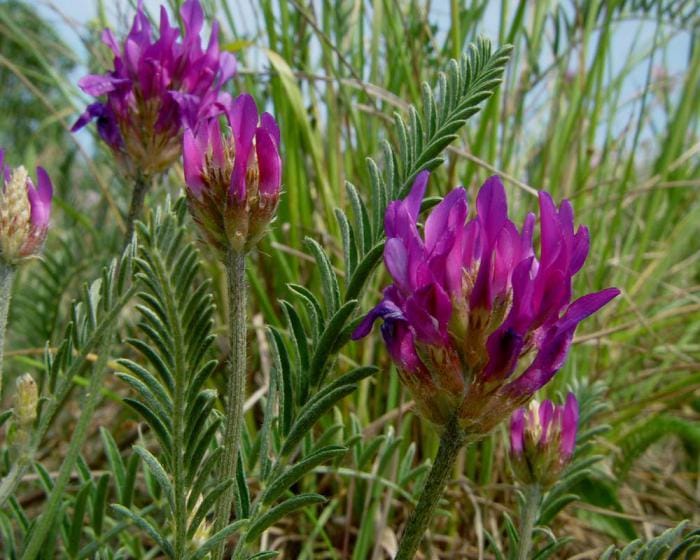
    Today, among a select few, the “Flower of Life”, believed to restore youth, is Astragalus—a rare bloom in yellow and violet hues.

    Wishing you days filled with the scent of flowers…

  • HAZARASHEN also known as “The Beam Passing Through the Skylight…”

    HAZARASHEN also known as “The Beam Passing Through the Skylight…”

    HAZARASHEN
    also known as
    “The Beam Passing Through the Skylight…”

    Ancient creation myths highlight the triumph of Light over Darkness.

    In discussing theories on the formation of the Universe and Life, Eznik of Kolb (5th century), in Refutation of the Sects, critiques the Epicurean idea of a “Self-Existing, Self-Sustaining World.” He illustrates the concept of creation by describing how dust particles in the air become visible when a ray of light passes through an opening.

    (338) The Epicureans believe that the world exists by itself, like dust floating in the air when a beam of light shines through an opening, making the particles visible. They claim that the first elements were indivisible and eternal, and that through their condensation, the world formed—without God and without any guiding force shaping it.

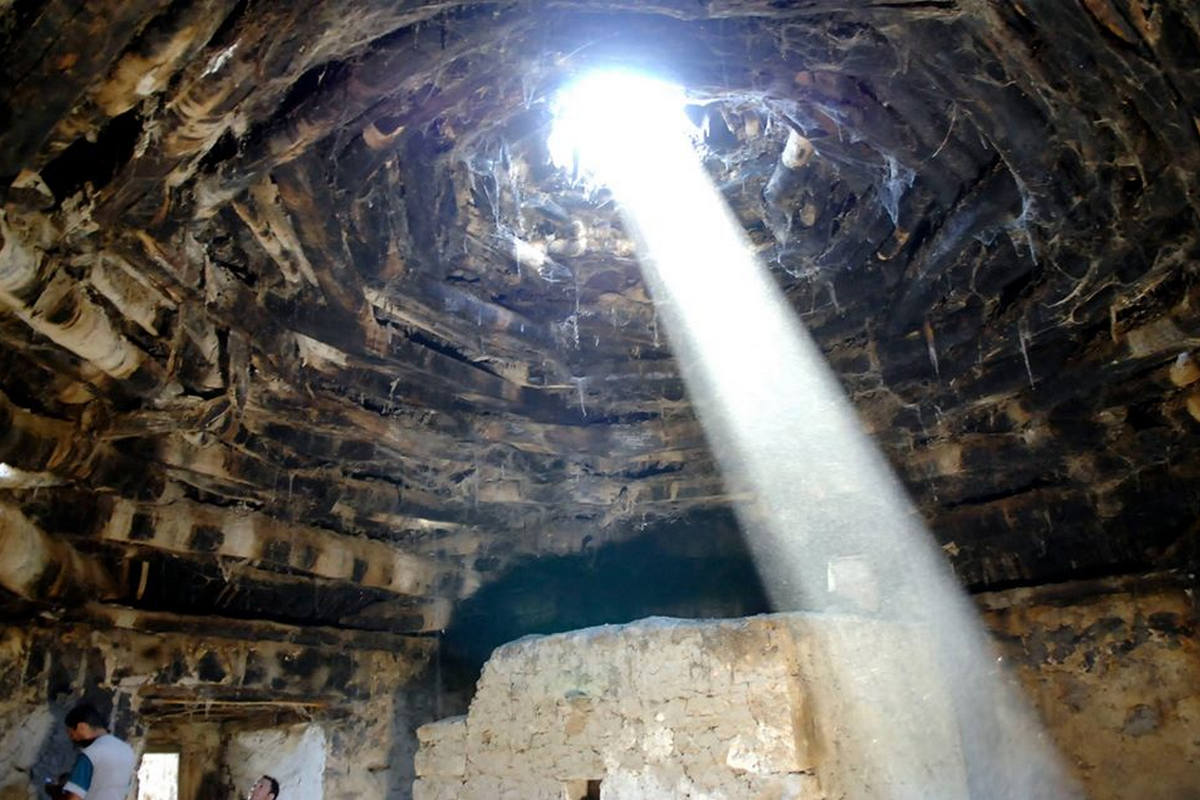
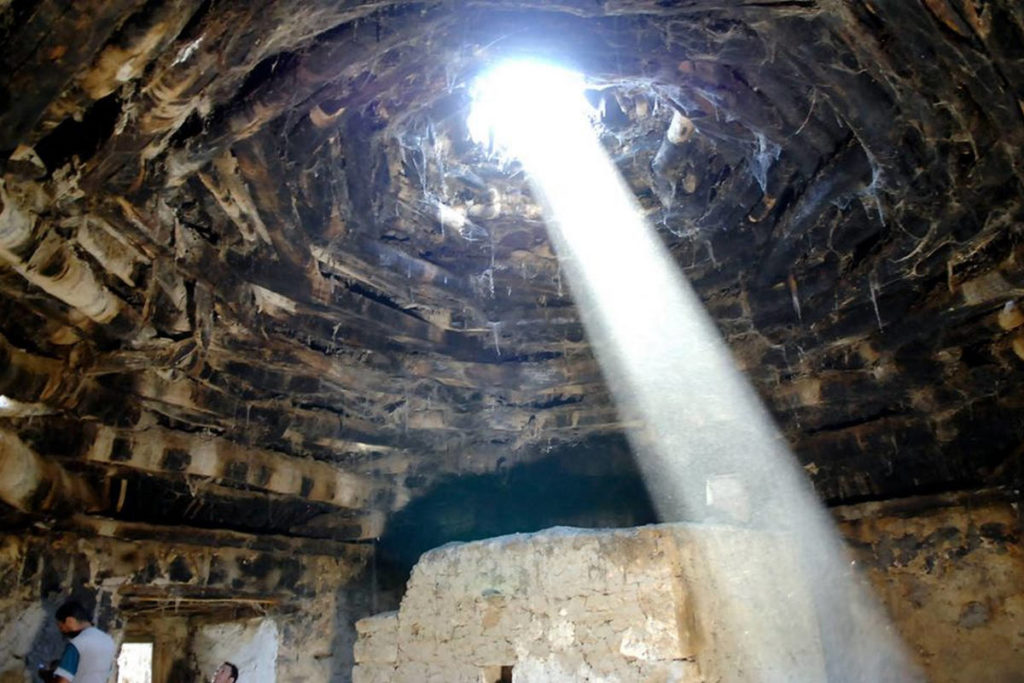
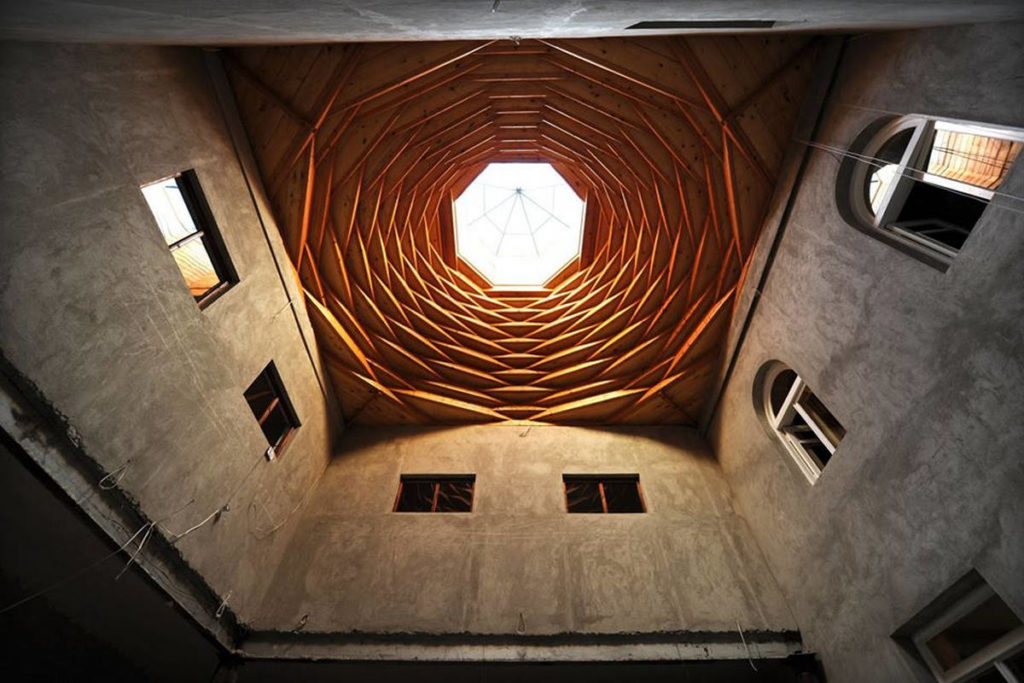
    Hazarashen (Photo by Samvel Karapetyan)

    Since ancient times, homes and religious structures throughout the Armenian Highlands have used natural sources of illumination, known as Loysijots or Lusantsuyts—roof openings (yerdik). Depending on the season, these were covered from the outside with waterproof layers of vegetation and soil, while in temples, a long pole-controlled shutter was used to regulate them from within.

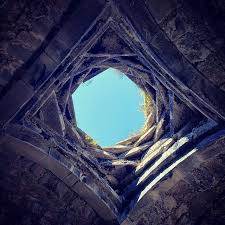
    One of the most remarkable examples is the Hazarašen, a wooden structure built from thousands of beams, with concentric polygonal frames of short logs that gradually taper toward the yerdik.

    More than just a source of light and ventilation, the yerdik symbolized “the household, its members, the family, the hearth, and its smoke.”

    Armenian chroniclers (Eznik, Agathangelos, Buzand…) and later historians estimated population sizes based on the number of roof openings, a method known as smoke-counting. As Buzand recorded: “Twenty thousand Armenian households.”

    The domed roofs of traditional Armenian homes, originating in ancient times, were built on wooden frameworks in two main styles.

    The first style, simpler in design, consisted of log frames placed parallel to the walls and gradually narrowing toward the roof opening (yerdik), with rough wooden planks filling the gaps between them.
    This type was commonly found in regions with abundant construction wood, such as northeastern Armenia, the Chorokh Valley, and the villages of Karabakh.
    It had various names, including Kondatsatsk, Soghomatsatsk, Soghomashen, and more frequently Gharnavush, Gharnaghush, among others.

    The second style had a more complex polygonal structure, made of concentric frames of short beams or logs that gradually shrank toward the yerdik.
    This method was used in regions with little timber, heavy snowfall, and frequent rains, particularly in Upper Armenia. It was widely known as Hazarašen or Hazarašenk.
    The term was most commonly used in Kars, Bayazet, Bulankh, Basen, Mush, Alashkert, Sebastia, Bayburt, Derjan, Sasun, Leninakan, Akhalkalaki, Akhaltsikhe, and surrounding areas.

    Additionally, in some places, Hazarašen was called Dastatsatsk (in villages of Ghukasyan and Leninakan), Soghomak’ash (in Yeghegnadzor, Lori, and Shabin-Karahisar), Soghomak’agh (in Alaverdi), and in other regions as Syurmak’ash, Shushatsatsk, and more.

    These terms were often used interchangeably for different roofing styles, mainly due to frequent population movements and resettlements.


    Still, the most widely recognized and authentic name that has endured is Hazarašen, derived from the fact that its roof was built using “thousands” of wooden pieces. (As cited in S. V. Vardanyan’s study, “Hazarašen and Its Significance in Armenian Architecture”).

    From ancient Armenian temples, where the sunlight illuminating the deity’s sculpture held great significance, to the earliest Glkhatun dwellings with central openings (yerdik) and hearths, to medieval palaces and modern structures, Hazarašen has, for thousands of years, drawn our gaze upward—toward the Unfading Light…

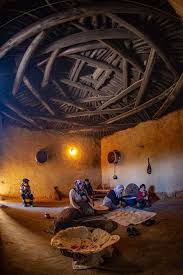
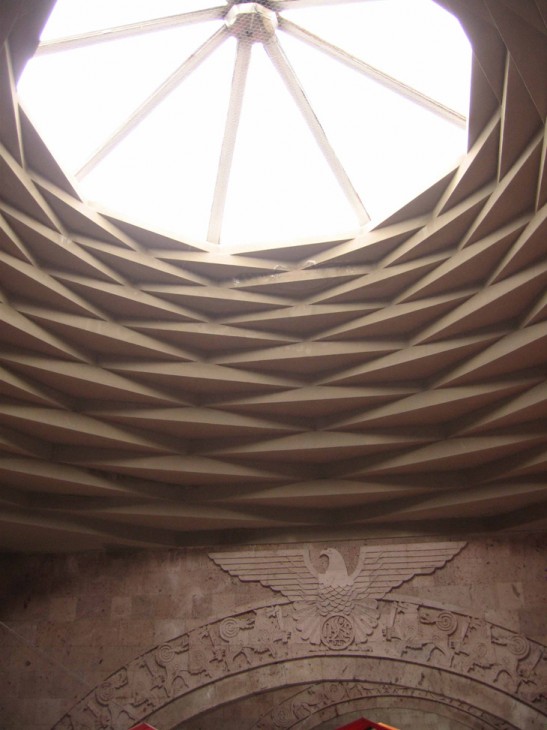
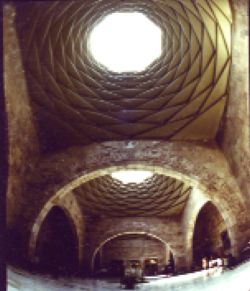
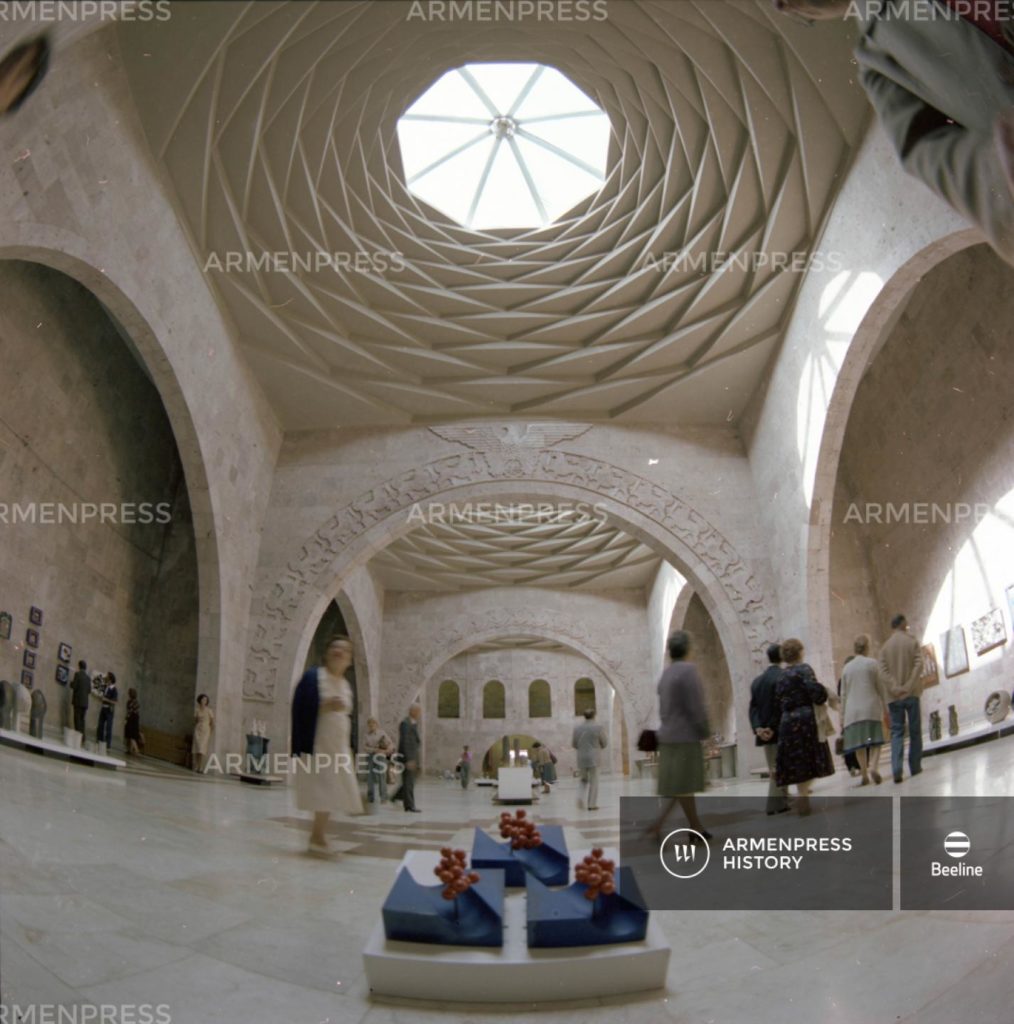
    The ceiling of the Ethnographic Museum exhibition hall, in the style of a “Hazarašen.”
    Photo by N. Chilingaryan.

    At the Sardarapat Ethnographic Museum

  • “Trndez – See the face of the smoke, Sow one pood, reap a thousand…”

    “Trndez – See the face of the smoke, Sow one pood, reap a thousand…”

    “Trndez – See the face of the smoke,
    Sow one pood, reap a thousand…”

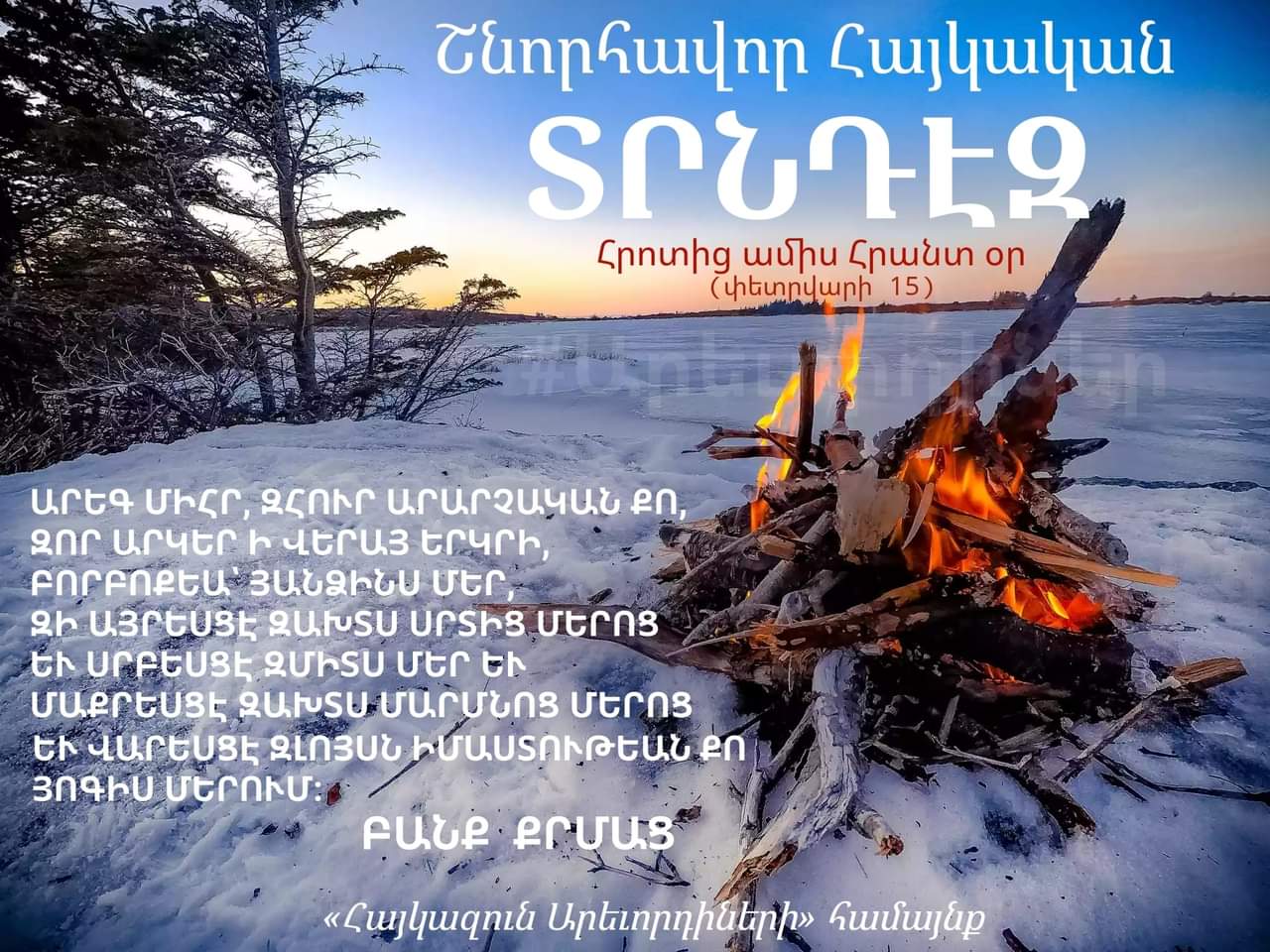
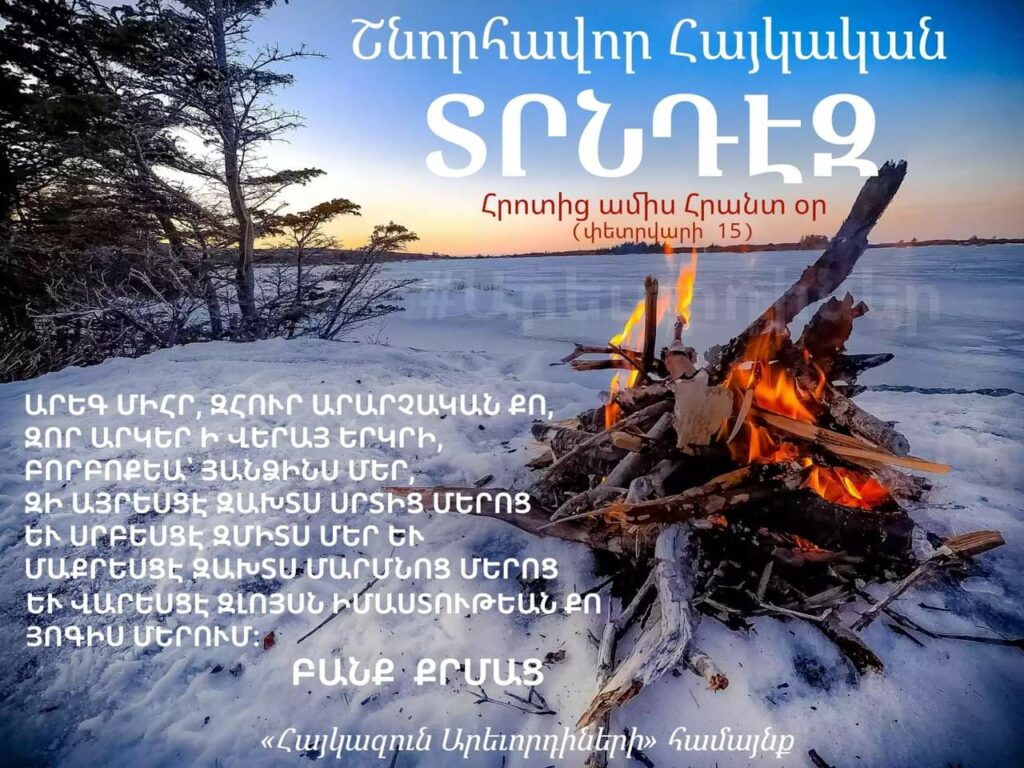
    Trndez is a festival symbolizing fire, a sacred and life-giving flame that warms the Earth and its people. According to Kurm Harut Arakelyan, following the Armenian Haykian Sacred Calendar, Trndez is celebrated on the Hrant day of the Hrotic month (February 15). The festival is marked by special rituals meant to assist the transition from winter to spring.

    Like Barekendan, which is observed around the same time, Trndez is associated with the rebirth of nature. It is a celebration of prosperity, hoping for a successful and fruitful new agricultural year. The rituals performed are believed to ensure fertility and abundance.

    Because humans are deeply connected to nature and the cosmos, this festival was also a time to celebrate love, new marriages, and the promise of future generations.

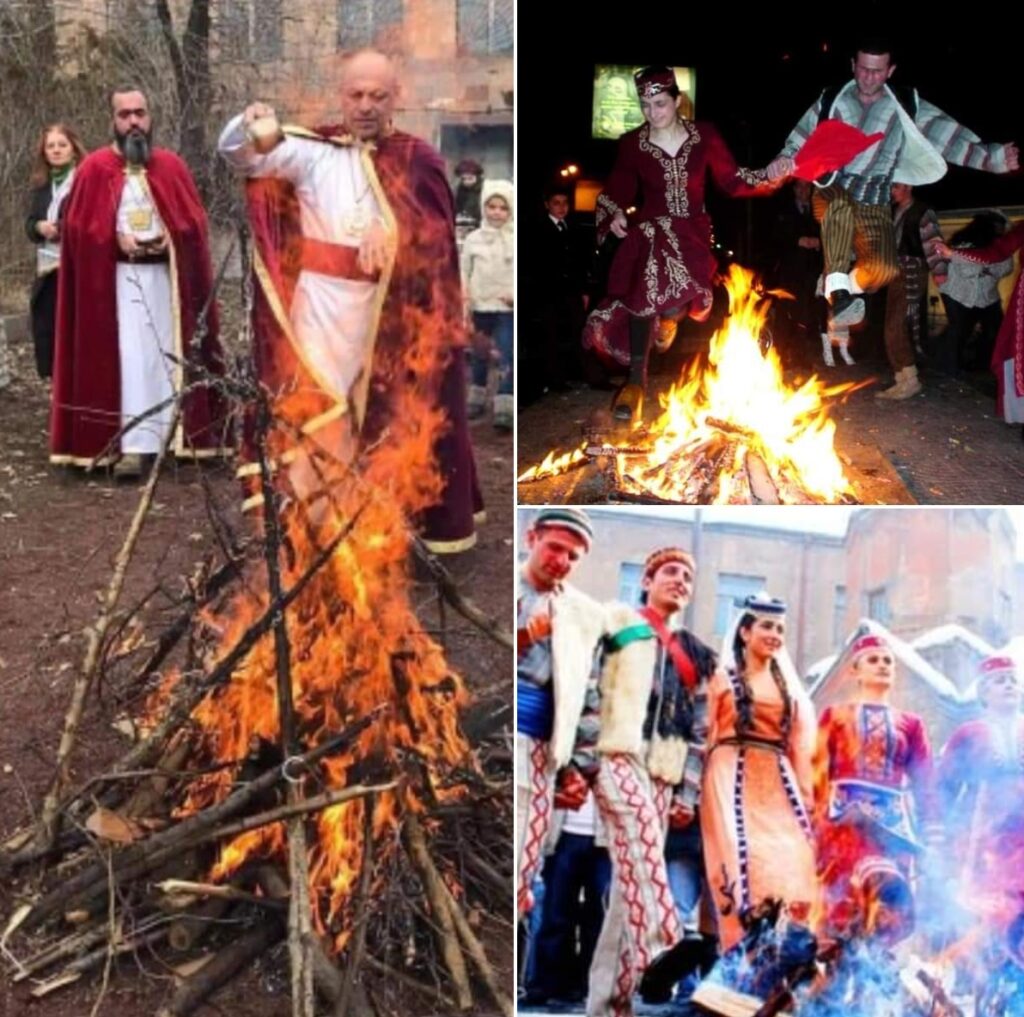
    “The festival fire is brought by the Kurms from the eternal flame burning in the temple. They light the fire and empower it with magic through sacred rituals. At the end of the festival, people take the fire home to light their hearths, ovens, or in modern times, candles,” explains Kurm Harut Arakelyan.

    How Trndez Was Celebrated in Kharberd (From “Hushamatyan”)

    “In February, bonfires are lit in the evening on the rooftops of Armenian homes in Kharberd, Hüsenig, and Mezire. Large piles of branches burn for hours, as boys and girls dance and sing around the fire. Some jump over the flames.

    In rural villages, the festival—called Melet—is celebrated in a grand manner.
    First, an evening church service takes place. Then, with candles lit, villagers head toward their neighborhoods to ignite the bonfires.

    In some villages, the fire is only lit in the churchyard. In Barjanj (Bergenj/Akçakiraz), the largest donor of the day has the honor of setting the bonfire ablaze.

    After the fire is lit, people return home with burning candles, and the celebrations continue on their rooftops. Families light smaller fires, singing and dancing late into the night. Dried branches (tsrdeni) are often used as fuel.

    Young men eagerly participate in gathering firewood for the festival.

    Even the ashes of the bonfire are believed to have protective powers. Villagers scatter them over rooftops to keep snakes and scorpions away during the summer. The ashes are also spread in barns, henhouses, fields, and vineyards, as people believe Melet (Trndez) brings fertility and prosperity.

    In Datem village, Garib Shahbazian mentions that newly married men must follow the tradition carefully.
    They are required to bring firewood and place it at the church entrance.
    If they fail to do so, the evil spirit Shvot might punish them by taking away their young wives.”

    As the bonfires burn, people express their wishes:

    “May our hens lay eggs, may our cows give milk, may our brides bear children…”

    Songs celebrating love and marriage have been sung during Trndez for generations:

    “Girl, your name is Vardanush,
    You are beautiful, your kiss is sweet,
    What harm is there in a kiss?
    It will neither fade nor grow old…”

    “Oh Gurgen, Gurgen, you talked too much,
    But you did not say what was needed.
    To love is foolish,
    But to hold back is worse.”

    “Oh, girl Vardanush,
    I will carry your burden,
    I will carve the stones,
    And I will keep you happy.”

    “Love is for those who cherish it,
    And wine is for those who drink it sweetly…”

    The photo is from Kurm Harut Arakelyan’s page, with thanks

  • “The Looting of the Century: The Dispossession of the Armenians in the Ottoman Empire”

    “The Looting of the Century: The Dispossession of the Armenians in the Ottoman Empire”

    “The Looting of the Century: The Dispossession of the Armenians in the Ottoman Empire”

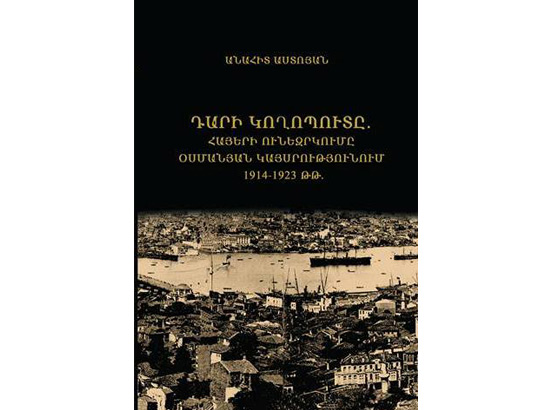
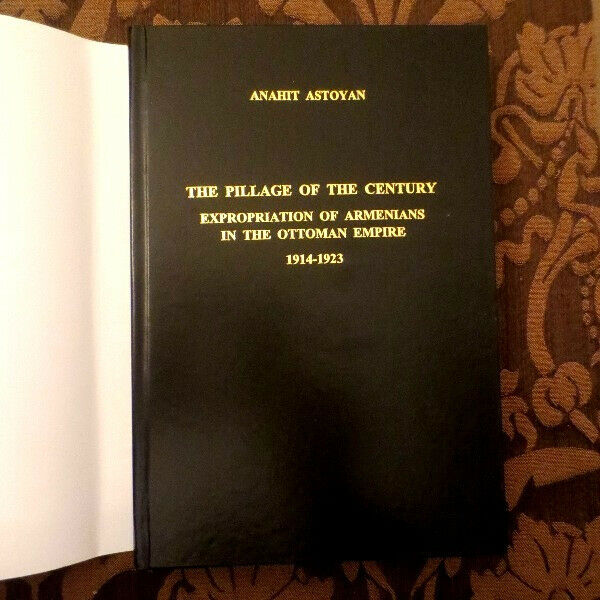
    “The Looting of the Century” by Anahit Astoyan

    For centuries, Armenians have fought for their independence, the restoration of their statehood, the liberation of Armenia from the rule of the Ottoman and Russian Empires, and the unification of the Armenian people within the Armenian Highlands, their ancestral homeland, to rebuild a strong and sovereign nation.

    Following the Russo-Turkish War of 1877-1878, the “Armenian Question” became an integral part of the “Eastern Question.” To rid itself of this issue, the Ottoman Empire implemented various measures—systematically weakening and destroying Armenians economically and materially, subjecting them to massacres and extermination.
    Yet, despite repeated violence, plunder, and the confiscation of Armenian lands and wealth, Armenians held a prominent place in the Ottoman Empire’s economy.

    Until the early 20th century, numerous Armenian and foreign sources documented the economic strength of Armenians.

    In a memorandum submitted to the French Ministry of Foreign Affairs on June 12, 1917, by Poghos Nubar Pasha, head of the Armenian National Delegation, it was stated that Armenians controlled 60% of imported trade, 40% of exported trade, and more than 80% of domestic trade.
    In the six Armenian vilayets (Erzurum, Van, Bitlis, Diyarbakir, Kharpert, and Sivas), Armenians dominated 69-86% of commerce, industry, and various crafts.
    All Armenian schools were under the full care of their communities, constituting more than 80% of the country’s total number of schools.

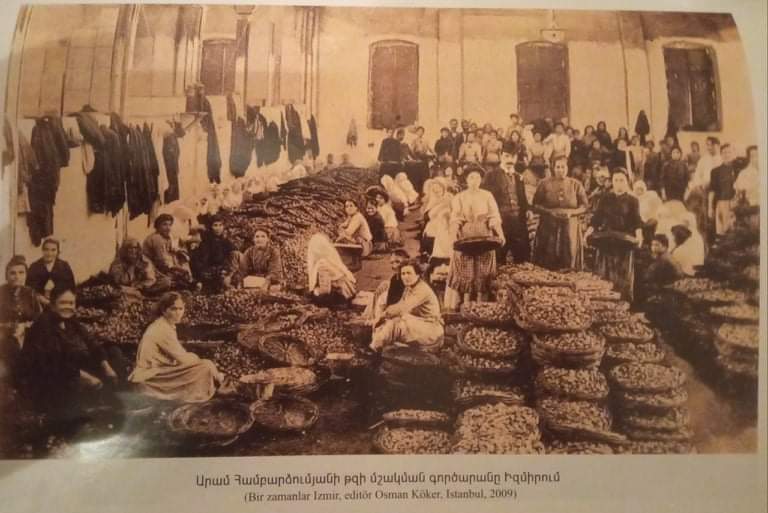
    In a 16 October 1920 article in the New York-based newspaper “Call of Armenia” (“Kotsnak Hayastani”), titled “The Situation in Bursa”, noted that before 1915, 40 out of 50 silk production enterprises in Bursa and its surroundings were owned by Armenians.
    Other Armenian and foreign sources reveal that in Erzurum, two-thirds of the city’s 3,000 shops belonged to Armenians, or, as M. Vrochenko wrote in 1835:
    “The wealthiest merchants in the inner cities of Asia Minor are Armenians.”

    One of the rare studies on the material losses suffered by Armenians due to the 1915 Genocide is Anahit Astoyan’s “The Looting of the Century: The Dispossession of Armenians in the Ottoman Empire, 1914-1923,” published in Yerevan in 2013.
    This work, of exceptional significance, compiles irrefutable historical facts, archival documents, testimonies from Armenian, Turkish, and foreign sources, and press reports, reaffirming the systematic looting and expropriation of Armenian property by the Turkish authorities and others.

    Here are a few excerpts from the book:

    “Among the Christian subjects of the Ottoman Empire, Armenians stood out due to their numbers, resilience, and abilities, occupying a leading position. They controlled key sectors of the empire’s economy—crafts, trade, and industry—and were among its primary taxpayers.
    Yet, Armenians became victims of Ottoman authorities and the Muslim population.
    Through persecution and massacres, the Ottoman rulers succeeded in weakening the Armenian people, while the Muslim population, exploiting the situation, continued to exterminate Armenians by fire and sword, seizing their wealth.”

    (From the book “Militarism” by Italian historian and writer Guglielmo Ferrero).

    “British diplomat Pearce considered one of the main reasons behind the Hamidian massacres to be the fact that Armenians had managed to concentrate significant economic power in their hands and had played a pioneering role in the empire’s economic development.”

    On October 31, 1915, from Constantinople, the Italian Commissioner for the Protection of Italian Nationals in Turkey, Talayan, sent a telegram to Italy’s Foreign Minister, Sonnino:
    “The confiscated property of the deported Armenians is being handed over to the emptied state treasury, but more often, it simply enriches Turkish officials’ personal wealth.”

    Johannes Lepsius summarized the situation bluntly:
    “A robbery of this scale, unmatched in history, could only take place under Turkish rule.”

    In another work, he noted:
    “The deported Armenians had no choice but to leave behind everything—their homes, land, livestock, household and farming tools. The deportation was, in reality, the systematic seizure of Armenian wealth.”

    U.S. Ambassador Henry Morgenthau described it even more starkly:
    “The true aim of the deportations was plunder and destruction; it was a new method of extermination. When the Ottoman authorities ordered these deportations, they knew they were signing the death warrant of an entire people. They understood it fully and did not even try to deny it in our discussions.”

    Fridtjof Nansen, in his book The Betrayed People, wrote about the Armenians’ financial losses:
    “The Turkish authorities not only displaced and massacred entire populations of desperate people but also stole all their assets, worth billions.”

    The material losses suffered by Armenians during the 1915-1923 Armenian Genocide at the hands of the Turkish government were so vast that their full extent is almost impossible to calculate. The challenge is even greater because the precise value of Western Armenian wealth before the genocide remains unknown.

    One account from Karin (Erzurum) illustrates the scale of the looting:
    *”Only during the deportations did the staggering wealth of the Armenians of Karin become evident, shocking everyone. If even a fraction of this wealth had been used for self-defense, it could have changed the fate of Armenians in the region. The forced deportations merely exposed these hidden and often denied fortunes.

    Tens of thousands of sacks filled with valuables were stored in the Surp Asdvadzadzin Church, American institutions, and even in the homes of Turks once considered friends. Thousands of ox-carts carried away the essentials and precious belongings of Karin’s Armenians, along with vast amounts of gold—hidden on family members or within household items.

    This gold and property were plundered and distributed across the region, from Karin to Baberd, Erzincan, Kemakh, Akn, Arabkir, Malatya, Adıyaman, Urfa, Suruç, and all the way to Aleppo—traded, stolen, and handed over to Turks and Kurds as bribes or ransoms.

    As a result, hundreds of Armenian women, girls, and even some men and boys were able to escape and reach Urfa, Suruç, Aleppo, and Mosul. They were able to flee death and reached the armistice of 1918 as eyewitnesses to the atrocities—the systematic genocide committed with official approval by the Turkish government, using criminal police forces, bloodthirsty Turkish and Kurdish militias, and violent mobs.”*

    “Armenian wealth was seized not only by the Turkish government and local Turkish, Kurdish, and Circassian populations but also by foreign interests. Reports in the Armenian press following the Mudros Armistice confirm this.”

    Today, as the world faces critical political decisions, recognizing the Armenian Genocide and seeking reparations—including compensation for victims’ descendants and the Armenian nation—demands the preparation of a legal case against the Republic of Turkey, the successor to the Ottoman Empire, to restore rightful Armenian lands and property.

  • “The Wild Rose Is the Image of My Land” or “Spring Will Arrive in Armenian, Your Centuries Will Arrive in Armenian”

    “The Wild Rose Is the Image of My Land” or “Spring Will Arrive in Armenian, Your Centuries Will Arrive in Armenian”

    “The Wild Rose Is the Image of My Land”
    or
    “Spring Will Arrive in Armenian, Your Centuries Will Arrive in Armenian”…

    Պարույր Սևակ

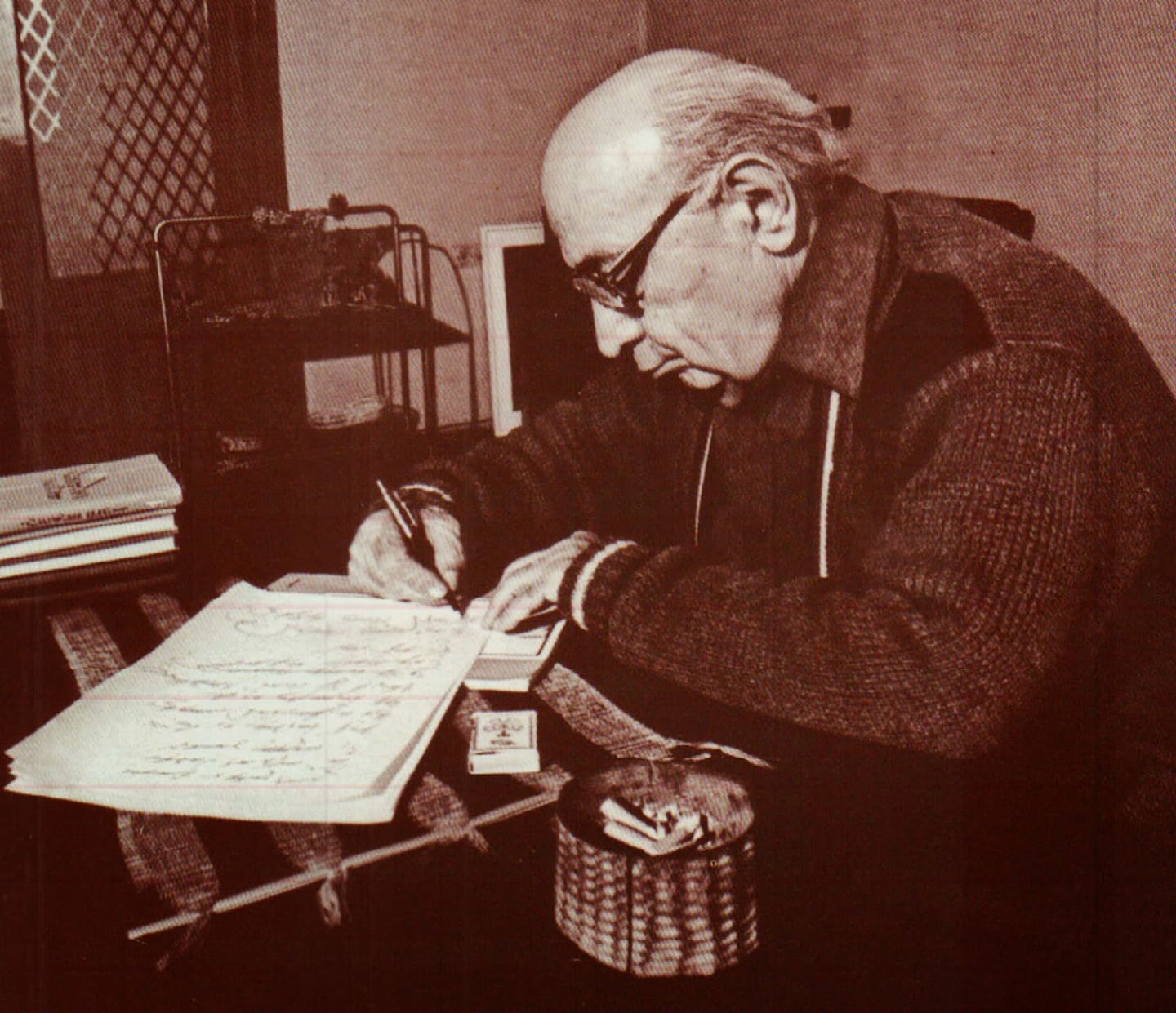
    On this day, April 14, 1914, the Armenian poet Hamo Sahyan was born—a poet who, with his “dewy lips,” glorified his birthplace, the Homeland, and sang the “Song of the Cliffs.”

    Deeply rooted in the culture of our ancestors, with an unshaken and pure spirit, this great Armenian poet has left us verses we often recall…

    The singer who fought for the “Nairian Green Poplar,” the symbol of our historical homeland—the Land of Nairi—wrote:

    You sway with grace in your emerald robes,
    Shading the path of my childhood’s green fields.
    Your call rings clear and loud
    In the deep gorges of my heart,
    O my far, far Nairian green poplar!

    Ah, you burn like a bonfire,
    A blaze of green flame!
    From afar, I embrace you
    With the longing fire of my heart.
    You fill the fields with your familiar rustling,
    O my far, far Nairian green poplar!

    My skylark-child plays in your shade,
    Singing your praise
    With lips like a budding rose.
    Shelter his life, caress him sleepless like a father,
    O my far, far Nairian green poplar!

    I am a singer of fire and sword;
    I desire nothing but your love.
    With a life as green as yours,
    I have fought for you.
    I shall die, so long as you may rustle free through the ages,
    O my far, far Nairian green poplar…

    “You have translated the poetry into English; the Englishman must know what tree grows in that country.

    The wild rose is the image of my country.

    …It asks for nothing. Even in drought, it bears good fruit.
    It blooms multiple times—greens, whitens, yellows, reddens…
    Humble, giving, yet covered in thorns.

    A foreigner should recognize me by the wild rose bush, clinging to the rock.
    It has the richest scent, the most vibrant color, the sweetest fruit.
    Its roots run deep, strong, and firm—just try to uproot it…

    The wild rose does not know how healing it is, how beautiful, how essential.
    It does not know—and could never know—that it is Armenian,
    That it carries the spirit of our people, so deeply characteristic of our nation.

    It is we who must know this and show it to the world.

    The wild rose holds the same worth as Tumanyan’s rock…

    Through the essence of the wild rose, we must come to understand ourselves.”

    These are the words of Hamo Sahyan (from Susanna Babajanyan’s Facebook page)…

    “I am the eyes and ears of Mother Nature,
    The consciousness, her embodiment.”

    Thus, Sahyan described himself…

    In one of his letters, Paruyr Sevak called Sahyan “one of the finest versifiers of our poetry.”

    Here stands the proof…

    “Our language”

    Our language is our conscience,
    The sacred bread on our table,
    The righteous voice of our soul,
    The very taste upon our lips.

    Our language is the smoke of our home,
    The weight that holds balance in this world,
    The salt of our identity,
    The essence of who we are.

    Our language is our blood,
    More precious than blood itself,
    Our fragrance, our color,
    Our language is us—it is our existence.

    It must be our first
    And our last love,
    For what else in this world
    Belongs to us so completely?

    Or else—

    “Spring Arrives in Armenian”

    Spring arrives in Armenian,
    Your snows cry in Armenian,
    Your waters surge in Armenian.

    Your birds sing in Armenian,
    Your plows carve the earth in Armenian,
    Your letters endure in Armenian.

    Your sun rises in Armenian,
    Your trees blossom in Armenian,
    Your words burst forth in Armenian.

    Your seeds sprout in Armenian,
    Your hands mold and forge in Armenian,
    Your stones keep their silence in Armenian.

    Your valleys breathe in Armenian,
    Your martyrs rest in Armenian,
    Your sorrows ache in Armenian.

    No matter how much has been taken,
    You have remained Armenian,
    Your mountains still rise in Armenian.

    May God protect what still stands,
    And no matter what the future holds,
    Your snows will cry in Armenian,
    Your spring will arrive in Armenian,
    Your centuries will come in Armenian.