Year: 2025

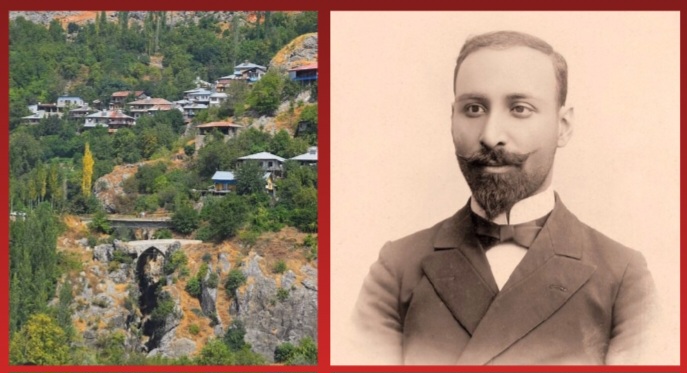
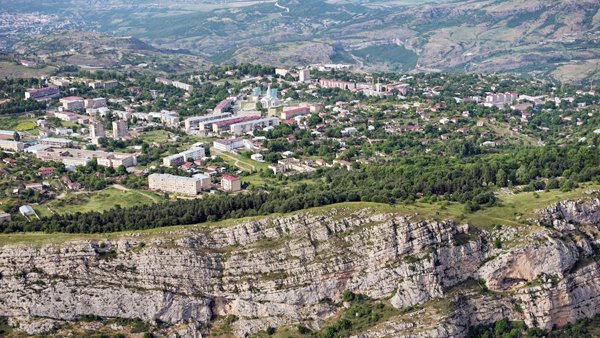
  • «IN THE HEART OF THE LAND OF MUSH — ON THE SLOPES OF MOUNT KARKE»…
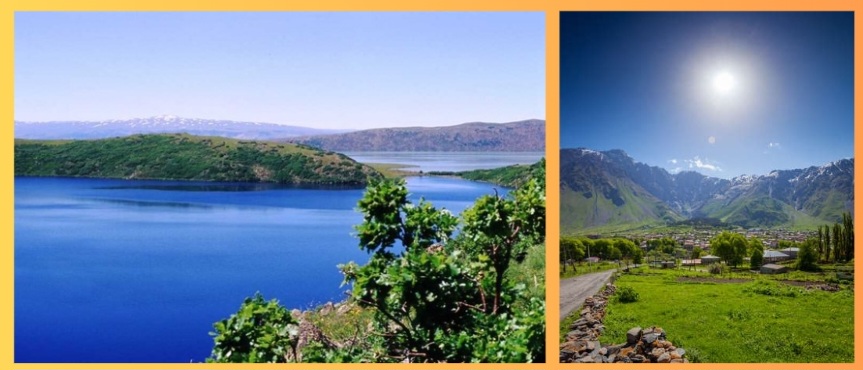
    «IN THE HEART OF THE LAND OF MUSH — ON THE SLOPES OF MOUNT KARKE»…

    «IN THE HEART OF THE LAND OF MUSH — ON THE SLOPES OF MOUNT KARKE»…

    Among the most ancient, renowned and sacred places of the Armenians were Ashtishat and, not far from it, the celebrated temple site in the land of Taron — near nine cold springs gushing close to one another, which «is called the monastery of Innakneay because of the IX (9) sweet-water springs, and is called the monastery of Glak after the father superior of the monastery»… (as the 13th-century historian Vardan Areveltsi reports).
    The Innakneay monastery of Mush, or of Taron, later — after the spread of Christianity — became «Sultan of Mush St. Karapet».
    «Churches were erected upon the temples», yet in the heart of the Armenian people it remained a place of worship for pilgrimages, especially for the joyful nationwide celebrations of Vardavar, where right up to the year 1915 the sons of Armenia gathered from the far and near provinces of Armenia — to express their national devotion and their love for the homeland.

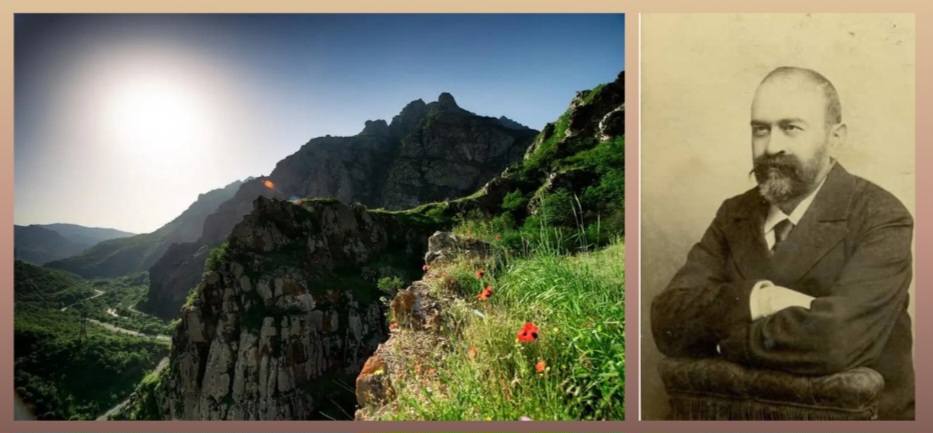
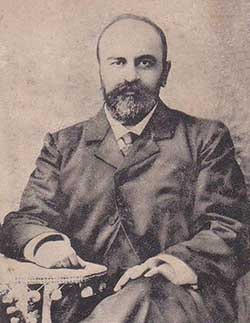
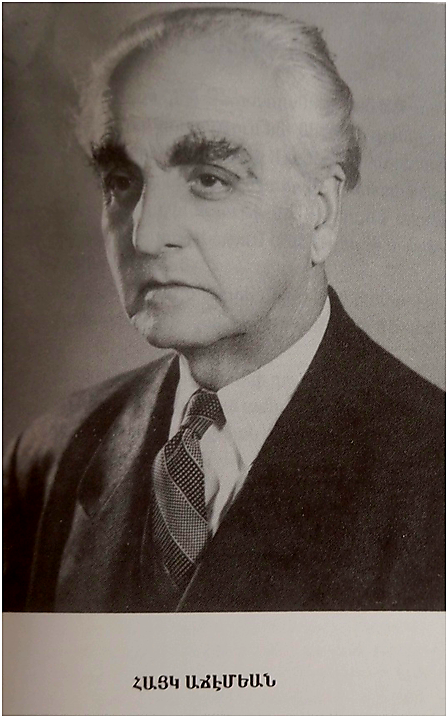
    The reflections of the Armenian ethnographer and philologist Hayk Ajemyan (1898-1965), born in Van —
    on «Sultan of Mush Saint Karapet» — published in the monthly «Hayrenik», (1926, June, No. 8, p. 112), below…
    A
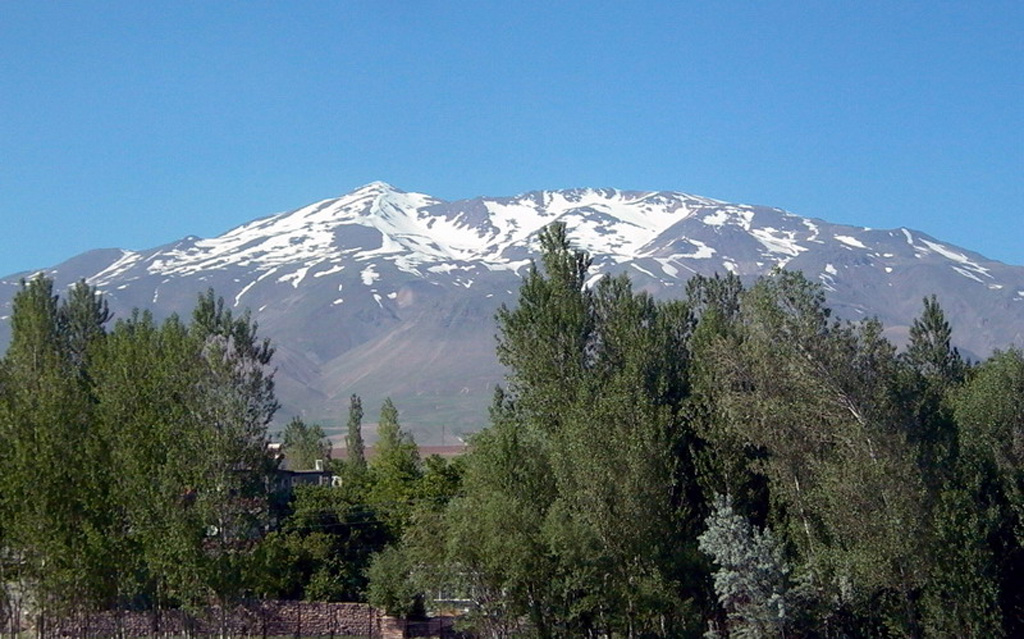
    Thousands upon thousands of years ago, when the world of Armenia was living the finest period of its glory and victory, in the heart of the Land of Mush — high on the slopes of Mount Karke,
    there rose that magnificent temple of Armenian pagan worship, under whose marble-built arches rested the gold-cast statues of Golden-mother Anahit, Golden-fingered Astghik and Dragon-reaper Vahagn — those ancient gods of the Armenians (hereafter — the Dits, K. A.), before which, before sunrise, the Armenian Kurms burned incense and frankincense and murmured melodies of glorification, while the Armenian virgins, with flowing hair and in white garments, scattered flowers and fragrant oils.

    When the righteous sun, with its gold-embroidered rays, abundantly illuminates the House of the Dits of the pagans, and the gleam of the gold-cast statues of the Ancient Dits also mingles with the beams of the sun, the temple fills with fading-glorious and crimson lights.
    The Armenian gusans begin to play the kithara and the bambir, the trumpeters sound the horns sweetly. The pagans rise to their feet and the prayer and glorification of the chief Kurm are heard — addressed to the sun-born Dits of the manly vigour, strength, battle and victory of the Armenians — Dragon-reaper Vahagn:

    «O thou, Vahagn, Dits of power, thou, Sun made man, O thou Victorious Giant, and Dits of our fathers, thou Sun-born and dragon-reaping power»…

    After the invocation of the chief Kurm, the pagan worshippers, with profound enchantment, sing the hymn of Vahagn, whose melody, with a thousand and one harmonious modulations, echoes in the mysterious sanctuaries of the temple:

    • «In travail were heaven and earth,
      In travail too the purple sea,
      The travail held in the sea
      The little red reed.
      Through the hollow of the reed smoke rose,
      Through the hollow of the reed flame rose,
      And out of the flame a youth ran.
      Fire for hair had he,
      And moreover he had a beard of flame,
      And his eyes were suns…»:

    Thus, for centuries on end, the pagan Armenians of the World of Mush devoted their worship and faith to the Ancient Gods of the Armenians (the Dits, K. A.), until Christianity found its way into Armenia.
    The illustrious Armenian representative of the new religion, St. Gregory the Illuminator, with his new apostles, persecuted the Armenian pagans, demolished and destroyed the altars and temples of the Ancient Gods, annihilated the Armenian pagan literature, which immortalized the songs and praises of love and enjoyment, of glory and victory of the ancient Armenians, their hopes and emotions, recorded in parchment books — by the hand of the Armenian gusans and of the singers of Goghtn.
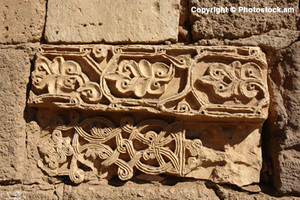
    The «apostle» of the Christian religion and of the new faith of the Armenians entered the World of Mush, climbed up the slopes of Mount Karke, demolished and destroyed the beautiful and lofty temple of the Ancient Gods of the Armenians and there, where once stood the golden, marble and bronze statues of Golden-limbed Anahit, Sea-born Astghik and Sun-born Vahagn, upon the ruins of the temple and the fragments of the statues of the Dits, he laid the foundation of a huge and glorious Christian temple-monastery; as a monument — eternal to the new religion and the bright faith of the Armenians.
    B
    The bitter-cold winter of Armenia has passed.
    The snows of the mountains have melted and, flowing down the valleys, have mingled with the rivers, which have swollen in floods and watered the fields and plains, the groves and gardens adorning their banks.
    The spring of the world of Taron is opening.
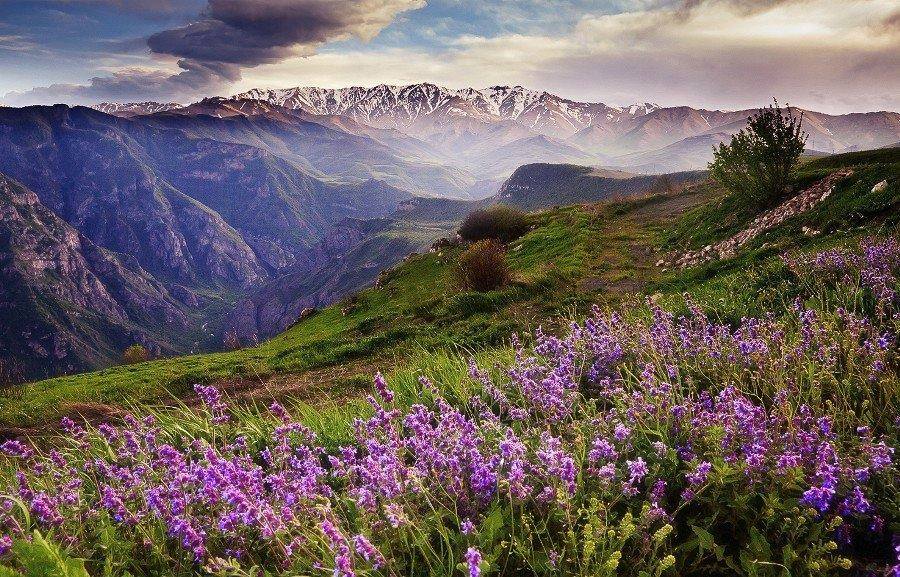
    The plain of Mush adorns itself like a graceful bride with countless flowers of every hue. The Meghraget and the Aratsani caress their banks with sweet water-voices and gentle splashes. Up the slopes of Mount Karke the Armenian shepherds graze their flocks. The villager ploughs his field, the householder tends his garden.
    Spring gives everyone new life and labour — the tireless and holy labour of righteous earnings, of honest sweat.
    The Armenian architect, at the head of thousands of workers, is building a beautiful temple. The villagers come of their own will to help in the construction of this new sanctuary. They carry stone and lime, with song and joy they encourage the efforts and toil of the workers. The vardapets of the new religion offer prayers and invocations for the establishment of the new sanctuary.
    An aged Armenian monk with a venerable biblical face kneels in the half-finished sanctuary of the temple and murmurs:
    «Establish it in faith
    Confirm it in hope
    Found it in love» …
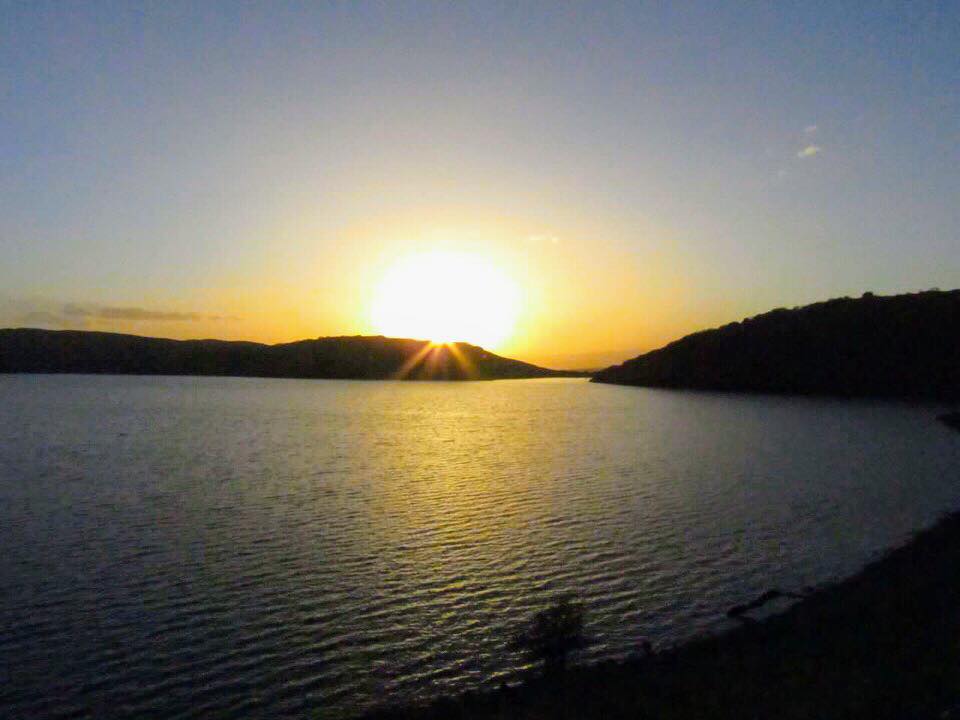
    With the rays of the sun the work of the day also begins.
    And behold, the temple is ready with its marvellous structure. The new sanctuary of the new religion has risen up on the heart of Mount Karke. The solidly built domes of the temple, having as crown and wreath the exquisitely wrought and sky-aspiring bell tower, with pleasing harmony present a soul-delighting scene against the distant horizon or the layers of the blue sky.

    Messengers are sent to all the sides of the Armenian world to inform the people that the construction of the temple dedicated to the name of Saint Hovhannes Karapet has been completed, and that soon the magnificent ceremony of consecration will be performed, at which the Patriarch of All Armenians and the king of the world of Armenia must be present — with their retinues.
    In a short time the world of Mush becomes a great all-Armenian festive ground. From all parts of Armenia many thousands of pilgrims come towards Taron — to see the consecration of the temple of Saint Karapet.
    At dawn the ringing bells of the lofty bell tower of Saint Karapet peal, whose last peals echo with melodious sounds in the valleys of the mountains of Sasun and vanish on the distant horizons.
    The pealing of the bells fills the hearts of the Armenian pilgrims with the bright faith of fervour, and all with one voice pray and cross themselves.
    The Patriarch of All Armenians comes with his archbishops and the officials of the religious hierarchy.
    The king of the Armenians is followed by the nakharars, the generals, the princes, then also the queen with her followers and handmaidens. These are followed by townsfolk, soldiers, commoners, peasants, men and women, old men and children, in a word, the Armenian people with all its classes.
    The Patriarch, the king and the queen, the princes and the nakharars, the great and the blessed of the land enter the temple and take their places, while the common people throng in the courtyard of the monastery. The office begins.
    The Patriarch of All Armenians with profound emotion blesses this newly built temple.
    Before the main altar flickers the bright lamp of the Illuminator, whose dim reflections have mysteriously illuminated the image of the Mother of God.
    And behold, the Armenian clergy, «servants of the immortal word», sound the soul-enchanting night-hymn of the apostolic church founded by the Illuminator —
    «Awake, my glory, awake, and I too
    shall awake in the morning, alleluia…»:
    «Awake, new people, a new song
    taking up to the Renewer, alleluia…
    «Awake, you too who are redeemed by blood,
    the glory to the Redeemer, alleluia…»:

    The arches and sanctuaries of the temple echo those sweet sounds of the dawn hymn, at the hearing of which the dense multitude of pilgrims kneels with profound reverence in this newly built sanctuary of the new religion, offering its worship to the name and power of Saint Karapet.
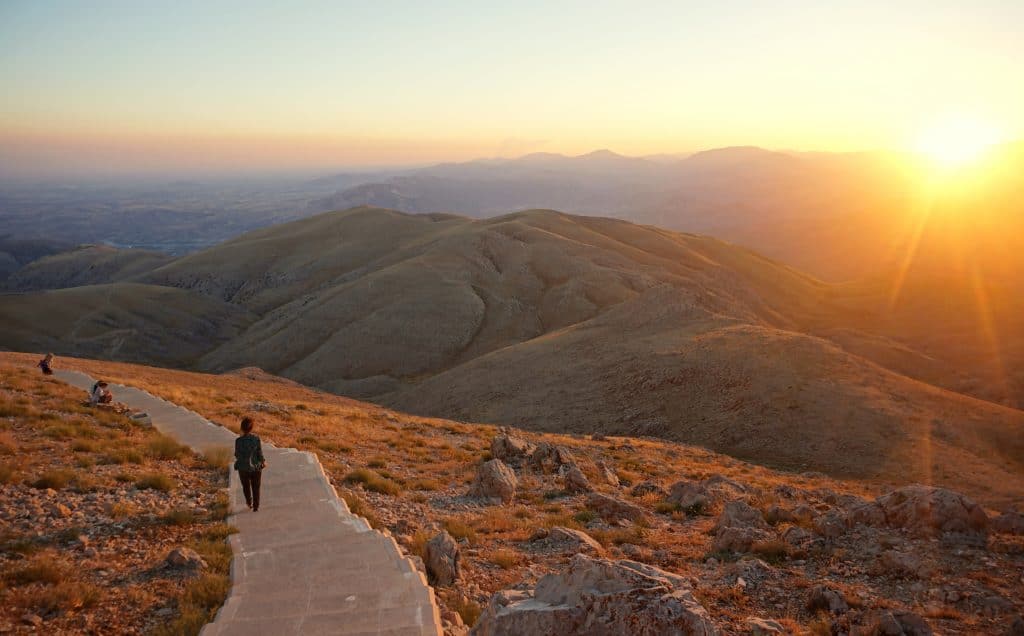
    A little later the religious glorification dedicated to the sun begins.
    The khashkhosh rattles rustle, the cymbals ring with sweet vibrations, the temple fills with mysterious voices, joined also by the clergy — singing praise:
    «Morning of light, righteous sun,
    shine light upon me… » :
    «Issuing from the Father, issue forth into my soul,
    a word pleasing to You»…
    «Treasure of mercy, of the hidden
    treasure make me a finder…»:

    The righteous sun has long since risen and warmed the whole created world; through the narrow windows of the temple the luminous rays have fallen inside and mingled with the flickering reflections of the candles and lamps.
    The solemn liturgy begins, and the Patriarch of the Armenians — vested in garments woven with gold thread — celebrates the liturgy, during which the ceremony of the consecration of the temple of Saint Karapet takes place.
    The stones of the Armenian temple, the sacred vessels and utensils, the images and books are anointed with holy myron, and that huge and beautifully wrought temple of the Christian faith, of the Armenian Church of the Illuminator, now becomes a renowned place of pilgrimage — in the name of Saint Hovhannes Karapet.
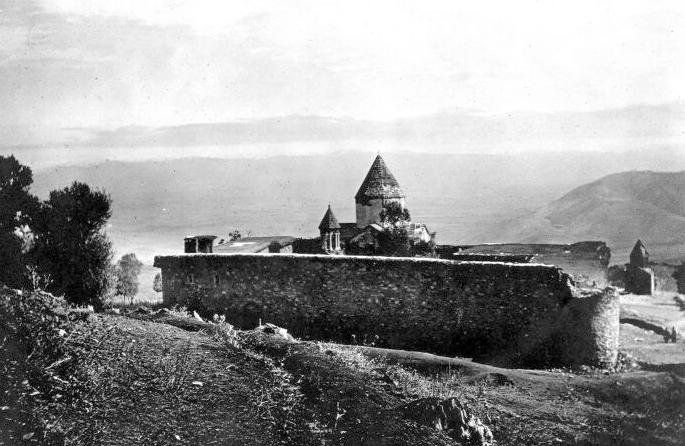
    C.
    Centuries and generations that never return have passed.
    The world of Armenia has become an arena of blood and devastation — for the tyrants and barbarian forces invading from the east and the west. Yet the magnificent monastery of Saint Karapet has remained as an eyewitness and silent witness to all the events that have taken place in Armenia.
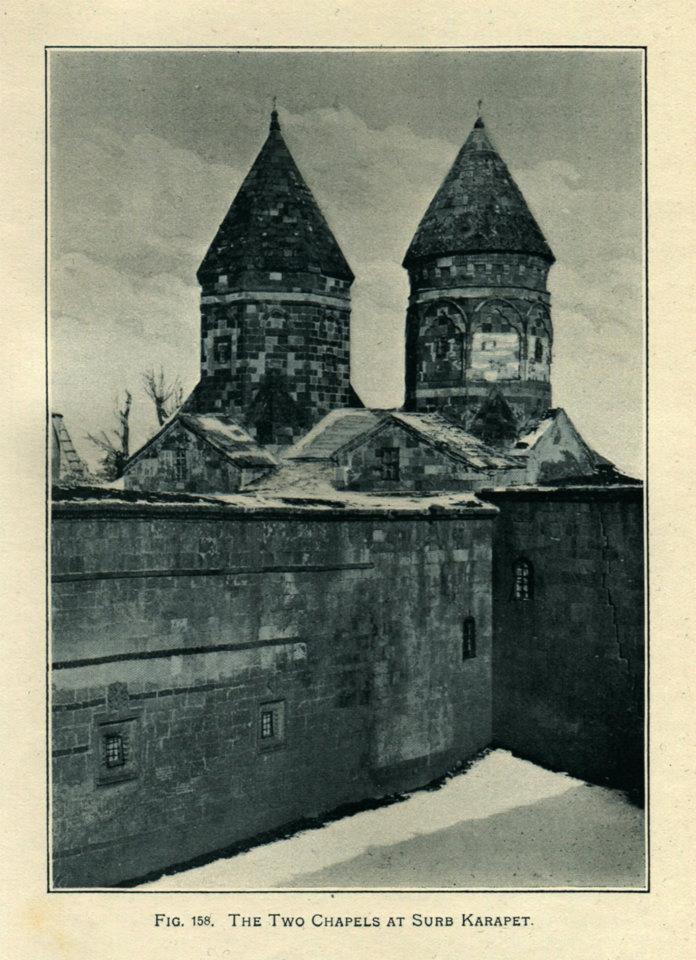

    Its lofty and sky-soaring domes, noble and proud, have remained standing in an indestructible and victorious posture, keeping hope and faith unvanquished in the heart of the Armenians.
    It is the feast of the monastery of Saint Karapet. From all parts of the Armenian world townsman and villager turn to its door — to have their wish fulfilled.
    It is the great and sacred Armenian pilgrimage.
    The fervent and faith-filled pilgrims have set out on the road before sunrise to reach the monastery.
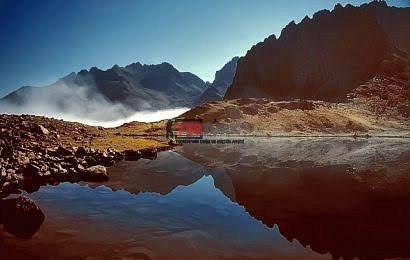
    The mist of the world of Mush disperses, the darkness of night scatters, and the good light sways from the east. The sun spreads its golden rays over the well-watered and green-adorned fields.
    The many-coloured flowers revive with the breath of warm beams and moist dews. Spring and brook, river and stream turn the colour of silver, and the whole of nature in the world of Taron takes on the appearance of a purple sea.
    At this sweet moment of nature, behold. The Armenian pilgrims are coming from the fields and villages, from the valleys and gorges, both on horseback and on foot, the village man and the village woman — decked out and adorned in colourful native costumes, their hearts — filled with Armenian faith and hope, with joyful songs, with joy and laughter, with dhol and zurna, with saz and flute.
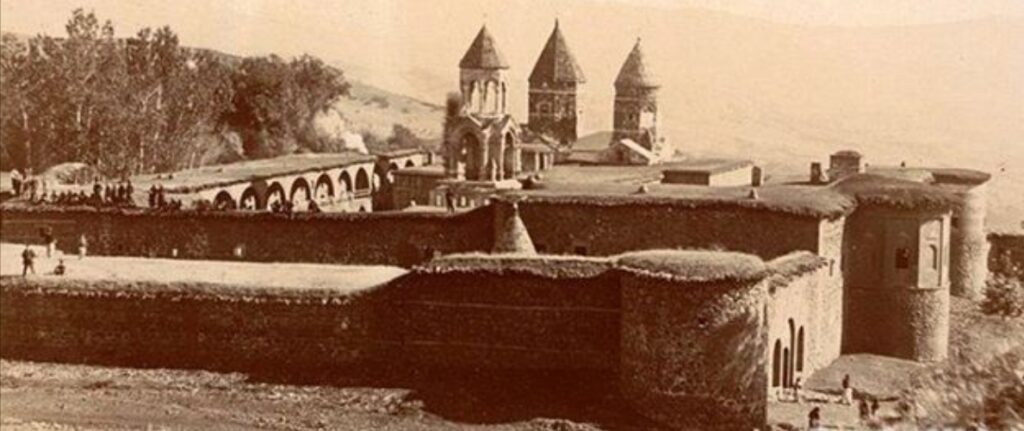
    Suddenly you see, man and woman, little child and old man, at the sight of the domes of Saint Karapet — kneel down; they cross themselves and, their hearts filled with emotion and their eyes with tears, sing the praise of Saint Karapet:
    «Saint Karapet is high above all,
    His road is winding and twisting,
    Many a pilgrim goes and comes,
    Both on horseback and on foot.
    He gives answer to the rider.
    He grants the wish of the one on foot.
    Sultan of Mush, chankli divan,
    Wish-granting Saint Karapet …»:

    Here too is the Armenian ashugh, who has leaned his back against the massive column of the bell tower and glorifies Saint Karapet:
    «Saint Karapet in the midst of the grove,
    A twin spring in the midst of his courtyard,
    To whose door lamb and ewe come,
    The sacrifice is cut on bright Sunday…
    Ya! Sultan of Mush, chankli divan,
    Wish-granting Saint Karapet».
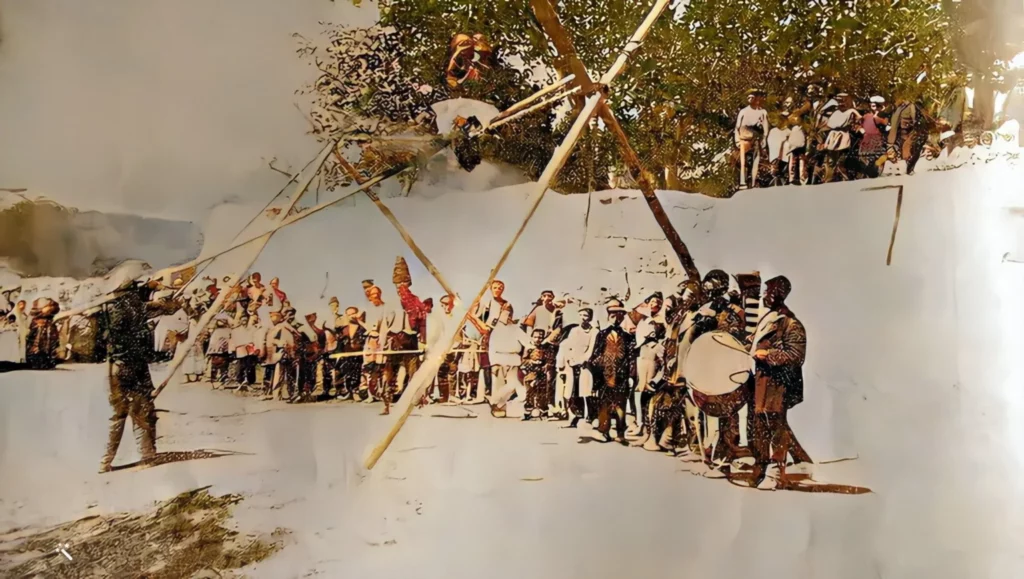
    The Armenian pahlevans have come too, all of whom have been granted the grace and power of Saint Karapet. They kept fasts and abstinence, repented and prayed until they attained their desire.
    Look! The pahlevan is now climbing onto the rope. He has put on colourful oyemas, he is barefoot, on his head he has put the arakhchi of Mush — his chest and back are adorned with crosses and beads. He kisses his long helping pole, his «chankli divan», puts it on his head, turns his eyes to the temple of St. Karapet and suddenly, leaping nimbly, begins to climb onto the rope, while the naghara and zurna play pleasantly, and in the air the faith-filled voice of the pahlevan is heard:
    «Ya! Sultan of Mush,
    Chankli divan,
    Saint Karapet
    May you stand firm».
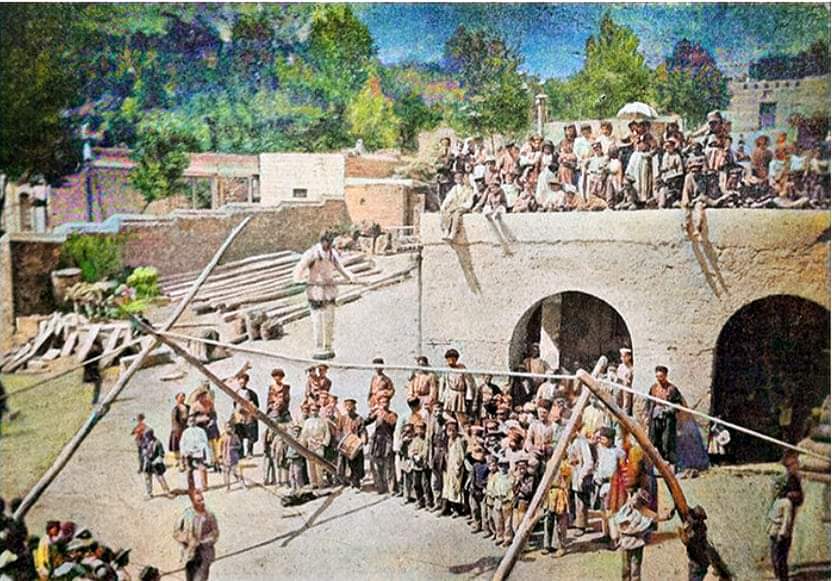
    The crowd of many thousands watches the game of the pahlevan with great pleasure, and then the dancing and merrymaking of the whole people begins.
    The village man and the village woman, hand in hand, forming a round dance, with a thousand and one light and joyful movements, smiling, open-hearted, noble and affectionate, begin to dance the «Mshu khrr» with harmonious modulations and to sing:
    «The world of Mush is mist,
    Its soil and water are sweet,
    Let the north wind drive me,
    Let it bury me in its bosom»…

    The dance ends. The dancers have turned red and are sweating. It is the hour of rest. The lively village women prepare the table.
    Everywhere they have slaughtered the matagh. They give everyone a share and from every mouth the wish «May God accept it» is heard. The simple patriarchal tables are full of white bread, the cheese and the pokhind are abundant, matsun and halva — never lacking. Everywhere joy and laughter, song and delight, «toasts» and wishes.
    And so the day darkens, the sun gives its last kiss to the mountain slopes of the Armenians and darkness covers the whole created world. Not a voice, not a whisper. The peace of the night is sometimes interrupted by the voices of the loud and sweet songs of the Armenian ashughs, who seem to be singing a lullaby to the pilgrims of Saint Karapet.
    D
    The sweet wind of the sea of Van whistles in the midst of the plain of Mush, and from the side of Mount Nimrut the mountain breeze blows gently.
    «Adam’s darkness» disperses and from the side of the chapel the twilight seems to appear, when suddenly the Morning Star too, like a lamp hung from the sky, sends forth its gleams.
    The pilgrims are still sleeping soundly, soundly, when the bell-ringer of the monastery, rattling his semantron, announces to the monks and the pilgrims the breaking of dawn and invites them to enter the temple to pray.
    Everyone springs up and washes with the cold water of the spring and the brooks.
    The temple fills with pilgrims. Everyone lines up side by side. In a silent and half-dark corner I too take a place and am soon carried away by imaginary and dreamlike thoughts. I turn my eyes to the old and faded picture of the Mother of God, before which the oil lamp flickers.
    O Mother of God, new Mother of God, do you know perhaps that in the place of that old picture of yours there once rose the gold-cast statue of our Golden-limbed Anahit, who was the Mother of goodness and abundance of the World of the Armenians?
    Here also is the picture of Saint Hovhannes Karapet.
    Thou, Saint Karapet, illustrious figure of the Gospel, apostle of God, forerunner of the lost, Baptist of Jesus, Good Tidings of men, wondrous prophet, much-tormented martyr, thou, lord of seven names, Saint Karapet, take a tongue, speak! Do you know perhaps that in the place of that pale and sad picture of yours, before you — upon an iron-built and bronze-covered pedestal sat enthroned the statue of our Dits Vahagn, that invincible giant of strength and power?

    I look at your picture, but what do I see? A Jewish woman, Herodias, has put your severed head on a dish and is gazing at it, while your headless body, your hands chained, lies sprawled in blood.
    Defeated, chained and then beheaded, martyred Saint Karapet, open your eyes and see how the people of the Armenians has knelt before your sanctuary and is lamenting your
    martyrdom.
    As long as you did not exist, Saint Karapet, in the place of that faded canvas depicting your blood-soaked body and severed head, we bowed down to the lofty statue — of Vahagn of the Great Armenians, that invincible and incomparable giant, who drove away even the dragons, and for that was called Dragon-reaper, Dragon-conqueror.
    In his day we were invincible, the World of the Armenians was strong and undivided – «The border of the brave — their weapon».

    Now we pray with sadness before your picture, while our Armenian pagan ancestors composed songs of victory before the statue of Vahagn, sounded the horn and the trumpet.
    While I am carried away by these reflections, the arches of the temple echo with the dawn hymn of the Armenian church, joined also by the sounds of the khashkhosh rattles and the cymbals:
    «Awake, my glory, awake, and I too shall awake in the morning, alleluia»…

    E
    But behold, the Great Genocide came and put an end to this great Armenian corner that had lived for centuries. And while on one side the Armenians were being martyred , on the other side the barbarians desecrated the temple and altar of St. Karapet, demolished the tomb, plundered the two-thousand-year-old marvellous monastery.
    And thus, behold, in the first quarter of the twentieth century, the historical existence of St. Karapet, the beloved monastery of the Armenians, came to an end.
    The World of Mush became ruined and desolate; its mother people was martyred on its own land, and the bells of Saint Karapet rang for the last time and with a weeping voice seemed to call out:

    • Hosanna to the Armenian victims, glory to the blood that was shed and eternal memory to them all!

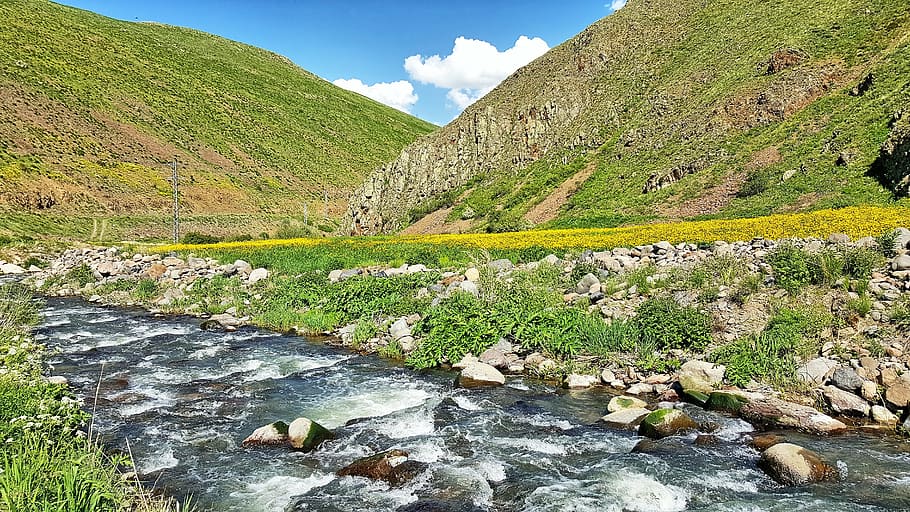
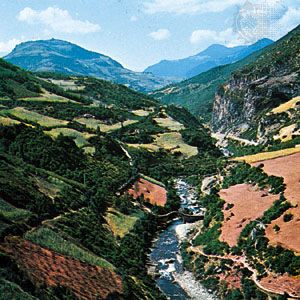
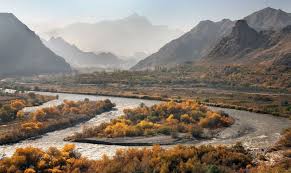
    And now Mount Nemrut is wrathful and frowning, sad, desolate and bereft of Armenians is the plain of Mush, tearing through whose heart the Meghraget flows winding and twisting — keeping in its heart the last sigh and longing of the Armenian martyrs.
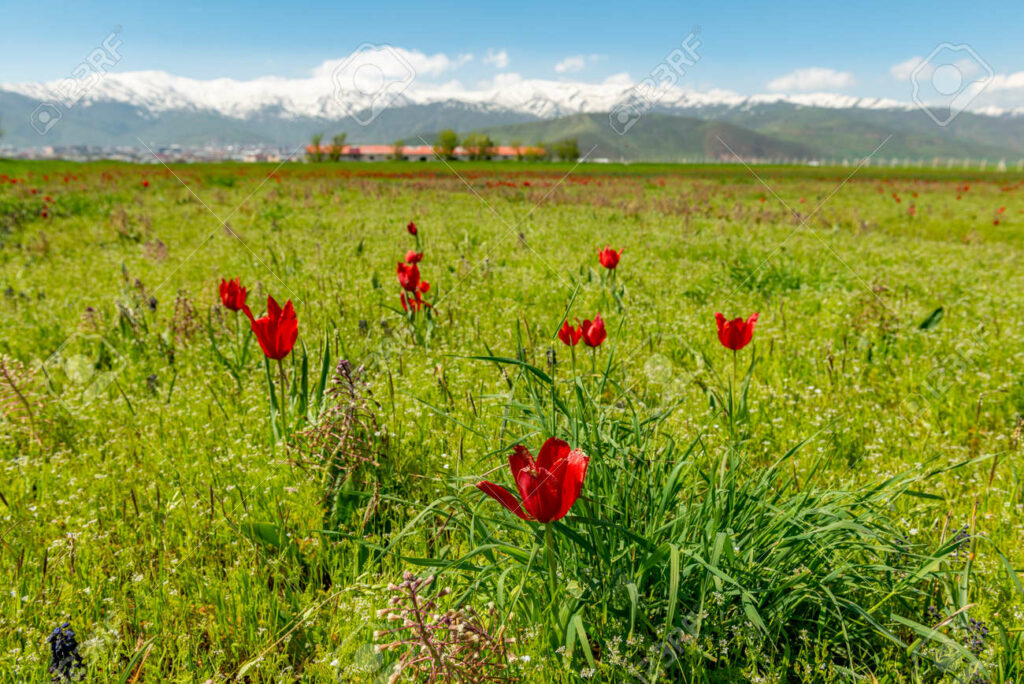
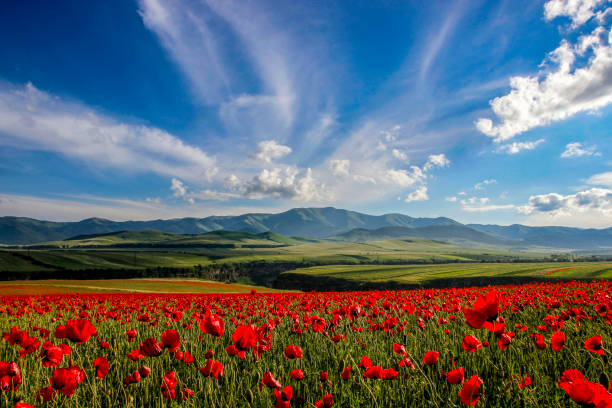
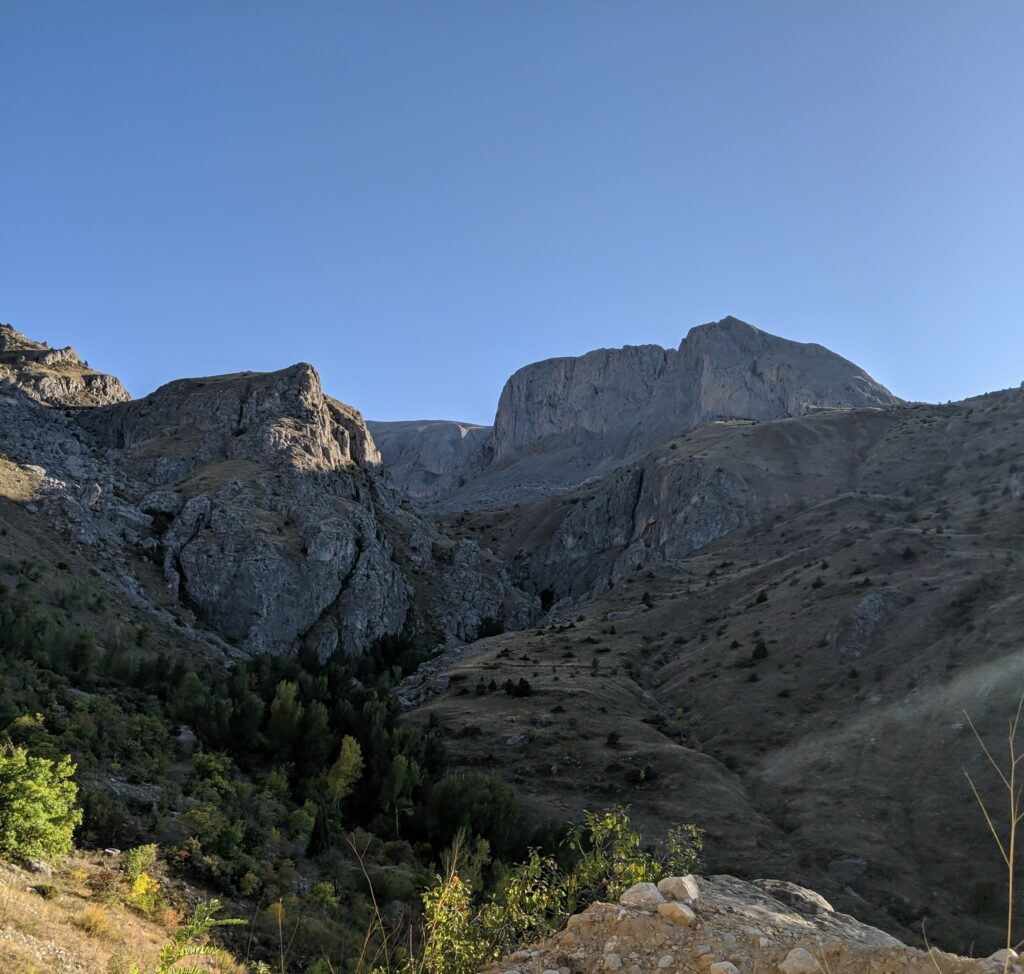
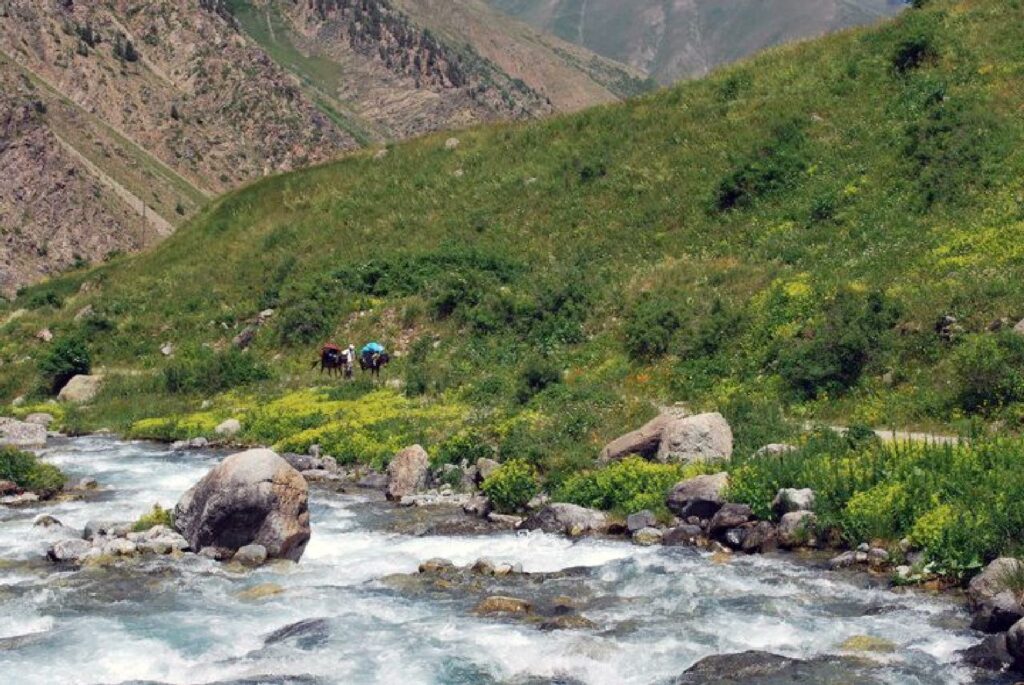
    Up the slopes of Mount Karke, there, where once rose the magnificent and marvellous monastery-temple of the Sultan of Mush Saint Karapet, now — enormous heaps of broken hewn stones and of lime and earth have mingled with one another, and from that mixture has formed a high and huge, shapeless and purposeless hill, on whose summit, at whose foot and on whose sides spring shoots and flowers grow, the red poppy — a sign of the innocent blood of the Armenians. And the «Brothers’ blood» among the stones reminds the passer-by of the unburied, forgotten and unremembered bodies of the Armenian martyrs.
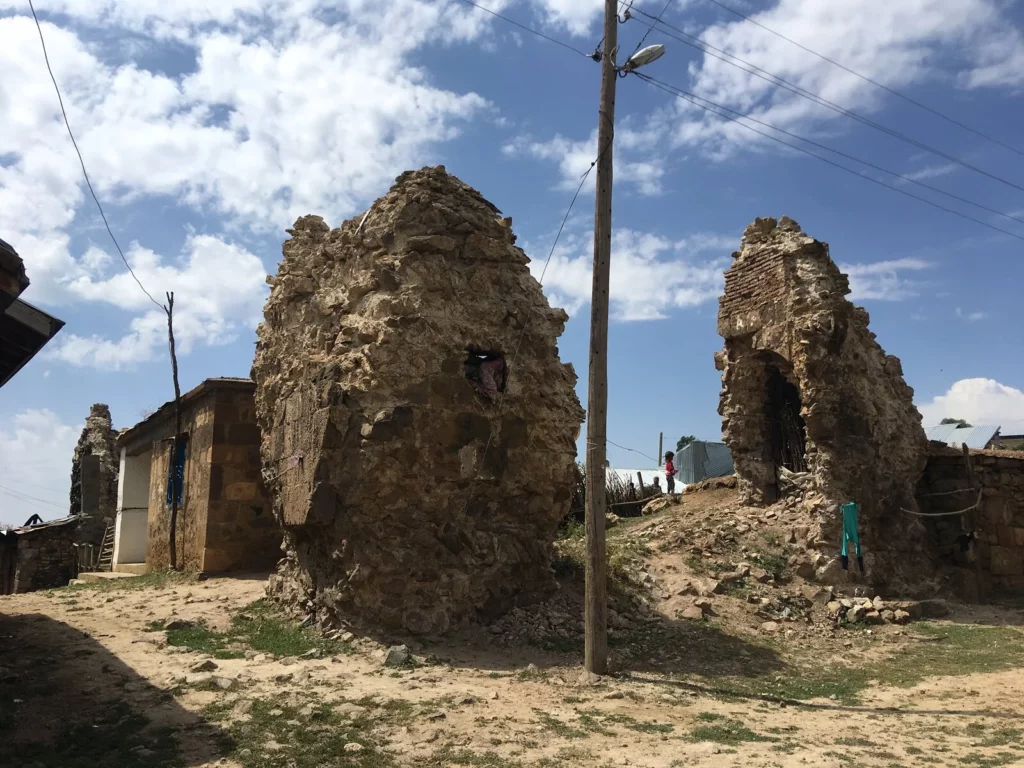
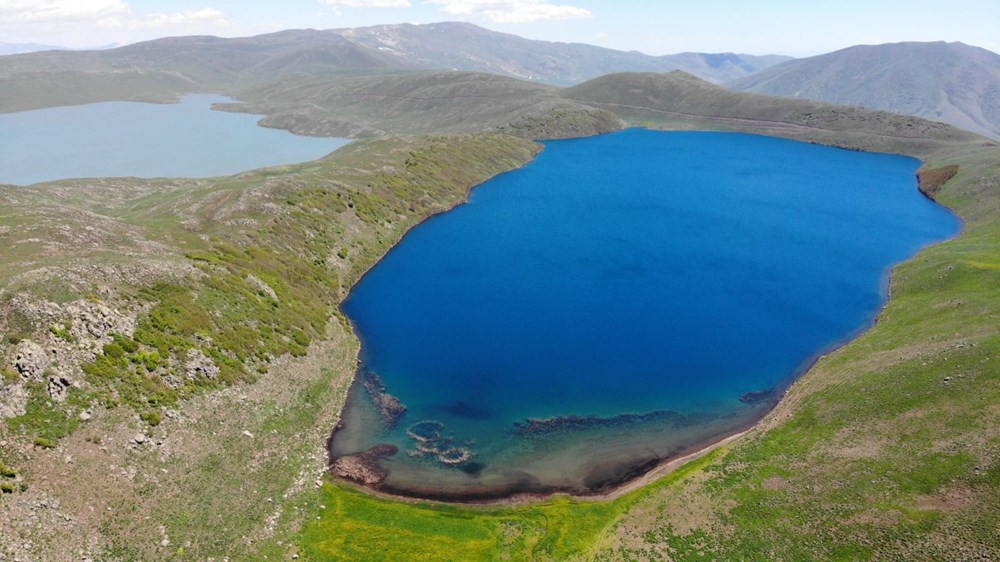
    It was spring. The day was turning to evening; the sun had spread its gold-embroidered rays over the slopes of Mount Nemrut and over the graceful waters of Lake Nazik. The plain of Mush was covered in the evening dusk. A profound, sepulchral silence reigned everywhere, life was dead in the once cheerful, but now desolate World of the Armenians.
    Two Kurdish shepherds — one a venerable old man with a grief-stricken face, and the other a vigorous and swarthy youth – had brought the sheep of their bek to graze at the foot of a huge hill covered with hewn stones, to which the torrential rain and the warm sun had given abundant vegetation.
    Near that hill the green life and the red sun of the brave and valiant young men of Mush, in the bloom of youth, had been extinguished.
    The sheep drank the cold water on the bank of the stream and then sat down row upon row under the shade of the trees.
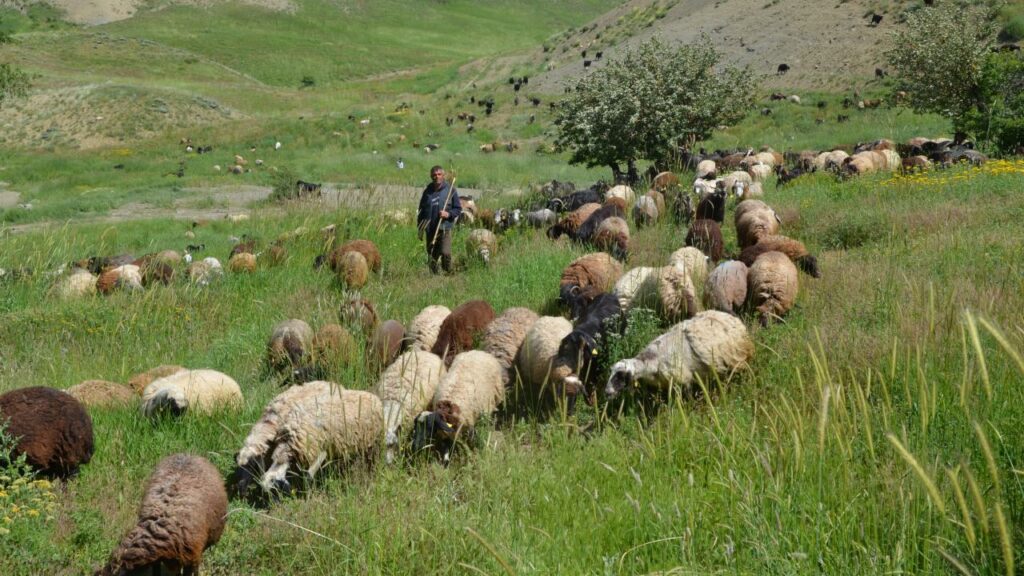

    The two shepherds — apparently father and son — crouched down beside the sheep.
    The old man gazed with a sad look at that huge mound of earth and heaved a deep «ah».
    The youth observed his father’s sadness and asked gently:

    • Papa, what place is this here?
      The old man answered with a deep sigh:
    • Lavo, this hill that you see, here rose the monastery-temple of the Sultan of Mush, chankli divan, Wish-granting Saint Karapet, ah, ah, a thousand ahs!
      The old man fell silent, took up his shepherd’s flute and with a melodious sound began to play the praise of Saint Karapet:
      Lo-o, Lo-o, Lo, Lo …
      Saint Karapet, Saint Karapet,
      Sultan of Mush Saint Karapet.
      Chankli divan Saint Karapet…
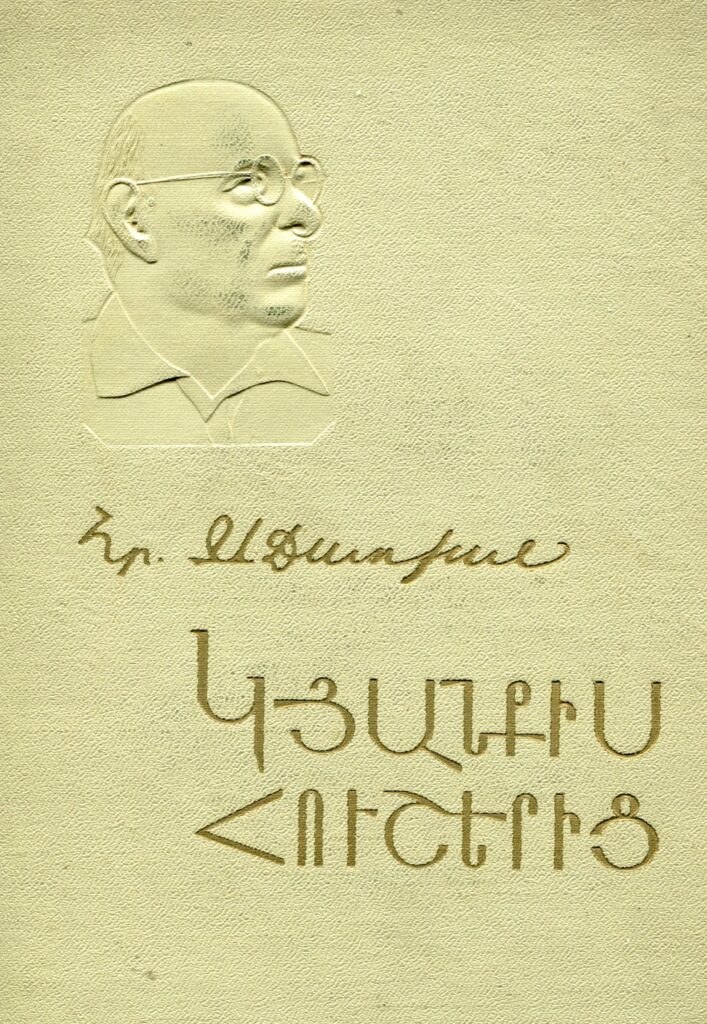
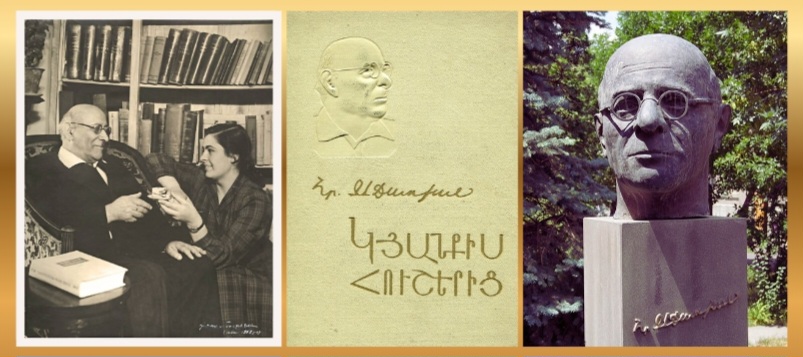
  • «FROM THE MEMORIES OF MY LIFE» (H. ACHARYAN) Part D

    «FROM THE MEMORIES OF MY LIFE» (H. ACHARYAN) Part D

    «FROM THE MEMORIES OF MY LIFE» (H. ACHARYAN)
    Part D

    When in Zeytun in 1895 the freedom-loving sons of Armenia rose in revolt and, besieged — resisted bravely for months on end — without food and ammunition…

    Again a few pages from the memoirs of Hrachya Acharyan — below…

    THE ZEYTUN UPRISING

    During the massacres of the Turkish Armenians Zeytun rose against the Turkish government. The news of the fighting was reported day by day by the telegraph agency and published in Paris. At first things went well, suddenly they worsened, and one day the telegram reported that Zeytun was besieged by the Turks, and that the Zeytunians were in need of outside help.
    This news greatly moved us: a group of young men prepared to leave for Zeytun. I too joined them and wanted to set out for Zeytun.

    Naive youths! Where were we to go? Zeytun is not on the seashore, so that on getting off the ship we could enter it at once. From the seashore to Zeytun, over the tops of mountains, there is an enormous and difficult road. How were we to cross that road, who was to guide us, where were we to find the means of money? Would the Turks not notice us, foreigners? Nobody asked all this. Before leaving I spoke with Meillet and said that I was going to Zeytun to fight. He praised my idea, he said:

    — You are doing very well, every man is obliged to serve his nation and to come to its help in hard days. But would it not be better if you waited a few more days, saw the course of events and then left?

    — There is need of immediate help,- I said.
    — And if the government suppresses the uprising before you arrive?…
    — It cannot suppress it.
    — Why can it not suppress it?
    — Because above all it has no money to feed its army.
    — It will find it: for a government finding money is very easy.

    We waited a couple of days and suddenly a new telegram came:

    «The Zeytunians have seized the kaymakamate and have taken under their rule the surroundings for a day’s journey all around».

    We rejoiced and felt that the Zeytunians had no need of us for the time being.

    At that time the Hunchak party was conducting propaganda and collecting money in favour of Zeytun.

    I do not know whether it was the head of the government himself and editor of «Hunchak», Avetis Nazarbekyants (from Tabriz), who came to Paris in person, or his representative. They convened a general meeting in Paris: all of us Armenians were present. The chairman delivered an impressive speech and proposed to start a collection on the spot.
    I, in an utterly poor condition, in need of a morsel of bread, seized a moment and, catching the senior of our students outside, donated my 20 francs kept for dire need, asking that my name never be given. When after a short break the meeting continued, the senior stood up and announced:
    «One of our student comrades, who has no bread to eat, donated 20 francs on condition that his name never be revealed: take example from him». Everyone was looking at my face, because there was no student more needy than me.

    Months passed. The Zeytun uprising ended successfully. Through the intervention of the Powers the Turkish government made peace with Zeytun, making various concessions. One of the concessions was that the leaders of the Zeytun uprising (6 people) should leave freely for Europe.

    Indeed, a short time later they came to Paris. A large meeting was convened, at which the leader of the Zeytun uprising, Aghasi, spoke. He was from Hajin, his real name was Karapet Tur-Sargsyan (number 35), with whom I had been a classmate from class B to the end.

    Karapet Tur-Sargsyan (Aghasi)

    He was a very poor boy: his father was a coffee maker and at the end of Finjanjilar street had so small a shop that only he himself could fit in it: when I went to see him, I had to stand on the pavement.

    So poor was Karapet that he did not even have a shirt to wear, and one day the physics teacher, the Frenchman Blanchon, was not ashamed to throw his poverty in his face and said:
    — Shame on you, you do not even have a shirt to wear.

    And indeed, he wore his jacket directly on his body. From class D he entered revolutionary activity. Rifles were being transported from Europe to the Homeland. One day Karapet showed me one of those rifles: outwardly it was an umbrella, but very heavy: it could be opened and held under the sun or the rain, but at the same time inside it was a rifle. Another time he showed me a walking stick, which, however, when pulled by the handle, became a bayonet or a sword. After graduating from the Getronagan he had left for Cilicia and had put himself at the head of the Zeytun uprising.

    At length he told of the events of Zeytun, whose last episode was the following touching incident.

    After the long siege and battles Zeytun no longer had either bread to eat or gunpowder to fight with: no one knew anything about it. It was necessary to get word to Patriarch Izmirlian and to report the true state of affairs. But all the roads were closed, it was impossible to pass through the ring of the Turkish army. A «woman of loose morals» undertakes to accomplish this task. She enters the Turkish army and, singing, dancing, amusing herself with the soldiers, breaks through the army and passes, reaches Marash and from there telegraphs Izmirlian. The Patriarch at once applies to the ambassadors and brings the work of peace to success.

    The chairman of the meeting was Chopanyan.

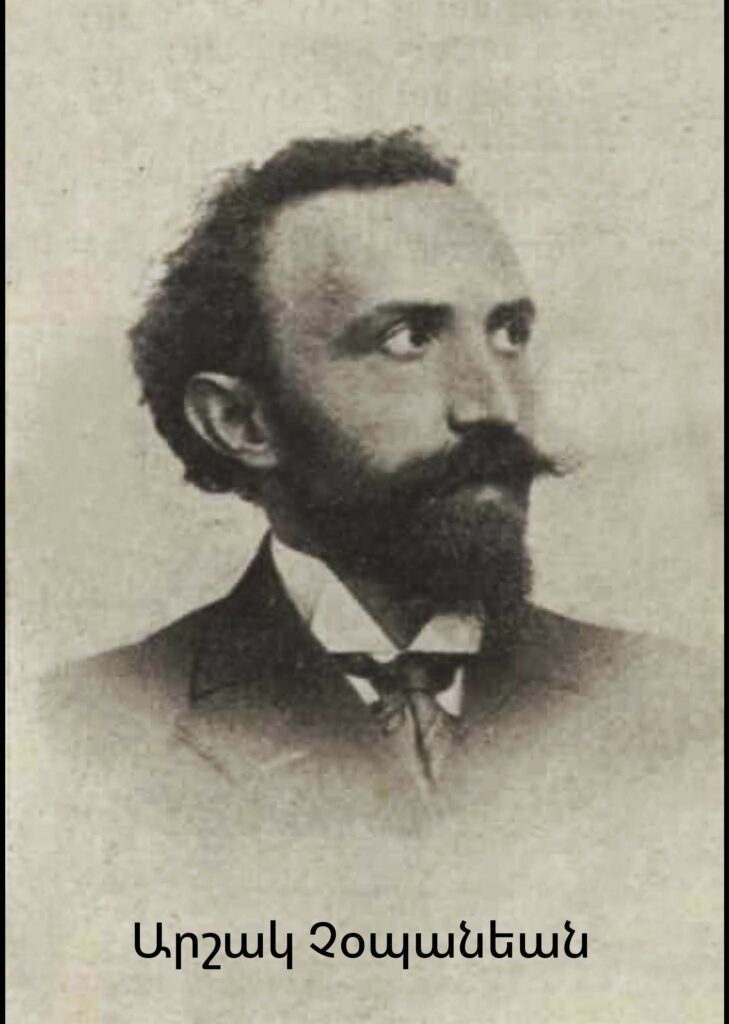
    Arshak Chopanyan

    He asked Aghasi: «What was that woman’s name?» «Mariam»,– said Aghasi. Chopanyan proposed that the meeting stand up and applaud her. Aghasi wrote an extensive history of Zeytun, which Chopanyan translated into French and published in Paris.


    Aghasi went to America. Later I heard that he, remaining dissatisfied with revolutionary activity, had gone into trade and had acquired a paper factory. In a private conversation Aghasi told me that during its whole uprising Zeytun did not receive a single kopek of help from outside: the whole sum collected went into the personal accounts of the editor of «Hunchak». His wife (Maro) was so «patriotic» that she had not given even one holey stocking of hers to the nation.
    My unfortunate 20 francs too had gone into Maro’s pocket.

    A GREAT DEMONSTRATION IN PARIS

    The Armenian massacres, the Cretan uprising and the Greek war made a great stir in Europe.
    The French Chamber of Deputies delivered stirring speeches, liberal newspapers continually wrote articles against the Turkish government. Students held noisy demonstrations and at last a great demonstration was organized, the like of which I had neither seen before nor saw again.
    Notices were posted everywhere and everyone was invited to take part in the demonstration on such and such a day. The meeting place was the square in front of the Panthéon. The demonstrators numbered 150.000 people.
    I too was in the first row. The leader of the demonstrators was a Polish student, who, bareheaded, umbrella in hand, issuing orders right and left, was leading the crowd. Right on his left side I was standing. The crowd of 150.000 went down from the Boulevard Saint-Michel. In front of all the windows and balconies the people, filled with enthusiasm, were cheering.

    Singing and with loud shouts we went down to the Boulevard Saint-Germain. Here, at the point where the boulevards cross, mounted soldiers were standing (in great numbers), who watched us smiling.
    No one touched us. We passed on. Suddenly behind us the attack took place. When half of our army had passed, the cavalry regiment attacked the crowd from the right side, broke through it and split it apart.

    Thus the 150.000 had turned into 75.000. They applied the same method a few more times, whereby the number of our group was greatly reduced. On the Boulevard Sébastopol the police arrested 8 people from the first row, about whom the newspapers had written: «parmi lesquels un Arménien – among whom an Armenian».
    That Armenian was I.
    They took us to the police station. It was rather cold, the policemen had lit a fire, and we too, gathered round the fire with them, were warming ourselves. All the policemen were talking with us like old friends, not a single bitter allusion to the demonstration. I asked what they were going to do with us. «What are we going to do, we shall wait until midnight, after which we shall let you go».
    Before the demonstration, the state had announced that it would punish the demonstrators severely, and if any foreign subject was found among them — it would expel him from the country.
    Midnight came: they wished us a good journey. Later I learned that the number of demonstrators, continually shrinking, had come down to 30; they went to the Turkish embassy, sang, shouted, stoned the windows and went away.

    JAURÈS’S SPEECH

    The students, having rented a large hall, had organized a large meeting there. At first a lady spoke at length in French…
    …After the lady the eminent national figure Minas Cheraz went up onto the stage, who also spoke in French and began to tell of the massacres to which the Armenians had fallen victim in various cities.

    Minas Cheraz

    The hall, that spacious hall, was full from end to end of a select crowd.
    The students had specially invited all the deputies, literary figures, renowned scholars and so on. At the very back — sitting on the amphitheatre were we — the students.
    In one of the first rows of the audience someone suddenly said in a loud voice:
    «All that is a lie».
    Cheraz was shaken, stammered, said in fright:
    «I have gathered all that information from English sources».
    The students made an uproar.
    Behind me stood Artashes Neturyan — one of the pupils of the Getronagan, a class below me, a handsome, tall boy.
    At once he leapt from his place and, stretching out his long stork-like legs, jumping over our heads, reached the first row.
    Below, the students sitting beside this young man had climbed on his back, and to protect himself he had hung his head down.
    Neturyan arrived and from the front gave a strong kick to his nose and mouth.
    In accordance with French law, they called in the policeman standing by the door and announced that this young man was disturbing our meeting: the policemen took him and led him away.

    J. Jaurès — at the moment of one of his speeches

    When Cheraz began to stammer… Jaurès leapt from his place like a lion and with his thunderous voice began such a speech that the whole audience greeted it with jubilant applause.

    Jean Jaurès

    He said:

    • That information is not merely gathered from English telegrams, but is known to the whole world: the Turks have always massacred the Christian peoples, and now too they are massacring the Armenians.
      Let all of us Europeans protest unanimously and demand from our governments — to curb at last these violences of the Turks.
      How magnificent Jaurès’s speech was…
      …The meeting ended and we dispersed.
      Some time later at the university I saw a young man, with whom, having become acquainted, I was talking. Suddenly I noticed that his nose was crooked.
    • What happened to your nose?- I asked.
    • These Armenians of yours did it, – he said,- during Cheraz’s speech, when I remarked that that information was not true, your Armenians attacked me, and one of them broke my nose with a kick.
    • What nationality are you?- I asked.
    • Swedish.
    • What are you saying, the Swedes are an honest people. What reason did you have to stand up and speak against the Armenians?
    • I knew nothing. That day I had gone on business to the Turkish embassy: there they said that Cheraz and Jaurès were going to speak about the Armenians, but, they said, their information about the Armenian massacres was not true. And I too expressed my opinion at the meeting.
    • You have got the punishment you deserved, another time you will not commit such foolishness.
    Hrachya Acharyan
  • «FROM THE MEMORIES OF MY LIFE» (H. ACHARYAN) Part C

    «FROM THE MEMORIES OF MY LIFE» (H. ACHARYAN) Part C

    «FROM THE MEMORIES OF MY LIFE» (H. ACHARYAN)
    Part C

    Though with extremely scant material means — yet with a firm spirit and steadfastness, with inexhaustible creative energy, Hrachya Acharyan was a scholar. After receiving his primary education in his birthplace — Constantinople, he reached Paris — following at the university the courses of comparative grammar, Zend, Arabic, Sanskrit, Pahlavi, and cuneiform.

    In a period cruel for the Armenian nation — in those nightmarish years of the Hamidian massacres, H. Acharyan deepened his knowledge day by day. In 1898 — having completed the courses of the Sorbonne, he leaves Paris for Germany — to attend the lectures of Hübschmann in Strasbourg.
    Returning to the homeland — he devotedly enriches his extensive works of Armenian studies — in Shushi, in Tabriz, in Karin — at the Sanasaryan school, in Nor-Nakhijevan, in Yerevan, alongside his pedagogical activity.

    Again some small fragments from H. Acharyan’s book «From the memories of my life» — below.

    FINAL EXAMINATIONS

    In the month of June of the year 1893 our final examinations began.
    It was the day of victory of our struggle: they exempted us from the examination in the sciences, against which we had struggled. Unfortunately two of those who had struggled had left — without enjoying the laurels of their struggle. There remained I and the pitiful Barnabas. To justify my last adjective, let me tell the following.
    — Barnabas asked me: «How do you distinguish the words «or» and «zor»»:
    I answered — «Or is nominative, zor — accusative»: «How do you understand that one is nominative and the other — accusative»:

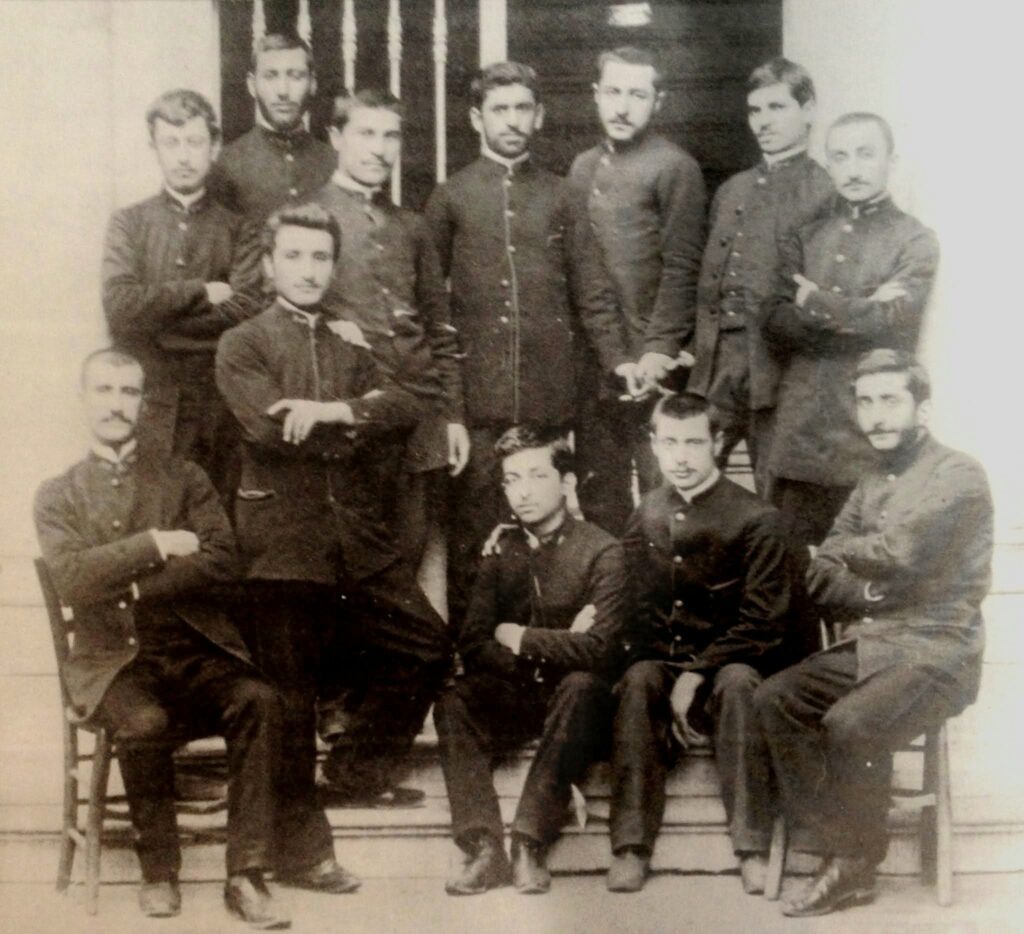
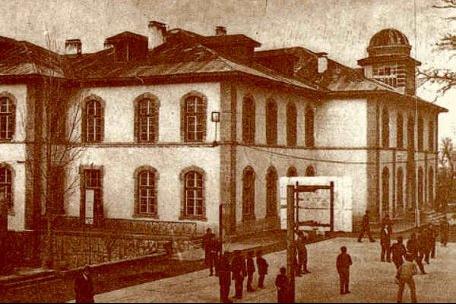
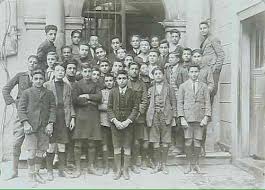
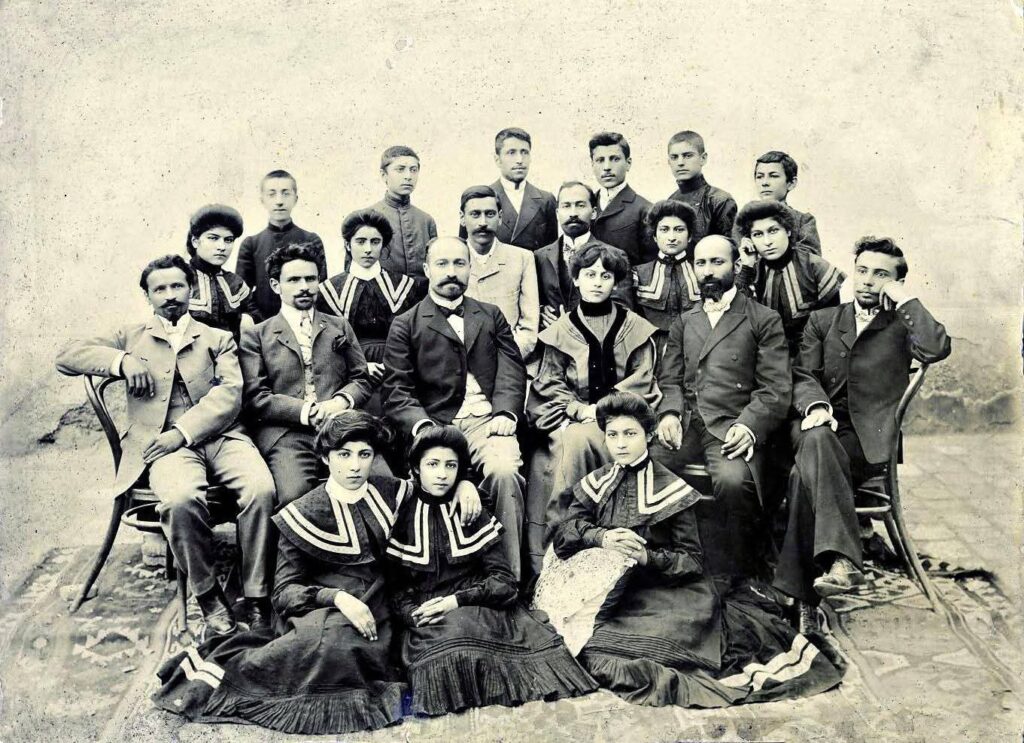
    H. Acharyan with his classmates — in the year 1893 — near the entrance of the Kedronakan school (photo — from the internet)

    The examinations took place in the Caucasian manner; that is — a list of questions had been drawn up, and we drew lots.

    The examinations were open to the public, and anyone could be present and ask the pupils any question he wished.
    I will not describe all my examinations one by one, but a few important ones.

    First — the Armenian language (Grabar).
    Present, besides Karagash and Mostichyan, were a group of outside guests, of whom I remember Father Gabriel Menevishyan, a member of the Vienna congregation, who was sitting right beside Karagash, and Misak Kochunyan (Kasim), who was known as the translator of the «Narek».

    When I presented myself, they proposed that I draw a lot, but I refused — saying:

    — Ask whatever you wish, I am ready to answer.

    Everyone was pleased at this boldness of mine. Menevishyan took the floor and said:

    — What opinion have you about Khorenatsi?

    At that time the question of Khorenatsi’s date was sharply posed. The Vienna congregation was generally hostile to Khorenatsi, considering him a deceitful historian. So too, as we know, judged Karagash. To defend Khorenatsi was considered conservatism.

    I took a middle position, and said that, although our teacher Karagash is entirely opposed to the traditional history, yet to reject everything at once and to subject Khorenatsi to cavilling — is premature.

    — What is he saying,- asked Karagash, whose ears had become rather hard of hearing from old age.

    Menevishyan, laughing, informed Karagash in a loud voice:

    — Your pupil is speaking against you.

    — Let him speak, let him speak,- said Karagash,- Vardan is a good boy.

    Kochunyan, who was sitting beside me, took the floor. He took out of his pocket a small-format «Narek» and, opening a page, proposed that I read and translate it. Seeing that the book was the Narek, I refused to read it, saying:
    — Our teacher Karagash Efendi has forbidden us to read non-Golden-Age books; if he permits — I shall read it.
    — What is he saying,- asked Karagash again.
    Menevishyan again reported what I had said and said that I would await his order.
    Karagash gave permission.
    I began to read the Narek with a pure pronunciation and a sensitive intonation, and when I was about to translate, Kochunyan took the Narek from my hand — saying:
    — To read with such beautiful pronunciation is enough to show that you have understood well; there is no need to translate.
    Thus ended my Armenian examination; perhaps Kochunyan too had difficulty understanding the Narek and wanted to come out of it with honour.

    THE LAZ LANGUAGE

    Below our seaside house in Sariyer there was a large hall (in Turkish — khovush), where a group of Laz fishermen lived. They caught the fish called tuna (palamut ), cut it up in thick pieces and salted it in small barrels. This was one of the export goods of Constantinople.

    The Laz are a Caucasian people, closely related to the Georgians. They have a separate language — Laz. When the Russians took Batumi, the whole Laz people emigrated to Turkey. A part had also come to Constantinople.

    When I compiled the dictionary of roots, I decided to put beside each root its original form, if there is one. Thus, beside the word «patker» — Persian pejker, beside the word «episkopos» — Greek episcopos and so forth. But many words remained without comparison. Since the Laz are a Caucasian people, I thought that they might have some words corresponding to Armenian.

    But the Laz are an indecent people; it was not possible to establish closeness with them. I found an old Laz, named Mehmed. Emigrated from Batumi — he sat on the seashore selling fruit. I went to him and, greeting him, began to converse (in the Turkish language). Grapes were set out before him. I asked what they call this in Laz. He answered — «ghurjeni». I immediately thought that this is our word «hagharj» (of course such an etymology is not acceptable, but I was not yet versed in the laws. Such comparisons some make even to this day, and N. Marr always made them): Near the grapes there was an unripe cluster; I asked what you call this.
    — Zhuri.
    About this word there was no longer any doubt that it is our word «zhur».
    — What do you do with that zhur?
    — We squeeze it and pour it over the dolma.
    — What do you call that juice?
    — Katsákhuri.

    I had asked three words, all three turned out to be Armenian. I resolved to learn Laz, so as to collect the remaining words too.

    I took the Handy Dictionary and every evening went to him, took a chair from the coffee house, ordered a coffee for each of us and, asking words for a few hours, recorded them in my notebook.

    After the dictionary, my appetite was whetted and I decided to learn the grammar too.

    How difficult it was to study grammar with an illiterate man.
    I give one example – I ask how they say «to die». I knew that illiterate people have no notion of the word, one must speak in a whole sentence. He in turn asked: «Who died?». So as to have mentioned someone, I said:
    — «Ali died»:
    — «What are you saying, I saw Ali yesterday; when did he die?»:
    — «I said something false»:
    — «What need is there to speak falsely, speaking falsely is a bad thing»:

    That is how it went the whole time…

    …The grammar was harder than the dictionary; how to ask about cases from a man who does not know cases?
    Continually, day after day, I learned by heart the words I had written down: …

    …One evening I told the Laz that tomorrow I would speak Laz with him. Indeed — I learned the grammatical rules too and the next day began to speak with my teacher in short sentences. The man was astonished and said:
    «Now you know Laz better than I do»:
    To make the book more complete I took down a few songs, as well as — a face-to-face conversation. One evening the Laz turned to me and said: «The Turkish police are pursuing you; what business does he have, sitting every evening and conversing with a Laz? Is he perhaps instilling revolutionary ideas? Look, he said, – when the Laz make friends with someone, they remain friends for ever. Do not come to me any more, flee, if you can, they are pursuing you»:
    I went away and never saw my Laz teacher again.

    The example of Laz shows well how great a role chance plays in our life. If the Laz had not lived below our house, whence would I have formed an idea of the Laz language? And if Mehmed agha had not sold grapes but sold apples, whence would I have known the words «ghurjeni, zhuri and katsákhuri», which served as the stimulus to learn that language? Do you think that I found many other words resembling Armenian? Never at all, those first three words amazingly turned out to be the first and the last. Of the hundreds of words I asked — I barely found 10 words, the most beautiful of which is — omisura = msur.


    Let us continue the game of chance.
    When in the year 1894 I went to Karin, we took the pupils of the Sanasaryan school for the summer to the place called Artadzor, where for a whole month we spent the nights under tents. There too the watchman was a Laz and, delighted at my «Laz scholarship», he became good friends with me.

    The Sanasaryan school in Karin

    On beautiful nights, under the light of the moon, he taught me a few Laz songs, which I also included in my collection.
    When I went to Paris, I presented all the material to my teacher Meillet.
    The Laz language had no literature; nor had it been studied, so Meillet examined my work with pleasure and, as a notable scientific novelty, presented it to the Linguistic Society of Paris.
    I too had the honour of being elected a member of the same Society and my book was published in its entirety in the Society’s collection, giving me too, as a reward, 50 copies of the same book (offprints).

  • «FROM THE MEMORIES OF MY LIFE» (H. ACHARYAN)  Part B

    «FROM THE MEMORIES OF MY LIFE» (H. ACHARYAN) Part B

    «FROM THE MEMORIES OF MY LIFE» (H. ACHARYAN)
    Part B

    From the very first years of study there appeared the wide range of interests of the future much-accomplished linguist, his boundless love for Armenian studies and his great diligence.
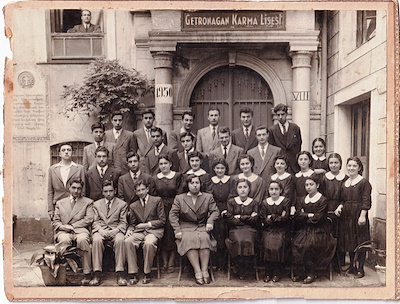
    The four years of study spent at the Kedronakan school of Constantinople (1889-1893) are described in his memoirs by Hrachya Acharyan with particular warmth and enthusiasm. It was those years that paved the way to the renowned European seats of learning — preparing the fruitful activity of the scholar’s long years.

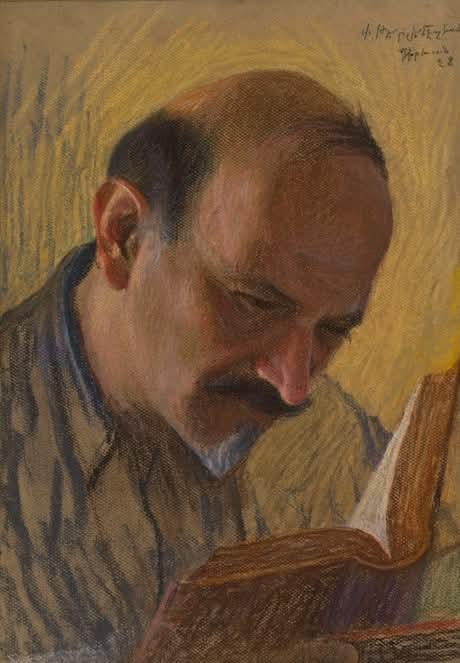
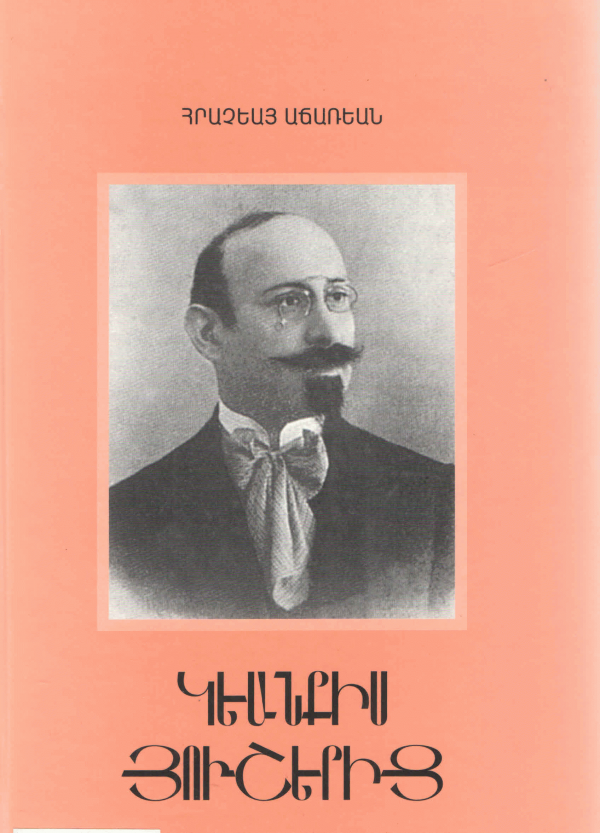
    Portrait of Hrachya Acharyan (1928, author — Panos Terlemezyan)

    «From the date of entry every pupil received a number at the Kedronakan. The first pupil, who had entered the school in 1885, was a boy from Sebastia named Garegin and bore the number 1. I received the number 150, Nerses — 151.
    There were foreign teachers who could not pronounce our names.
    They called us up to the lesson by numbers.
    We all wore a black uniform — with a high collar and red stripes. On both sides of the collar was written in gold letters — «Kedr. Varzh». On our heads we wore a fez. In this form our uniform was not distinguished from a military one, and often the soldiers standing guard in front of government buildings saluted us, especially at night. In the classroom we wore a long grey smock, on whose breast our number was written.
    Pupils who did not know the lesson exchanged their smock with a pupil who knew it, and they themselves received his good mark.

    My entering the second class at one go had a great influence on my life.
    If I had finished the Kedronakan a year later, I would not have been able to go to Europe, I would have stayed in Constantinople during the period of the massacres and perhaps would have become a victim of prison or slaughter, as many of my comrades did»…

    …«One day Karagash brought to class and began to read a paper, in which he wanted to establish that Khorenatsi is not an author of the V. century, but of the IX. I raised my finger and said:

    • How can Khorenatsi be an author of the IX. century, if the author of the VII. century Movses Kaghankatvatsi mentions him?
    • Eh?!,- he went, confused,- who told you that Kaghankatvatsi mentions him?
    • You taught us!
    • You do something about this!
      He meant to say — «you find the answer to that question».
      I did something.
      I took the two volumes of Kaghankatvatsi home, read them in one night and noticed that the history that has come down to us under the name of Kaghankatvatsi is a compilation, in which writings of various centuries are gathered. I also found two principal authors, one — from the V. century, the other — from the X., who edited this book.
      In this way Karagash was saved.
      I wrote an extensive article on this subject and read it at the next lesson.
      Karagash, as a former vardapet, put his hand on my head and blessed me.
      At that moment the inspector Mostichyan saw us through the window and came in. Karagash related the incident in detail and blessed me once more.
      My article was printed in the Venetian «Bazmavep», in the May issue of 1897. The same was written by Doctor of philosophy Manandyan — in July of 1897».

    Another passage from H. Acharyan’s book «From the memories of my life» — below…

    MY COURSE OF STUDY AT THE KEDRONAKAN

    «At the Kedronakan I stayed 4 years (1889-1883)…

    The Kedronakan had opened in the year 1886; it gave its first graduates in the year 1891; of the graduates I remember the first — the young man named Garegin from Sebastia, who was the first pupil to enter the Kedronakan.
    The second was Ghevond Srvandztyants (from Van); of the others I remember the eminent poet Arshak Chopanyan, who already in his school years was publishing literary articles and poems in the newspapers — under the pseudonym «Fantasio»; in his last year he published a novella — entitled «Paper glory». Then a notebook — entitled «Tremors» and later a volume of poems named «Chimes of dawn».

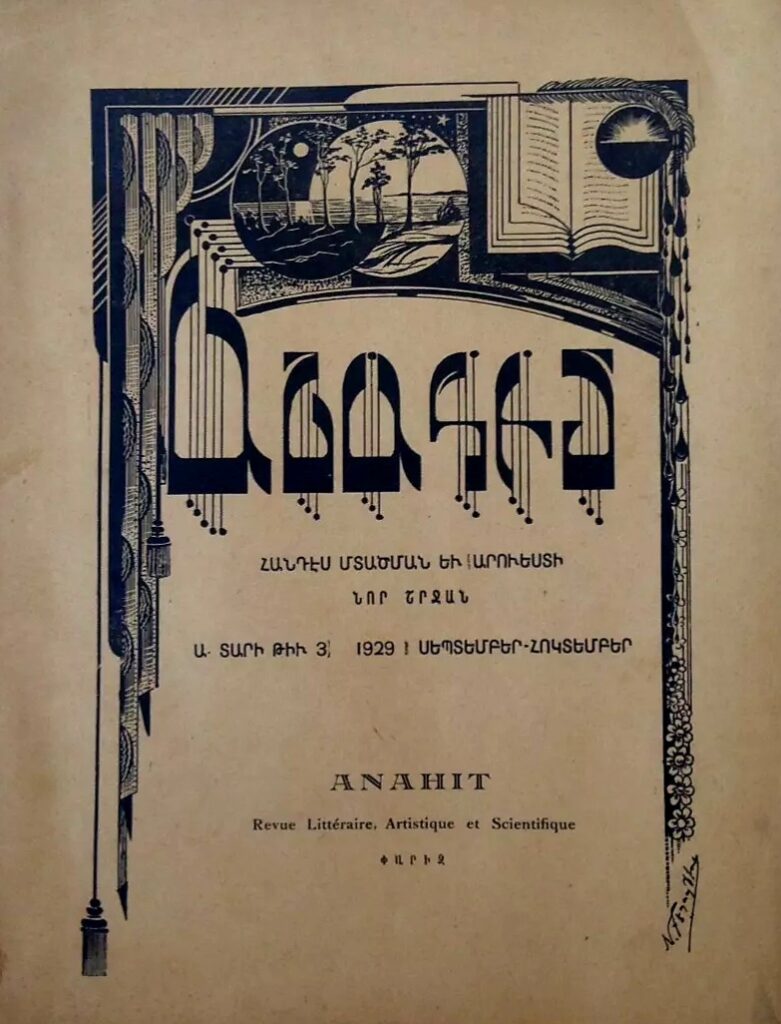
    After that he went to Paris, where he published the journal «Anahit».

    I also remember the young man named Vagharshak, who after graduating went to Paris, studied medicine and became a resident physician of a hospital; a post that few manage to attain.

    A pupil from Samatia named Mihrdatyan also studied in Paris and became a notable engineer.
    But the most notable of all was Yervand Manvelyan, from Hasköy, who also went to Paris — to study at the university. The following interesting incident is told about him.
    In Paris the professor lecturing on chemistry writes a group of formulas on the blackboard. Among the students is also Manvelyan, who suddenly, jumping up from his place, shouts: «C’est faux!» (it is wrong): All the students begin to whistle and to beat the floor with their feet. The professor silences everyone and calls Yervand to the platform and asks — «What is wrong?»:
    Yervand, explaining all the formulas, stops at one point and says: «Here it is wrong». The professor looks for a long time and says: «You are right»:
    All the students are astounded. The lecturer asks:
    «Who are you?»:
    — «Je suis Arménien», (I am Armenian),– Yervand answers boastfully,- I am a pupil of the Kedronakan school».
    After that the lecturer takes Yervand under his guardianship and follows him attentively until graduation.

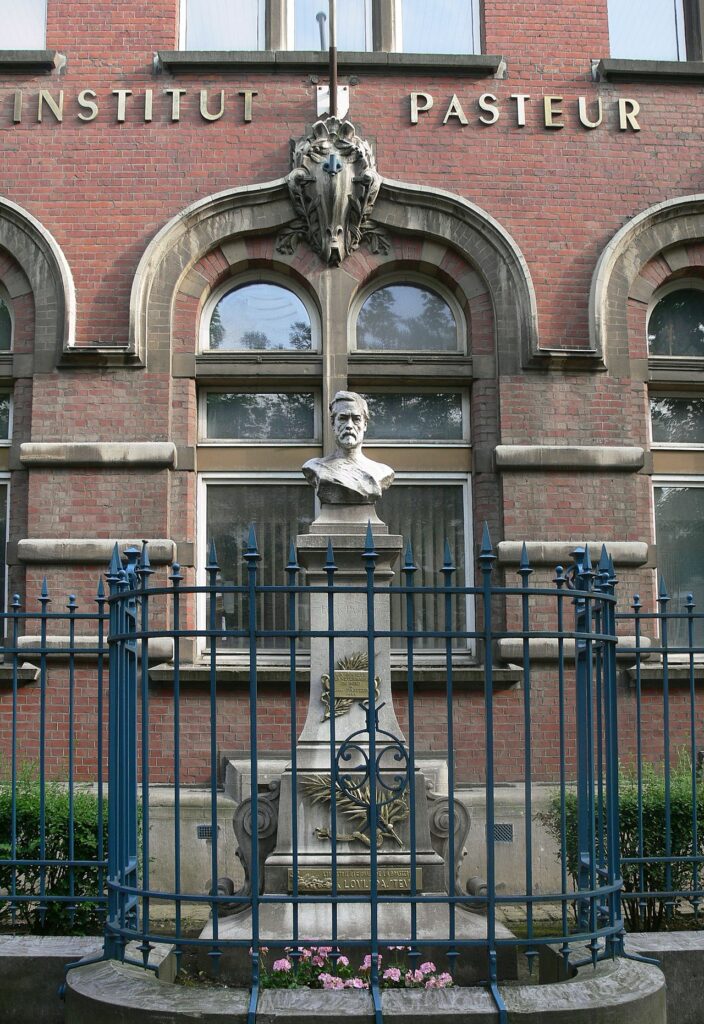
    After graduating Manvelyan enters the Pasteur establishment (Institut Pasteur), whose name is already venerable.

    Pasteur was a French scientist who devised in medicine a particular system of treatment, which is called Pasteurian after his name. With this system he first found the remedy for curing rabies, which has spread throughout the whole world. But Pasteur was unable to find the microbe of rabies and bequeathed that one of his pupils should find it. Yervand Manvelyan found that microbe. He also found numerous important secrets about the structure of the brain and became a notable scientist. A couple of years ago our Academy invited him to Yerevan to give a few scientific lectures, but he was unable to come»…

    «… Our teacher of Armenian was the worthy-of-memory Anton Matatia Karakashyan, whom we called by a short word Karagash Efendi (at that time by saying Armenian we understood Grabar; while we did not learn the grammar of Ashkharhabar, but only wrote compositions). Karagash was one of the Mekhitarist fathers of Vienna; he was one of the first authors of the discovery of Golden-Age Armenian; later he — adhering to Büchner’s materialist (materialistic ) philosophy, had left the habit and become a layman.
    He knew Grabar as no one knew it. The most unusual word — when we asked, he immediately began to enumerate that the word is used in such and such a chapter of Eznik or in such and such a passage of Chrysostom, and immediately recited those attestations by heart.

    Unfortunately in our time there was no Grabar literature; history books were forbidden by the state; Chrysostom, Ephrem the Syrian, Basil’s Hexaemeron, Eusebius and similar books were not available on the market — because they had been printed in Venice.
    All that we had learned only from the history of ancient literature, whose teacher was Karagash Efendi himself. Our textbook was Eznik, which we had almost learned by heart.
    Besides that, we continually made Grabar translations of La Fontaine’s fables.
    Karagash — being a fanatical Golden-Age man, did not allow us to read any later Grabar book, and as for the books written by the Mekhitarists of Venice, he hated them with a passion.
    The «Telemachus» translated by Hyurmyuz he called «the language of persuading a whore».
    Ashkharhabar was for him a monstrosity:
    «What does «under the power» mean? «under» — what is it? «under»… say «ynd ishkhanutyamb»:
    The dropping of prepositions is vulgarity; that is Turkish».
    Such extreme words, in other cases inadmissible, Karagash used, but we listened to his words with great reverence.
    He — following Büchner’s materialist philosophy, was godless:
    «What is God?»,- he would say and, pointing to his tobacco tin or to other objects, would say: «Here, this is God, that too is God, everything is God»:
    That is — matter itself is God, and God himself is matter.

    «Karagash»

    He was a decrepit old man, but still had all his wits about him. Boundlessly kind, he taught not as a teacher, but as a comrade. During the lesson he gathered us all around him and studied with us that way.
    He was exceedingly naive. One day, one of the pupils standing on his left whispered in Karagash’s ear that the pupil standing on his right side was a thief.
    Karagash looked at him in fear and, taking his watch out of his right pocket, put it in his left pocket.
    Another day, on entering the classroom, he had brought in his hand something wrapped in a red handkerchief and, as if secretly, quietly put it under the lectern and began the lesson.
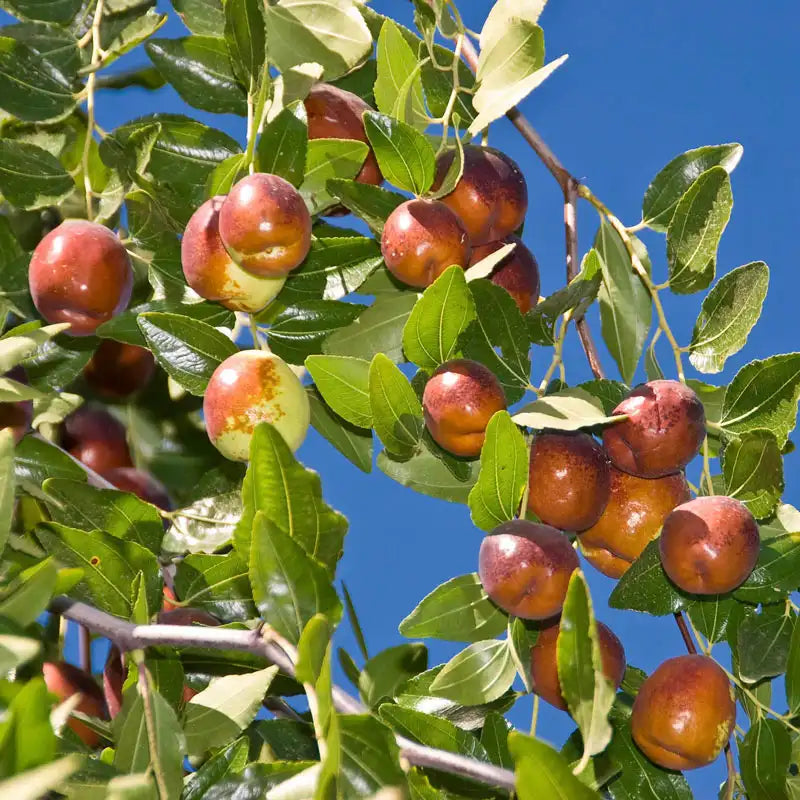
    One of the pupils looked and saw that what he had brought was jujubes.

    Jujube

    In a few minutes we ate up all the jujubes.
    When the lesson ended, and Karagash, having forgotten his jujubes, was leaving, «Karagash Efendi, you had put something here»,- we called out.
    Karagash remembered and came back, bent down under the lectern and, seeing only the empty handkerchief, said:
    «I had brought something here».
    «What thing?»,- we asked — as if knowing nothing.

    Karagash was ashamed to say, but in the end said that it was jujubes.
    «Oh, why didn’t you tell us, we would have kept them; there are many mice here, the mice have carried them off».
    That is how naive he was»…

  • «FROM THE MEMORIES OF MY LIFE» (H. ACHARYAN)  Part A

    «FROM THE MEMORIES OF MY LIFE» (H. ACHARYAN) Part A

    «FROM THE MEMORIES OF MY LIFE» (H. ACHARYAN)
    Part A

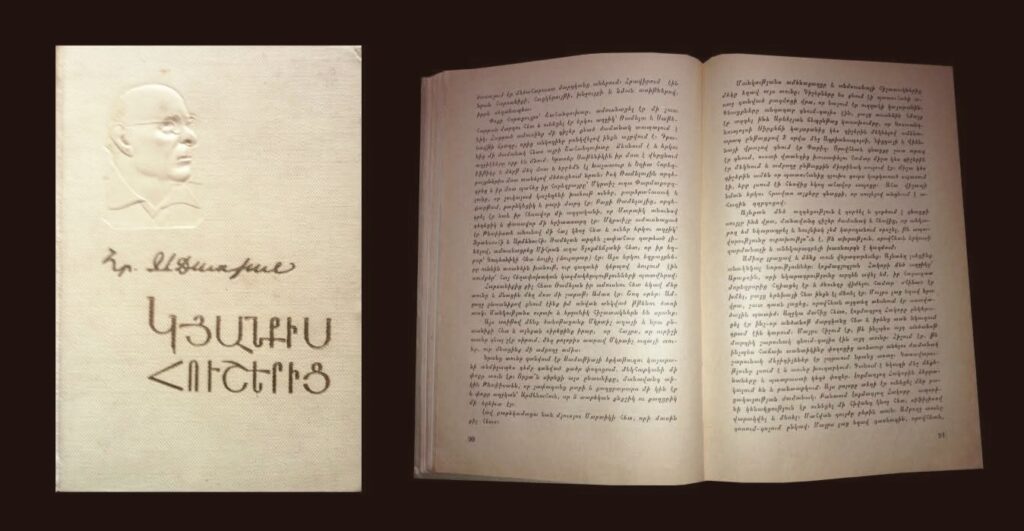
    With his scholarly activity of nearly half a century, the Armenian linguist, academician of the Academy of Sciences of Armenia Hrachya Acharyan excavated the treasury of the Armenian language and left to the generations the fruits of his prolific work in Grabar, linguistics, comparative grammar, dialectology, etymology and other fields.

    Born in 1876 in the Samatia quarter of Constantinople, in a craftsman’s family, H. Acharyan received his primary education in his birthplace — at the Kedronakan school. In 1895 the paths of higher education brought him to France — to the Sorbonne University of Paris, from where he returned to the homeland — to continue his fruitful scholarly and pedagogical activity in various cities…
    In the memoirs he left at the sunset of his life, the distinguished Armenologist gives valuable information about numerous Armenian and foreign intellectuals and public figures.

    «As a head and as a heart — I foretold a great future for that called pupil of the Kedronakan… he has everything to advance, to grow great… for he is a poet too. And contrary to the saying — instead of the word it is the writing that will fly and come to us». (Yeghia Temirchipashyan — about H. Acharyan)
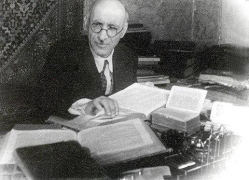
    Some passages from H. Acharyan’s book «From the memories of my life» — below…
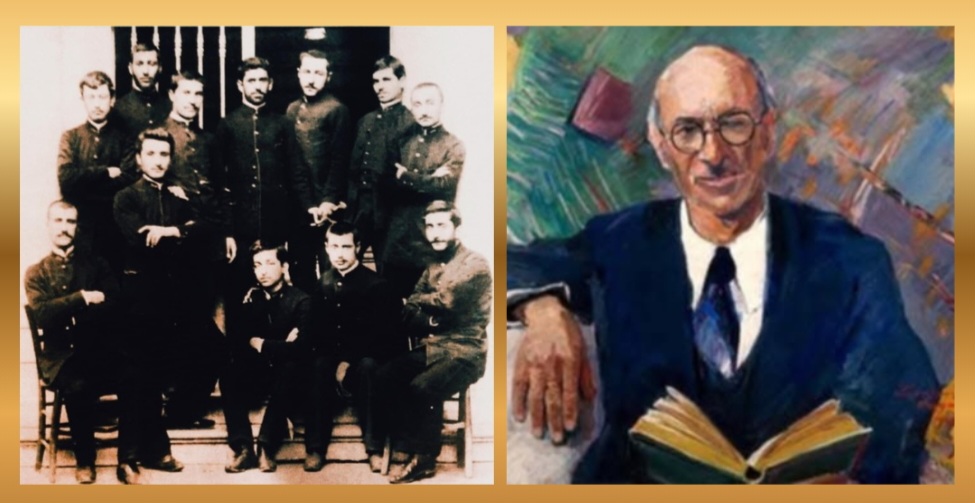
    MY COURSE OF STUDY

    Many times I have thought about what was the reason that I entered this profession. That is the same as if we asked why some choose this and some that profession. Is the inclination innate, or does it arise from various conditions?

    I think that conditions have a very great influence, as will appear from the following lines.

    My mother was entirely illiterate. So too was my elder sister, who until her death did not recognize even the letter A. My father was semi-literate, but very hard-working and eager to learn. Two small anecdotes will show the degree of his literacy.

    One day, coming to the school, my father asks the trustees: «How is my son doing in his studies?». They answer: «Your son is very studious». My father says: «A pity, instead of being studious, if he were working — it would be better».

    Another time I bring home the school marks I had received. With us at that time the pupil’s mark was written in words and not in figures. On my sheet, against the subjects, were put several «excellent», «best» and one «good». My father — reading that sheet, remarked to me: «Why do you have only one «good», the others are «best»»:
    I was afraid of exactly the opposite, because «good» was lower than «best», while he, it was astonishing, thought the opposite.
    I said: «Father, «best» is higher than «good»»:
    –«Whom are you trying to fool, «lavaguyn» — that is, merely having the colour, guyn, of lav, good».
    I explained at length, but he was not convinced and only outside, asking in the coffee house, did he learn with astonishment that «best» is higher than «good»»:

    «… My mother had had a cousin, the son of her paternal uncle, who was a priest and for that time was considered a learned man. He had died, and one of his books had fallen to my mother as an inheritance. It was a small-format «History of the Armenians», printed in Venice. I do not remember the author’s name and the year of printing, but I remember the outward appearance of the book well.
    My father — loving the History of the Armenians exceedingly, continually made me read it not only during rest, but also during work.
    In his shop, which at one time was in our garden, or when he worked sitting at the table in the room, I too, sitting opposite him, read that book. When the book ended, he made me read it again. And so on and on.
    So that I can say that I read that book several dozen times. At the end of the book was placed the list of the names of all the patriarchs and kings of the Armenians — from Hayk to Levon VI. I had read it so much that to this day I know that whole list by heart and can repeat it like a machine.

    Thus was born in me an inextinguishable love for the history of the Armenians, which later passed to general history.
    I had read the history of every nation that I had been able to obtain. Every book in whose heading «History» was written always had an attractive charm for me, and I read it with great love — even if it were «History of birds».

    My father had bought for me the French dictionary of Larousse .
    In the second part of that book, as is known, we find a large list of names; there are marked the names, dates and lives of the kings of various countries, in the alphabetical order of the dictionary. I, a pitiful naive child, turning all those names into a regular list by countries and by chronology — had compiled a work. And for me the greatest pleasure was to read, for example — the chronological series of the kings of France; and so — of other countries. As if those countries did not have their own history book or manual.

    Thus, then, in my childhood, having as my guide that little volume of the History of the Armenians, I had created in myself a love for Armenian and general history. It was that love which turned from history towards the languages of nations; in other words — from history I passed to linguistics.

    For language too I had no guide. At the end of our street there was a Greek grocer; I asked him to give me the Greek alphabet; I learned all the letters and at that young age of mine read Greek freely.
    A few streets away there was a Jewish pedlar, from whom we sometimes made purchases. The pedlar was a venerable and kind old man with a white beard. Spectacles on his eyes, head bent over the books, and according to their custom — always rocking, he read. I asked him too to give me the Hebrew alphabet, with their names and values. He wrote the 22 letters on a sheet, and I, learning quickly, read Hebrew too.

    In our school as a foreign language, besides Turkish, we learned French. But there were schools where instead of French they taught English. Such was the school of the Nor quarter of Samatia, where our neighbour’s son — Yervand — was a pupil. On Sundays he came to our house and, sitting on the threshold of the door, studied English with me»…

    «I had not yet passed on to German and other languages. I learned Grabar very well and wondered, as I still wonder to this day, why others have so much difficulty learning Grabar»…

    To be continued…

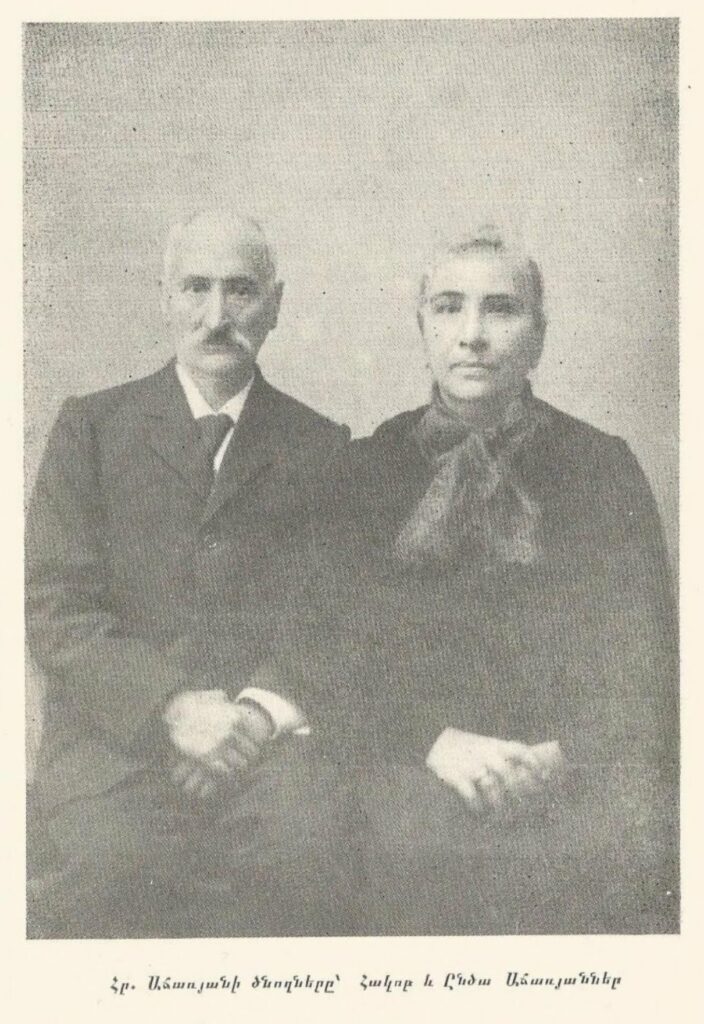
    In the photo — the parents of Hrachya Acharyan

  • «KHOJA CAPITAL»  PART C

    «KHOJA CAPITAL» PART C

    «KHOJA CAPITAL»
    PART C

    ARMENIAN CLERICAL DIPLOMACY

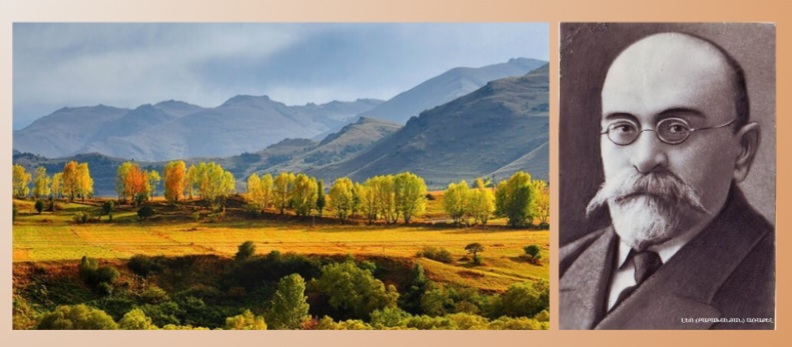
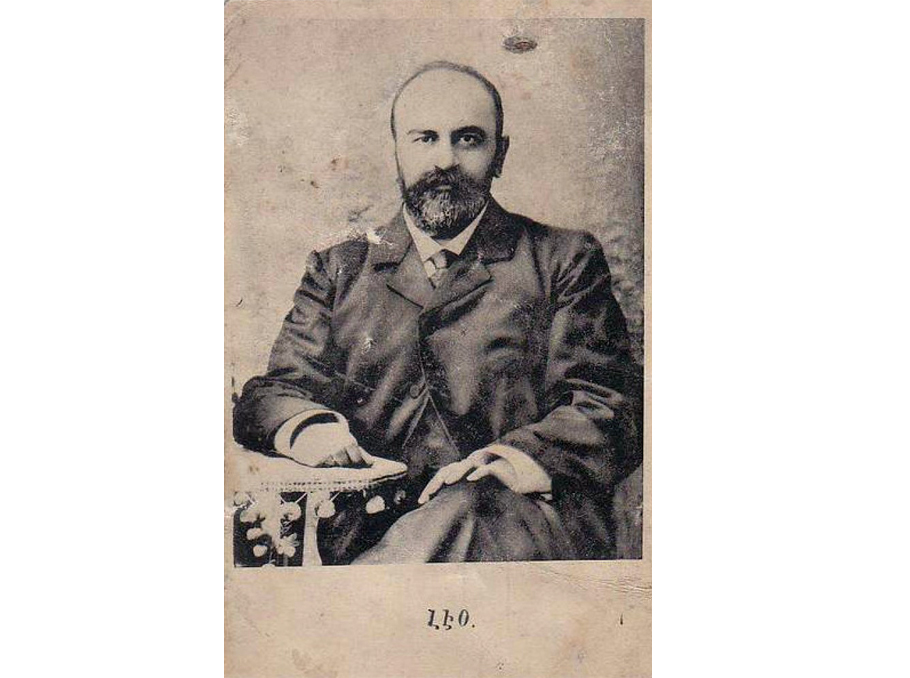
    Born in 1860 in Artsakh — beneath the sheer cliffs of Shushi — in a large family of the village of Karin Tak, Arakel Babakhanyan — Leo, made an enormous contribution to Armenian culture with his historical studies, valuable works and publicistic articles…

    Continuing the previous publications — one more passage from Leo — below…

    «…And the immature Armenian politicians did not know why it turned out this way. They thought that it was the emperor’s counsellors who were bad men, and that this was why their Christ-loving begging had such a sad end.
    And again there remained the faith that co-religiosity with the West is the only salvation that the Armenian people can expect.

    Let us note here one more peculiarity of Armenian clerical diplomacy — the formulating of slogans in the name of all the Armenians.
    «Death with piety rather than life with apostasy» – this meant that a whole world must die — for Christianity or, more precisely, for Illuminatorism.
    And it turned out that a handful of people made themselves master and disposer of the physical existence of a whole people and delivered it to slaughter and extermination — before an adversary far stronger than it.

    The representatives of Armenian clerical diplomacy did not know and have never known how to count all the victims they have snatched from the Armenian people.
    They have been impetuous, short-sighted, irresponsible, and for this reason they have carried out the holocaust of a small and weak people with a calm conscience.

    Yeghishe — in order to justify and substantiate the unfortunate and disastrous uprising of the Vardanants that he glorified, assures us that the whole world wanted to die for its religion, and that everyone ran towards the battlefield, like sheep — towards salt.
    This is poetry, which has never been lacking in clerical diplomacy — for deceiving both itself and others.

    Ghazar Parpetsi gives a description of the same war of the Vardanants, and there we see whole masses of serf peasants driven to the field of Avarayr by order of the feudal princes, who flee from the field before the battle has even begun. (Gh. Parpetsi, p. 153):
    Feudal Armenia was laid in ruins by that uprising, which the Persians suppressed with all cruelty. But clerical diplomacy was neither terrified by so many victims, nor did it take instructive lessons from the great popular disaster.
    In the Church there was a book that formed one of the greatest supports of the clergy, and whose name was the «Tonatsuyts»: Into that book was inserted the following commemoration:
    «Of the holy Vardanants, our valiant ones, the one thousand and thirty-six martyrs, who were perfected in the great war»: (Calendar of Etchmiadzin, 1927, p. 35):
    Clerical diplomacy granted this favour to the slaughtered people and thereafter could calmly continue its conduct. (Note. The same Calendar, 1464 years after the war of the Vardanants, treated the massacres that took place in 1915 as follows: «National feast. Memorial of the myriad martyrs during the world war; in the churches of Armenia a requiem is to be performed»)…

    …«What we have seen up to now is repeated thereafter too in the course of long, long centuries. Nor can it be said that the clergy played such a leading role with regard to the political destiny of the country owing to the circumstance that it — in the periods of the decline and destruction of political power — was the official representative of the Armenian people.
    First — this circumstance is refuted by our 4th and 11th centuries, the latter in the kingdom of Ani, when there existed a king (Gagik), but he was a plaything in the hands of Catholicos Petros, a self-seeking and disgustingly greedy cleric, who, united with a few feudal lords — sold that provincial independence of Armenia to the Byzantines, and yet, in clerical literature he has not only not received any reproach for that loathsome deed, but has even been adorned with the halo of a miracle-working saint («Getadardz»).

    Second — the question is not being or not being the representative.
    The question is the principle, the content, the understanding, the world view.
    In the 19th and 20th centuries we have a number of facts when the leaders of clerical diplomacy are not even clergymen, but laymen, even such as considered themselves «socialists»:

    It remains for us — in order to have preserved historical accuracy with regard to the whole duration of the phenomenon, to take the term «Byzantinism» and put in its place «Christian Europe». The essence, from this change, will not suffer a hair’s breadth for either side, and the situation will remain eternal – one side, that is — Armenian clerical diplomacy, a weeping beggar — «for the love of Christ», and the other side, Christian diplomacy — lying, deceitful, treacherous, making a trade of the blood of nations, itself a whore that sells itself.

    How malignant a vice the cult of Armenian clerical diplomacy was, – this circumstance too Armenian history has emphasized with a number of major facts.
    The first fact we have seen – King Pap — a victim. After him too, in Armenian reality there appeared figures who understood that the political interests of the country loudly command to let go of the wretched prop of co-religiosity and to find a language of reciprocity with the neighbouring strong, dominant, but non-Christian states.

    After Pap the second place belongs to Theodoros Rshtuni (7th century), who — disgusted with the treacherous policy of Byzantium, allied with the Arabs — on terms very advantageous for Armenia — against Byzantium, but for this the Grecophile catholicos of the time — Nerses the Builder, raised enmity against him.

    A more glorious example is presented by Prince Mleh of Cilicia (12th century), a very exceptional phenomenon in Armenian history. He allies with the neighbouring Muslim states, with their help wages a victorious war against the local Latin principalities. This was the only man who, casting aside religious prejudices, by that very means grew so strong that he waged wars even against Byzantium and was never defeated, until Emperor Manuel was forced to make peace with him.

    But Armenian clerical diplomacy could not bear such a phenomenon, and Mleh was killed by the hand of his own people, having barely been able to exercise his rule for five years.

    Another example, still more astonishing: King Hetum of the same Cilicia (13th century,) who, in order to free his country from the world-devastating Mongol invasions — concluded an alliance with the great khan of the Mongols and for this made an arduous and unusual journey from the shore of the Mediterranean Sea to Karakorum, the capital of Mongolia. Hetum undertook to help the Mongol armies with his troops, but in return preserved the peace and independence of his state.

    The Armenian people, then, was not entirely deprived of the ability to see and weigh things at their true value and significance. But these testimonies that we have cited remain isolated and separate, as incomprehensible, persecuted exceptions under the complete and unlimited dominion of Armenian clerical diplomacy».

  • «KHOJA CAPITAL»  PART B

    «KHOJA CAPITAL» PART B

    «KHOJA CAPITAL»
    PART B

    ARMENIAN CLERICAL DIPLOMACY

    For nearly half a century, with his painstaking work and exceptional endurance, Leo, concerned with the destiny of his nation, excavated the known and unknown pages of Armenian history — examined historical events comprehensively and presented his conclusions in multi-volume studies.
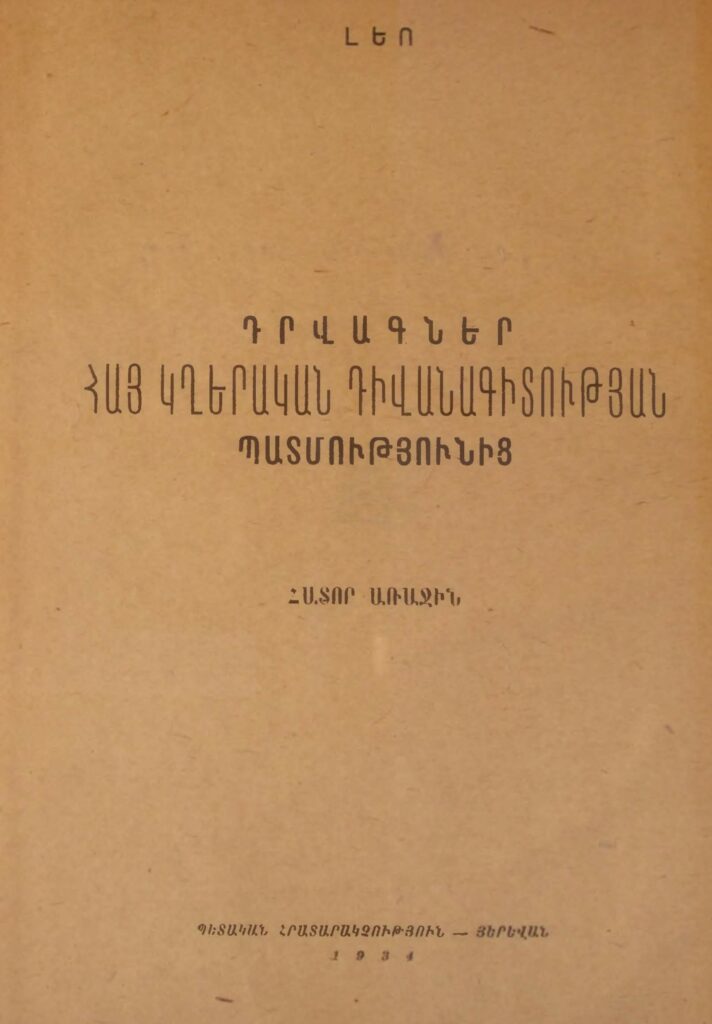
    A few more pages from the book «Khoja Capital», published in Yerevan in the year 1934 — below…

    «…That middle world of Armenia was becoming a European semi-colony, developing its own aristocratic way of life, civilizational demands and so on, while around it, on the highlands, the pastoral economy reigned in its poor primitiveness, which reached such a degree that there were places where the cooking of meat was still unknown (Khorenatsi, Book II):

    But in the first quarter of the fourth century the Roman state was undergoing a radical change. Emperor Constantine, wishing to free the throne of the emperors from the republican traditions of the city of Rome and thus to strengthen the principles of autocratic power, raised Christianity to the rank of state religion, and then moved his throne from Rome to Byzantium, which was also called Constantinople after his name.
    This was an exchange of two worlds. Pagan Rome, with its unbridled way of life, entirely unbelieving, was leaving the stage of history, and in its place there entered the stage the new religion worked out by the bishops, with its fanatical intolerance and ascetic dull-wittedness, which had grown particularly dense in the Greek milieu and were to conquer also dissolute and sated Rome.

    Giving Christianity a state-conquering force, the emperor also took care that the new church should spread in other countries too, first of all, of course, in the vassal countries belonging to the empire. The vassal kings of Armenia and Georgia received the order to accept Christianity and make it the official religion: It is understandable that such a proposal could not be ignored, especially by the Armenian Arshakunis, whose fortune depended entirely on the Roman Empire.

    However, Christianity was not an entirely unfamiliar religion to Armenia. It had long since made its way into that country, was spreading slowly, without causing great noise and movements. Perhaps, if left to the course of natural development, it would have succeeded in accomplishing the conquest of the country by means of peaceful propaganda. This was entirely possible for that new cult, because it was Syrian Christianity, which, at the same time as entering Armenia, had made its way even into Persia as a peaceful and neutral religious phenomenon and had made the Sasanian capital Ctesiphon the centre of its preaching, founding a church and an episcopal see there.
    The only force and charm of the Syrian mission was the wandering commercial capital of the Syrian merchant, riding on whose shoulders the new religion went on spreading imperceptibly as far as India.

    The Armenian Arshakunis paid no attention to that poor Syrian Christianity. There was Christianity and Christianity.
    What was needed was not a merchant, but an imperial Christianity, a powerful state armed to the teeth, whose language is not so much the Gospel and the Psalm as iron and fire.
    What was needed was Greek Christianity, which was coming in the East to replace Roman imperialism. This would be, above all, the best defence of the dynastic interests of the Armenian Arshakunis — against the Sasanian danger.

    Thus was the great dynastic necessity being created in the Ararat centre. However, its realization was not at all easy. There could not be unanimity in such a many-headed feudal country, where the attraction of backward economic forms towards Iran, the different stratifications of cultural levels and so on were so great. What was entirely understandable and desirable in the heart of the dense urban economy of Ararat could be entirely obscure and alien in the fertile pastures of Armenia, where the nakharar economies were — consisting of great flocks:

    It was on the ground of this great necessity, amid great perplexities and waverings, that there quickly emerged from obscurity, took the situation into its hands and began to act a family that has not left a particular family name; it is sometimes called Parthian, sometimes — Pahlav, but more often — by the name of its founder — the family of Gregory, and since this Gregory is deified in ecclesiastical literature with the title «Illuminator», it has become customary to call that family «the family of the Illuminator»:

    It was he who introduced the Christianity of the emperors into Armenia and carried through the difficult task of consolidating the new state religion. But this success was not for the salvation of the Armenian Arshakunis, nor did it ensure the economic advancement of the country. On the contrary.

    Historical criticism will never succeed in clarifying the true origin of this Gregory: Although he has his history, around which a whole literature has formed, yet that history is so cluttered with legends, miracles, efforts to stupefy and deceive human naivety, that one can only make conjectures about the truth, among which not even uniformity can be found.
    By such pitiful means the Armenian clergy has already succeeded in accumulating veiled «holy» lies and frauds peculiar to the clergy of all countries and times, and by their multitude in leading prejudiced mankind astray and making Gregory a kind of demigod — as a reward for the great efforts thanks to which Armenia became a Christian state.

    But the origin of a figure so infinitely exalted and glorified may also not interest us: What matters is not whether he was perhaps a Greek, an Armenized Parthian, or from some other nation and country: What matters is the work he did. And in the assessment of this work we are not so helpless.
    The very history that has made him a hero and a saint — burying his person in admiring hymns of miracles, that same history, that same Agathangelos with his endless verbosity gives us much material to learn what kind of man was Gregory, the Christianizer of Armenia.

    First of all we see that this is not the peaceful and meek disciple of the Christ invented by the poor, the deprived and the humble in general, but a merciless and cruel commander of the churchified, that is — militarized Christ clothed in sword and fire, in whose hand there is only one means of persuading and subduing – armed violence.
    The history of the conversion of Armenia is a history of military campaigns. The king, whom ecclesiastical panegyric has also greatly puffed up and inflated, is a perfect nonentity before that man; he has given him his troops and weapons, and has himself stepped aside; probably content that the will of Constantine is being carried out and the throne of the Arshakunis in Armenia is being strengthened. Such an incompetent character was bound without further ado to be overcome before the energy, the dexterity and especially the great organizational ability of Gregory:

    And the «Christianization» of the country was carried out easily, with lightning speed.
    It was not an ideological movement introduced among the popular masses — to bring about conviction and consciousness.
    It was an order, a formal ceremony.
    Gregory illuminated not with the word, with persistent and long preaching, but — with fire and iron.
    In pagan Armenia the temple was a feudal institution, strong and authoritative, especially in that it contained accumulations of riches.
    To destroy those temples utterly, to kill or put to flight their officials – this is what «spreading Christianity» meant for Gregory, when he, at the head of the royal troops, flew from one place to another — to demolish temples and put Kurms to flight.
    Agathangelos continually records the divine missions of his hero with such expressions. But he does not forget either to repeat continually and monotonously that Gregory did not destroy the gold and silver of the destroyed temple, but took it to use for various purposes.

    The secret is out.
    Sacred plunder – here is the main thing, the axis of the mission, the great guarantee of success.
    The wealth of the temples, of course, was not only metallic.
    In the feudal order the greatest wealth was land; with the same insatiability the lands belonging to the temples were also plundered. It was by means of the distribution of these riches that Gregory organized the Christian church in Armenia, its officialdom, its hierarchy and the political force on which he was to lean.

    This entry of Christianity into Armenia must be regarded as a whole feudal movement, in which the traditional orders of the distribution of landed wealth are turned upside down — destroying the old lords, putting forward new feudal lords, either strengthening or weakening those who remain, depending on how the partisan interests of the new church demand.
    Thus within the feudal class various groupings were forming with their own separate interests, which created opposing and conflicting situations, sharpening still further the acuteness of mutual relations and frictions.

    Feudalism had already of itself prepared an environment rich in inflammable materials in its advance towards general and final victory; Christianity, falling into that inflammable environment, set ablaze a whole feudal conflagration — to hasten the feudal revolution:

    The Christian church was becoming a new, strong and well-organized feudal institution, receiving abundant land allotments in every village and thus becoming one of the largest representatives of the serf economy: But in the ecclesiastical organization a particularly important role belonged to the head of the church, and Gregory arranged the position of that head personally for himself in the most magnificent way. He himself was the head and he would not give that place to another, and here that one, placed by the mouth of his glorifiers in the very highest rank of saints, that «angel in the flesh», that almost-god showed that he was a man well versed in accounts and profit, and at the distribution of riches kept the lion’s share personally for himself.
    As high priest — he was becoming the richest man in Armenia, perhaps as rich as the king, consequently — the strongest and most authoritative in the feudal class. This, – if we were to ask a cleric, – not, of course, for his own person, for his «earthly frame», but solely and only for the glory of Christ.

    Pavstos Buzand — a fanatical partisan of the family of Gregory the Illuminator, gives an almost unbelievable figure for his estates, – 15 provinces («History of the Armenians by Pavstos Buzand», Venice, 1832. 114):
    Their crown and wreath was Ashtishat of Taron, «a temple of great treasure,- says Agathangelos,- full of gold and silver and many gifts of great kings, dedicated there». (Agathangelos, Venice, 1862, 606):

    Besides this very rich content of its own, the temple was famed also for the beautiful position and natural riches of its estates. Gregory took possession of it with great difficulties, by means of a whole war, which is described in detail in the traditions that have remained under the name of Zenob Glak:
    We see here a large priestly feudal land, such as Taron was, which put forward against the royal troops led by Gregory its own army — consisting of six thousand men, and this force is defeated after showing stubborn and bloody resistance. The wonderful estate acquired at such a dear price Gregory appropriated for himself.

    After the head of the church came his princes – the bishops, who also received ample estates from Gregory. How generous he was in these earthly distributions and especially how he treated the lands belonging to the Armenian people, an approximate idea of this can be formed from the same traditions bearing the name of Zenob Glak.
    There we see a letter attributed to Gregory, by which he invited bishops and priests from the West — to officiate in Armenia.

    «All the more so,- he wrote to a bishop,- since you know that bishops and priests are needed for all these provinces. For although there are some, who have come and gathered from here and there, yet what are these for the six hundred and twenty provinces of the Armenians; in which barely one or two priests are found per province. For the children of this land are still at school, and none of them is sufficient for the priesthood… So we entreat you, do not stay behind from us, but with all confidence hasten to come after the men whom we have sent to you. And if you come, we hold the whole land of Ekegheats and of Harkh before you; in whatever see you settle — it shall be yours and those after you, as long as you and we are alive; and the land of the Mamikonians, if it seems pleasing to you; as you yourself said — give me the places of Innakn, and there I have ordained your very brother bishop, and according to his entreaties we changed the name of the place to his own name… But if he himself gives it, it is fully from us, for I add still more to the estates. But if not that, yet the whole land is before you, whichever you see as a fitting place for you»:

    Bearing in mind this lavish distribution, let us listen to Agathangelos, who says that there were four hundred bishops ordained by Gregory and appointed overseers of sees. But this is not all. The church also had its great army – monasticism:

    «And again,- writes Agathangelos,- he established many and countless companies upon companies of monks in inhabited and uninhabited places, plain-dwellers in villages and mountain-dwellers, cave-dwellers and recluses»:

    It was about these that the bishop of Caesarea wrote to Gregory:

    «And you shall gather in the same place about a hundred men, assign to them villages and large hamlets, so that the head of the monastery may pay from them, and they themselves may occupy themselves only with prayer and asceticism»:

    Such were the land upheavals that the fourth century brought to Armenia with its official Christianity.
    It must not be forgotten that the surface of the country was already cut up into large and small parts and divided among the secular feudal lords or nakharardoms, and their number, as they say, reached 900.

    Even if we lower that number to 400, as some propose, we shall nevertheless have a country — cut up into exceedingly small parts, whose peasant serf population was forced to feed countless packs of secular and clerical parasites»…

    To be continued…

  • «KHOJA CAPITAL»  (PART A)

    «KHOJA CAPITAL» (PART A)

    «KHOJA CAPITAL»
    (PART A)

    ARMENIAN CLERICAL DIPLOMACY

    «What has guided me, what has urged me, what has imperatively driven me forward has been the Armenian people…
    Being a child of the people, nourished and grown up amid its sufferings, its boundless pains, at every step of my activity, every hour, every minute, I listened to its voice — the voice of that great and ill-fated mother, I turned to its noble heart and received inspiration from there»,- Leo wrote in 1907 («Vtak», Tiflis, 1907, No. 11, p. 163):

    Leo presents the history and culture of the most ancient period of the Armenians — dwelling on the influence of the political situation of the time; he compares, draws parallels, notes the interactions, the commonalities and the particularities.
    He reassesses the events of the past — convinced that every people itself forges its own history — in spite of external circumstances and the coercion of the foreigner…
    In his study «Khoja Capital» Leo examines the situation of Armenia, located by its geographical position between two rival powers, in the 3-4th centuries and later.

    A few lines from the said work — below…

    «Parthian Iran was very close to Armenia — bound by ties of kinship, thanks to the political organization that it had given to the Armenians. That organization was a kingdom — in Parthian form»…

    «…Now let us see the other side – Rome. This is already a phenomenon entirely alien to the East; it was born and grew up in Europe, it is endowed with a high culture, it has brought its military organization and the craft of conducting campaigns to perfection from the standpoint of the time, it lives by wars, it conquers and grows rich by plundering worlds, by reducing millions of people to slavery and making them serve it.

    Among us to this day Roman imperialism has been understood merely from the standpoint of the ambition of conquest. The long-lasting occupations by the armies of Rome, whose centre of gravity was formed by the middle course of the Araks or the Ararat country, were described as: they came, they occupied, they settled, then they went away again, came again, and so on.
    As if the legions of Rome were making military excursions, or were already so hungry for laurels that they undertook such distant and difficult campaigns, and if today near the village of Garni the wonderful fragments of Roman ruins have remained, this only means that the temple built with all the sanctities of Roman art and the large station spread around it had a single aim — to enjoy the cold water of the spring gushing abundantly two steps away.

    No, such was not the age-old reality.
    Roman imperialism gave birth to the capitalism of Rome, so that it might become its servant and, going from world to – world — conquer profits for it.
    The bankers, contractors and suppliers of Rome – these were the ones who set the Roman legions marching.
    Foreign provinces were needed — to colonize them, to exploit them. And behind the army whole armies of capitalist leeches moved towards the foreign countries, which had all kinds of undertakings – the collection of taxes, the trade in captives, the exploitation of the local land wealth and of industrial enterprises, etc., etc., and all this was to be patronized and protected by the Roman troops that had occupied the countries.

    How numerous were these packs of profiteers following the military campaigns – can be inferred from the circumstance that when Mithridates of Pontus, the implacable enemy of Rome, issued an order to destroy the Romans living in Asia Minor, 80.000 Italians were slaughtered in the various communities of that country. Thereafter this «Roman slaughter» became a kind of custom in the province of Asia; tribes came down from the mountains of the Caucasus and staged partial massacres in this or that city.
    These bloodsheds are proof of the degree to which the hatred of the local population towards the newcomer exploiters was furious and, on the other hand, of how much those exploiters needed the vigilant and energetic protection of the legions, which also became the object of the principal concerns of the Roman government that was in the hands of capital.

    From this side the admonitions are instructive and interesting that Cicero, the ideologist of the capitalist strata, gave to the general Pompey, who conquered Armenia again, when the latter, put forward by the capitalist class, was going to replace Lucullus, who belonged to the aristocratic class and who, despite his brilliant victories, had been removed from office by his own soldiers — thanks to the propaganda that the capitalist agents who had come from Rome had spread in the army.

    Cicero, reminding Pompey how great an importance the province of Asia has with its natural riches, developed agriculture, extensive pastures and an industry useful for export, drew his attention to the insecurity that reigned there and brought about the situation that people out of fear abandon their houses and fields, and thus the state treasury is harmed or, more precisely, the contractors who are agents of the treasury and who heap up great fortunes for themselves in tax-farming, whom the renowned orator of Rome called «honourable and respected», and found that first and foremost these must enjoy the solicitous attention of the commander-in-chief, since they «have taken their financial operations and capitals to that country, and their interests, in and of themselves, are worthy of your attention; indeed, if we have rightly always seen in the royal revenues the arteries of our state, just as rightly have we called the class that manages those revenues the guarantee of the existence of the other classes. But, besides that, the members of the other classes too, enterprising and active men, partly themselves engage in financial transactions in Asia, and therefore, as absentees, have the right to receive your support, and partly have placed great capitals in that province:

    Thus humanity itself demands of you that you save so many of our fellow citizens from misfortune, but above all this, your prudence must tell you that the ruin of so many citizens cannot pass without a trace for the life of our state too. Of course, it may be objected that after losing them we can recover our revenues by the road of victories, but first there is little benefit in this, because the former companies, being ruined, will not be in a position to take up their contract, and other companies will not come near out of fear; then too we must remember well what this very Asia and that Mithridates himself taught us at the beginning of the Asian war, a lesson that cost us exceedingly dear.
    When at that time numerous citizens lost great capitals in Asia, payments in Rome stopped and all the rates fell.
    It cannot be otherwise; it is impossible that in a state many citizens lose their fortune without dragging into that ruin masses of other persons too.
    Protect, then, our state from that danger and believe, if not me, at least your own eyes: the rates of Rome, the financial operations of Rome which are carried out here, in the Forum, are in close and organic connection with the financial transactions carried out in Asia; the ruin of the latter cannot fail to drag the former too into the same abyss»:

    That is what it meant to be a Roman province.
    The conquest was not military, but pre-eminently economic, and the Roman soldier was the guardian of Roman capitals. Thus the exploited colony was bound by hundreds of vital threads to the centre of the state, and the commander of the world-wide Roman state was the stock exchange of Rome, its Forum:

    Armenia bordered on the province of Asia and was no less important than it, not only from the strategic, but in particular also from the economic standpoint. Being the advanced guard of Roman imperialism in the East, which ensured the possibility of domination over the Euphrates-Tigris valley as far as the Persian Gulf, it at the same time had within itself such sources of its own, local wealth as could not fail to attract the Roman capitals following hard on the heels of the Roman soldier.
    The Roman military occupation did not take in the whole of Armenia, but a part of it, and if that part was Ararat and not some other province, this too was for the very same reason that this same province, and no other, had become the centre of the Armenian state, and that because of its economic importance of the first rank:

    It was here that the Roman military occupation settled, and so firmly that the difficult construction of the small but costly temple of Garni was considered a necessity. And together with the military occupation, the capitalist occupation of Rome also settled firmly in the Ararat country, at whose disposal came the varied crops of the land renowned for its fertility.
    If in the province of Asia among the principal economic supports of Rome were the large carpet-weaving workshops and the craft of gold-woven brocades, Armenia too was famous for its carpets, while for gold-thread brocade weaving the city of Dvin was renowned in the Arab period, whose fabrics throughout the East bore the name «Armenian goods», (Note. The highly developed industry of woollen and silk fabrics of Dvin is described with admiration by the Arab geographer Al-Istakhri (X century): See my «History of the Armenians», volume two, book A. manuscript), a renown that, of course, could not be created at once, but was the result of centuries of technological development.
    We have no need here to detail what other valuables for export the Roman capital settled in the Ararat country could exploit – it is enough to recall one – the cochineal red.

    Thus, we have before us an exceedingly great vital phenomenon – European capital among the Armenian people, in its country. This capital knew not only how to fleece and carry away, but also how to organize an economic environment — corresponding to the demands of its exploitation and profit-making.
    This meant the introduction of Roman orders into Armenia, which, before getting to know the Romans, was under the strong influence of the economic orders of Iran.
    Along with the sharp rivalry of political influences there also goes the rivalry of economic influences.
    The prevailing one is, of course, the European method, as the higher and stronger. But it also had its weak side, and that was that, being bound up with Roman capital, it was also bound to the extent of the Roman military occupation, unable to step onto such lands where there was no Roman soldier.
    This meant that over the whole territory of Armenia only the Ararat country was becoming the arena of the new economic phenomenon, and hence a kind of exception — in the all-pervading Armenian reality»…

    To be continued…

  • «LEO — THE OAK OF THE MOUNTAINS OF ARTSAKH»

    «LEO — THE OAK OF THE MOUNTAINS OF ARTSAKH»

    «LEO — THE OAK OF THE MOUNTAINS OF ARTSAKH»

    As a result of the decades of painstaking work of the distinguished historian Leo, born in Shushi — Arakel Babakhanyan (1860-1932), Armenian historiography was enriched with multi-volume studies.
    The voluminous works of this tireless and indomitable scholar, firm as «spiritually the oak of the mountains of Artsakh», shed light on numerous episodes of our history and culture.

    «… He — being the child of a family without means, under heavy material privations, having finished the city school of Shushi, was thrown while still in his adolescence into the struggle of life — to provide for the family’s livelihood.
    Possessed of inexhaustible energy and exceedingly hard-working — he devoted himself to self-education and built and forged out of himself that literary force which for many years was one of the dominant figures in the intellectual life of Caucasian-Armenian society.
    As a greatness created by self-work, Leo is a very interesting example.
    One could hardly find a man who worked so relentlessly. No doubt his strong, healthy physical constitution also contributed to this.
    Without losing time, he studied incessantly, read and wrote, wrote and read — from his school days until old age, until he reached half-blindness of the eyes.
    He had no life outside books and writing, knew no other pleasure; he was a singular lover of reading, a book-worshipper, a book-maniac.
    A few times a year you would barely meet him outside, in the street, at celebrations, at public gatherings.
    What had he not read and what was he not reading — literary books, critical, geographical, historical, scientific, philosophical. He devoured the sea of Russian original and translated literature and was never sated. And there was no old or new Armenian book that was unfamiliar to him. Boundless was his curiosity.
    From the age of eighteen he set foot in the literary arena — adopting the name «Leo» of the hero of Spielhagen’s famous novel, and for a full 55 years held the pen and died — pen in hand.
    Being an enthusiastic disciple of Gr. Artsruni, with all the impetus of his passionate temperament he propagated and popularized the liberal theories of his revered master and waged a merciless struggle against the Armenian conservative currents.
    Very often partial and partisan — his pen sent forth poison and had the sharpness of a lancet.
    Many-branched are the paths of his literary activity.
    As a publicist, he signed countless articles, which in their time were read breathlessly, with enthusiasm».

    … «I remember that recently in Yerevan one day, at Leo’s house, we together counted his writings, whose number reached some two hundred and still remained incomplete.
    However, Leo’s just renown lies mainly in his historical works»…

    …«A man must have a life of at least 200 years to gnaw at science and be able to build a scholarly monument»,- he once said to me — raising his grey head from the disheartening books and looking with tired eyes into my astonished eyes:

    Leo with his legendary energy and diligence began his excavations over the years, brought and rummaged through the archives and libraries of Tiflis, Baku, Yerevan, Etchmiadzin, Shushi. Countless numbers of books, newspapers, journals…
    And one after another the volumes of his historical works began to appear, which — while not being free from shortcomings, to this day have no equal in our literature»…

    «After being absent from the Caucasus for many years, when I returned again to the homeland, I saw my old friend Leo in Yerevan:
    I found him prematurely aged and his health impaired, yet spiritually he was the same oak of the mountains of Karabakh:
    He lectured on Armenian history at the University of Yerevan: And after the lectures — eternal reading and writing…
    He was again the same man; the room — full of books, on the shelves — splendidly bound books (how he loved books in luxurious bindings, how he cherished books and trembled over them):
    On the table — books, on the chairs — books, newspapers, everywhere — book, paper, and his white head bent — his forehead reaching down to the book…
    The years had changed nothing; the same book-maniac Leo, morbidly book-mad:

    Until late at night, sitting before the writing table, we would converse: His formidable memory, which had not withered at all, seemed to flood over me:
    He told of his childhood, of Shushi, of the old and new of Karabakh, of the life of the meliks, the catholicoi, the khans, of wars, of writers, authors, of books and books, and a thousand events, faces, happenings, persons, anecdotes…

    …The horrors and disasters suffered by the Armenian people in the Great War had filled his soul with bitterness: He had been crushed by the weight of that impossible grief»,- wrote Avetik Isahakyan in the year 1933. (Av. Isahakyan, «From my memories», Collected works, vol. 5, Yerevan, 1977):

    Leo stressed the role of science and education in the development of society, in the progress of mankind and, especially, for the Armenian nation – «considering intellectual activity as the most powerful bulwark of existence».

    Some fragments from Leo’s rich and multi-genre literary heritage — below (and in the next ones)…

    «The basis of the idea of divinity is man.
    Worshipping one god or numerous gods, man worships himself, his nature, as he understands himself. This principle is shown very clearly in the conceptions of the most ancient, primitive man».

    «Provinces:
    a) Daranaghi (now — Kamakh)
    … Ani of Daranaghi was founded on the Euphrates and is of important significance both as a very strong fortress and as the site of one of the principal temples of the pagan Armenians. Its religious significance was so great that the Arshakuni kings were buried there. There too the royal treasure was kept.
    The Christian religion, entering Armenia, was bound to clash first of all in this religious place with the old pagan (national, K. A.) religion: And indeed, the early traditions of the Armenian Church testify that Gregory the Illuminator began his preaching activity from the province of Daranaghi and especially from Ani»…

    «… The largest pagan centre was the famous village of Ashtishat or Hashtishat at the foot of Mount Karke, on the Aratsani. There were three great and very rich temples in that village.

    1. Vahevahyan,, dedicated to the worship of Vahagn,
    2. the temple of Golden-mother, Gold-born, Gold-cast Anahit, where the gold-cast statue of that goddess (Goddess, K. A.) was, and
    3. the temple of the Goddess Astghik, which was also called «Vahagn’s Chamber».

    Christianity here had a great clash with paganism. And after conquering, it made this sacred place a Christian sanctuary. The church built in place of the destroyed temples was the first in Armenia as a mother church. The small forest «Paradise of the Bread-trees» is mentioned,, which was located at the foot of the plateau occupied by the Vahevahyan temple and consisted of bread trees.

    A famous pagan place was also the place called Innaknyan on Mount Karke, where the altars of the gods Gisane and Demeter were. In their place was built the monastery of St. Karapet, which is a famed Christian sanctuary to this day. It is also called «Innaknyan monastery», «Glak monastery». It occupies one of the most beautiful places of Taron»…

    «The sun-worshippers called themselves Arevordi.
    This name was preserved within the borders of Armenia still in the 12th century. It is probable that the name of the most ancient Armenian cult too was that»…

    «… To the first days of our literature go back those spiritual songs which are renowned among us under the name «sharakan». Tradition shows by name and by person which are the sharakans composed by Sahak and Mashtots. What they began was continued by their disciples, so that the Golden Age handed down to its following centuries a great series of spiritual poems.
    Those songs had a strictly defined form and metre, represented an entirely separate, independent type. And remaining obedient to these features with all faithfulness, the spiritual singers of later centuries too increased the number of sharakans, and thus the generations of long times completed a great poetic treasury, our «Sharakan».

    Turning to the significance and value of that treasury, it must be noted first of all that the sharakans were not the exclusive property of the Christian religion, but were born among the Armenians on a prepared ground that had long existed, which was Armenian paganism (in particular — Sun-worship, K.A.):
    A distant echo of this fact is the circumstance that our church singing with its modes has a close kinship with Persian singing. It is known that the Armenians had a religious-ideological connection with Iran in their pagan time, when the one playing a very great role was Persian Zoroastrianism, and this, as the Zend-Avesta shows, had rich spiritual chants, dedicated to the gods, to good spirits, to rituals.
    The close connection of Persian modes with Armenian modes could have arisen only from the similarity of the cults of sacred ceremonies.
    And thus among the Armenians, at the time of the entry of Christianity, there already was an extensive religious poetry and singing, which, remaining faithful to the Persian model, had become nationalized. And these elements too entered the poetry of the Christian church. The modes of singing were not borrowed by the figures of the Armenian Church from the Greek or the Syrian, but were taken from the nationalized songs existing in the country, and this is proof that in the Armenian singing in a Christian way there spoke the layers, nuances and inspirations of the old national pagan poetry.
    Today too these old modes resound in our churches, and our «first tone» is the Persian «hejaz», while the last tone’ is the Persian «sabahin» or «siharin», the «senior side»’ — «segah» and so on. Even the Persian word «ganz» has been preserved in the name of one kind of our church songs – gandz»…

    To be continued…

  • «LIGHT, CREATOR OF LIGHT, FIRST LIGHT»…

    «LIGHT, CREATOR OF LIGHT, FIRST LIGHT»…

    «LIGHT, CREATOR OF LIGHT, FIRST LIGHT»…

    The Haykian teaching crystallized over the centuries since the most ancient times — Sun-worship, is the fruit of the Armenian perception of the world.
    From the folklore of the Armenian Ancestors — the primordial mythical narratives, from the hymns dedicated to the Dits elaborated by the Kurms to the culture of present-day Haykazuns, in various creative fields, in the feasts and rites loved by the people, the traces of the cult of the Sun are present — with wonderful images of the praise of Light and the glorification of Life, with songs dedicated to Arevagal — to Sunrise…

    The Armenian literary scholar, Doctor of Philological Sciences Grigor Hakobyan (1907-1981), the themes of whose scholarly studies came from medieval Armenian literature, in the article «The «Arevagal» sharakans of Nerses Shnorhali, the songs «Morning of Light» and «All the World»» («Etchmiadzin» journal, 5 (May) 1958) analyses the Christian sharakans attributed to Shnorhali and brings to light their national character — emphasizing that they are taken from the most ancient culture of the Armenians, that the songs of Arevagal, in which there is the glorification of Sunrise — of dawn, are among the hymns of Sun-worship:
    The said article — with some abridgements, below:

    «Shnorhali’s Arevagal sharakans deserve special attention from the point of view that by their essence and forms of expression they differ from our usual sharakans and to a certain extent are the distant echo and expression of the religious world-view and thinking of the Armenian pagan period.
    Our Sharaknots is a priceless poetic treasury, a collection of countless songs: Together with their religious tint, these songs have a national colour, a defined metre and form, and in our medieval spiritual poetry they form a respectable independent type:
    It must be said that not all these sharakans by their essence were the exclusive property of the Christian religion: For the most part they were born, grew and developed in the Armenian reality, on the national prepared ground that had existed in the soul and heart of the Armenian man since the pagan period:
    Not only the sharakans, but also certain modes of our church music are likewise Eastern and national: In the initial period, bearing the influence of the ideology of neighbouring nations — especially of the old religion of the Persians, later, developing and taking shape, they became an independent national music:
    In the pagan period the Armenians were in close religious-ideological connection with Iran: Persian Zoroastrianism is known in the ancient world: The latter, according to the Zend Avesta, had a rich spiritual music — dedicated to the gods, to good spirits, to fire, to light:
    As close and similar as the sacred ceremonies, the rituals of the pagan Armenian and the Zoroastrian Persian were, so close and similar can be the spirit, the mode of the Persian and Armenian spiritual songs:

    At the time when Christianity entered Armenia the Armenians had their rich religious poetry and music, which in the initial period was already original and nationalized:
    And these pagan elements entered our spiritual song, especially of the early period, and then later — the sharakans:
    Even in the first centuries of Christianity, Zoroastrianism and especially the religion of Mithra had a strong influence not only in the East, but also in the west:
    «In the first four Christian centuries, – says Professor M. Abeghyan,- the religion of Mithra (Mihr), the Persian god of the Sun and of light, which — thanks to its attractive mysteries (secret rites, K. A.) was spread also in the vast Roman Empire, influences the organization of the Christian creed» (M. Abeghyan, «History of Ancient Armenian Literature», Book I, p. 501):

    It is natural that this religion strongly influenced our spiritual poetry as well, as a consequence of which the cult and glorification of light and the sun was created, sometimes allegorically and sometimes in a direct way: Armenian spiritual song, as a branch of our national literature, is Eastern, national, colourful and sunny: And among these spiritual songs the Arevagal sharakans attributed to Shnorhali are the glorification of true and intelligible light.
    The allegories and comparisons in these songs are rich and many-hued:
    It can be said with confidence that Shnorhali developed the «light-worship» existing in Armenian spiritual poetry and brought it to such a high degree, which in that period was an incomparable phenomenon in the literature of the East: Zoroastrianism itself is a religion of the cult, veneration and glorification of light.
    But if we place especially our sharakans of light-worship and of Arevagal next to the light-hymns of the Zend Avesta, we will see that these songs of ours too breathe entirely with light and sun and are the deification and eulogy of that light:
    It was these beautiful motifs of light and sun that passed from pagan Armenia as an inheritance to the new Christian world-view:
    The cult and glorification of light was strong not only in the initial period of Christianity, but even in the time of Shnorhali and even after Shnorhali, up to Kirakos vardapet Erznkatsi, who sang light and the sun so beautifully and colourfully in his famous poem «East Most-Radiant»:
    It is fitting to note here that it is not only in our Arevagal sharakans that the glorification of light and the sun appears strongly:

    In most of our «Metsatsutse»-s — in many of the sharakans dedicated to the Mother of the Lord, with colourful, juicy images and allegory the image of the Mother of God is given entirely within light and luminous images, such as «Mother of light», «light from light», «east most-radiant», «morning of peace», «gladdening morning star», «pillar of light», «temple of light», «new tabernacle of the sun», «new temple of the ineffable light», «light-shining pearl» and so on:
    Coming to Shnorhali’s Arevagal songs — it must be said that here the poet has masterfully been able to harmonize the praise of light with dogmatic or theological questions, which have become luminous hymns: With lofty feelings the poet sings to the creator of light or to the uncreated intelligible light: Here are samples from Shnorhali’s Arevagal sharakans.
    «Light, creator of light, first light,
    Thou who dwellest in light unapproachable…»:

    «Light from light the dawning — Sun of righteousness»:

    Then in the Arevagal sharakans dogmatic motifs rise — combined with light, the Father, the Son and the Holy Spirit.
    Light, threefold and one indivisible Holy Trinity»:
    And at the end of each stanza of this beautiful lyric poem beginning with these words «light» the following refrain is sung —
    «At the dawning of the light this morning,
    Make dawn in our souls Thy intelligible light!»…

    …«To glorify the Light and the creator of light, to compose new hymns, the poet calls from east to west, from south to north, that all nations and tribes come and bless the Father of light, who gave light to the world.
    «All nations and peoples,
    Bless with a new blessing
    The Creator of creatures,
    Who made the light of the sun dawn
    Today upon this world»…

    …«It is not only in the Arevagal songs that Shnorhali venerates and praises light: This appears in almost all his poems, where Shnorhali consistently sings light — connecting with it his thoughts and feelings:
    Light in the Bible symbolizes God: In the Gospels Christ appeared as «A Light to lighten the Gentiles»: Jesus called himself «the Light of the world»: Of course, in the light of these ideas, it would be wrong to attribute the cult of light in Shnorhali only to pagan influences: Shnorhali under the image of light sings God, Christ, the Mother of the Lord: His whole poetry is saturated with the metaphorical meaning of Christian light:
    To substantiate what we have said let us bring a few characteristic lines from Shnorhali’s well-known sharakans and songs.

    From the blessing of the second day of Vardavar.
    «Ray of the Father’s glory, Thou Only-begotten Son,
    Who didst enclose Thy boundless light in a body»:

    From the sharakan of the third day of Vardavar.
    «Christ, the Sun of righteousness
    Dawned upon the world, chased away the darkness of ignorance»:

    From «Today the Ineffable».
    «Today the dawning of the ineffable light,
    The fulfilment of our salvation…

    The Light spoke in supplication,
    For the return of the darkened one:

    Thou torch of light in the morning,
    On the Friday of the old Passover»:

    From «Newly Created».
    «Thou Light, uncreated, creative,
    Didst command created light to be»:

    From «Creative».
    «From the Father, light, Thou didst dawn
    Life-giver to our dead nature…
    That bright light on the fourth day,
    Gathered as matter into the sun,
    The moon created in the image of light
    And the choir of stars composed…»:

    From «Look with Love».
    «To Thee we look, Thou light unapproachable.
    Hidden in perceptible light…

    Thou Being of shadowless light,
    With supplications we stand before Thee…»:

    From the sharakan of the «Third Sunday of Lent».
    «We praise Thee, Word and light,
    Who Thy lordly image
    Having found with the light of Thy lamp didst restore:

    Light from light, birth and dawning…
    Who the light of Thy divine word
    Didst make dawn upon the world-covering darkness of ignorance…»:

    Such songs could still be continued:
    Shnorhali in our spiritual song created wonderful images of the glorification of the Light God, which run like a red thread through all his main works:
    This cult and glorification of light through Shnorhali’s sharakans also influenced many sharakans that came after Shnorhali:

    Among Shnorhali’s songs the famous songs «Morning of Light» and «All the World» are more loved and more popularized by the people because of their simplicity, accessibility and beauty:
    These two simple songs are not included in the canon of the sharakans, but according to the Book of Hours are considered night songs»…

    …«Morning of Light» has a language that is simple in the highest degree, smooth, having reached almost popular simplicity: This song was also simple in its content for the soul and heart of the ordinary believer: By the simplicity of form and content and the beauty of these two must also be explained the secret of this song’s becoming popular and beloved:
    No sharakan, no tagh, no gandz has been so widespread, has entered the broad strata of the people and been sung both in the hour of sorrow and of joy, in church or outside, also often with the accompaniment of wind instruments, as «Morning of Light» has been»…